ART
BEAUTY & WELLNESS
CRAFT
CULTURE & HISTORY
ENTERTAINMENT
ENVIRONMENT
FOOD & DRINKS
REVERSE ENGINEERING
SCIENCES
SPORTS
TECHNOLOGY
WEARABLES


The Wedge Pie Server: Cut and Lift a Slice Without Breaking It
The first slice of a pie usually comes out broken, and it drags the neighbouring slices with it.
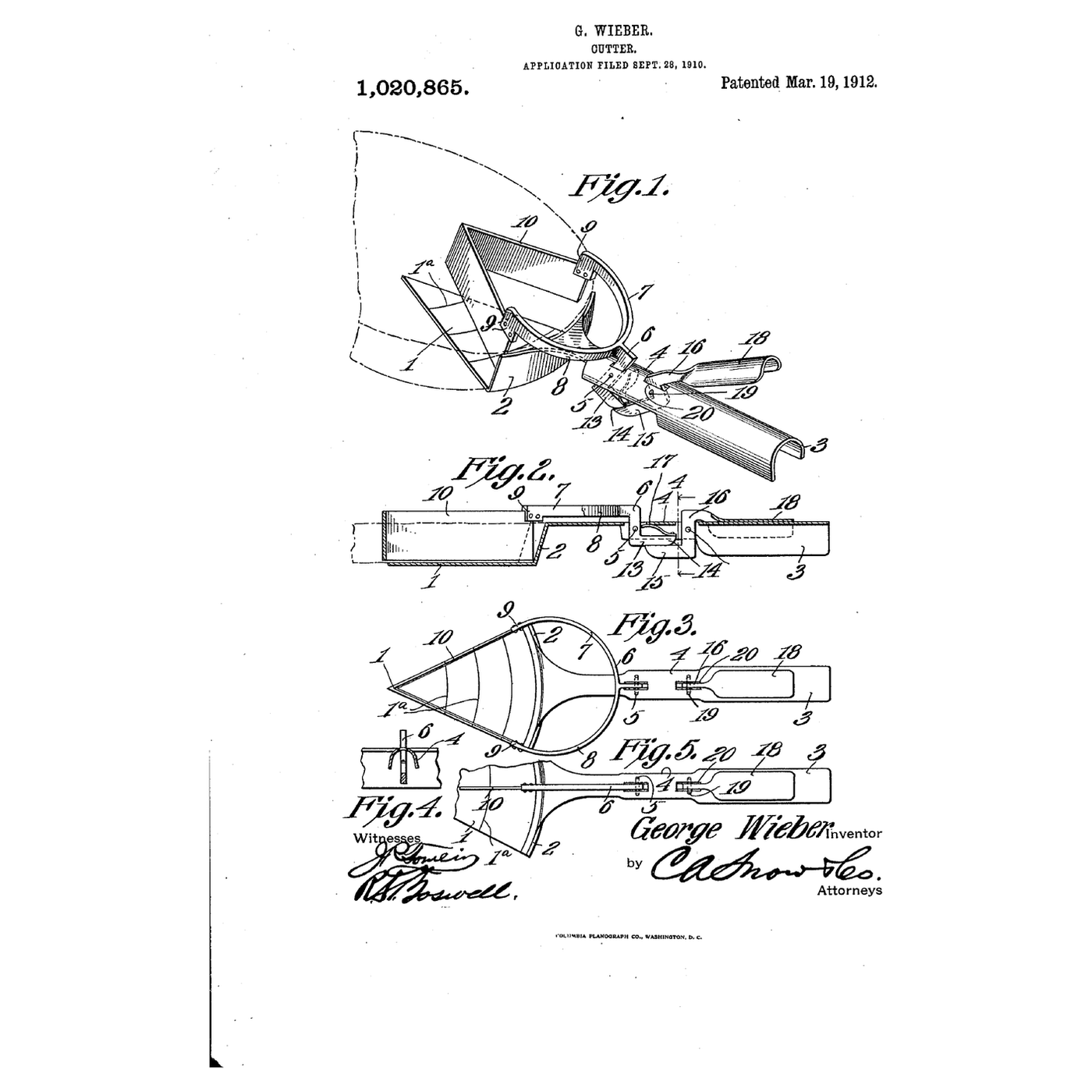
George Wieber of Syracuse, New York, received US 1,020,865, dated 19 March 1912, for a cutter in which a triangular plate is slid under the pie, point to the centre, and a spring-held pair of blades set in the same triangle is levered down onto it, "whereby the desired slice of pie or cake may be removed easily, without tearing or breaking the remainder of the cake or pie".
This rung works out how much of a slice a flat triangle can carry, then cuts and bends a wedge server from stainless steel sheet and lifts slices with it.
Beginner
About 2 hours
Instructions
1
1
The share of the slice on the plate
The share of the slice on the plate
Loading Jupyter Notebook...
2
2
A cutter that also lifts
A cutter that also lifts
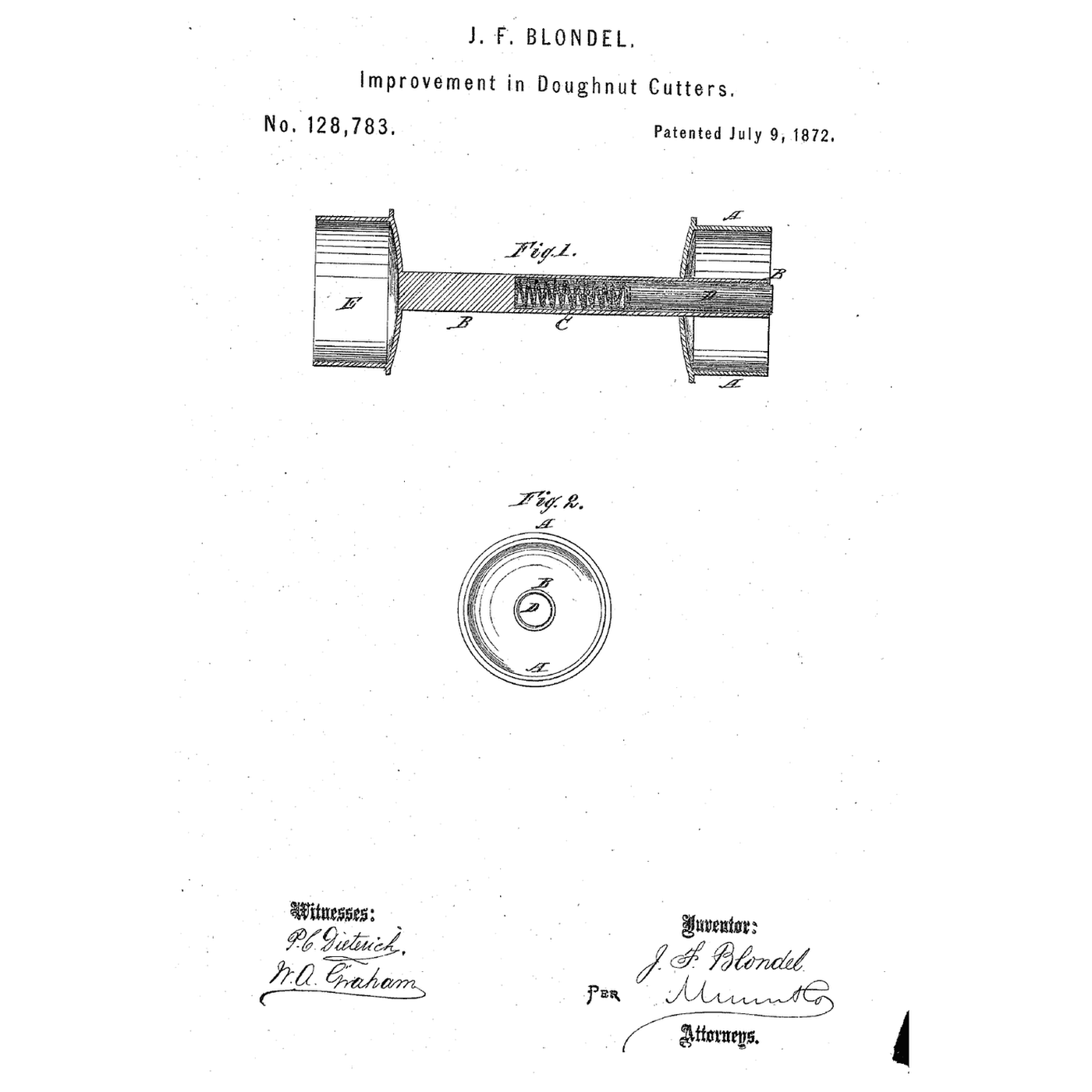
The embedded blueprint's cutter uses a spring to push the cut piece back out. Wieber's plate lifts the cut slice out whole.
3
3
Read US 1,020,865
Read US 1,020,865
"The main object of the invention is to provide a device of this design including means, whereby the desired slice of pie or cake may be removed easily, without tearing or breaking the remainder of the cake or pie."
"When cutting a piece of cake or pie the apex of the knife, when the knife is brought down upon the cake or pie, registers with the center thereof."
"The plate 1 is provided with a plurality of lines 1ª whereby pies or cakes of various diameters may be held in registration with any one of the lines, in order to cut a segment thereof of the proper radius."
4
4
Cut a wedge server and lift slices
Cut a wedge server and lift slices
Mark on stainless steel sheet a triangle with a 45° point (for 8 slices) and sides 15 cm long, and a strip 2.5 cm wide and 15 cm long running on from the middle of its wide end. Cut it out with the snips and file every edge smooth.
Clamp the sheet in the vise along the wide end of the triangle and bend the strip up at a right angle; 2 cm further on, bend it back level as the handle. Scratch lines across the plate 10, 11.5 and 13 cm from the point: these register 20, 23 and 26 cm pies.
Slide the plate under a baked pie until the rim sits on the right line. Cut down along both edges of the plate with a knife and lift. Serve half the pie this way and half with a knife alone, and count the broken slices.
Materials for this step:
 Stainless Steel Sheet1 piece
Tools needed:
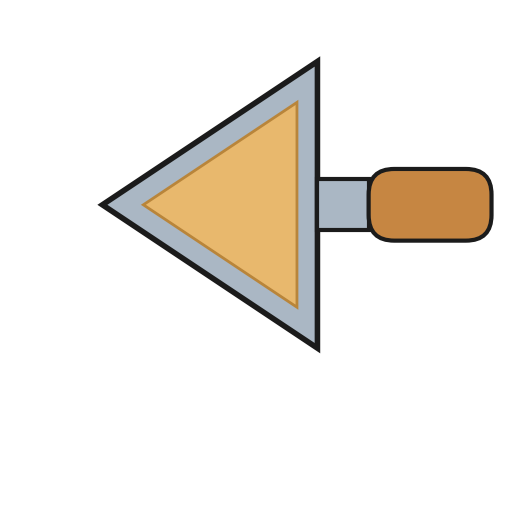 Pie Server
 Pie Dish
 Tin Snips
 Metal File
 Bench Vise
 Protractor
 Ruler
Ruler Permanent Marker
 Knife
Knife5
5
A server that tears the slice or will not slide under
A server that tears the slice or will not slide under
Pie server troubleshooting.
Flow
Loading...
6
6
History and honest limits
History and honest limits
**George Wieber** of Syracuse, New York, filed US 1,020,865 on 28 September 1910; it was patented 19 March 1912. His blades were held up by a spring and brought down by a lever in the handle. This rung cuts with a knife along the plate instead.
**Honest limits.** The notebook treats the slice as a flat sector; a deep pie also has sides. Slice counts are examples. Your count of broken slices is the measurement.
Materials
1- 1 piecePlaceholder
Related Blueprints
These blueprints share knowledge with this one — techniques, materials, or principles that connect them in the learning graph.



CC0 Public Domain
This blueprint is released under CC0. You are free to copy, modify, distribute, and use this work for any purpose, without asking permission.
Support the Maker by purchasing products through their Blueprint where they earn a Maker Commission set by Vendors, or create a new iteration of this Blueprint and include it as a connection in your own Blueprint to share revenue.