ART
BEAUTY & WELLNESS
CRAFT
CULTURE & HISTORY
ENTERTAINMENT
ENVIRONMENT
FOOD & DRINKS
REVERSE ENGINEERING
SCIENCES
SPORTS
TECHNOLOGY
WEARABLES


The Wood-Topped Cork Stopper: A Cork Ferrule on a Wooden Head You Pull by Hand
An ordinary cork is driven in and drawn out with a corkscrew, and is spoiled after one use.
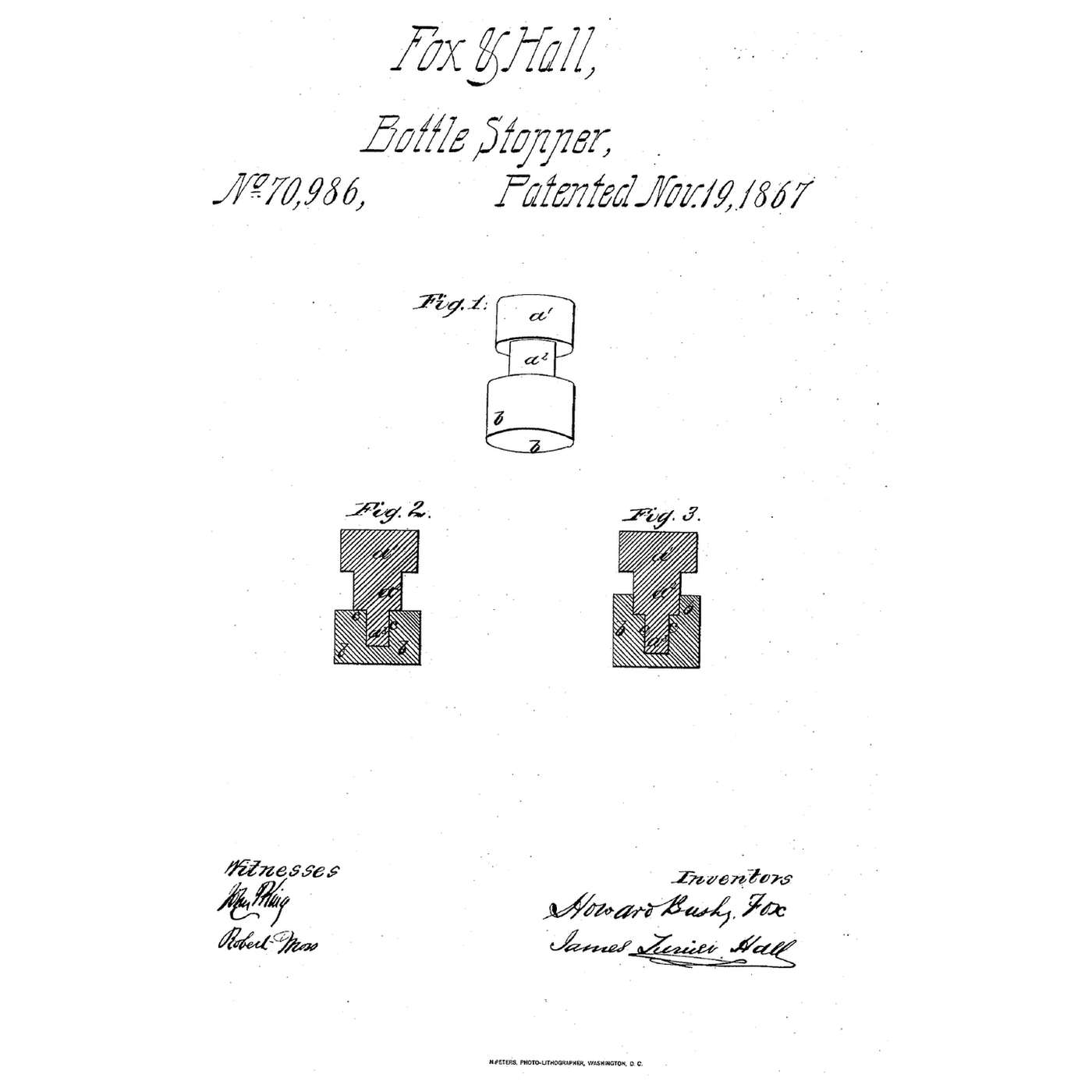
Howard Busby Fox of Oxton and James Turner Hall of Liverpool, England, received US 70,986, dated 19 November 1867, for "cheap and efficient stoppers, suitable for closing the mouths or filling openings of vessels generally, particularly well adapted for closing wine, soda-water, and other bottles with necks of the ordinary construction": a rigid top, preferably of wood, turned with three diameters, and a ferrule of cork fitted over its lowest part and cemented on. They can be forced in by percussion or pressure, withdrawn by hand without a corkscrew, and used over and over.
This rung works out how the cork ferrule grips, then turns a wooden top, fits a bored cork over it with shellac, and stops and opens a bottle by hand.
Beginner
About 3 hours
Instructions
1
1
The ferrule's grip
The ferrule's grip
Loading Jupyter Notebook...
2
2
A stopper drawn by hand before it
A stopper drawn by hand before it
The embedded blueprint draws a cork by a rod through it. Fox and Hall put the cork on the outside of a wooden core and pull by a wooden head.
3
3
Read US 70,986
Read US 70,986
"a1 a2 a3 denote the rigid portion formed with two shoulders or changes of diameter, and made, by preference, of wood; but glass, earthenware, vulcanite, or other hard substance or composition can be used, while b is an elastic substance, made, by preference, of cork, in the form of a ferrule, and fitted on so as to cover only the part a3."
"Some of the advantages secured by our stoppers, which, as is above implied, we propose to use in the place of ordinary corks are, that they can be forced in by percussion or by pressure; they can be withdrawn by hand without a corkscrew, without being damaged; they can be used over and over many times; they can be used for closing aerated-water bottles without metal caps, the wires being led directly over the top of the rigid portion, and they are efficient closers, and are cheap and durable."
4
4
Make the stoppers and stop a bottle
Make the stoppers and stop a bottle
**Top.** From hardwood dowel, cut a 12 mm length of 30 mm dowel as the head a1, a 10 mm length of 14 mm dowel as the neck a2, and a 20 mm length of 10 mm dowel as the spigot a3. Drill the head and neck on centre and glue the three together on a short 6 mm dowel pin, so they share one axis.
**Ferrule.** Drill a 10 mm hole through the length of a tapered cork a little shorter than the spigot, and trim its top flat against the neck's shoulder.
**Join.** Dip the spigot's end in shellac and force the ferrule on, as Fox and Hall did with dissolved shellac. Seal the spigot's end with shellac so no bare wood meets the drink.
**Test.** Fill a bottle with water, push the stopper in by hand and by a light tap, turn the bottle over, then pull it out by the head. Repeat twenty times and look at the cork.
Materials for this step:
 Dowel Rod0.1 meter
 Wooden Dowel0.1 meter
 Wood Glue1 piece
 Corks2 pieces
 Shellac1 piece
 Glass Bottle (Clear)1 piece
 Water1 liter
Tools needed:
 Hand Saw
 Cordless Drill
 Drill Bit Set
 Sandpaper
 Kitchen Knife
 Clamps
 Digital Caliper 6-Inch
5
5
A stopper that leaks, sticks or comes apart
A stopper that leaks, sticks or comes apart
Wood-topped cork stopper troubleshooting.
Flow
Loading...
6
6
History and honest limits
History and honest limits
**Howard Busby Fox** of Oxton and **James Turner Hall** of Liverpool, England, received US 70,986, dated 19 November 1867. The wooden part's pores were to be closed by impregnation under pressure, or its end coated with tin-foil or another metal impervious to liquids; caoutchouc could replace the cork; and a cheaper form used a ring and plug. Their claims cover the stopper of wood and cork combined, and the rigid part of three diameters fitted within and upon the elastic part.
**Honest limits.** Glued dowels stand in for a turned top, and a bored bottle cork for their ferrule. The notebook treats the grip as simple friction; its pressure, sizes and friction coefficient are examples. Your twenty stoppings are the result.
Materials
7- 0.1 meterPlaceholder
- 0.1 meterPlaceholder
- 1 piecePlaceholder
- 2 piecesPlaceholder
- 1 piecePlaceholder
- 1 piecePlaceholder
- 1 literPlaceholder
This blueprint makes

Related Blueprints
These blueprints share knowledge with this one — techniques, materials, or principles that connect them in the learning graph.
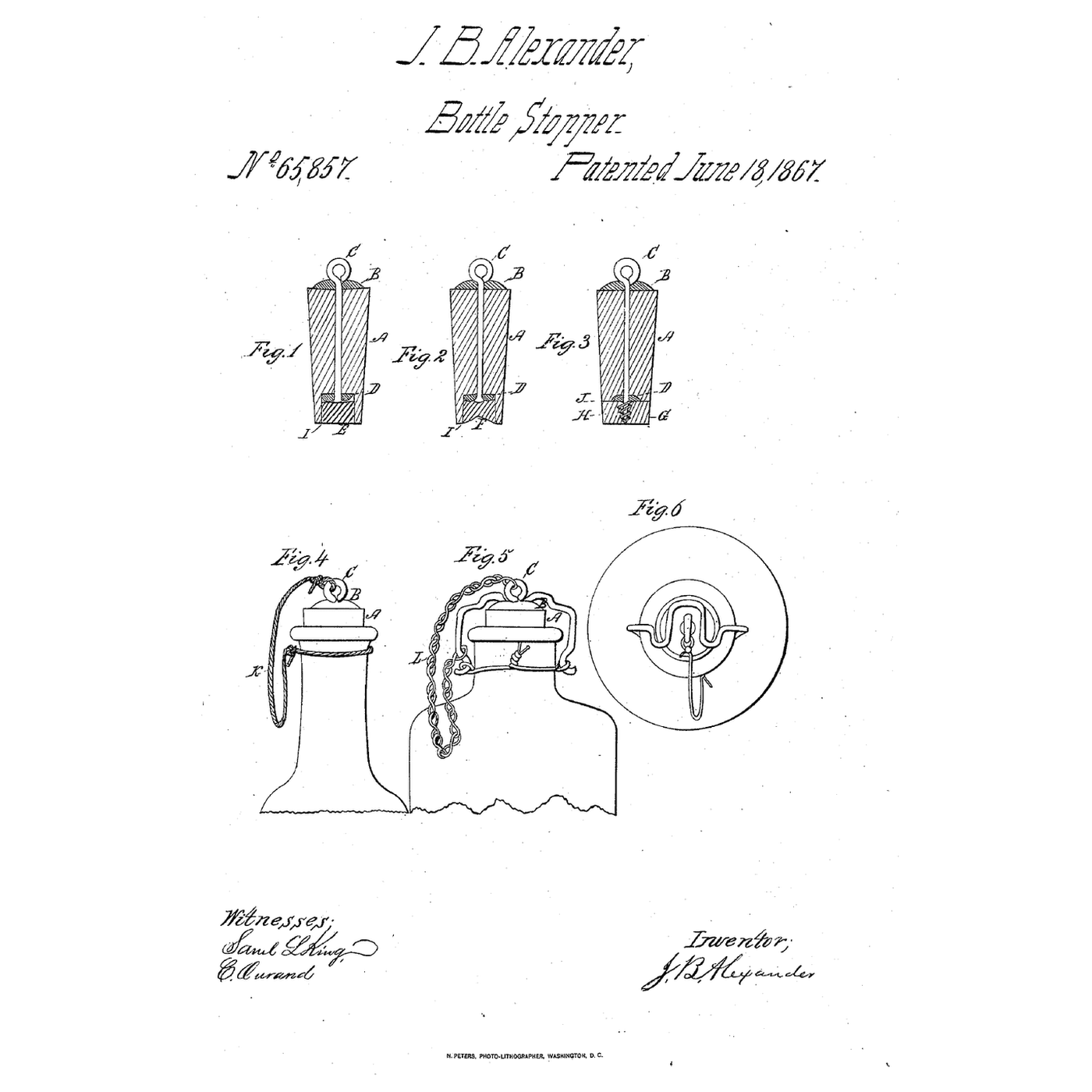
The Rod-and-Eye Stopper: Pull the Eye and the Plate Beneath Pushes the Cork Out Whole
by Charlie
Drinks
32
0
0
0
0
0

The Cork-Lined Screw Cap: A Rigid Cap Whose Lining Takes the Shape of the Thread
by Mary
Drinks
21
0
0
0
0
0
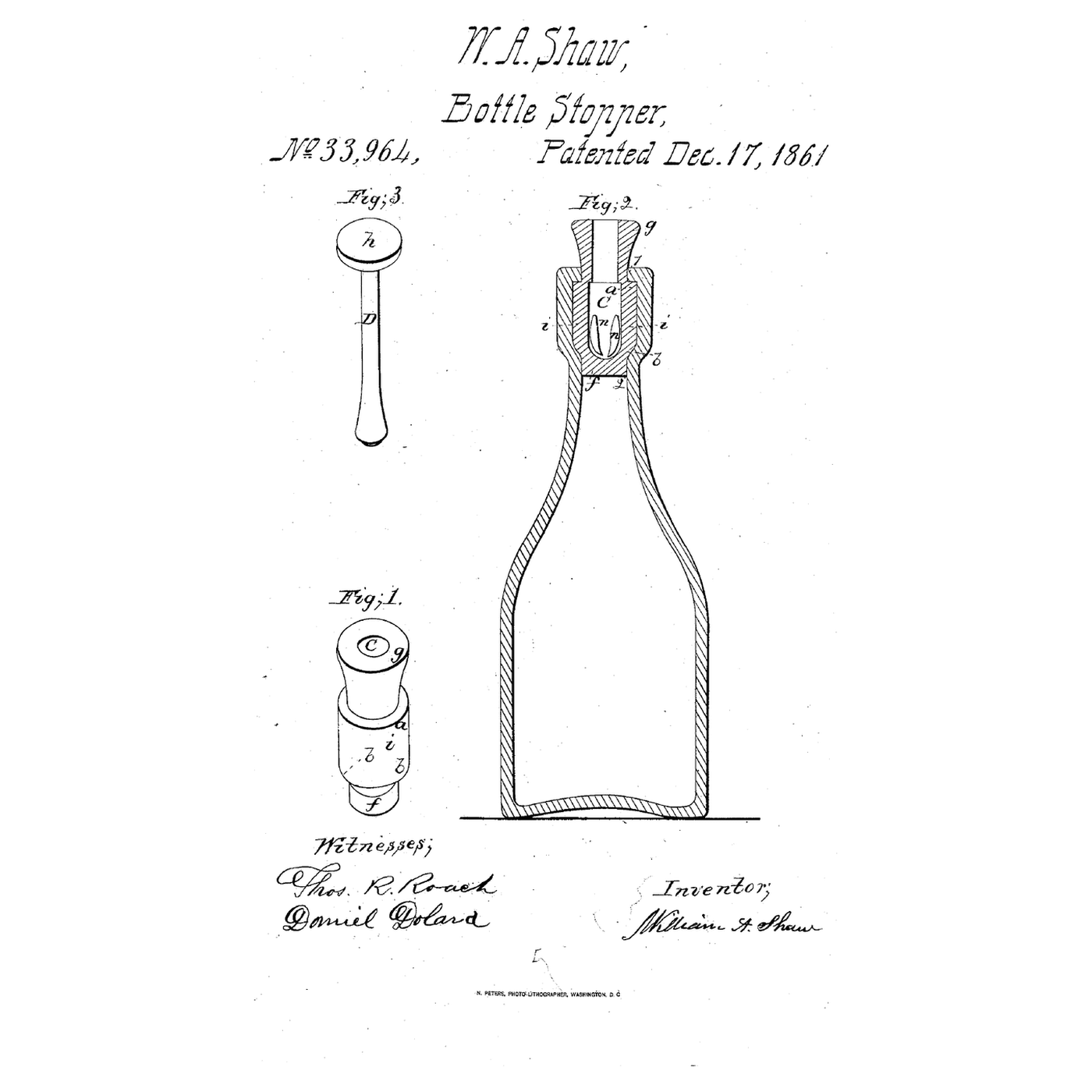
The Hollow Rubber Stopper: Stretch It Thin to Put It In, and the Gas Seats It Tighter
by Charlie
Drinks
33
0
0
0
0
0
CC0 Public Domain
This blueprint is released under CC0. You are free to copy, modify, distribute, and use this work for any purpose, without asking permission.
Support the Maker by purchasing products through their Blueprint where they earn a Maker Commission set by Vendors, or create a new iteration of this Blueprint and include it as a connection in your own Blueprint to share revenue.