Collaboration
ART
BEAUTY & WELLNESS
CRAFT
CULTURE & HISTORY
ENTERTAINMENT
ENVIRONMENT
FOOD & DRINKS
REVERSE ENGINEERING
SCIENCES
SPORTS
TECHNOLOGY
WEARABLES
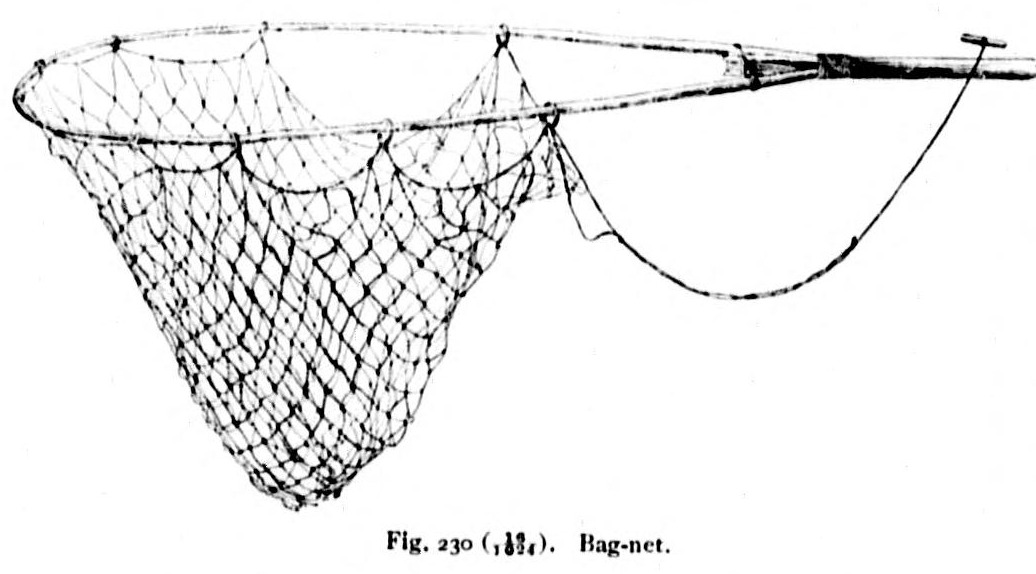


Thompson (Nlaka'pamux) Salmon Bag-Net: Dogbane Twine Netted on a Gauge, Hung from Horn Rings on a Hoop that Closes with the Catch (Teit, 1900)
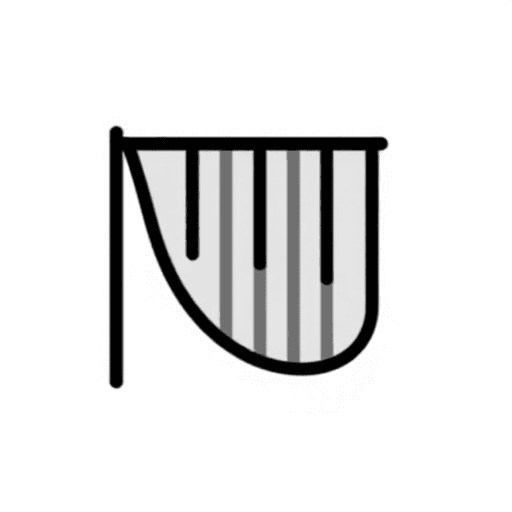
The Thompson (Nlaka'pamux) salmon dip-net James Teit recorded on the rivers of British Columbia: a bag of thigh-spun dogbane twine with even, double-knotted meshes, its mouth as wide as a man's outstretched arms, hung from small horn rings slid round a fir or cedar hoop on a long handle; let go of the purse string and the fish's weight pulls the rings together and traps it.
Intermediate
Several days
Instructions
1
1
Read Teit
Read Teit
"He lets go the piece of stick, when the weight of the fish causes the horn rings to come together, and thus close the mouth of the net."
2
2
Make the twine
Make the twine
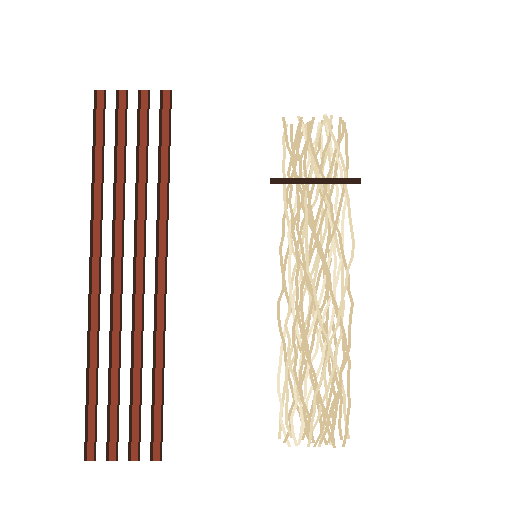
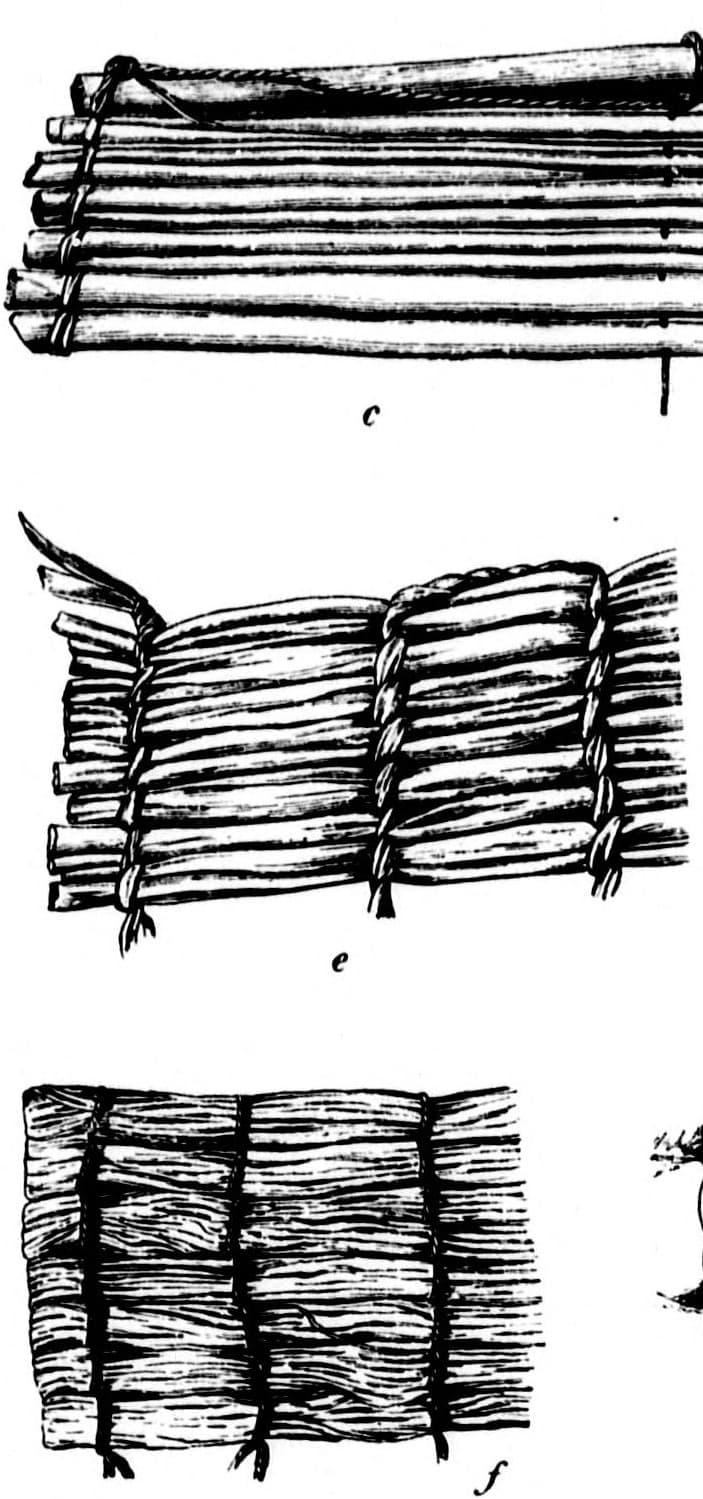
Clean dogbane bark fibre over a board edge and roll it on the thigh into two-stranded twine (see the tule-mat blueprint). A net takes a great deal.
Materials for this step:
 Dogbane Bark Fibre1 piece
Tools needed:
 Knife
3
3
Net the bag
Net the bag
Net a deep bag in large meshes, tying each with a double knot over a wooden netting stick so every mesh is the same size (ours: a netting needle to carry the twine, meshes about 8 cm). Make the mouth about as wide round as a man's arms held out in a circle with the middle fingers touching.
Materials for this step:
Dogbane Bark Fibre1 pieceTools needed:
 Mesh Gauge Stick
 Wooden Netting Shuttle/needle
4
4
Hoop and handle
Hoop and handle
Bend a hoop of fir or cedar and fix it to a long straight handle of the same wood.
Materials for this step:
 Green Wood Poles1 piece
 Willow Withy1 piece
Tools needed:
 AxeKnife
5
5
Rings and purse string
Rings and purse string
Make small horn rings (ours: antler slices bored through), slip them onto the hoop and tie the bag's mouth to them. Tie a string to the bag with a small stick at its end as a handle (ours: run it through the rings so pulling holds the mouth open).
Materials for this step:
 Antler Slices1 pieceDogbane Bark Fibre1 piece
 Wooden Dowel1 piece
Tools needed:
 Bone AwlKnife
6
6
Fish it
Fish it
From a platform built out from the bank where fish hug the shore, dip the net and let it drift down with the current, holding the stick. When you feel a fish, let go: the rings slide together and close the mouth. Draw it ashore, pull the stick to open the bag and tip the fish out. For small fish the meshes were tied straight to the hoop instead.
Tools needed:
Green Wood Poles7
7
Troubleshooting
Troubleshooting
Bag-net troubleshooting.
Flow
Loading...
8
8
History and honest limits
History and honest limits
From James Teit, *The Thompson Indians of British Columbia*, **Memoirs of the American Museum of Natural History, Jesup North Pacific Expedition** vol. I part IV (1900), pp. 190-191, 249-250 and Figs. 134, 230 (checked on the archive.org scan cihm_16242; p. 249 from the text layer). Caught fish were kept in a ring of boulders on the bank. Mesh size, ring size and number, handle length and how the string is rigged are ours.
Materials
5- 1 piecePlaceholder
- 1 piecePlaceholder
- 1 piecePlaceholder
- 1 piecePlaceholder
- 1 piecePlaceholder
This blueprint makes
Related Blueprints
These blueprints share knowledge with this one — techniques, materials, or principles that connect them in the learning graph.

CC0 Public Domain
This blueprint is released under CC0. You are free to copy, modify, distribute, and use this work for any purpose, without asking permission.
Support the Maker by purchasing products through their Blueprint where they earn a Maker Commission set by Vendors, or create a new iteration of this Blueprint and include it as a connection in your own Blueprint to share revenue.