Collaboration
ART
BEAUTY & WELLNESS
CRAFT
CULTURE & HISTORY
ENTERTAINMENT
ENVIRONMENT
FOOD & DRINKS
REVERSE ENGINEERING
SCIENCES
SPORTS
TECHNOLOGY
WEARABLES
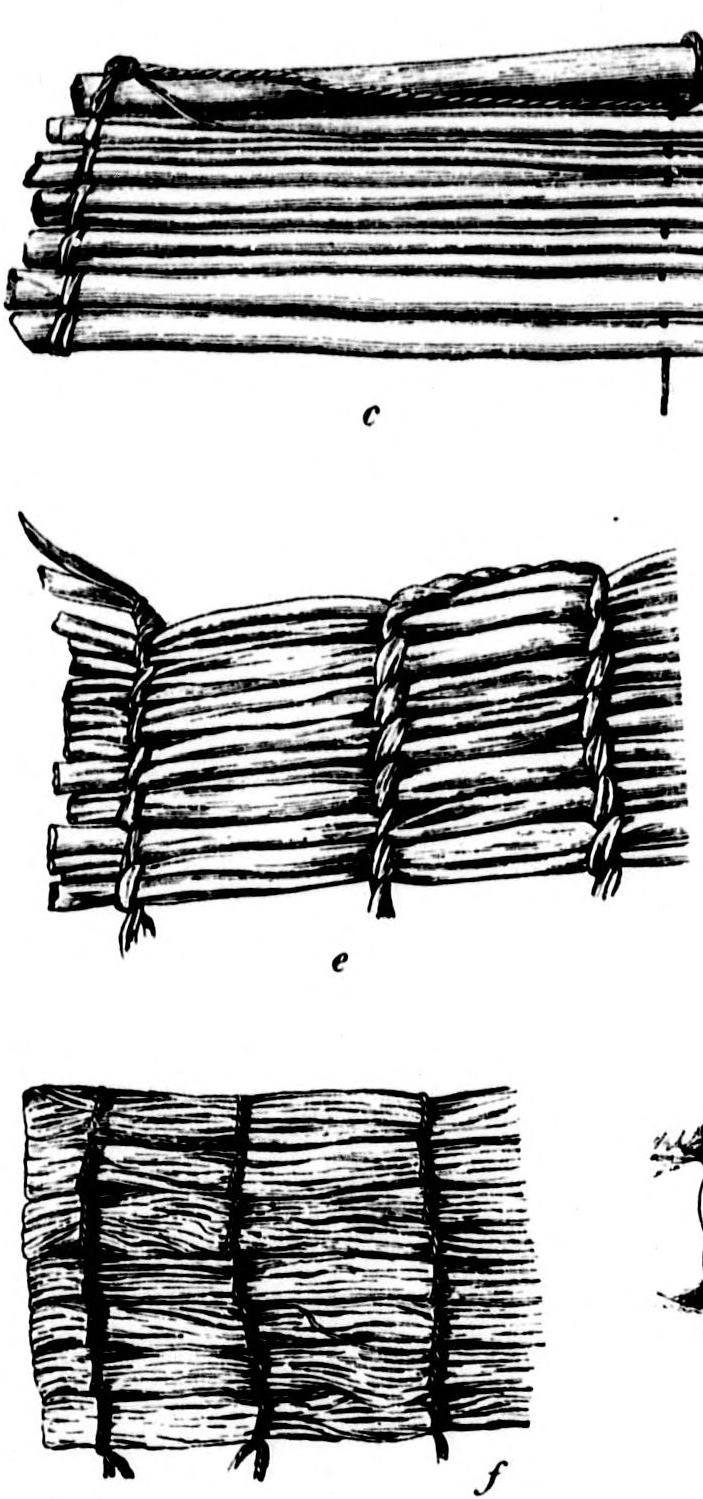


Thompson (Nlaka'pamux) Tule Mat: Dogbane Fibre Cleaned on a Board Edge, Thigh-Spun, Reeds Strung Across (Teit, 1900)
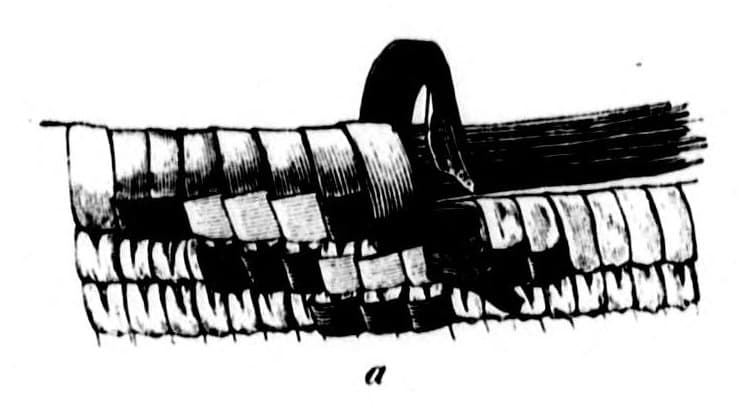
The Thompson (Nlaka'pamux) tent and floor mat as James Teit recorded it: Indian-hemp (dogbane) bark fibre cleaned by pulling it over a sharp board edge and rolled on the thigh into two-ply twine, then long tule stems strung side by side on the twine and held by more twine passed round them near their ends, with a stick across the end.
Beginner
A day
Instructions
1
1
Read Teit
Read Teit
"The reeds are strung on bark strings, and held in place by other bark strings which pass around them near their ends."
2
2
Clean the fibre
Clean the fibre
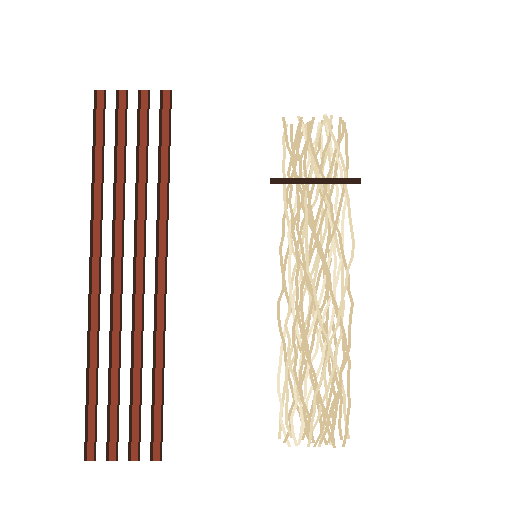
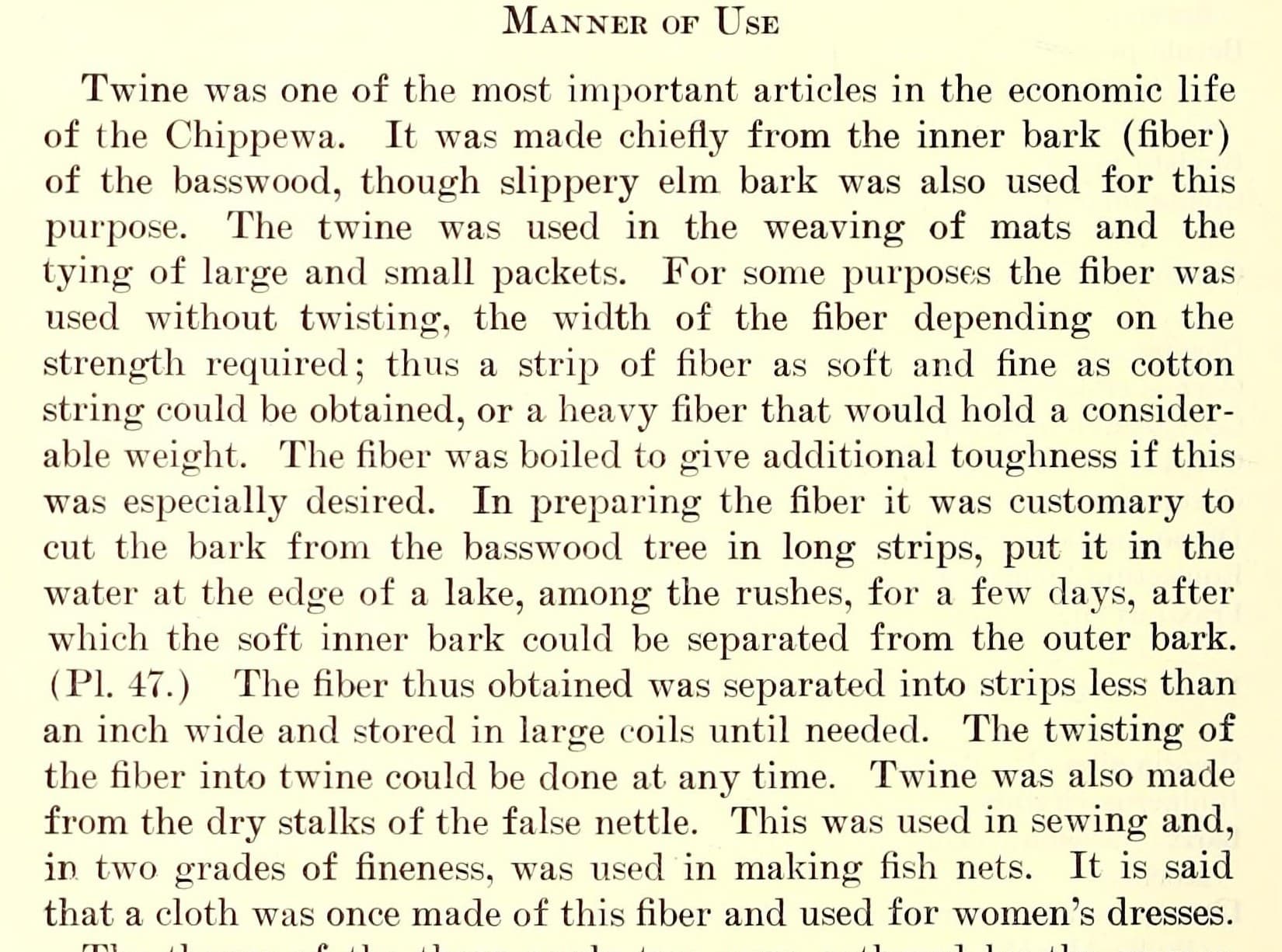
Pull the dogbane bark with the left hand over the sharp edge of a small board held in the right, pressing the bark down against the edge with the right thumb, to shred and clean it. (Milkweed fibre was used too, and nettle when bark fibre ran out.)
Materials for this step:
 Dogbane Bark Fibre1 piece
Tools needed:
 Knife
3
3
Spin the twine
Spin the twine
Roll the fibre on the bare thigh into a two-stranded twine. Make plenty: it is both the stringing and the binding.
Materials for this step:
Dogbane Bark Fibre1 pieceTools needed:
Knife4
4
String the tule
String the tule
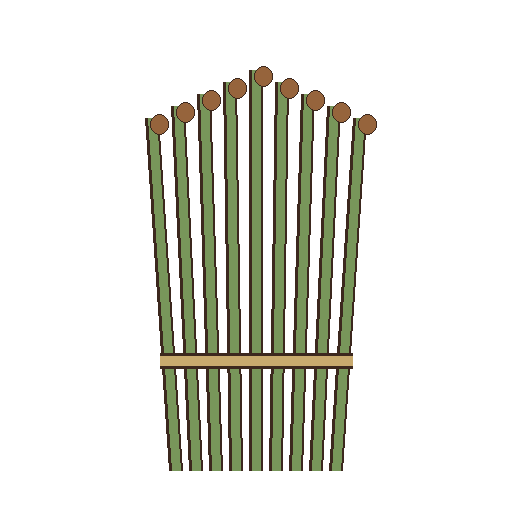
Lay dried tule stems side by side and string them on the bark twine (ours: push the twine through each stem with a pointed bone, rows about 20 cm apart). Run more twine round them near their ends to hold them, and finish the mat end with a stick (his tent-mats used rosewood).
Materials for this step:
 Tule Stems1 pieceDogbane Bark Fibre1 piece
 Wooden Dowel1 piece
Tools needed:
 Bone AwlKnife
5
5
Troubleshooting
Troubleshooting
Tule mat troubleshooting.
Flow
Loading...
6
6
History and honest limits
History and honest limits
From James Teit, *The Thompson Indians of British Columbia*, **Memoirs of the American Museum of Natural History, Jesup North Pacific Expedition** vol. I part IV (1900), pp. 188-190 and Fig. 131 c (checked on the archive.org scan cihm_16242). Floor and table mats of young reeds were woven in other ways, some exactly like Coast cedar-bark blankets. Mat size, row spacing and the stringing tool are ours.
Materials
3- 1 piecePlaceholder
- 1 piecePlaceholder
- 1 piecePlaceholder
This blueprint makes

Related Blueprints
These blueprints share knowledge with this one — techniques, materials, or principles that connect them in the learning graph.
CC0 Public Domain
This blueprint is released under CC0. You are free to copy, modify, distribute, and use this work for any purpose, without asking permission.
Support the Maker by purchasing products through their Blueprint where they earn a Maker Commission set by Vendors, or create a new iteration of this Blueprint and include it as a connection in your own Blueprint to share revenue.