Collaboration
ART
BEAUTY & WELLNESS
CRAFT
CULTURE & HISTORY
ENTERTAINMENT
ENVIRONMENT
FOOD & DRINKS
REVERSE ENGINEERING
SCIENCES
SPORTS
TECHNOLOGY
WEARABLES
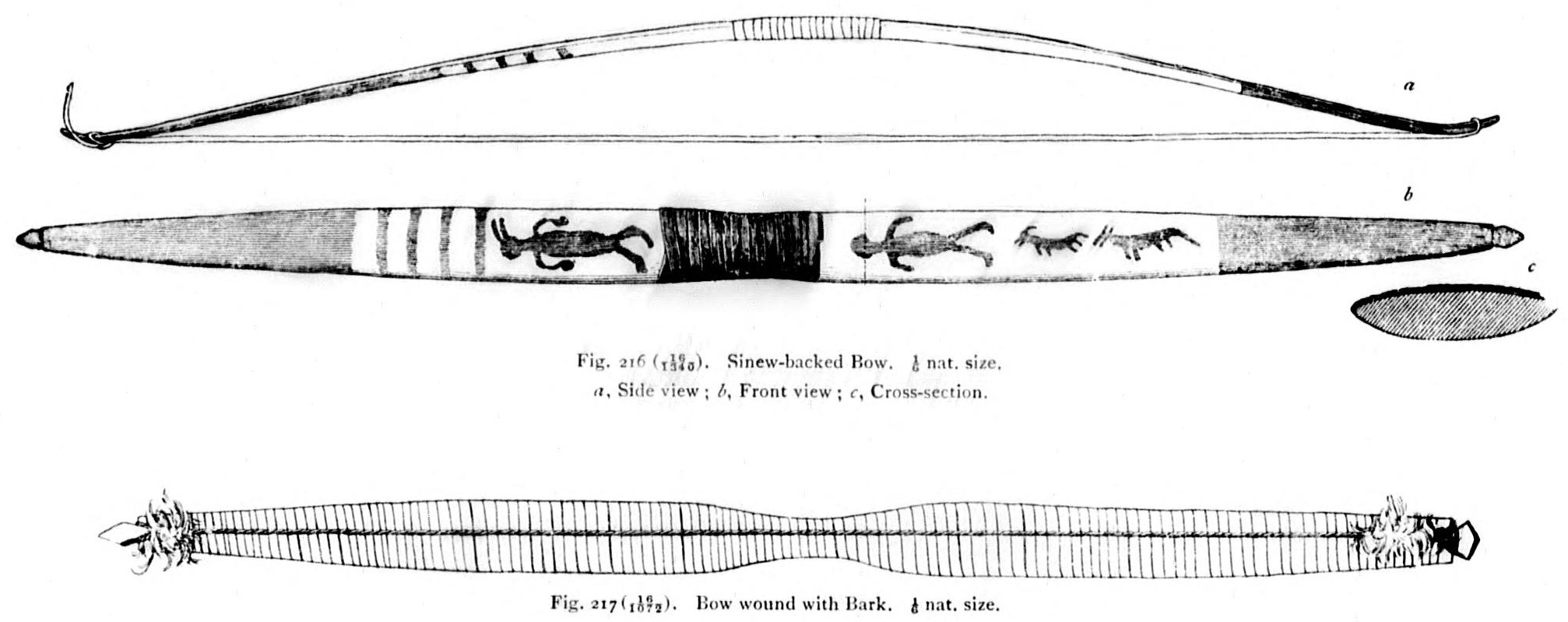

Thompson (Nlaka'pamux) Sinew-Backed Bow: Juniper Stave, Sinew Glued to the Belly Then Bent Back, Cherry-Bark Grip (Teit, 1900)
The best hunting bow of the Thompson (Nlaka'pamux) people, from James Teit: a juniper stave with deer sinew glued along its hollow side, then bent right over by two men so the sinewed side becomes the back, giving a bow that lies flat unstrung; the grip narrowed and wrapped with bitter-cherry bark, and a string of deer back-sinew.
Advanced
A week or two, mostly glue drying
Instructions
1
1
Read Teit
Read Teit
"When the glue has set, two men bend the bow over so that what was originally the concave side becomes the back of the bow."
2
2
Shape the stave
Shape the stave
Shape a stave of juniper (the Lower Thompsons also used hemlock, yew and dogwood), flat in section (Fig. 216 c), the middle a little narrower for the hand. Ours: about 1.2-1.4 m long.
Materials for this step:
 Hardwood Stave1 piece
Tools needed:
 Drawknife
 Knife
3
3
Glue on the sinew
Glue on the sinew
Lay deer sinew in glue along the stave's concave side and let the glue set fully. Ours: shred dried back sinew into fibres, soak it, lay it overlapping in warm hide glue, and let it dry a week or more.
Materials for this step:
 Sinew Cord1 piece
 Hide Glue1 piece
 Water1 piece
Tools needed:
 Iron Kettle
 Fire Pit
4
4
Bend it over
Bend it over
Two people bend the bow over against its curve so the sinewed side becomes the back. Teit's Fig. 216 lies perfectly flat with the string off and takes its working curve when strung.
Tools needed:
 Rope
5
5
Grip, string and finish
Grip, string and finish
Wrap the narrow middle with what Teit calls bird-cherry bark (ours: taken as bitter cherry, Prunus emarginata). Make a string of twisted deer back-sinew (Apocynum twine served when sinew was short). Bows were often painted, or had incised lines filled with red on the flat inner side.
Materials for this step:
 Bitter Cherry Bark1 piece
 Sinew Thread1 piece
Tools needed:
Knife6
6
Troubleshooting
Troubleshooting
Bow troubleshooting.
Flow
Loading...
7
7
History and honest limits
History and honest limits
From James Teit, *The Thompson Indians of British Columbia*, **Memoirs of the American Museum of Natural History, Jesup North Pacific Expedition** vol. I part IV (1900), pp. 239-241 and Figs. 216-221 (checked on the archive.org scan cihm_16242). He also describes bows wrapped with cherry bark instead of sinew (weaker), a snakeskin-covered birch bow, plain bows for birds, and a hand-guard for the thumb. Length, sinew preparation and glue are ours.
Materials
6- 1 piecePlaceholder
- 1 piecePlaceholder
- 1 piecePlaceholder
- 1 piecePlaceholder
- 1 piecePlaceholder
- 1 piecePlaceholder
This blueprint makes
Related Blueprints
These blueprints share knowledge with this one — techniques, materials, or principles that connect them in the learning graph.
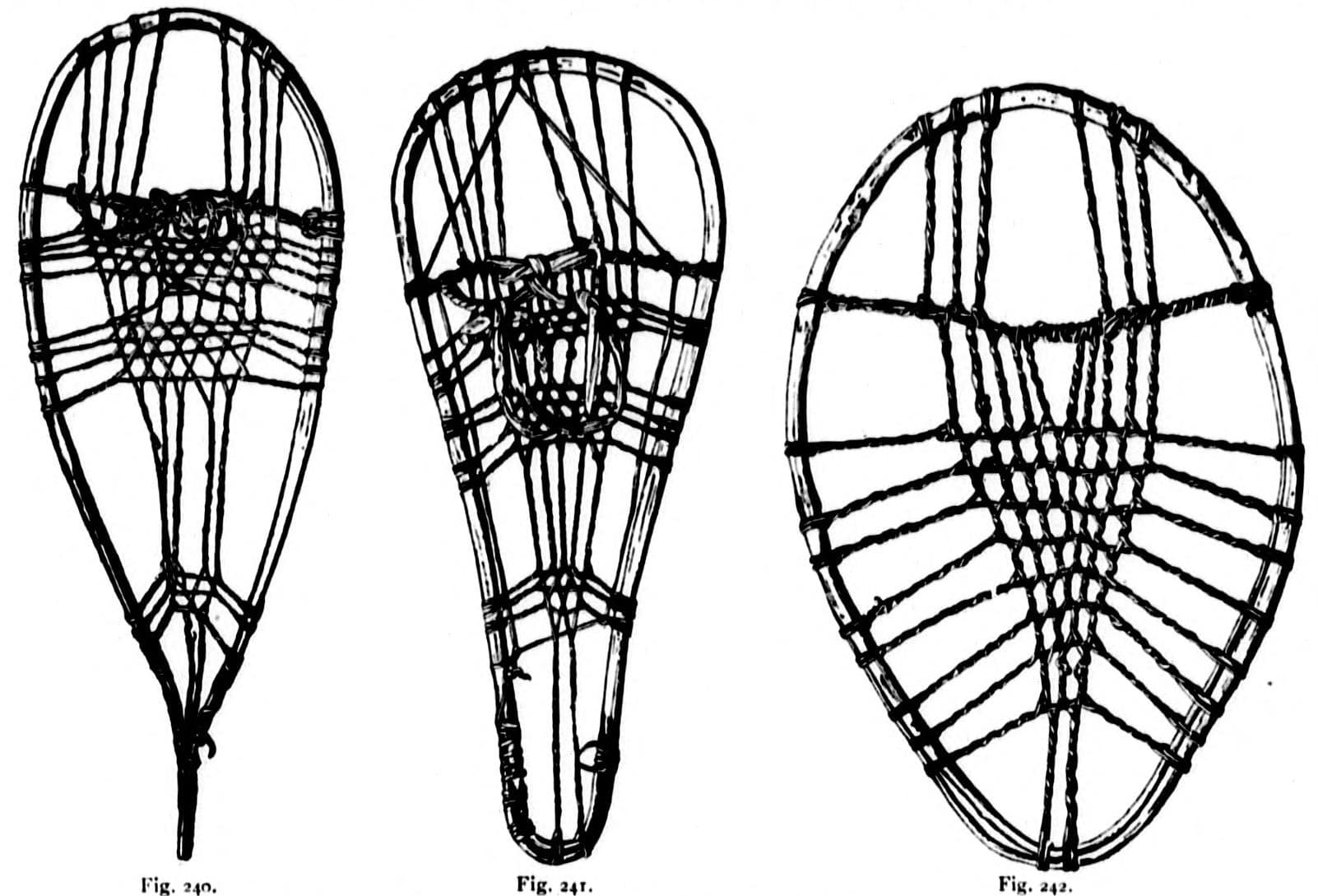
Thompson (Nlaka'pamux) Snowshoes: One-Piece Maple or Yew Frames Steamed in Pairs, Netted with Twisted Raw Deer-Hide (Teit, 1900)
by Woody
Woodworking
7
0
0
0
0
0

Thompson (Nlaka'pamux) Salmon Bag-Net: Dogbane Twine Netted on a Gauge, Hung from Horn Rings on a Hoop that Closes with the Catch (Teit, 1900)
by Tex
Textile & Leather
4
0
0
0
0
0
CC0 Public Domain
This blueprint is released under CC0. You are free to copy, modify, distribute, and use this work for any purpose, without asking permission.
Support the Maker by purchasing products through their Blueprint where they earn a Maker Commission set by Vendors, or create a new iteration of this Blueprint and include it as a connection in your own Blueprint to share revenue.