Collaboration
ART
BEAUTY & WELLNESS
CRAFT
CULTURE & HISTORY
ENTERTAINMENT
ENVIRONMENT
FOOD & DRINKS
REVERSE ENGINEERING
SCIENCES
SPORTS
TECHNOLOGY
WEARABLES
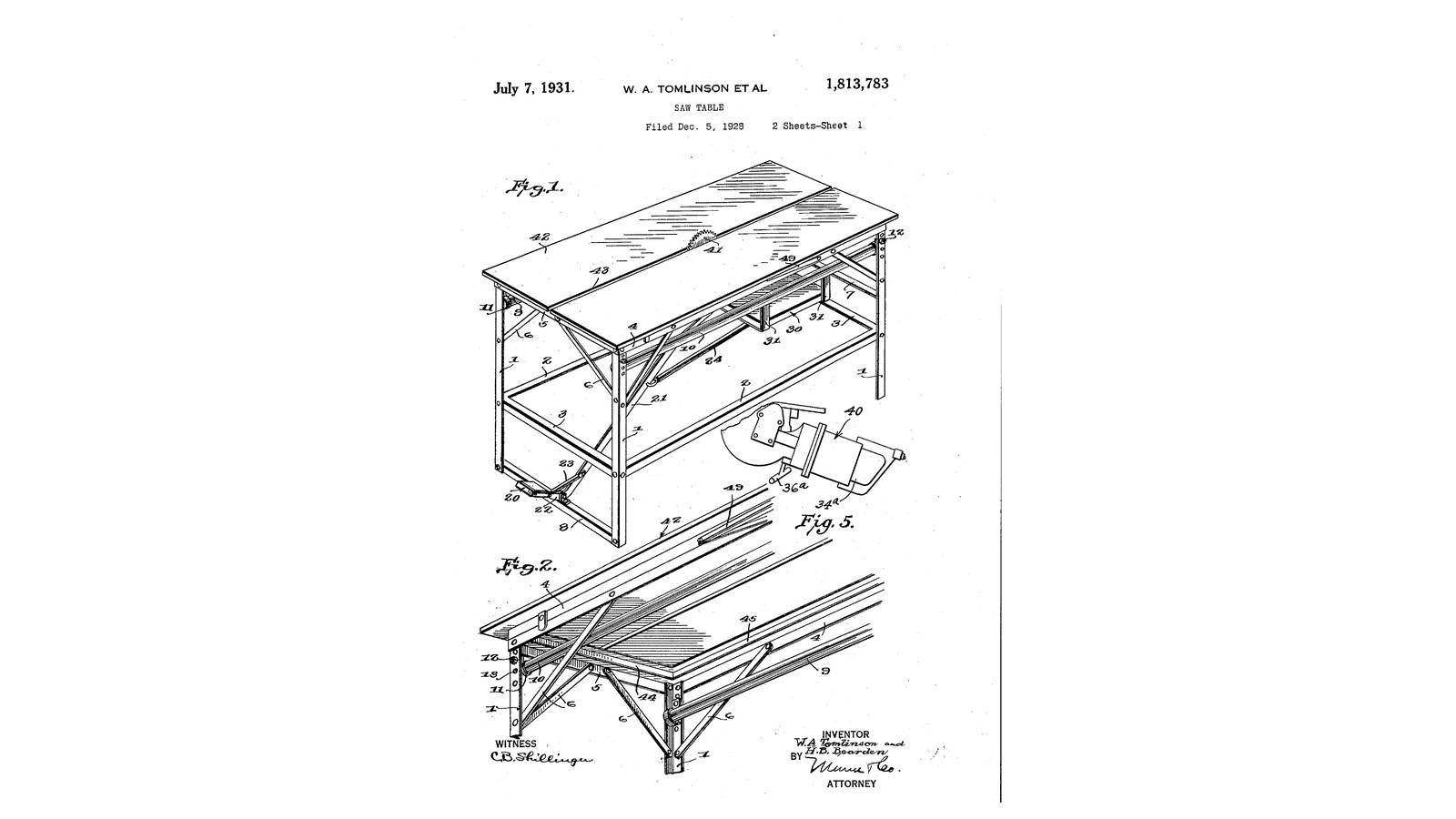

Tube-Track Pedal Saw Table: Any Portable Saw Clamped Upside Down on a Carriage Rolling Inside Slotted Tubes (Tomlinson & Bearden, 1931)
William A. Tomlinson and Howell B. Bearden of Phoenix, Arizona, received US 1,813,783, dated 7 July 1931, for a table that turns any portable power saw into a table saw. The saw is clamped upside down on a carriage, its blade through the slot of a top hinged at the rear. The carriage rolls on ball-bearing rollers inside two steel tubes slotted along their undersides. A pedal pushes it forward through the work, leaving both hands free, and a spring brings it back. With the pedal left alone it works as a fixed saw, and the saw unbolts for hand use.
The patent gives no sizes; every size here is ours.
Advanced
About 4 days
Instructions
1
1
Pedal, link and travel
Pedal, link and travel
Loading Jupyter Notebook...
2
2
Read US 1,813,783
Read US 1,813,783
"By using the pedal in the manner above set forth both hands of the operator will be free for manipulating the work, which is especially desirable when pattern work is to be sawed."
3
3
Angle-iron frame
Angle-iron frame
Bolt a frame of steel angle 900 x 500 mm, 850 high: four corner legs 1, side and end bars 2, 3 halfway up and 4, 5 at the top, flat-bar diagonal braces 6 at the top corners, a cross bar 7 between the rear legs above the middle bars, and a cross bar 8 between the front legs at the bottom. Drill a vertical row of 9 mm holes 13, 25 mm apart, near the top of each leg, for the track hangers.
Materials for this step:
 Mild Steel Angle Iron6 pieces
 Mild Steel Flat Bar1 piece
 Hex Bolt Assortment40 pieces
 Hex Nut40 pieces
 Flat Washer40 pieces
Tools needed:
 Hacksaw
 Angle Grinder
 Drill Press
 Drill Bit Set
 Center Punch
 Combination Square
 Tape Measure
 Adjustable Spanner
 Safety Glasses
4
4
Slotted tube tracks
Slotted tube tracks
Cut two 900 mm lengths of 42 mm steel tube 9, 10 and cut a 10 mm slot 14 along the underside of each, stopping 20 mm short of the ends; file the slot's edges smooth. Bolt a flat-bar hanger 11 to each end of each tube and hang the tubes along the frame's sides from the legs with bolts 12 through the row of holes, at the height that suits your saw. Put a short coil spring 39 in each end of each tube as a buffer.
Materials for this step:
 Mild Steel Round Tube2 piecesMild Steel Flat Bar1 piece
 Coil Spring4 piecesHex Bolt Assortment8 piecesHex Nut8 pieces
Tools needed:
HacksawAngle Grinder File Set
 Bench ViseDrill PressDrill Bit SetAdjustable Spanner
 Digital Caliper 6-InchSafety Glasses
5
5
Carriage and rollers
Carriage and rollers
Cut the carriage 30 from 5 mm steel plate, as wide as between the tubes. At each corner bolt an upright flat-bar standard 31 that reaches up through a tube's slot, and on its top a short bar 33 across inside the tube carrying a 22 mm ball bearing 32 at each end on an M8 bolt with a lock nut. Slide the rollers into the tubes from the ends, the standards hanging down through the slots, and bolt them to the carriage.
Materials for this step:
 Mild Steel Plate1 pieceMild Steel Flat Bar1 piece
 Ball Bearing8 piecesHex Bolt Assortment16 pieces
 Nylon Insert Lock Nut8 piecesFlat Washer16 pieces
Tools needed:
HacksawAngle GrinderDrill PressDrill Bit SetFile SetBench ViseAdjustable Spanner6
6
Pedal and springs
Pedal and springs
Pivot a lever 21 of steel flat bar on the front bottom cross bar 8, with an arm 22 to the side carrying the pedal 20 and a brace 23 from arm to lever. Join the lever's top to the carriage's front with a flat-bar link 24. Hook a return spring 25a from the rear cross bar 7 to the lever partway up.
Materials for this step:
Mild Steel Flat Bar2 pieces Mild Steel Round Bar1 piece
 Extension Spring1 pieceHex Bolt Assortment4 piecesNylon Insert Lock Nut4 pieces
Tools needed:
HacksawDrill PressDrill Bit SetBench ViseAdjustable Spanner7
7
Mount the saw and the top
Mount the saw and the top
Turn the circular saw upside down on the carriage and bolt it by its base plate with bolts and wing nuts, so it lifts off for hand use; his T-bolt 34 and hook bolts 36 gripped the saw's handles, which modern saws do not suit. Make the top 42 of plywood on a steel angle frame 44, slotted along the blade's path, and hinge its rear edge to the frame so it swings up to reach the saw. Fit a catch 47 to lock it down and a folding flat-bar brace 49 to prop it up.
Materials for this step:
 Circular Saw1 pieceHex Bolt Assortment4 pieces
 Wing Nut4 pieces
 Plywood Sheet1 pieceMild Steel Angle Iron1 piece
 Butt Hinge2 pieces
 Hook and Eye1 pieceMild Steel Flat Bar1 piece
 Wood Screws16 pieces
Tools needed:
 Jigsaw
 Cordless DrillDrill Bit SetHacksawAdjustable SpannerCombination Square
8
8
Cut
Cut
Lock the top down. Set the saw's depth so the blade stands 10 mm above the board. Place the board on the top in front of the blade, start the saw and press the pedal: the carriage rolls the running blade through it while both hands hold the work. Let the pedal up and the spring returns it. For ripping, leave the carriage still and feed the board.
Tools needed:
Safety Glasses Hearing Protection (Ear Defenders, SNR 30 dB)
9
9
Troubleshooting
Troubleshooting
Tube-track saw table troubleshooting.
Flow
Loading...
10
10
History and honest limits
History and honest limits
**William A. Tomlinson** and **Howell B. Bearden** of Phoenix, Arizona, US 1,813,783, dated 7 July 1931, filed 5 December 1928. They claimed a top with a slot, "laterally spaced longitudinally extending tubular tracks" below it, "slotted longitudinally on their lower faces", and a saw carriage with upstanding roller-carrying hangers in the tracks, their shanks through the slots. Their saw is held by its handles; ours by its base plate. Their frame is angle iron, as ours. They give no sizes; every size here is ours.
Materials
18- 6 piecesPlaceholder
- 2 piecesPlaceholder
- 72 piecesPlaceholder
- 48 piecesPlaceholder
- 56 piecesPlaceholder
- 2 piecesPlaceholder
- 4 piecesPlaceholder
- 1 piecePlaceholder
- Placeholder
- 12 piecesPlaceholder
- 1 piecePlaceholder
- 1 piecePlaceholder
- 1 piecePlaceholder
- 4 piecesPlaceholder
- 1 piecePlaceholder
- 2 piecesPlaceholder
- 1 piecePlaceholder
- 16 piecesPlaceholder
Tools Required
15- Placeholder
- 1 vendor sell this, none ship to you yetPlaceholder
- Placeholder
- Placeholder
- Placeholder
- Placeholder
- 1 vendor sell this, none ship to you yetPlaceholder
- Placeholder
- Placeholder
- Placeholder
- Placeholder
- Placeholder
- 1 vendor sell this, none ship to you yetPlaceholder
- 1 vendor sell this, none ship to you yetPlaceholder
This blueprint makes

Related Blueprints
These blueprints share knowledge with this one — techniques, materials, or principles that connect them in the learning graph.
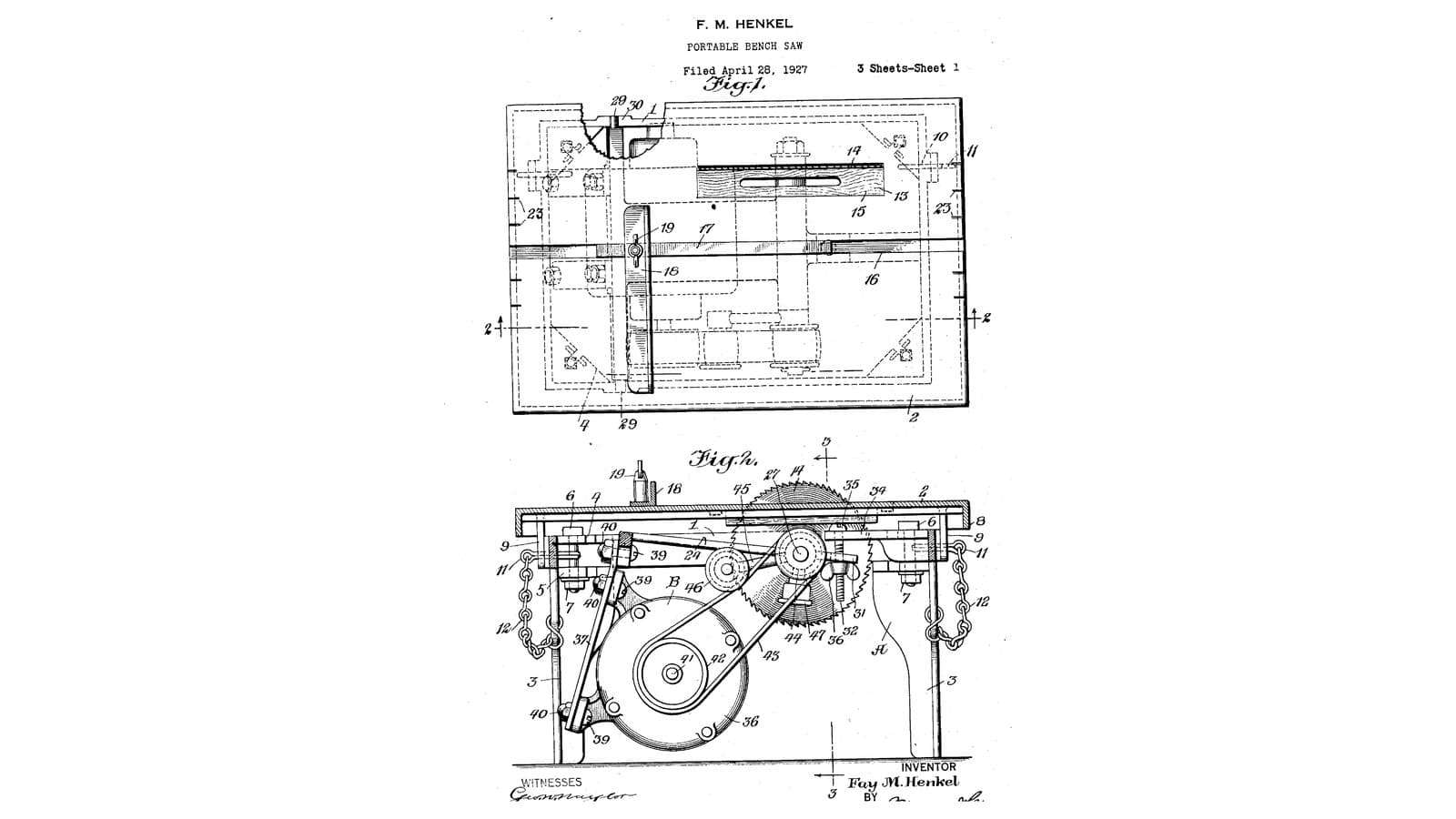
Portable Bench Saw: A Lift-Out Power Unit on Trunnions, Its Motor on Spring Bars, Under a Tilting Platform (Henkel, 1928)
by Forge
Woodworking
1
0
0
0
0
0
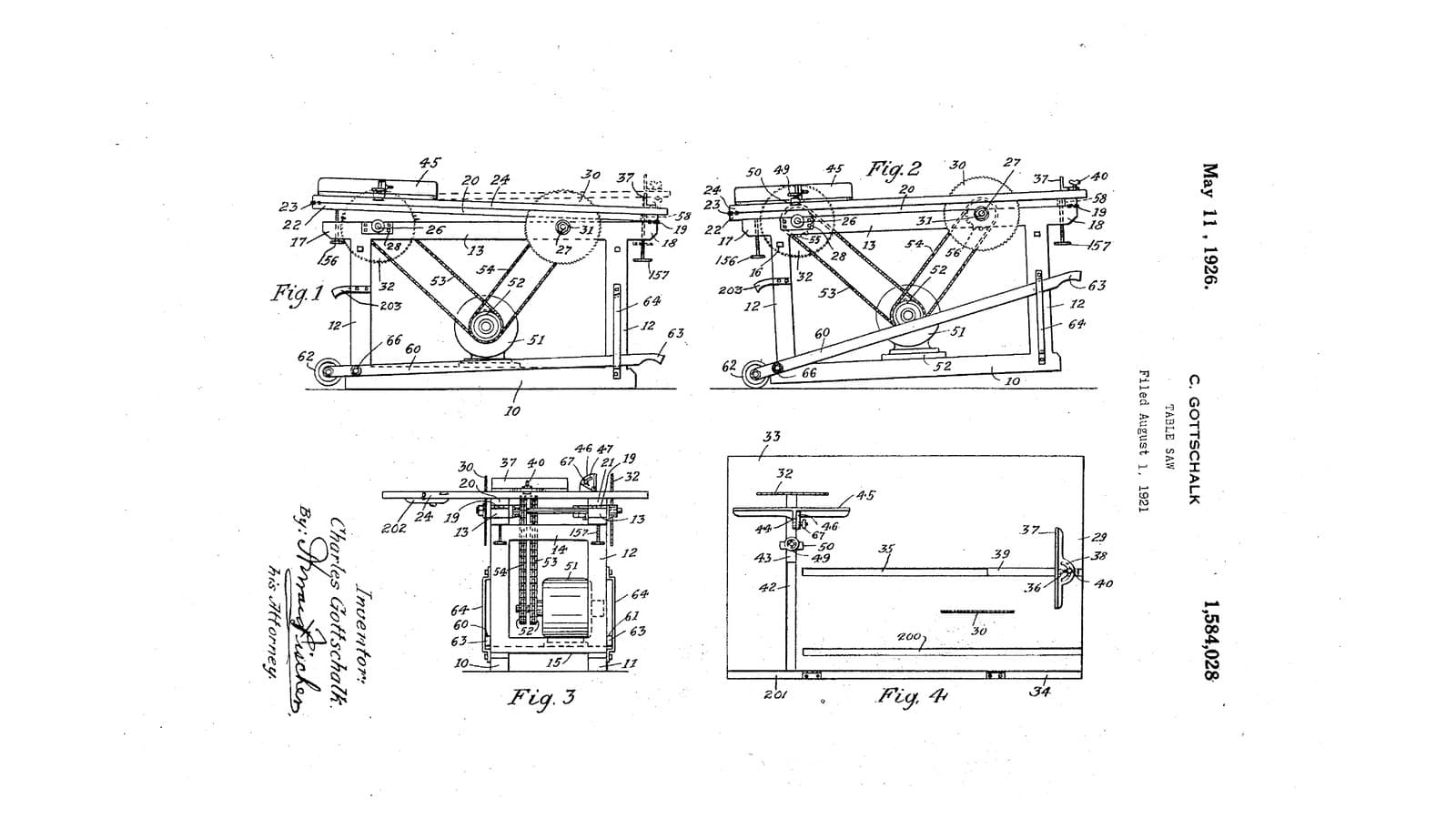
Twin-Saw Table: A Rip Saw and a Crosscut Saw at Opposite Corners, One Motor, Each Depth Set by Tilting the Top (Gottschalk, 1926)
by Forge
Woodworking
0
0
0
0
0
0
CC0 Public Domain
This blueprint is released under CC0. You are free to copy, modify, distribute, and use this work for any purpose, without asking permission.
Support the Maker by purchasing products through their Blueprint where they earn a Maker Commission set by Vendors, or create a new iteration of this Blueprint and include it as a connection in your own Blueprint to share revenue.