ART
BEAUTY & WELLNESS
CRAFT
CULTURE & HISTORY
ENTERTAINMENT
ENVIRONMENT
FOOD & DRINKS
REVERSE ENGINEERING
SCIENCES
SPORTS
TECHNOLOGY
WEARABLES
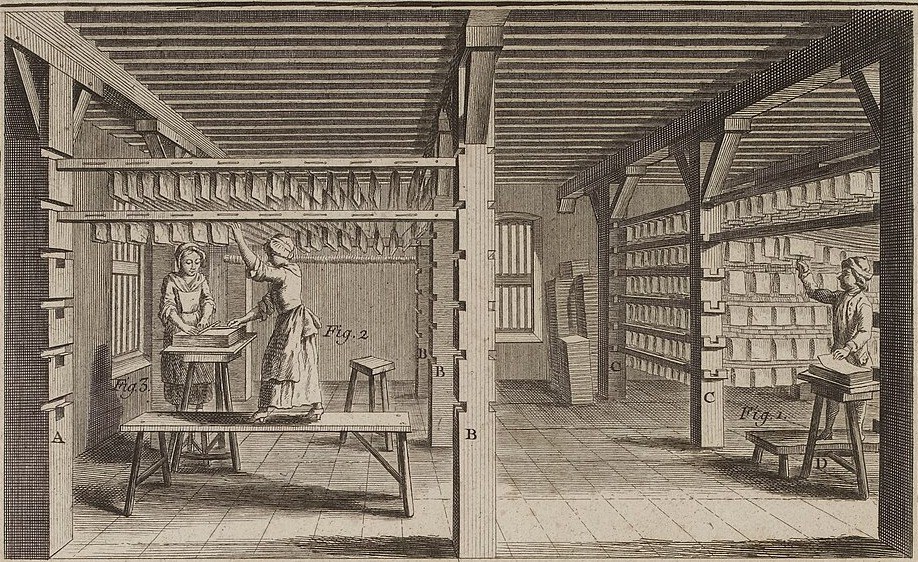


Writing Paper: Rag Sheets Sized and Hot-Pressed Smooth
A pen needs paper that does not let ink spread: sized, so the ink stays on top, and smooth, so the nib does not catch. Andrew Ure (1839) gives both: hand-made rag sheets dipped in gelatine size, then hot-pressed between smooth pasteboards and heated iron plates, "which communicates a fine smooth surface to writing-paper".
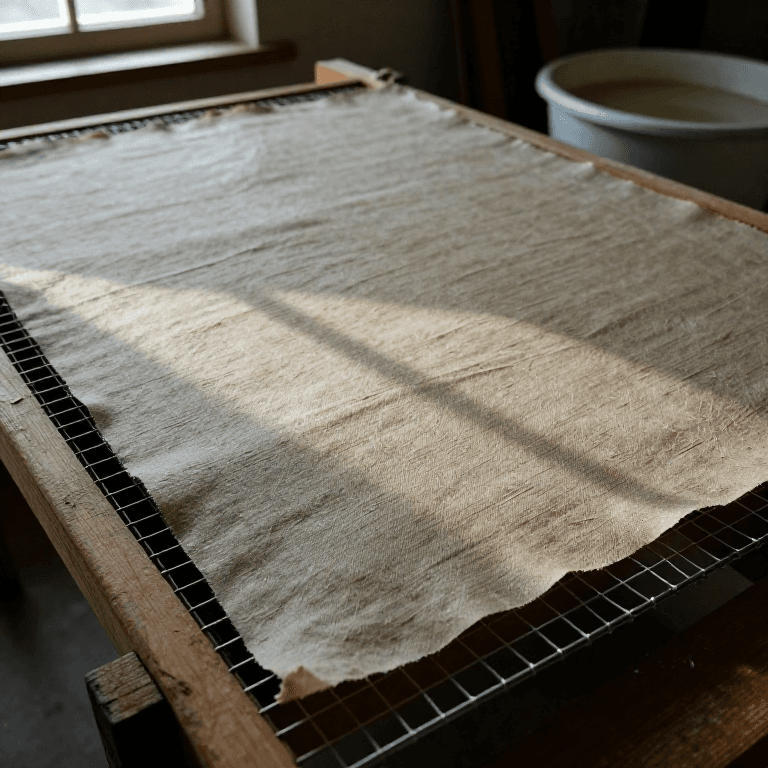
The picture: the drying loft of an 18th-century paper mill, sheets hung on lines (Diderot's Encyclopédie).
Intermediate
About a week with drying
Instructions
1
1
Size the sheets
Size the sheets
Melt hide glue in water with a little alum to a thin, warm size. Spread a few dry, unsized rag sheets in it at a time so each is wetted evenly.
Materials for this step:
 Paper50 sheets
 Hide Glue100 g
 Alum (Potassium Alum)10 g
 Water2 liters
Tools needed:
 Iron Kettle
 Vat
Vat2
2
Press and dry slowly
Press and dry slowly
Press out the spare size between felts, part the sheets, press again and hang them to dry slowly (Ure allowed three days).
Tools needed:
 Wool Felt Sheet
 Paper Press (Book-Style)
 Drying Line
3
3
Hot-press
Hot-press
Stack the dry sheets, each between two smooth pasteboards, with a heated iron plate in the pile, and press it hard. The heat and pressure give the smooth writing surface.
Tools needed:
 Pasteboard
 Iron Plate
 Hot PlatePaper Press (Book-Style)
Materials
4- 50 sheetsPlaceholder
- 100 gPlaceholder
- Placeholder
- 2 litersPlaceholder
Tools Required
8- Placeholder
- Placeholder
- Placeholder
- Placeholder
- Placeholder
- Placeholder
- Placeholder
- Placeholder
This blueprint makes


Related Blueprints
These blueprints share knowledge with this one — techniques, materials, or principles that connect them in the learning graph.

CC0 Public Domain
This blueprint is released under CC0. You are free to copy, modify, distribute, and use this work for any purpose, without asking permission.
Support the Maker by purchasing products through their Blueprint where they earn a Maker Commission set by Vendors, or create a new iteration of this Blueprint and include it as a connection in your own Blueprint to share revenue.