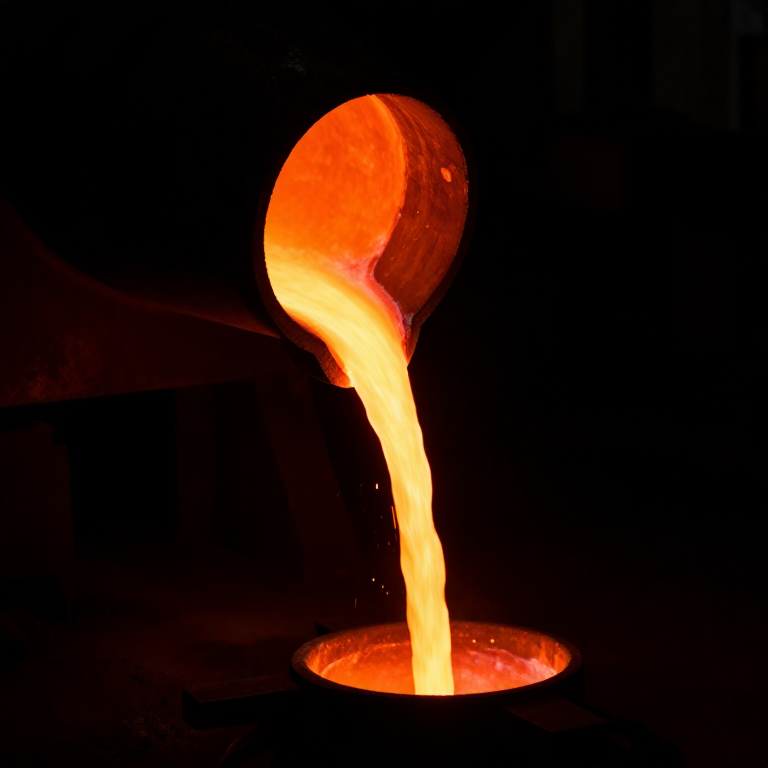


Casting Iron in a Cupola Furnace — Re-Melting Pig Iron into Finished Castings
The blast furnace makes pig iron by the tonne, but pig iron in bars is not yet a useful object. To turn it into pots, pipes, stoves, and machine frames, a foundry re-melts it and pours it into moulds — and the workhorse that does the re-melting is the cupola furnace.
A cupola is a tall iron chimney lined with firebrick, charged from the top with alternating layers of coke, pig iron, and limestone, and blown with air near its base. Unlike the blast furnace it does not smelt ore; it simply melts iron that is already made, quickly and cheaply, keeping a steady stream of molten metal ready to tap. The melting iron picks up a little carbon from the coke and runs out of the tap hole as grey cast iron.
Poured into sand moulds shaped from wooden patterns, that iron sets into castings of almost any form. Cast iron is brittle but immensely strong in compression and cheap to pour into complex shapes, which made the cupola the beating heart of Victorian industry — casting everything from cooking pots and drainpipes to the columns and machines of the factories themselves.
Hướng dẫn
Understand the cupola
Understand the cupola
Build and line the cupola
Build and line the cupola
Vật liệu cho bước này:
 Gạch chịu lửa100 cái
Công cụ cần thiết:
 Bay làm vườn
Light the coke bed
Light the coke bed
Vật liệu cho bước này:
 Than cốc luyện kim60 kg
Start the blast
Start the blast
Công cụ cần thiết:
 Máy thổi khí
Charge in layers
Charge in layers
Vật liệu cho bước này:
 Thỏi gang thô80 kg
 Phiến đá vôi6 kg
Melt the iron
Melt the iron
Flux off the slag
Flux off the slag
Công cụ cần thiết:
 Thanh chọc lò
Prepare the sand moulds
Prepare the sand moulds
Vật liệu cho bước này:
 Cát đúc60 kg
Công cụ cần thiết:
 Hòm khuôn
Tap the molten iron
Tap the molten iron
Công cụ cần thiết:
 Muỗng rót kim loại nóng
Pour the castings
Pour the castings
Shake out and clean
Shake out and clean
Công cụ cần thiết:
 Máy mài góc
Identify cast iron
Identify cast iron
Vật liệu
5- 100 cáiTạm thời
- 60 kgTạm thời
- 80 kgTạm thời
- 6 kgTạm thời
- 60 kgTạm thời
Công cụ yêu cầu
6- Tạm thời
- Tạm thời
- Tạm thời
- Tạm thời
- Tạm thời
- 1 vendor sell this, none ship to you yetTạm thời
Vật liệu bản thiết kế liên kết

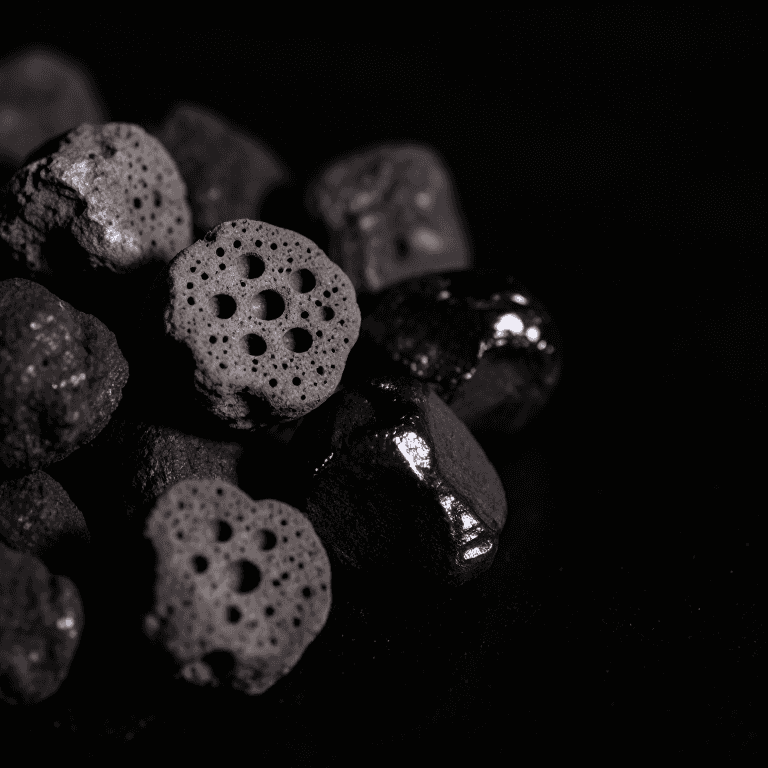
Bản thiết kế này làm ra



Blueprint liên quan
Các blueprint này chia sẻ kiến thức — kỹ thuật, vật liệu hoặc nguyên tắc

CC0 Phạm vi công cộng
Bản thiết kế này được phát hành theo CC0. Bạn tự do sao chép, sửa đổi, phân phối và sử dụng cho bất kỳ mục đích nào mà không cần xin phép.
Hỗ trợ nhà sáng tạo bằng cách mua sản phẩm qua bản thiết kế, nơi họ nhận Hoa hồng nhà sáng tạo do nhà bán hàng đặt, hoặc tạo phiên bản mới và kết nối trong bản thiết kế riêng để chia sẻ doanh thu.