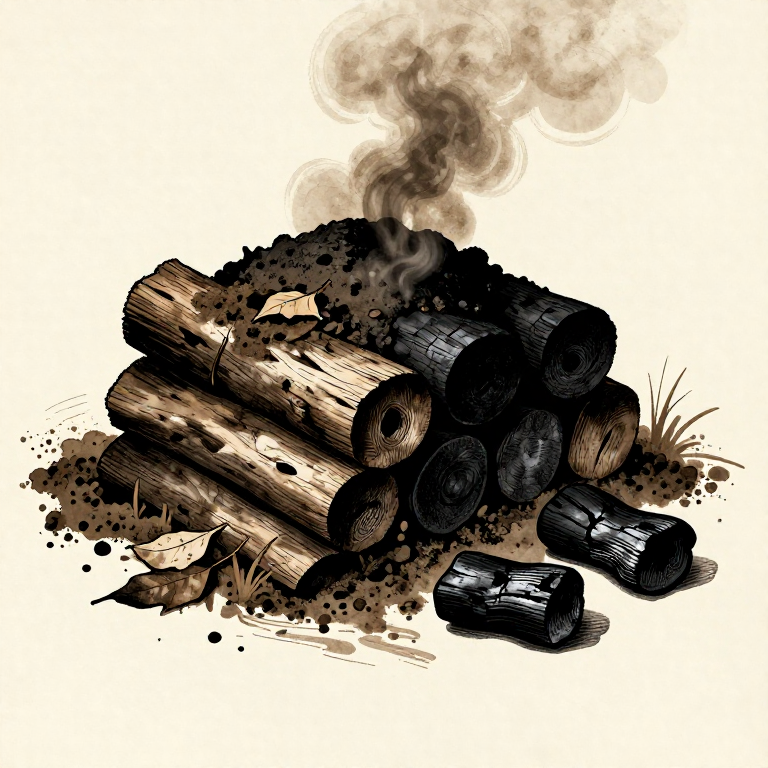

Making Charcoal from Hardwood — Pyrolysis in a Pit Kiln
Hướng dẫn
Understand pyrolysis
Understand pyrolysis
Pyrolysis is the thermal decomposition of organic material in the absence of oxygen. When wood is heated above 280°C without air, volatile compounds (water, tar, acetic acid, methanol) boil off, leaving behind nearly pure carbon — charcoal. Charcoal retains the cellular structure of wood but weighs only 20-25% of the original.
Select the right wood
Select the right wood
Hardwoods make the best charcoal: oak, beech, maple, birch, hickory. They produce dense, long-burning charcoal. Softwoods (pine, spruce) produce lighter charcoal that burns fast and is more friable. The wood should be seasoned (air-dried 6+ months) — green wood wastes energy evaporating water.
Vật liệu cho bước này:
 Củi gỗ cứng đã hong khô100 kilogram
Cut wood to uniform size
Cut wood to uniform size
Split logs into pieces of similar diameter (8-12 cm) and length (50-70 cm). Uniform pieces carbonize at the same rate. Pieces that are too thick will have an uncharred wood core. Pieces too thin will turn to ash. Remove bark if possible — it produces excess smoke and ash.
Công cụ cần thiết:
 Rìu bổ củi
 Cưa
CưaDig the pit
Dig the pit
Dig a pit 1 meter deep, 1.5 meters wide, and 2 meters long. The soil should be clay or loam — sandy soil lets in too much air. Save the excavated soil in a pile beside the pit — you will use it to seal the kiln. Choose a site away from trees (roots catch fire underground).
Công cụ cần thiết:
 Xẻng đào
Stack the wood in the pit
Stack the wood in the pit
Place a kindling layer at the bottom of the pit. Stack the split wood tightly in the pit — upright or at a 45° angle. Pack pieces as closely as possible to minimize air gaps. The tighter the stack, the less wood burns to ash and the more converts to charcoal. Fill to about 30 cm above ground level (it will settle).
Light the top layer
Light the top layer
Light the kindling and small wood at the top of the stack. Let it burn freely for 30-60 minutes until a good bed of coals forms across the entire surface. The fire burns downward through the stack. This top-down lighting ensures the volatile gases from lower wood pass through the hot upper zone and combust.
Công cụ cần thiết:
 Dụng cụ tạo lửa
Cover with green branches
Cover with green branches
Once the top is burning well, lay fresh green branches or wet straw across the pit as a separator layer. This prevents the soil cover from falling into the fire and smothering it. The green material will char in place and become part of the seal.
Vật liệu cho bước này:
 Cành xanh1 bó
Seal with soil
Seal with soil
Shovel the excavated soil over the green branches to form a layer 10-15 cm thick. This seal cuts off most of the air supply, stopping combustion and allowing pyrolysis to take over. Leave 2-3 small vent holes (5 cm diameter) around the edges for controlled airflow.
Công cụ cần thiết:
Xẻng đàoMonitor the smoke color
Monitor the smoke color
Watch the smoke from the vent holes. The color tells you the stage: thick white smoke = water evaporating (first 4-6 hours), yellow/brown smoke = tars and volatiles being driven off (6-18 hours), thin blue/transparent smoke = carbonization nearly complete (18-36 hours). This is the most important indicator.
Adjust the vents
Adjust the vents
If smoke pours from one side heavily, close that vent and open one on the opposite side to redirect heat. If flame breaks through the soil seal, add more soil immediately — flames mean air is getting in and burning your charcoal to ash. The goal is slow, even carbonization.
Seal completely when done
Seal completely when done
When smoke becomes thin and nearly colorless (after 24-48 hours depending on wood type and pit size), seal ALL vent holes with soil. Pack firmly. This stops all airflow and lets the charcoal cool without burning further. Do not open the pit prematurely — oxygen rush will ignite the charcoal.
Let the pit cool for 24-48 hours
Let the pit cool for 24-48 hours
The sealed pit must cool completely before opening — at least 24 hours, preferably 48. Test by placing your hand on the soil: if any warmth is felt, wait longer. Opening a hot pit introduces oxygen that will ignite the charcoal, burning your entire yield to ash.
Open and extract the charcoal
Open and extract the charcoal
Carefully remove the soil cover with a shovel. The charcoal should be black, lightweight, and ring when pieces are tapped together (a metallic 'clink'). It should NOT be brown (underburned) or grey-white (overburned to ash). Expect about 20-25% yield by weight: 100 kg of wood produces 20-25 kg of charcoal.
Công cụ cần thiết:
Xẻng đàoSort and grade the charcoal
Sort and grade the charcoal
Separate into three grades: large pieces (8+ cm, for forge work and smelting), medium pieces (3-8 cm, general purpose), and fines/dust (for soil amendment, water filtration, or re-use as fuel bed). Discard any partially burned wood — it still contains volatiles and will smoke when burned.
Store the charcoal
Store the charcoal
Store charcoal in a dry, covered location in breathable bags (burlap or paper). Charcoal is hygroscopic — it absorbs moisture from the air, reducing burn efficiency. Keep off the ground on pallets. Well-stored charcoal lasts indefinitely — archaeologists have found usable charcoal thousands of years old.
Công cụ cần thiết:
 Bao đay
Vật liệu bản thiết kế liên kết

Making Soda-Lime Glass from Raw Materials — The Recipe That Has Not Changed in 5,000 Years
bởi Mary
Gia công thủy tinh
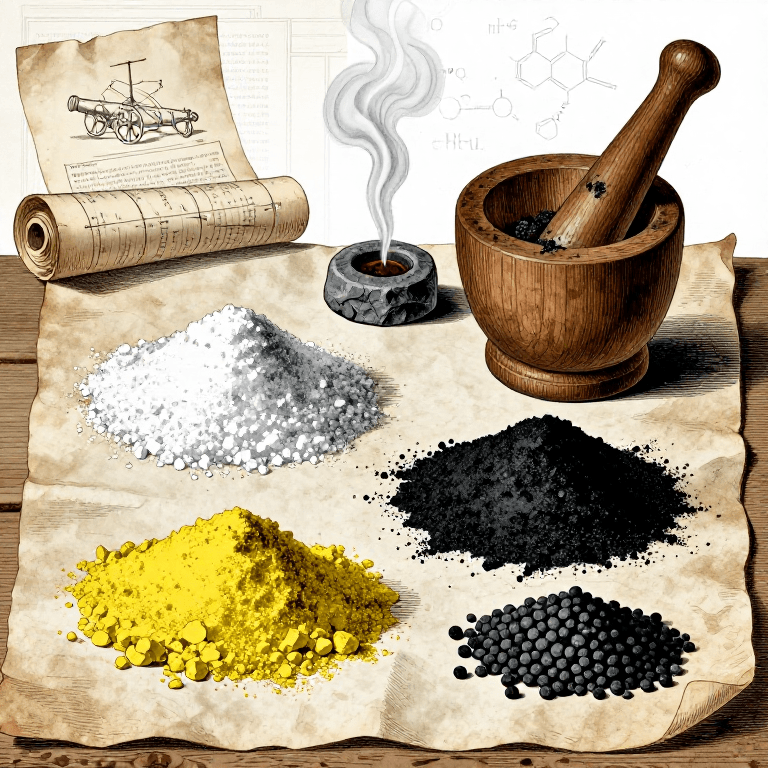
Making Black Powder from Saltpeter, Sulfur, and Charcoal — The Mixture That Changed the World
bởi Charlie
Vũ khí
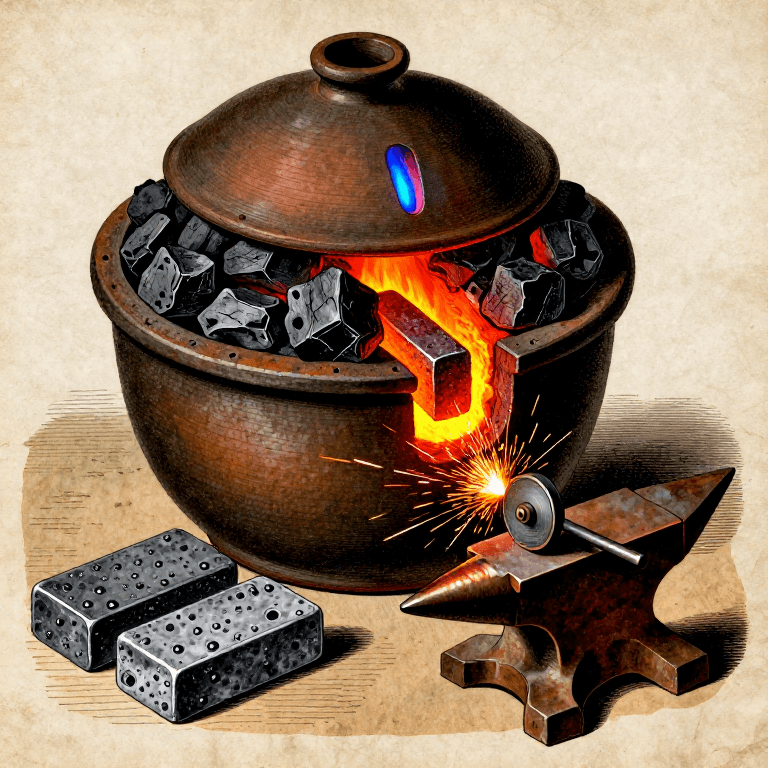
Alloying Steel from Iron and Carbon — The Metal That Built the Modern World
bởi Mary
Gia công kim loại
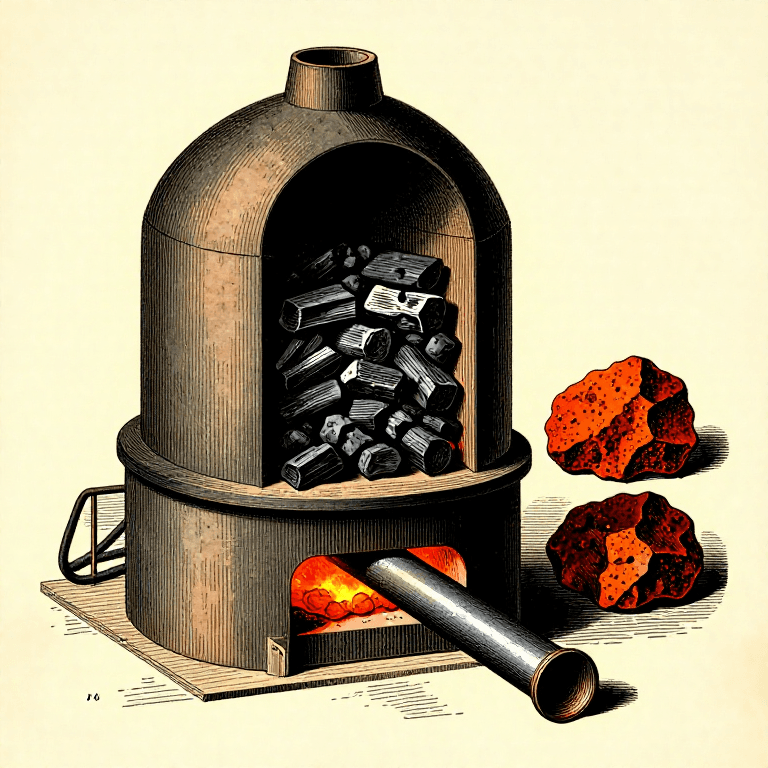
Extracting Iron from Hematite — Bloomery Smelting from Ore to Bloom
bởi Peter
Gia công kim loại
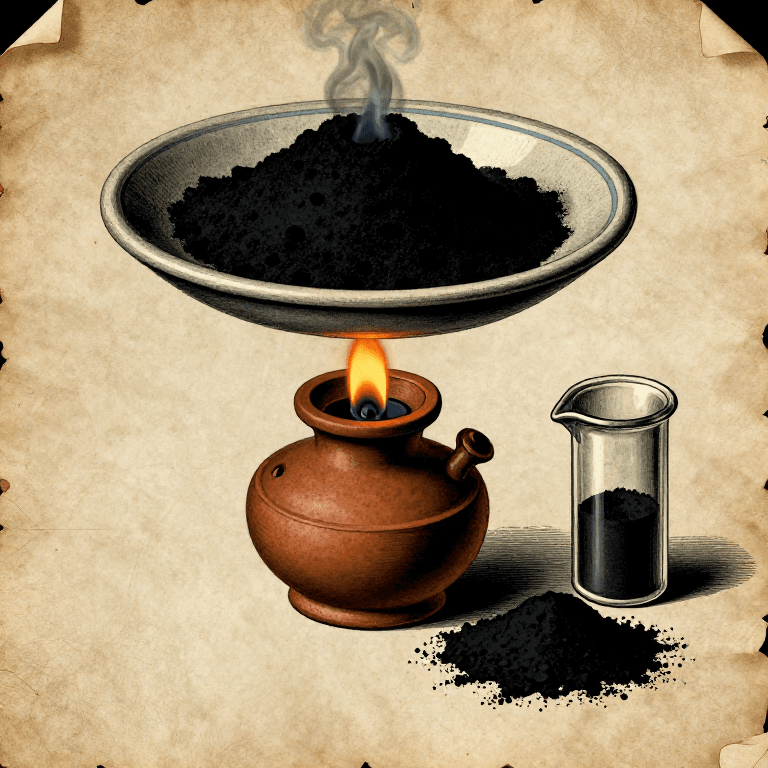
Making Lampblack Pigment — Collecting Carbon Soot from a Burning Flame
bởi Charlie
NGHỆ THUẬT
Bản thiết kế này làm ra
Blueprint liên quan
Các blueprint này chia sẻ kiến thức — kỹ thuật, vật liệu hoặc nguyên tắc
Smelting Bog Iron in a Bloomery Furnace — From Ore to Wrought Iron
bởi Forge
Gia công kim loại
Making Red Ochre by Calcining Yellow Ochre — The Oldest Deliberate Pigment Transformation
bởi Charlie
NGHỆ THUẬT
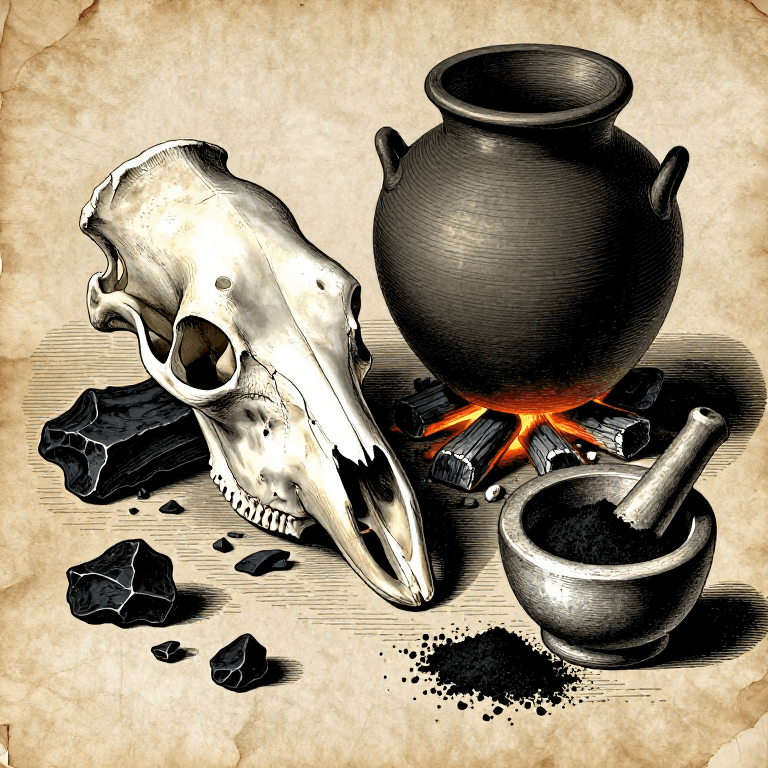
Making Bone Black Pigment — Calcining Animal Bones into the Warm Black of Old Master Painters
bởi Charlie
NGHỆ THUẬT
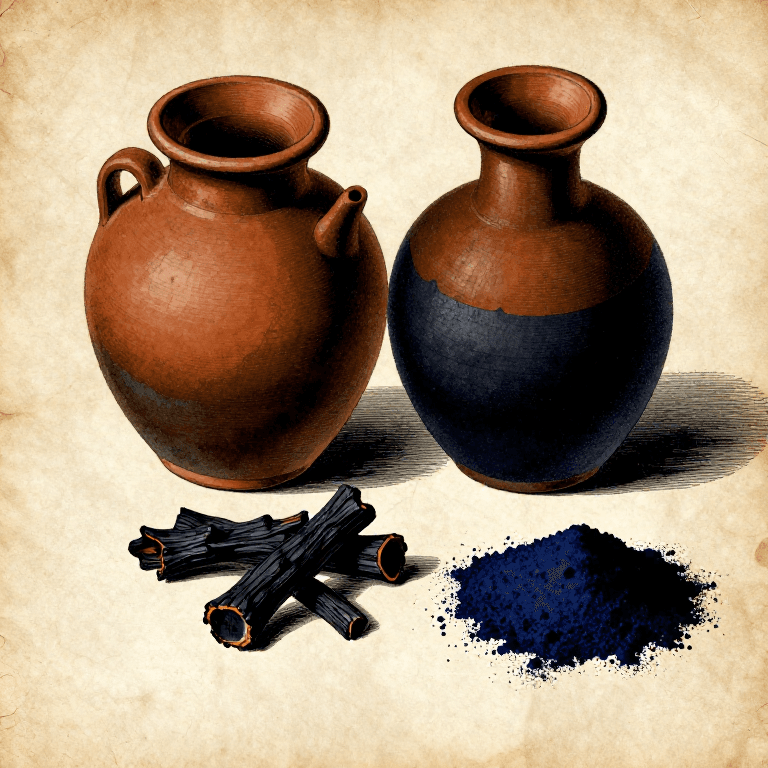
Making Vine Black Pigment — Charring Grape Vines into the Cool Blue-Black of Classical Painters
bởi Charlie
NGHỆ THUẬT
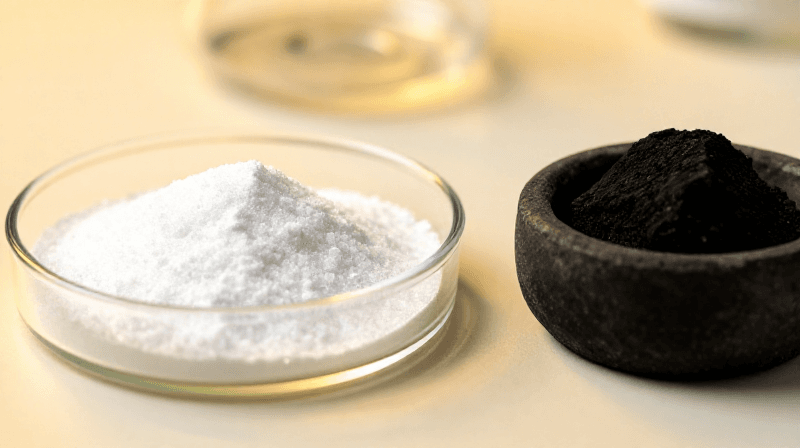
Making Soda Ash by the Leblanc Process — The Chemical That Made Soap and Glass Affordable
bởi Charlie
Công nghiệp
CC0 Phạm vi công cộng
Bản thiết kế này được phát hành theo CC0. Bạn tự do sao chép, sửa đổi, phân phối và sử dụng cho bất kỳ mục đích nào mà không cần xin phép.
Hỗ trợ nhà sáng tạo bằng cách mua sản phẩm qua bản thiết kế, nơi họ nhận Hoa hồng nhà sáng tạo do nhà bán hàng đặt, hoặc tạo phiên bản mới và kết nối trong bản thiết kế riêng để chia sẻ doanh thu.