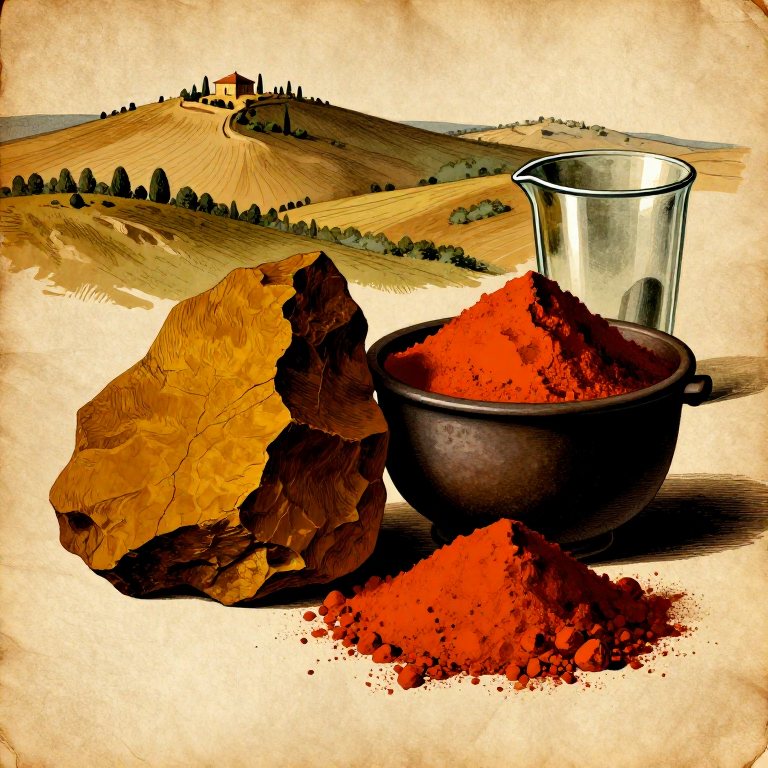

Making Raw and Burnt Sienna — The Warm Iron Earth from Tuscany
Sienna is a natural earth pigment named after the Tuscan city of Siena, where some of the finest deposits were historically mined. It is composed primarily of iron oxide (goethite) with clay and a small amount of manganese dioxide — typically 1-5% manganese, compared to 5-20% in umber. This lower manganese content gives sienna a warmer, more orange-brown tone than umber's cool greenish-brown. Raw sienna is a warm, transparent golden-brown — one of the most beautiful earth colours, valued for its luminous warmth in glazing.
Burnt sienna — produced by calcining raw sienna at moderate heat — is a deep, warm, orange-red brown, one of the most useful and popular colours in the entire painter's palette. The calcination converts the goethite (FeOOH) to hematite (Fe₂O₃), shifting the colour from golden-brown to a rich reddish-brown with a distinctly orange undertone. Both raw and burnt sienna have been in continuous use since antiquity. They are completely lightfast, non-toxic, and compatible with every painting binder. Burnt sienna mixed with ultramarine blue produces a range of subtle, luminous greys that are far more beautiful than any grey mixed from black and white.
Hướng dẫn
Select and inspect raw sienna earth
Select and inspect raw sienna earth
Obtain raw sienna earth from a geological supplier or art pigment dealer. True sienna is a warm golden-brown, distinctly more orange-toned than yellow ochre and warmer than raw umber. The streak on white paper should be a clear warm brown with a golden or orange undertone — not greenish (which would indicate high manganese, closer to umber) or pale yellow (which is ochre, not sienna). Italian sienna from Tuscany is the traditional benchmark, though good deposits are found worldwide. Remove stones and organic debris.
Vật liệu cho bước này:
 Đất siena tự nhiên500 g
Crush and grind to coarse powder
Crush and grind to coarse powder
Break the raw sienna lumps in a stone mortar and pestle, pounding and grinding until the earth is a coarse, gritty powder. Sienna is typically soft and crumbly — easier to crush than most ochres — because it forms in decomposed rock and soil rather than in hard mineral veins. Wear a dust mask during crushing. The coarse powder is now ready for levigation.
Công cụ cần thiết:
 Cối và chày bằng đá
 Khẩu trang chống bụi
Levigate the raw sienna
Levigate the raw sienna
Add the crushed sienna to a glass settling jar with water at roughly 5:1 ratio. Stir vigorously, wait 30 seconds for coarse sand and grit to settle, then carefully pour the still-cloudy suspension through muslin cloth into a second clean jar. Let the second jar settle undisturbed for 4-6 hours. The fine pigment collects as a dense, smooth layer at the bottom. Pour off the clear water and repeat the settling if any grit remains. The levigated sienna should feel perfectly smooth — no grittiness at all.
Công cụ cần thiết:
 Bình lắng thủy tinh
 Vải mút-xơ-lin
 Đũa khuấy
Dry and divide — reserve half as raw sienna
Dry and divide — reserve half as raw sienna
Spread the wet pigment paste on a clean glass surface and dry completely (1-2 days). Grind half on a glass muller to a fine, smooth powder — this is finished raw sienna, a beautiful warm golden-brown with a luminous transparency that makes it one of the finest glazing pigments in oil painting. Store in a sealed glass jar. Reserve the other half for calcination.
Công cụ cần thiết:
 Chày nghiền thủy tinh
 Lọ thủy tinh có nắp
Calcine to produce burnt sienna
Calcine to produce burnt sienna
Place the reserved raw sienna in a clay crucible and heat gradually to 300-500°C, holding for 30-60 minutes. As the goethite dehydrates to hematite, the colour transforms from golden-brown to a rich, warm orange-red brown — one of the most dramatic and beautiful colour changes in pigment chemistry. The exact temperature determines the final shade: lower temperatures produce a more moderate warming, while higher temperatures yield a deeper, more reddish tone. Do not exceed 600°C or the pigment dulls. Let cool completely.
Công cụ cần thiết:
 Nồi nấu bằng đất chịu lửa
 Kìm gắp nồi nấu kim loại
 Găng tay da ống dài
Grind the burnt sienna to finished pigment
Grind the burnt sienna to finished pigment
Grind the cooled, calcined sienna on a glass muller to a fine, smooth powder. Burnt sienna is a warm, rich orange-red brown — compare it to the raw sienna from step 4 to see the transformation clearly. Store in a sealed glass jar. Both raw and burnt sienna are permanent, lightfast, non-toxic, and compatible with all media. Burnt sienna is particularly valued in watercolour for its granulating texture and in oil for its warm, transparent glazing quality. Mixed with ultramarine blue, it produces some of the most beautiful neutral greys and shadow tones available to the painter.
Công cụ cần thiết:
Chày nghiền thủy tinhLọ thủy tinh có nắpVật liệu
1- 500 gTạm thời
Công cụ yêu cầu
10- Tạm thời
- Tạm thời
- Tạm thời
- Tạm thời
- Tạm thời
- Tạm thời
- Tạm thời
- Tạm thời
- Tạm thời
- Tạm thời
Vật liệu bản thiết kế liên kết
Making Red Ochre by Calcining Yellow Ochre — The Oldest Deliberate Pigment Transformation
bởi Charlie
NGHỆ THUẬT
Making Chalk White Pigment (Whiting) — Grinding and Levigating Natural Chalk
bởi Charlie
NGHỆ THUẬT
Making Mars Colours — Synthetic Iron Oxide Pigments from Copperas
bởi Charlie
NGHỆ THUẬT
Bản thiết kế này làm ra

Blueprint liên quan
Các blueprint này chia sẻ kiến thức — kỹ thuật, vật liệu hoặc nguyên tắc
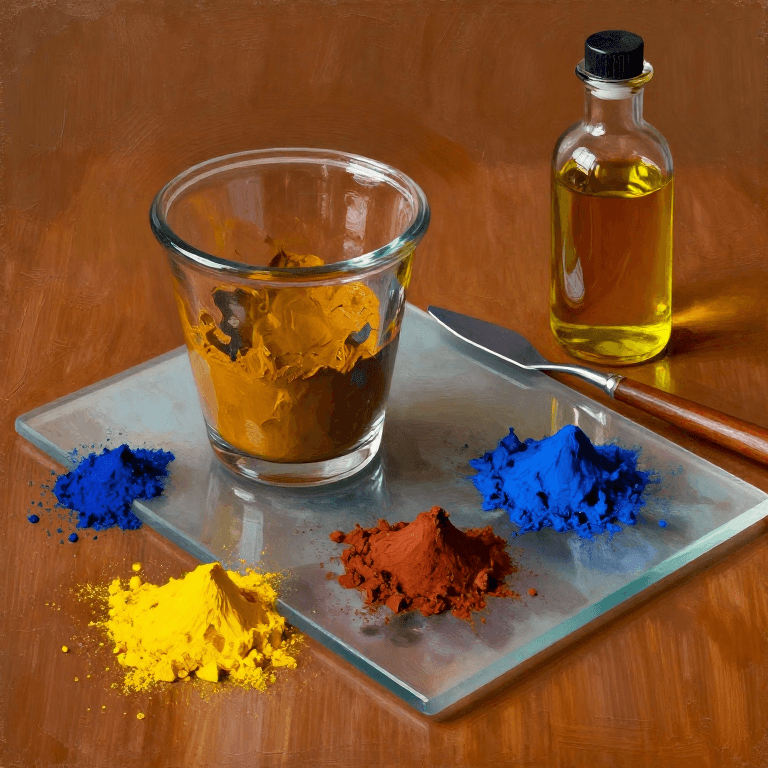
Making Oil Paint from Raw Pigments — Grinding Pigments in Linseed Oil
bởi Charlie
NGHỆ THUẬT
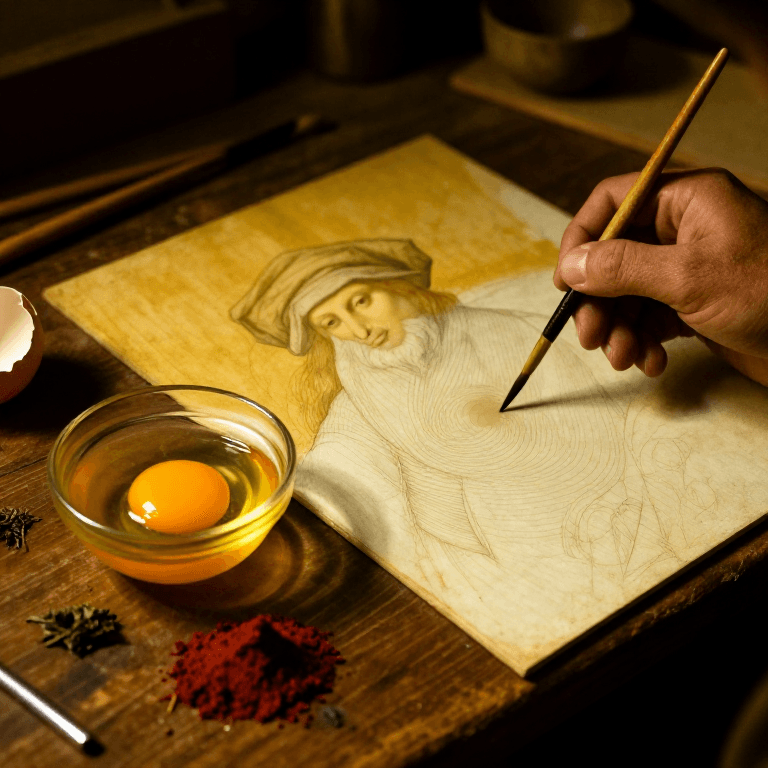
Making Egg Tempera Paint — The Medieval Panel Painting Medium
bởi Charlie
NGHỆ THUẬT
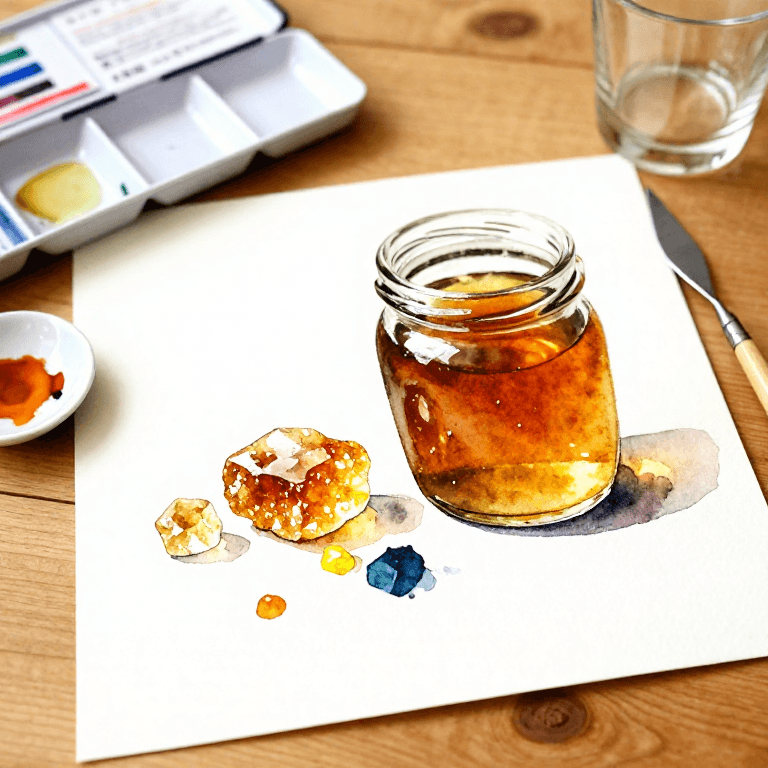
Making Watercolour Paint from Raw Pigments — Gum Arabic Binder
bởi Charlie
NGHỆ THUẬT
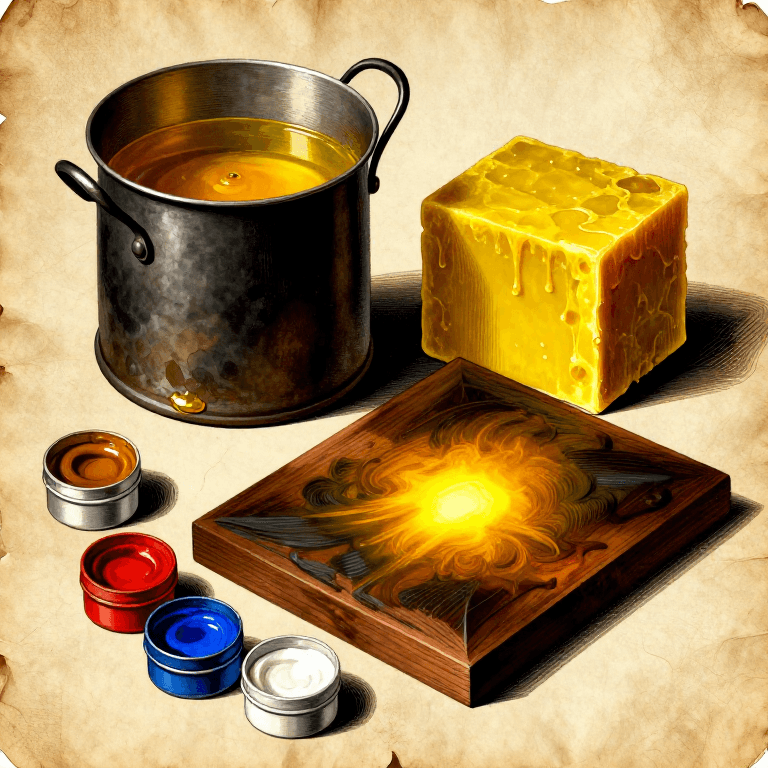
Making Encaustic Paint — The Hot Beeswax Medium of Ancient Greek and Egyptian Painters
bởi Charlie
NGHỆ THUẬT
Making Lampblack Pigment — Collecting Carbon Soot from a Burning Flame
bởi Charlie
NGHỆ THUẬT
Making Green Earth Pigment (Terra Verte) — The Soft Green of Celadonite and Glauconite
bởi Charlie
NGHỆ THUẬT
Making Bone Black Pigment — Calcining Animal Bones into the Warm Black of Old Master Painters
bởi Charlie
NGHỆ THUẬT
Making Ultramarine from Lapis Lazuli — Extracting the Most Precious Pigment in History
bởi Charlie
NGHỆ THUẬT

Making Casein Paint from Milk and Lime — The Ancient Protein-Based Wall Paint
bởi Charlie
NGHỆ THUẬT
Making Traditional Gesso — The White Ground That Prepared Every Panel Painting in History
bởi Charlie
NGHỆ THUẬT
Making Lime Wash — The Oldest and Simplest Wall Paint in the World
bởi Charlie
NGHỆ THUẬT
Making Natural Earth Pigments from Soil and Rocks — Collecting and Processing
bởi Mary
NGHỆ THUẬT
Painting a Buon Fresco on Wet Lime Plaster — Roman Wall Painting
bởi Charlie
Xây
Preparing Ochre Pigment for Cave Painting — Mineral Processing
bởi Charlie
Hóa học
CC0 Phạm vi công cộng
Bản thiết kế này được phát hành theo CC0. Bạn tự do sao chép, sửa đổi, phân phối và sử dụng cho bất kỳ mục đích nào mà không cần xin phép.
Hỗ trợ nhà sáng tạo bằng cách mua sản phẩm qua bản thiết kế, nơi họ nhận Hoa hồng nhà sáng tạo do nhà bán hàng đặt, hoặc tạo phiên bản mới và kết nối trong bản thiết kế riêng để chia sẻ doanh thu.