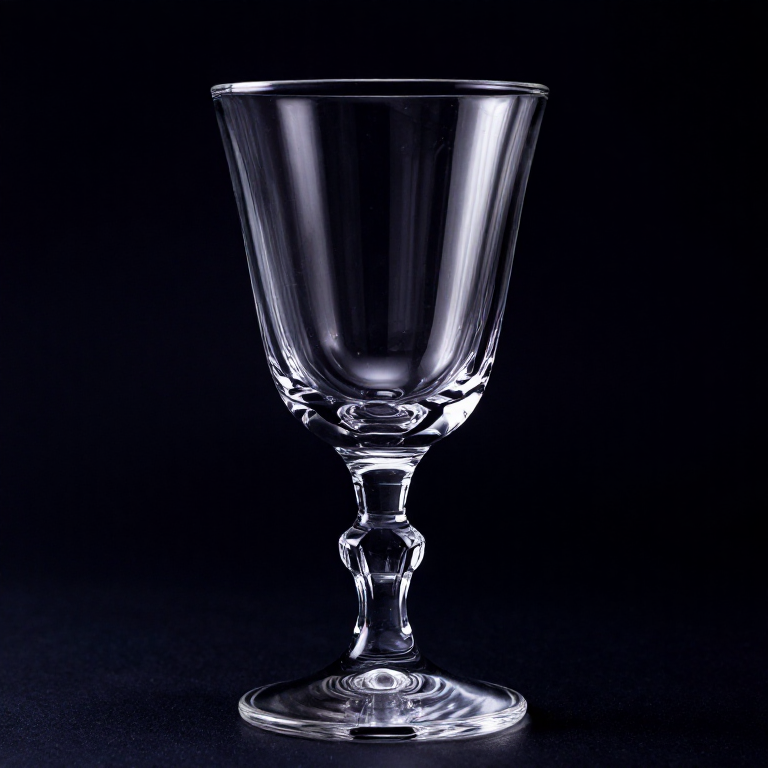

Making Venetian Cristallo — The Water-Clear Glass of Murano
Cristallo is the name given to the exceptionally clear, colourless glass perfected by Venetian glassmakers on the island of Murano around 1450. The breakthrough is credited to Angelo Barovier, who discovered that purifying the soda ash flux (using manganese dioxide as a decolourant and carefully selecting the purest quartz pebble silica) could produce glass of astonishing clarity — approaching the transparency of rock crystal, which is why it was called cristallo.
Before cristallo, all glass had a natural green or brown tint caused by iron impurities in the sand. Roman and Islamic glassmakers accepted this tint or masked it with intentional colour. Barovier's innovation was chemical: he understood that the green colour came from iron in the raw materials and that manganese dioxide (pyrolusite) could oxidise ferrous iron (green) to ferric iron (nearly colourless) at high temperature. Combined with the purest available silica (quartz river pebbles from the Ticino river, not beach sand) and carefully purified plant ash (allume catina from Levantine saltwort), the result was glass so clear it revolutionised European luxury goods.
Cristallo was the foundation of Venice's glass monopoly for over two centuries. The Venetian state confined all glassmaking to Murano, partly to prevent fire in the wooden city but mainly to protect trade secrets. Glassmakers who left Murano faced severe penalties. The technique eventually spread to other centres — Bohemia, England, France — but Murano remained synonymous with the finest clear glass until the invention of lead crystal in 1674.
Hướng dẫn
Select the purest quartz pebbles for silica
Select the purest quartz pebbles for silica
The key to cristallo is iron-free raw materials. Select white quartz river pebbles — not beach sand, which contains too much iron from shell fragments and mineral contaminants. Venetian glassmakers sourced their silica from the Ticino river in Lombardy, choosing only the whitest, purest pebbles. You need approximately 1.5 kg of quartz pebbles to produce enough silica for a small batch of cristallo glass. Reject any pebbles with brown, yellow, or pink staining — these indicate iron or other metal contaminants.
Vật liệu cho bước này:
 Cát thạch anh1500 g
Crush the quartz pebbles to fine powder
Crush the quartz pebbles to fine powder
Crush the selected quartz pebbles in a stone mortar and pestle to produce a fine white powder. Grind until the particles pass through a fine mesh sieve (approximately 1 mm or finer). The finer the powder, the faster and more completely it dissolves in the melt. Wear a dust mask — silica dust is a serious respiratory hazard with prolonged exposure. Work outdoors or in a well-ventilated space. The crushed quartz should be pure white with no coloured grains.
Công cụ cần thiết:
 Cối và chày bằng đá
 Rây lưới mịn
 Kính bảo hộ kín
Prepare purified soda ash flux
Prepare purified soda ash flux
Soda ash (sodium carbonate) acts as a flux — it lowers the melting point of silica from over 1700 °C to about 1000 °C, making glassmaking practical with wood-fired furnaces. Venetian glassmakers used allume catina, a purified plant ash from Levantine saltwort (Salsola soda). Dissolve raw soda ash in hot water, filter through cloth to remove insoluble residue (which often contains iron), and evaporate to recover the purified crystals. You need approximately 700 g of soda ash per 1.5 kg of silica — a ratio of roughly 30% flux to 70% silica by weight.
Vật liệu cho bước này:
 Natri cacbonat (sô đa)700 g
Add lime as a stabiliser
Add lime as a stabiliser
Without lime (calcium oxide), soda-silica glass is soluble in water — it slowly dissolves over decades. Adding approximately 10% lime by weight makes the glass chemically stable. Use calcium carbonate (crushed limestone or marble) — it converts to lime during melting. Venetian glassmakers added lime as crushed marble or as a component already present in their plant ash. Add about 200 g of calcium carbonate to the batch. This gives a final glass composition close to the standard soda-lime recipe (roughly 70% silica, 15% soda, 10% lime, 5% other).
Vật liệu cho bước này:
 Canxi cacbonat - đá vôi nghiền200 g
Add manganese dioxide as a decolourant
Add manganese dioxide as a decolourant
This is the crucial cristallo step. Add a small quantity of manganese dioxide (pyrolusite) — approximately 5–10 g per batch. Manganese dioxide is called 'glassmaker's soap' because it removes the green colour from glass. The chemistry: trace iron in the batch exists as ferrous oxide (Fe²⁺), which absorbs red light and transmits green. Manganese dioxide oxidises it to ferric oxide (Fe³⁺), which absorbs blue-green light and transmits a faint yellow-brown — but at the low iron concentrations in purified batch materials, this colour is so weak the glass appears colourless. Too much manganese produces a pink or purple tint; use sparingly.
Vật liệu cho bước này:
 Mangan dioxit (pyrolusit)10 g
Mix the batch ingredients thoroughly
Mix the batch ingredients thoroughly
Combine the crushed quartz, purified soda ash, calcium carbonate, and manganese dioxide in a large clay bowl. Mix thoroughly with a wooden paddle until the components are evenly distributed — streaks of unmixed flux or silica produce inhomogeneous glass with colour variations and weak spots. The mixed batch is a dry white-grey powder. Label this the cristallo batch — it is ready for the first melt.
Perform the first melt (frit stage)
Perform the first melt (frit stage)
Load the mixed batch into a clay crucible and place in the furnace. Raise the temperature to approximately 900–1000 °C. At this temperature the soda ash melts first and begins to dissolve the silica particles. The mixture froths violently as carbon dioxide escapes from the decomposing carbonates. Hold at this temperature for 4–6 hours, stirring occasionally with an iron rod. The batch gradually transforms from a bubbling, foaming mass into a rough, semi-fused 'frit' — a sintered cake of partially melted glass. Remove the crucible and allow the frit to cool. This first melt drives off gases that would otherwise create bubbles in the final glass.
Vật liệu cho bước này:
 Than củi dạng cục10 kg
Công cụ cần thiết:
 Nồi nấu bằng đất chịu lửa
 Lò nung
Crush and re-melt for the clear glass
Crush and re-melt for the clear glass
Break the cooled frit into small pieces and reload into a clean crucible. This second melt is the refining stage. Raise the temperature to approximately 1100–1200 °C — hotter than the first melt. At this temperature the glass becomes fully liquid and the remaining bubbles rise to the surface and pop. Hold for 3–4 hours, allowing the glass to refine. Skim any scum (undissolved impurities) from the surface with an iron ladle. The result is a pot of clear, bubble-free molten glass with the water-like clarity that defines cristallo.
Gather glass on the blowpipe
Gather glass on the blowpipe
Dip the pre-heated tip of an iron blowpipe into the crucible of molten cristallo and rotate slowly to gather a uniform blob of glass. The gather should be about the size of an orange for a small vessel. Cristallo glass is slightly less viscous than coloured soda-lime glass at the same temperature — the very low iron content affects the rheology slightly. This means you must work a few degrees cooler to maintain control. Lift the gather from the crucible and let excess glass drip back. The glass on the pipe should be a brilliant glowing orange-yellow with no visible colour tint.
Công cụ cần thiết:
 Ống thổi thủy tinh
Shape the gather by marvering
Shape the gather by marvering
Roll the glass gather back and forth on a flat steel or stone marver table to shape it into an even cylinder. The marver cools the outer surface slightly, creating a skin that holds the shape while the interior remains soft. For cristallo, the goal is a perfectly symmetrical gather with no cold spots or thin areas. The glass should be clear enough that the orange glow of the hot interior is evenly distributed with no dark streaks (which would indicate undissolved batch or trapped bubbles).
Blow an initial bubble
Blow an initial bubble
Blow a short, gentle puff of air into the blowpipe to inflate a small bubble inside the glass gather. The bubble should expand evenly — if it bulges to one side, the glass wall thickness is uneven. Rotate the pipe continuously to prevent gravity from distorting the bubble. For cristallo, a thin-walled vessel is the goal — the clarity of the glass is best appreciated when walls are only 2–3 mm thick, allowing light to pass through with minimal absorption.
Expand and shape the vessel
Expand and shape the vessel
Reheat the inflated bubble in the glory hole (the furnace opening) and continue blowing to expand it to the desired size. Shape with wooden blocks (fruitwood soaked in water), jacks, and tweezers — the traditional tools of the Venetian glassblower. The water in the wooden tools prevents them from burning and creates a steam barrier that prevents the glass from sticking. Open the top by transferring to a pontil rod, cracking off the blowpipe, and tooling the rim with jacks. Cristallo is prized for thin, elegant forms — goblets, vases, and delicate bowls that exploit the glass's transparency.
Transfer to the annealing oven
Transfer to the annealing oven
Place the finished vessel in the annealing oven (lehr) — a separate kiln chamber maintained at approximately 550 °C. The cristallo vessel must cool from working temperature (about 600 °C at the surface) to room temperature over 8–12 hours. Thin-walled cristallo is particularly vulnerable to thermal stress because the very purity that makes it clear also makes it slightly more brittle than coloured soda-lime glass. Venetian workshops ran their lehrs continuously, adding finished pieces throughout the day and removing cooled pieces the following morning.
Inspect the finished cristallo for clarity
Inspect the finished cristallo for clarity
Hold the cooled vessel up to strong light and look through the glass walls. True cristallo should be colourless — no green, brown, or yellow tint visible even when looking through the thickest part. Any faint pink or purple tint indicates excess manganese. Any green tint indicates insufficient manganese or iron-contaminated batch materials. The glass should be free of visible bubbles, streaks, and cords (streaky lines from inhomogeneous mixing). A perfect cristallo vessel has a crystalline sparkle and clarity that earned it comparison to natural rock crystal — and a price to match. The Venetians guarded this recipe for two centuries because the premium for clear glass over common green glass was enormous.
Vật liệu
6- 1500 gTạm thời
- Tạm thời
- Tạm thời
- Tạm thời
- 10 kgTạm thời
- Tạm thời
Công cụ yêu cầu
6- Tạm thời
- Tạm thời
- Tạm thời
- Tạm thời
- Tạm thời
- Tạm thời
Vật liệu bản thiết kế liên kết

Making Soda-Lime Glass from Raw Materials — The Recipe That Has Not Changed in 5,000 Years
bởi Mary
Gia công thủy tinh
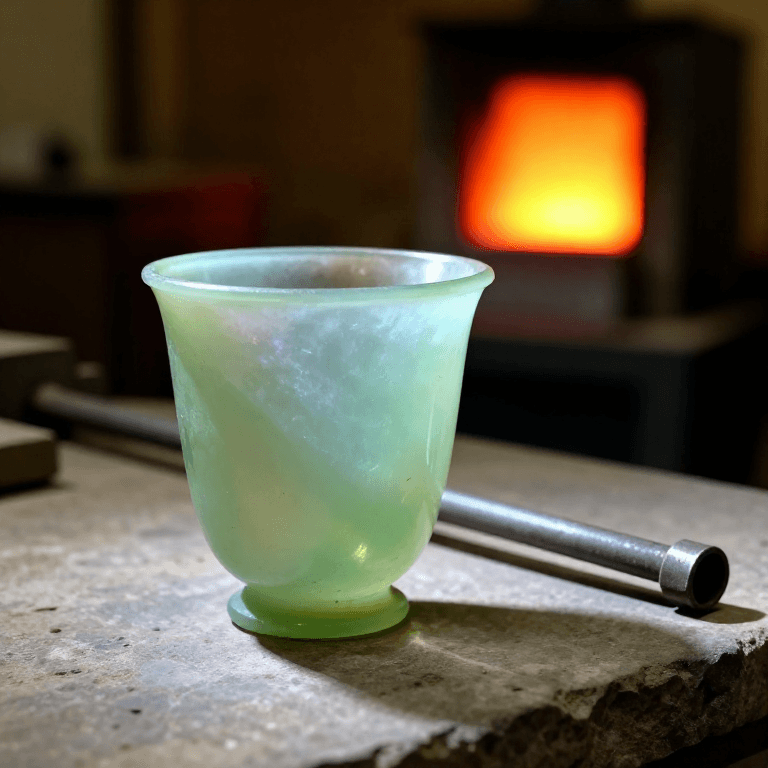
Blowing a Glass Vessel on an Iron Pipe — Roman Glassblowing
bởi Mary
Gia công thủy tinh
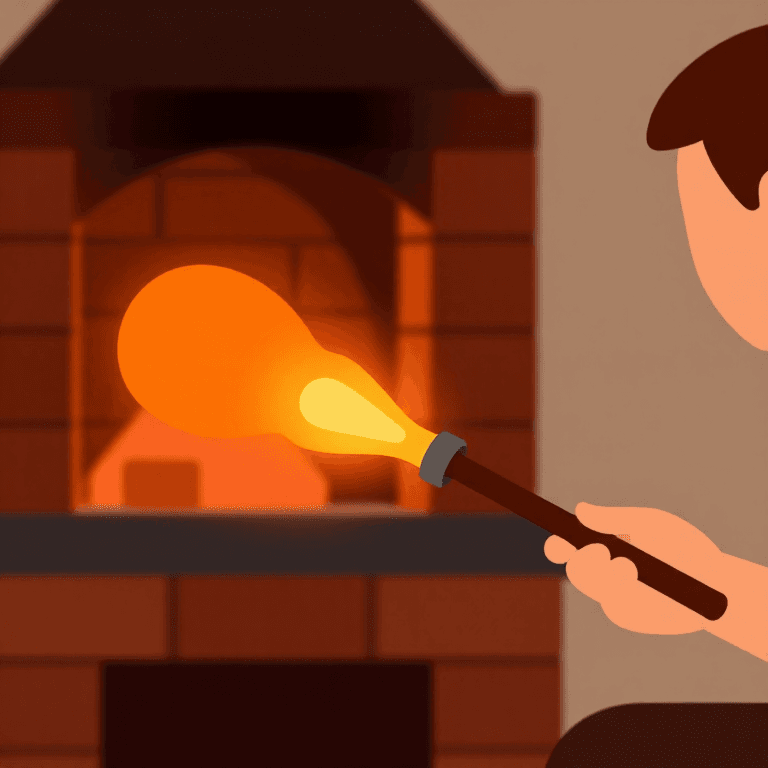
Blowing a Glass Bottle by Hand — Free-Blown Vessel Shaping
bởi Forge
Gia công thủy tinh
Bản thiết kế này làm ra

Blueprint liên quan
Các blueprint này chia sẻ kiến thức — kỹ thuật, vật liệu hoặc nguyên tắc

Shaping a Core-Formed Glass Vessel — The Oldest Glassworking Technique
bởi Charlie
THỦ CÔNG
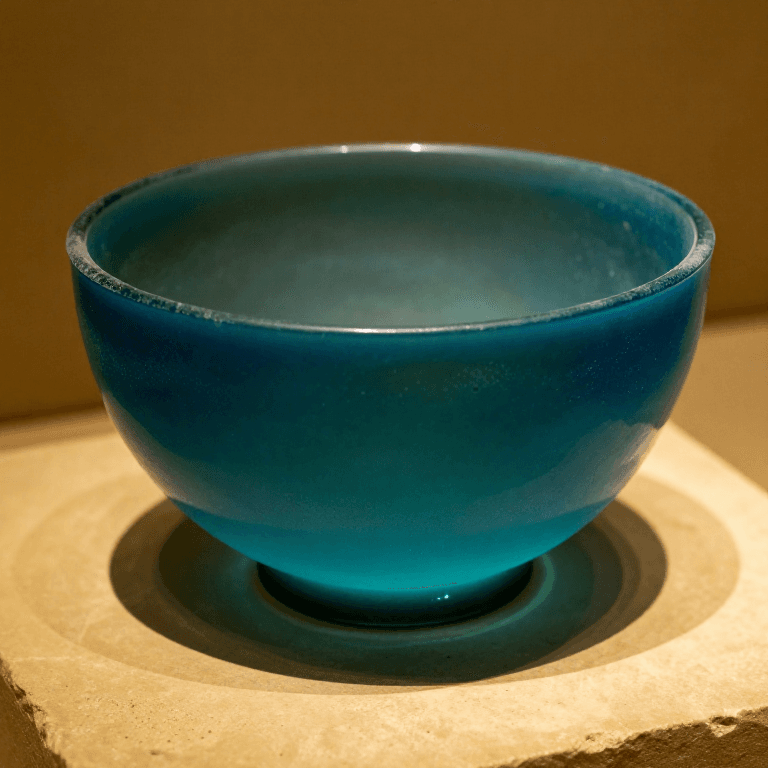
Casting a Glass Bowl in an Open Mold — Frit-Fusing the Oldest Hollow Glassware
bởi Charlie
Gia công thủy tinh
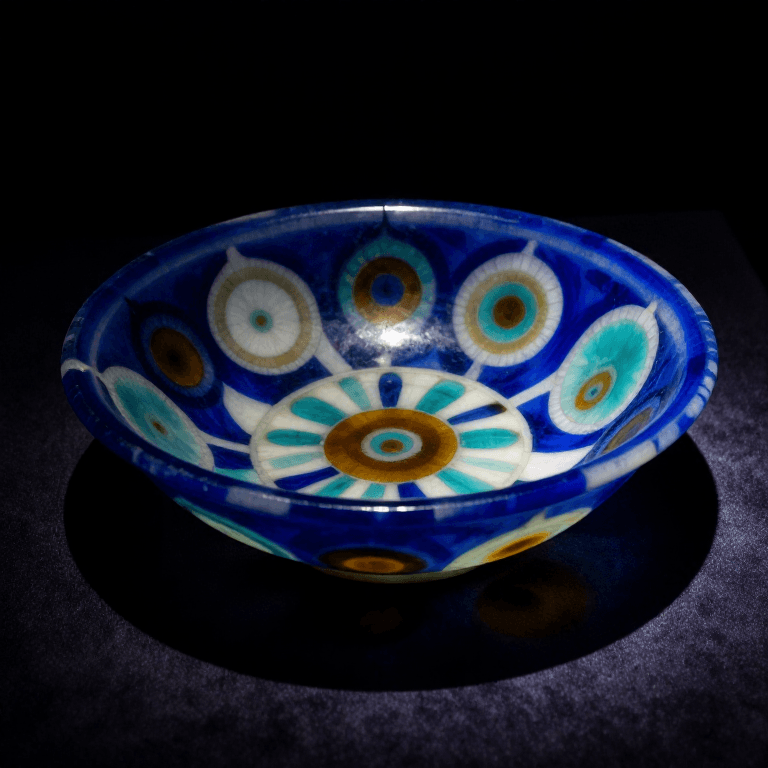
Making Roman Millefiori Glass — Fusing Mosaic Cane Slices into a Patterned Dish
bởi Charlie
Gia công thủy tinh
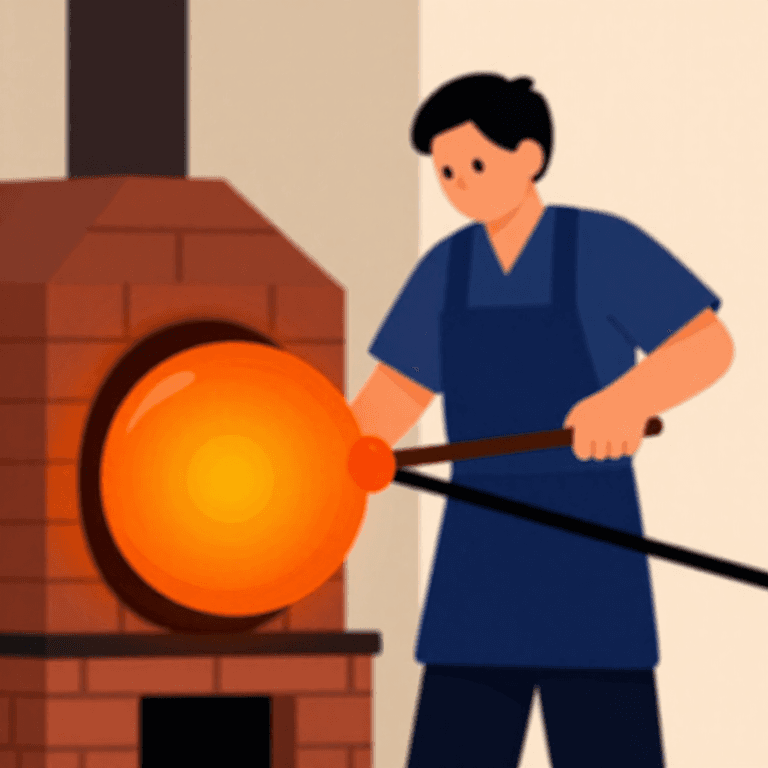
Making Window Glass by the Crown Glass Method — Spinning Molten Glass into Flat Panes
bởi Forge
Gia công thủy tinh
Grinding a Glass Lens for a Telescope — Shaping Light with Abrasive and Patience
bởi Penny
Không gian
CC0 Phạm vi công cộng
Bản thiết kế này được phát hành theo CC0. Bạn tự do sao chép, sửa đổi, phân phối và sử dụng cho bất kỳ mục đích nào mà không cần xin phép.
Hỗ trợ nhà sáng tạo bằng cách mua sản phẩm qua bản thiết kế, nơi họ nhận Hoa hồng nhà sáng tạo do nhà bán hàng đặt, hoặc tạo phiên bản mới và kết nối trong bản thiết kế riêng để chia sẻ doanh thu.