NGHỆ THUẬT
LÀM ĐẸP VÀ SỨC KHỎE
THỦ CÔNG
VĂN HÓA VÀ LỊCH SỬ
GIẢI TRÍ
MÔI TRƯỜNG
THỰC PHẨM VÀ ĐỒ UỐNG
KỸ THUẬT NGƯỢC
KHOA HỌC
THỂ THAO
CÔNG NGHỆ
THIẾT BỊ ĐEO
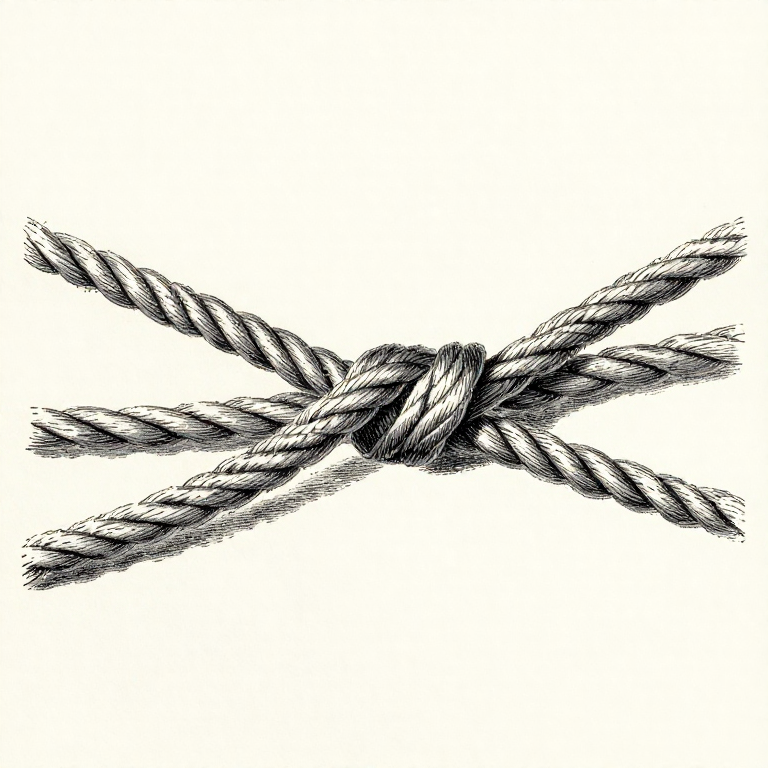


Plying: Two Wrongs Making a Right
A single spun thread — a **singles** — carries all its twist in one direction, so it is permanently trying to untwist. Knit with it and the fabric leans; weave with it and the cloth skews.
**Plying** twists two or more singles together in the OPPOSITE direction. Each strand unwinds a little as the ply twist goes in, and at the right amount the two cancel: the yarn hangs straight, and it is far stronger and more even than either strand alone.
It is also the fastest way to make a yarn more consistent, because a thin place in one strand almost never lines up with a thin place in the other.
Trung cấp
3 hours
Hướng dẫn
1
1
Why ply at all
Why ply at all
**Balance.** The main reason. Opposing twists cancel, and the yarn stops trying to rotate. A knitted fabric from unbalanced singles leans visibly to one side; a woven one pulls out of square.
**Strength.** A plied yarn is stronger than the sum of its strands, because a thin place in one is supported by the others across it rather than being the weak link of the whole.
**Evenness.** Two strands average out each other's variation. Three do it better. This is the cheapest improvement available to a beginner's spinning.
**Roundness.** A two-ply is slightly oval and shows stitch definition well; a three-ply is genuinely round and is what cables and lace want. A four-ply or more is rounder and denser still.
**Singles are not a failure**, though. A singles yarn is lighter and airier for the same thickness, and it is what most weaving yarn and most historical yarn actually was. Tapestry and much traditional weaving use singles deliberately — the loom holds the twist under tension until the cloth is woven, and the finished cloth holds it afterwards.
Vật liệu cho bước này:
 Sợi len chưa nhuộm2 cái
Công cụ cần thiết:
 Kính lúp thợ kim hoàn
2
2
Doing it, and how much ply twist
Doing it, and how much ply twist
**Ply in the opposite direction to the singles.** Z singles are plied S. Getting this wrong produces a rope so overtwisted it cannot be used, and it is obvious within a few centimetres.
**Keep the strands under even tension** and let them come together at one fixed point. A lazy kate holding the bobbins with a little drag is what keeps them from unwinding at different rates.
**Roughly two thirds of the singles twist**, as a starting point. Less and the yarn is still active; more and it becomes hard and wiry in the other direction.
**The balance test while plying:** stop the wheel, let a loop of the plied yarn hang slack. A balanced yarn hangs almost straight with perhaps a slow lazy loop. A yarn that corkscrews tightly has too much ply twist; one that still tries to twist in the singles direction has too little.
**Ply from bobbins filled at about the same time.** Spinning drifts over a long session, and plying the first bobbin against the last puts all the drift into one yarn.
**Chain plying** makes a three-ply from a single bobbin by pulling loops through each other. It keeps colour sequences together, which is why it is used for dyed fibre, and it costs a slight bump at each join.
Vật liệu cho bước này:
Sợi len chưa nhuộm2 cáiCông cụ cần thiết:
 Con quay xe sợi
 Máy quấn thoi
3
3
Finishing: the wash that sets the twist
Finishing: the wash that sets the twist
A freshly plied skein is not finished. The twist is held in place by tension, and it is still an active, energetic yarn.
**Skein it, tie it loosely in four places**, in a figure of eight so the ties do not slip.
**Soak it in hot water** with a little wool wash, twenty minutes, no agitation. The fibres relax and the twist settles into its final arrangement.
**Then thwack it, if it is wool.** Squeeze the water out and snap the wet skein hard against a hard surface a dozen times. It sounds violent and it is exactly what fulls a woollen yarn: the fibres bloom, the yarn plumps up and becomes softer and more cohesive. Worsted yarn wants less of this.
**Hang it to dry without weight.** Weighting a drying skein stretches out the very elasticity that was just developed, and the yarn will spring back when it is knitted, leaving the garment a different size from the swatch.
**Measure it again afterwards.** Finished yarn is shorter, thicker and softer than it was on the bobbin, and it is the finished number that goes on the tag.
Vật liệu cho bước này:
Sợi len chưa nhuộm2 cáiCông cụ cần thiết:
 Cân chính xác
 Thước kẻ
 Kéo
Kéo4
4
Cabling, and the structures beyond a simple ply
Cabling, and the structures beyond a simple ply
**A cable** is a plied yarn plied again. Two two-plies, both S, plied together Z gives a four-strand cabled yarn: very round, very hard-wearing, and the structure of most sewing thread and rope.
Each level reverses the direction, exactly as rope is laid: yarns Z, strands S, rope Z. The catalogue's rope blueprints are the same principle at a different scale, and a cabled yarn is a rope.
**A crepe yarn** deliberately leaves the twists unbalanced — a hard-twisted singles plied lightly, so the finished yarn still wants to move. That residual energy is what makes crepe fabric crinkle when it is washed. Unbalanced on purpose is a technique, not a fault.
**A boucle or other novelty yarn** plies strands of different lengths or tensions together so one loops around the other. It needs a binder — a fine strong thread plied in last — to hold the loops in place.
**A navajo or chain ply** is a three-ply from one strand, as above.
In every case the rule from the first step holds: **each level of twist opposes the one below it.** Count the levels and the directions alternate.
Vật liệu cho bước này:
Sợi len chưa nhuộm2 cái Chỉ lanh1 cái
Công cụ cần thiết:
Con quay xe sợiKính lúp thợ kim hoànBlueprint liên quan
Các blueprint này chia sẻ kiến thức — kỹ thuật, vật liệu hoặc nguyên tắc
CC0 Phạm vi công cộng
Bản thiết kế này được phát hành theo CC0. Bạn tự do sao chép, sửa đổi, phân phối và sử dụng cho bất kỳ mục đích nào mà không cần xin phép.
Hỗ trợ nhà sáng tạo bằng cách mua sản phẩm qua bản thiết kế, nơi họ nhận Hoa hồng nhà sáng tạo do nhà bán hàng đặt, hoặc tạo phiên bản mới và kết nối trong bản thiết kế riêng để chia sẻ doanh thu.