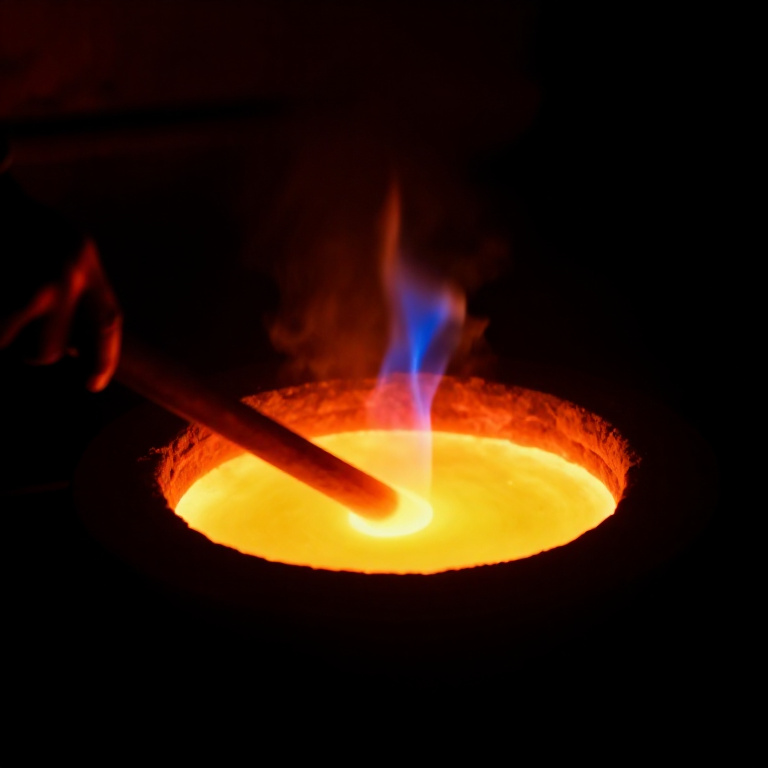


Puddling Wrought Iron from Pig Iron — Burning Out the Carbon in a Reverberatory Furnace
Pig iron straight from the blast furnace is cheap and plentiful but nearly useless for anything that must bend or take a blow: its high carbon makes it brittle as glass. To turn it into the tough, malleable wrought iron that built the railways and bridges of the 1800s, the carbon has to be burned out. Henry Cort's puddling process, patented in 1784, did exactly that — at scale, with coal.
The trick is the reverberatory furnace, which keeps the fuel separate from the metal. Coal burns in a side firebox and the flame is drawn over a low bridge and reflected down off the furnace roof onto a hearth of pig iron, so the sulphurous coal smoke never touches the iron. A workman called a puddler stirs the molten bath through a small door with a long iron rabble, exposing every part of it to the air until the carbon oxidises away.
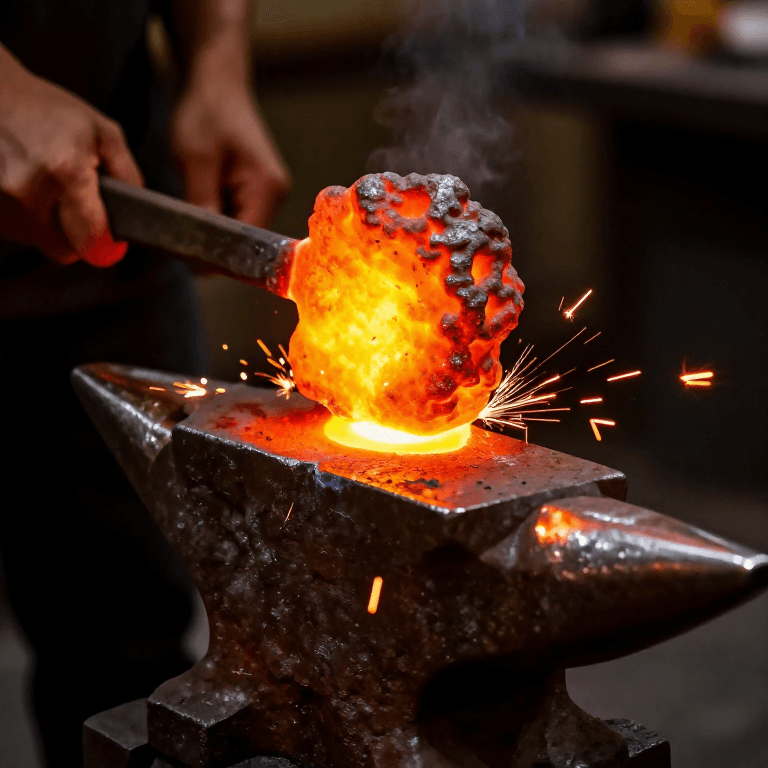
As the carbon leaves, something strange happens: the purer iron's melting point rises above the furnace temperature, so the metal grows stiff and pasty even in the heat. The puddler gathers it into spongy balls, which are then hammered and rolled to squeeze out the slag and consolidate the fibres into bars of wrought iron.
Hướng dẫn
Understand the goal
Understand the goal
Build a reverberatory furnace
Build a reverberatory furnace
Vật liệu cho bước này:
 Gạch chịu lửa100 cái
Công cụ cần thiết:
 Bay làm vườn
Fettle the hearth
Fettle the hearth
Vật liệu cho bước này:
 Vảy sắt rèn5 kg
Fire the furnace with coal
Fire the furnace with coal
Vật liệu cho bước này:
 Than bitum60 kg
Charge and melt the pig iron
Charge and melt the pig iron
Vật liệu cho bước này:
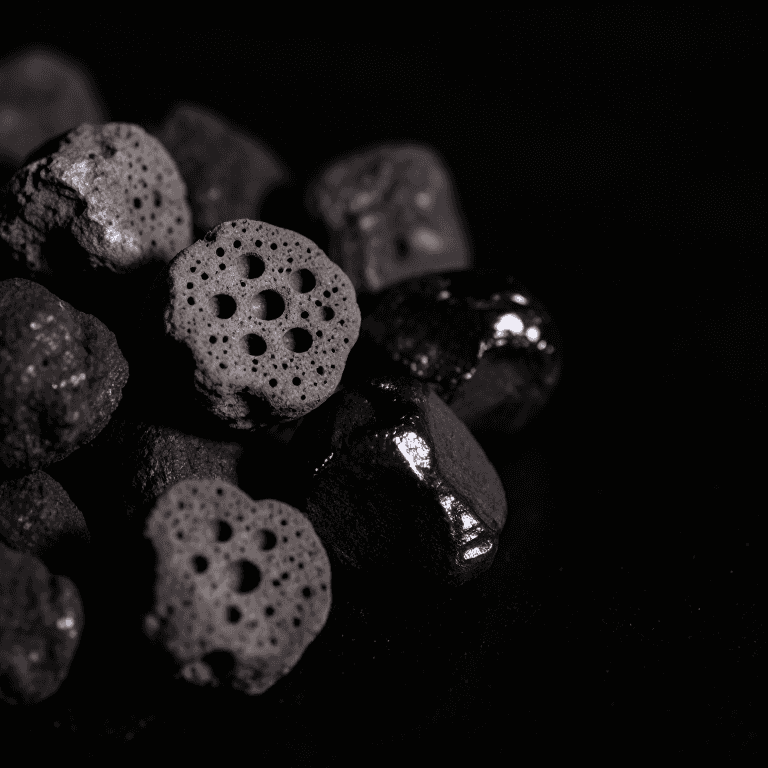
 Thỏi gang thô30 kg
Puddle the bath
Puddle the bath
Công cụ cần thiết:
 Que khuấy lò puddling
Bring on the boil
Bring on the boil
Let it come to nature
Let it come to nature
Công cụ cần thiết:
Que khuấy lò puddlingBall up the iron
Ball up the iron
Công cụ cần thiết:
Que khuấy lò puddlingShingle the ball
Shingle the ball
Công cụ cần thiết:
 Búa tạ
Roll into bars
Roll into bars
Công cụ cần thiết:
 Máy cán
Identify wrought iron
Identify wrought iron
Công cụ cần thiết:
 Búa
BúaVật liệu
4- 100 cáiTạm thời
- 5 kgTạm thời
- 60 kgTạm thời
- 30 kgTạm thời
Vật liệu bản thiết kế liên kết

Blueprint liên quan
Các blueprint này chia sẻ kiến thức — kỹ thuật, vật liệu hoặc nguyên tắc

CC0 Phạm vi công cộng
Bản thiết kế này được phát hành theo CC0. Bạn tự do sao chép, sửa đổi, phân phối và sử dụng cho bất kỳ mục đích nào mà không cần xin phép.
Hỗ trợ nhà sáng tạo bằng cách mua sản phẩm qua bản thiết kế, nơi họ nhận Hoa hồng nhà sáng tạo do nhà bán hàng đặt, hoặc tạo phiên bản mới và kết nối trong bản thiết kế riêng để chia sẻ doanh thu.