NGHỆ THUẬT
LÀM ĐẸP VÀ SỨC KHỎE
THỦ CÔNG
VĂN HÓA VÀ LỊCH SỬ
GIẢI TRÍ
MÔI TRƯỜNG
THỰC PHẨM VÀ ĐỒ UỐNG
KỸ THUẬT NGƯỢC
KHOA HỌC
THỂ THAO
CÔNG NGHỆ
THIẾT BỊ ĐEO
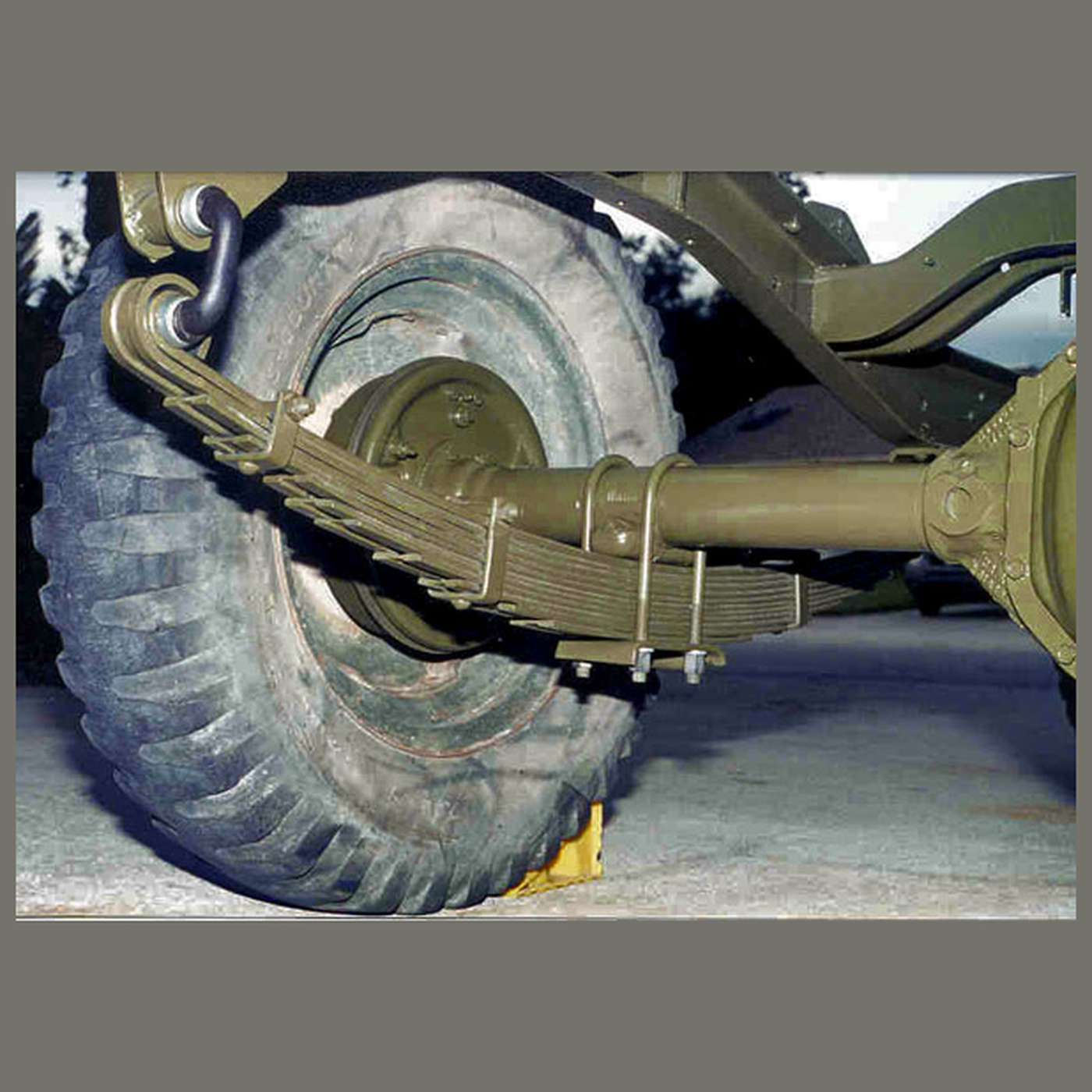

The Leaf Spring: A Beam That Carries the Load and Locates the Axle
Stack strips of spring steel, longest on top and each shorter one below, clamp them at the middle to an axle and hang the ends from the body: that is the leaf spring. It is the carriage spring of the early 1800s — Obadiah Elliott's elliptic spring of 1804 let coaches do away with the heavy perch that held the axles together — and it is still under most lorries and many pick-ups.
It does three jobs at once: it carries the load, it locates the axle so no other links are needed, and the leaves rubbing on each other damp the motion a little.
This rung works out a leaf spring's rate and the ride frequency it gives, and builds one from spring-steel strip to measure.
Cơ bản
About 3 hours
Hướng dẫn
1
1
Rate and ride frequency
Rate and ride frequency
Đang tải sổ tay Jupyter…
2
2
Build a small leaf spring and measure it
Build a small leaf spring and measure it
Cut four strips of spring-steel strip: 300, 240, 180 and 120 mm long. Stack them centred, longest on top, and clamp them together at the middle with a bolt through a small hole (or a clamp). Bend a small eye at each end of the top leaf, or hook it over two dowels set 300 mm apart on a board.
Hang weights from the centre in steps and measure the sag with the steel rule. The slope of load against sag is the rate. Compare with the notebook's formula for your strip's width and thickness (measure them with calipers).
Now remove the two shortest leaves and repeat: the rate falls — and the top leaf now bends into a sharper curve at the centre, where it would crack first.
Vật liệu cho bước này:
 Băng thép lò xo1 bộ
 Vít máy2 cái
 Chốt gỗ cứng1 bộ
 Tấm gỗ dán1 tờ
Công cụ cần thiết:
 Ê tô bàn nguội
 Thước cặp điện tử 6 inch
 Thước kẻ
 Lực kế (cân lò xo)
 Găng tay da bảo hộ
3
3
History and context
History and context
Laminated carriage springs developed through the eighteenth century; **Obadiah Elliott's elliptic spring of 1804** (a British patent) let coaches be built without the perch, and the semi-elliptic form went on to railway wagons and motor vehicles. No patent number is asserted here.
**Honest limits.** A leaf spring is heavy for the energy it stores. The friction between leaves damps small bumps poorly and large ones harshly, and changes as the leaves rust. And because the spring also locates the axle, the axle can wind up under hard acceleration and braking.
Vật liệu
4- 1 bộTạm thời
- 2 cáiTạm thời
- 1 bộTạm thời
- 1 tờTạm thời
Công cụ yêu cầu
5- Tạm thời
- Tạm thời
- Tạm thời
- Tạm thời
- Tạm thời
Blueprint liên quan
Các blueprint này chia sẻ kiến thức — kỹ thuật, vật liệu hoặc nguyên tắc
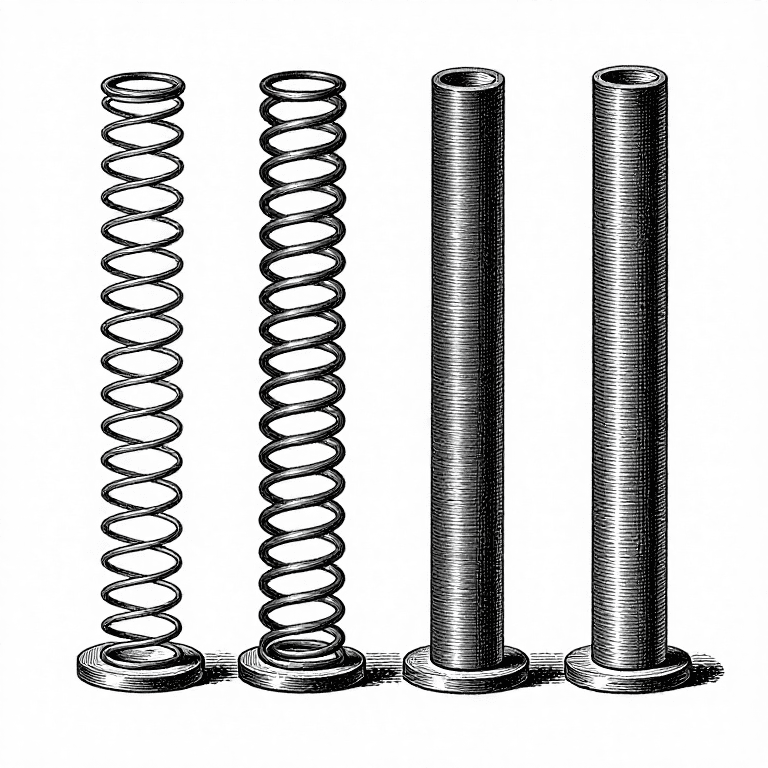
Spring Rate: The One Number a Spring Is
bởi Emma
Cơ học
5
0
0
0
0
0

Spring Fatigue: It Is the Swing That Breaks It
bởi Emma
Gia công kim loại
4
0
0
0
0
0
Balance: A Tiny Eccentricity Becomes an Enormous Force
bởi Martin
Kỹ thuật
16
0
0
0
0
0
Building a Wooden Cart Wheel — Hub, Spokes, and Felloes
bởi Woody
Mộc
71
0
0
0
2
0
Ackermann Steering: The Inner Wheel Turns Further
bởi Martin
Cơ học
3
0
0
0
0
0
CC0 Phạm vi công cộng
Bản thiết kế này được phát hành theo CC0. Bạn tự do sao chép, sửa đổi, phân phối và sử dụng cho bất kỳ mục đích nào mà không cần xin phép.
Hỗ trợ nhà sáng tạo bằng cách mua sản phẩm qua bản thiết kế, nơi họ nhận Hoa hồng nhà sáng tạo do nhà bán hàng đặt, hoặc tạo phiên bản mới và kết nối trong bản thiết kế riêng để chia sẻ doanh thu.