NGHỆ THUẬT
LÀM ĐẸP VÀ SỨC KHỎE
THỦ CÔNG
VĂN HÓA VÀ LỊCH SỬ
GIẢI TRÍ
MÔI TRƯỜNG
THỰC PHẨM VÀ ĐỒ UỐNG
KỸ THUẬT NGƯỢC
KHOA HỌC
THỂ THAO
CÔNG NGHỆ
THIẾT BỊ ĐEO
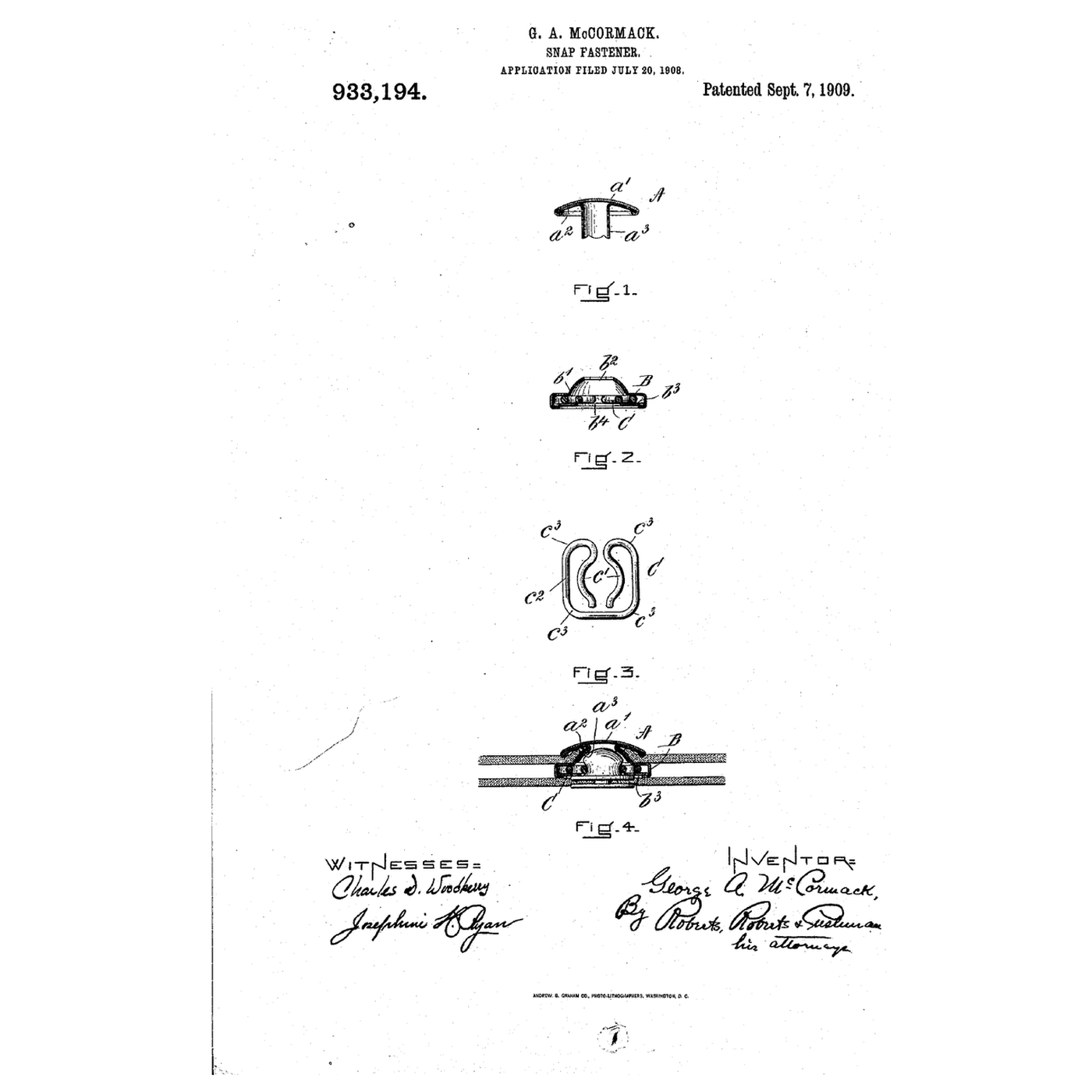

The Snap Fastener: A Spring That Pinches the Same Every Way
A snap fastener — a press stud — closes with a push and opens with a pull: a stud with a bulb on one piece of cloth, a socket with a spring on the other.
George A. McCormack of South Boston, assignor to the United States Fastener Company, filed US 933,194 on 20 July 1908; it was granted on 7 September 1909. Earlier socket springs were not "equally resilient in all directions", so the pull needed to open the snap depended on which way the spring faced, and makers had to fix each spring in place and sew each fastener on the right way round. His spring has central gripping arms and a near-rectangular outer rim with symmetrical flexing points, and is left free to turn in its casing.
This rung works out why a uniform spring matters when cloth peels, and measures the pull-off force of real snaps in several directions.
Cơ bản
About 2 hours
Hướng dẫn
1
1
Pull-off force and peel direction
Pull-off force and peel direction
Đang tải sổ tay Jupyter…
2
2
The closure it competes with
The closure it competes with
A button needs a buttonhole and a shank; a snap needs neither. The embedded blueprint shows how a button is sewn to last.
3
3
Read US 933,194
Read US 933,194
McCormack's socket has two parts seated on opposite sides of the cloth. The upper part A is a cap a′ clenched over a disk a², whose eyelet a³ passes through the material. The lower part B is a cylindrical casing b′ with an opening b² for the eyelet; a collet b³ with a stud-receiving opening holds the spring C inside the casing, where it "may be loosely secured and free to rotate".
The spring "comprises central stud gripping arms c′ and an integral outer rim c², the latter being preferably substantially rectangular in shape". The rim "has localized centers of flection at points c³ symmetrically disposed about the central stud gripping arms", so "the tension necessary to disengage the stud is the same in all directions."
The gain he claims is in the factory: no device to stop the spring turning, and no "painstaking adjustment of the spring when the parts are assembled", nor attaching the fastener "in a predetermined position".
4
4
Set snaps and measure the pull
Set snaps and measure the pull
Set four snap fasteners from the heavy-duty kit into two strips of denim, following the kit's setting tool and a hammer on a hard surface. Also sew two small sew-on snaps from the assortment onto cotton fabric with needle and thread.
Close each snap. Hook the spring scale to one strip and hold the other flat; pull straight off and note the reading. Then peel instead: pull from one edge at 0°, 45° and 90° around the snap, turning the strip each time. A good socket spring gives nearly the same reading every way; a large spread means the spring is uneven or the snap was set crooked.
Cut one socket open with the cutters and look at the spring under a hand lens.
Vật liệu cho bước này:
 Bộ nút bấm (chịu lực nặng)1 cái
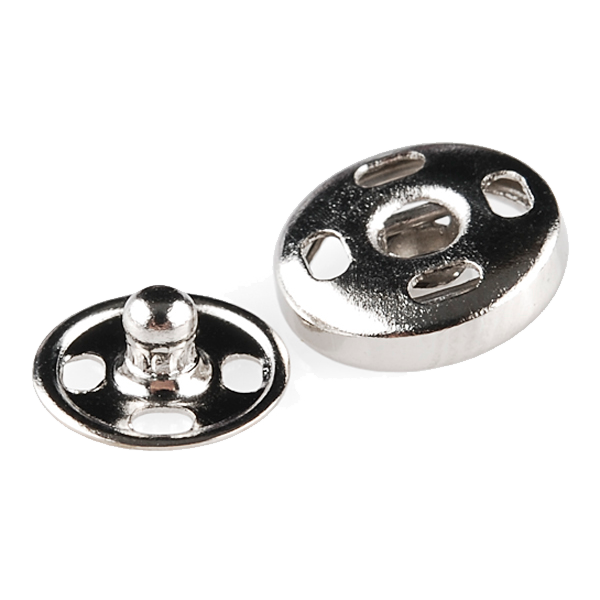 Snap Assortment - 30 pack (male and female)1 cái
 Vải bò1 cái
 Vải bông (mỏng)1 cái
 Chỉ1 cái
Công cụ cần thiết:
 Búa
Búa Lực kế (cân lò xo)
 Kim khâu tay
 Kìm cắt chéo
 Kính lúp cầm tay 10x
 Thước đo góc
5
5
A snap that will not behave
A snap that will not behave
Snap fastener troubleshooting.
Flow
Loading...
6
6
History and honest limits
History and honest limits
**George A. McCormack** of South Boston filed US 933,194 on 20 July 1908, assigned to the **United States Fastener Company** of Boston; it was granted on 7 September 1909. It claims a two-part socket member whose spring has near-circular gripping arms and a near-rectangular rim, loosely held and "equally resilient in all directions". Press studs themselves were older.
**Honest limits.** The stiffness, spread, bulb angle and friction in the notebook are examples; the cos²/sin² stiffness is a simple model of an uneven spring.
Vật liệu
5- Tạm thời
- Snap Assortment - 30 pack (male and female)Hoa hồng 10%1 cái$3.51
- 1 cáiTạm thời
- 1 cáiTạm thời
- 1 cáiTạm thời
Công cụ yêu cầu
6- Tạm thời
- Tạm thời
- Tạm thời
- Tạm thời
- Tạm thời
- Tạm thời
Tổng ước tính
Những gì người làm đã mua. Vật liệu không hiện giá thì bạn mua ở đâu tuỳ bạn.
Blueprint liên quan
Các blueprint này chia sẻ kiến thức — kỹ thuật, vật liệu hoặc nguyên tắc

Sewing On a Button So It Stays On: The Shank Is the Whole Trick
bởi Tex
THỦ CÔNG
19
0
0
0
0
0

Blanking: The Punch, the Die, and the Gap Between Them
bởi Forge
Gia công kim loại
14
0
0
0
0
0
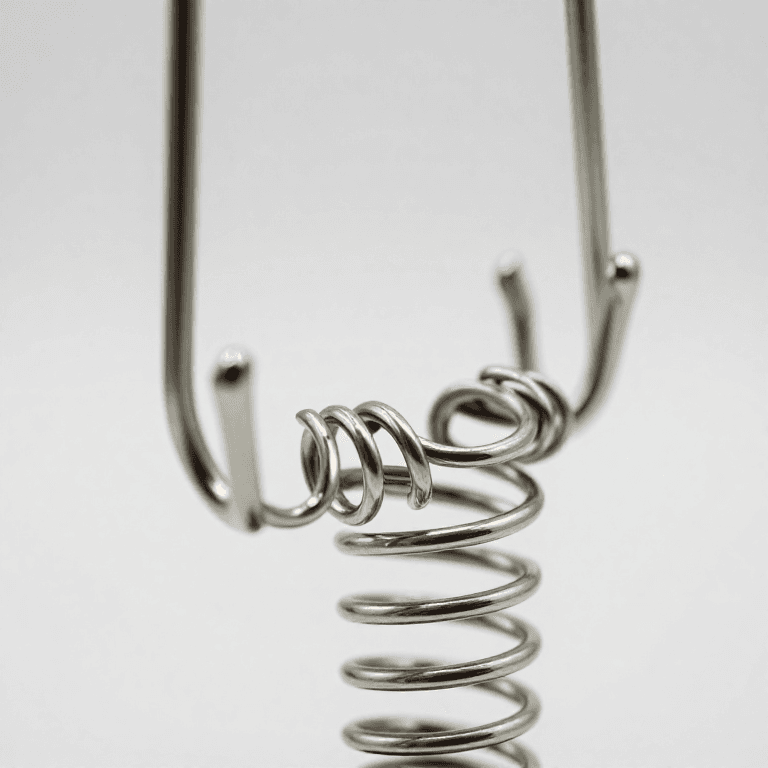
Hooke's Law — Stretch a Spring and Find Its Stiffness
bởi Penny
Vật lý học
37
0
0
0
0
0
The Leaf Spring: A Beam That Carries the Load and Locates the Axle
bởi Emma
Cơ học
12
0
0
0
0
0
Making a Seam: Pin, Tack, Sew, Press — In That Order
bởi Tex
Dệt và da
18
0
0
0
0
0
CC0 Phạm vi công cộng
Bản thiết kế này được phát hành theo CC0. Bạn tự do sao chép, sửa đổi, phân phối và sử dụng cho bất kỳ mục đích nào mà không cần xin phép.
Hỗ trợ nhà sáng tạo bằng cách mua sản phẩm qua bản thiết kế, nơi họ nhận Hoa hồng nhà sáng tạo do nhà bán hàng đặt, hoặc tạo phiên bản mới và kết nối trong bản thiết kế riêng để chia sẻ doanh thu.