NGHỆ THUẬT
LÀM ĐẸP VÀ SỨC KHỎE
THỦ CÔNG
VĂN HÓA VÀ LỊCH SỬ
GIẢI TRÍ
MÔI TRƯỜNG
THỰC PHẨM VÀ ĐỒ UỐNG
KỸ THUẬT NGƯỢC
KHOA HỌC
THỂ THAO
CÔNG NGHỆ
THIẾT BỊ ĐEO

The Square-Socket Screw: A Driver That Holds the Screw for You
A slotted screw has one weakness: the screwdriver slips out of the slot, marks the work and chews the head. In 1875 Allan Cummings of New York patented a screw with an angular cavity in the centre of its head (US 161,390) so the driver could not slip.
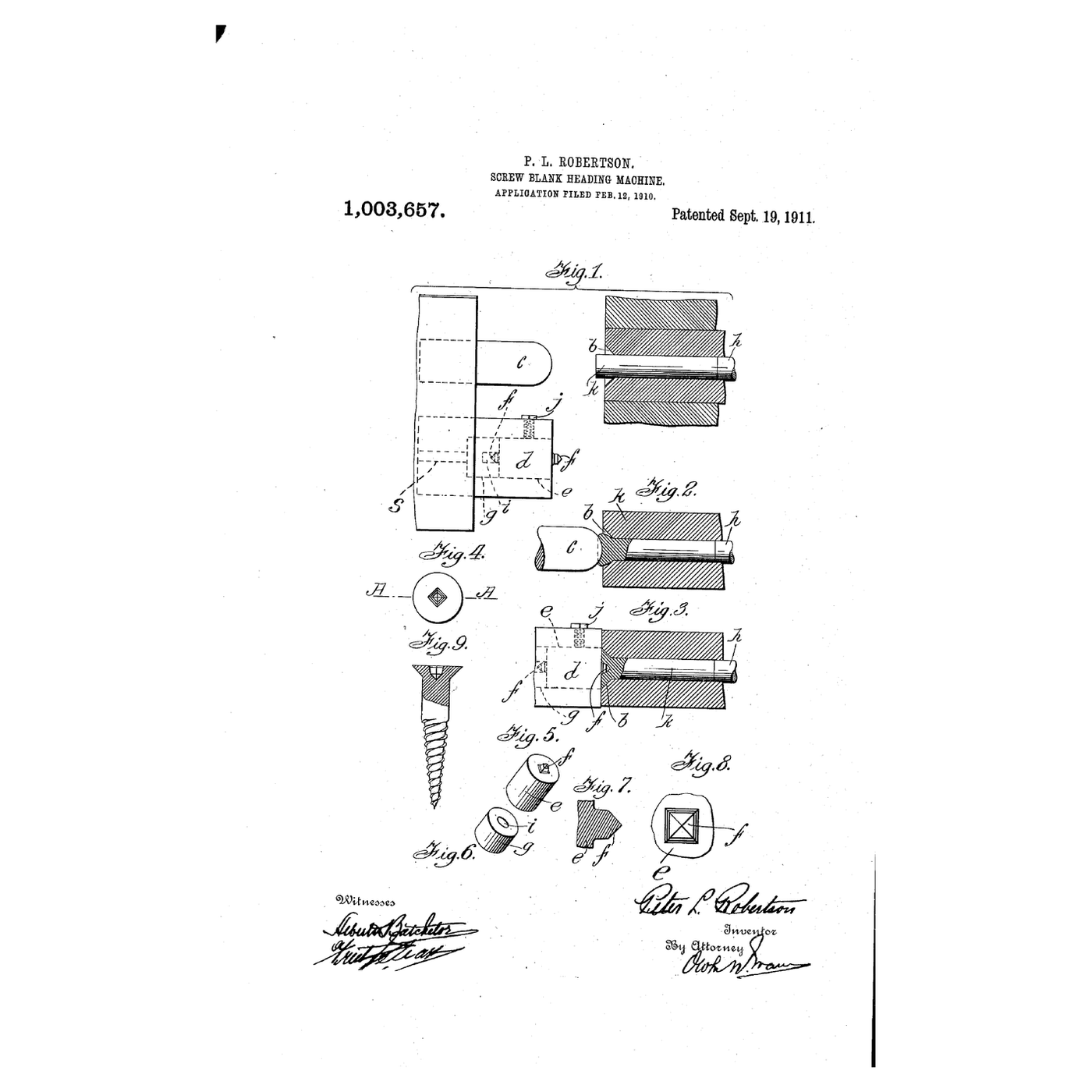
Peter Lymburner Robertson of Hamilton, Ontario, made the idea manufacturable. His US 1,003,657 (granted 19 September 1911, filed 12 February 1910 as a continuation in part of an application of 8 November 1907) is a cold-heading machine whose punch carries a square male die with sides converging "at a very slight angle" and a pyramidal point. Two blows form the head and punch the socket in the end of a piece of wire, and the socket grips the driver so well that the screw "may be carried upon the point of the driver".
This rung works out why a slight taper holds the driver and a wedge pushes it out, and tests square, cross and slotted heads side by side.
Cơ bản
About 2 hours
Hướng dẫn
1
1
Taper, friction and cam-out
Taper, friction and cam-out
Đang tải sổ tay Jupyter…
2
2
How a head is formed cold
How a head is formed cold
Robertson's first blow upsets the end of the wire into a head. The embedded blueprint shows how metal gets thicker by getting shorter.
3
3
Read Cummings (1875) and Robertson (1911)
Read Cummings (1875) and Robertson (1911)
**Cummings, US 161,390**, dated 30 March 1875. The object is a screw that can be driven home "without any danger of injuring the slot or head of the screw by the slipping of the screw-driver." He forms in the centre of the head "a cavity of suitable shape and depth", usually tapering from top to bottom, or triangular (Fig. 5), either with the usual slot or without it — the slotless form being "particularly adapted to the capped screws" whose thin plated caps a slipping driver would ruin. He notes the cavity "may be formed in the screw machine at the time the screw is made, by any of the well-known mechanical processes, this being no part of my invention".
**Robertson, US 1,003,657.** He explains why earlier attempts failed: punching a closed slot or a cross left the metal ahead of the punch "crystallized thus fatally weakening the screw at its neck", and the recess too shallow or uneven to hold the driver. His punch e is reversible, with a male die f at each end, "of square cross-section and all the sides whereof are of equal area" converging at a very slight angle, "while the end converges at an angle of forty five (45°) degrees and terminates in a point preferably of pyramidal form." A bumper block of softer metal behind the punch cushions it.
The wire gets two blows: "the first (Fig. 2) upsetting the protruding end and the second (Fig. 3) punching the socket and thereby forming and facing the head". The blank is then threaded "in the usual way".
4
4
Test square, cross and slot side by side
Test square, cross and slot side by side
Drill pilot holes in a pine board in three rows. Drive square-drive screws with a square-drive screwdriver, cross-head wood screws with a Phillips driver, and slotted screws with a flat screwdriver.
1. **Carry test.** Press a screw onto each driver, then hold the driver horizontal. Record which screws stay on the tip.
2. **One-hand start.** Start each screw using only the driver hand, without holding the screw.
3. **Cam-out.** Drive each screw until the head seats, then keep turning with light pressure. Note which driver rides out of its recess first, and inspect the heads with a lens.
Measure the square socket's taper with the caliper: across the flats at the mouth, and the depth, against the tip of the driver.
Vật liệu cho bước này:
 Vít lỗ vuông10 cái
 Vít gỗ10 cái
 Ván thông1 cái
Công cụ cần thiết:
 Tua vít đầu vuông
 Tua vít bốn cạnh
 Tua vít dẹt
 Máy khoan pin
 Bộ mũi khoan
 Thước cặp điện tử 6 inch
5
5
A square-drive screw that will not behave
A square-drive screw that will not behave
Square-drive troubleshooting.
Flow
Loading...
6
6
History and honest limits
History and honest limits
**Allan Cummings**'s US 161,390 (dated 30 March 1875, filed 15 February 1875) claimed a screw whose head has an angular cavity at its centre together with the usual slot. **Peter Lymburner Robertson** patented the tooling to punch a square, slightly tapered socket cold, with a first application filed on 8 November 1907 and US 1,003,657 granted on 19 September 1911.
**Honest limits.** The friction coefficient in the notebook is an assumed value; real grip depends on finish, plating and dirt. The patent gives no figure for the taper, only "a very slight angle".
Công cụ yêu cầu
6- Tạm thời
- Tua vít bốn cạnhHoa hồng 10%Tạm thời
- Tua vít dẹtHoa hồng 10%Tạm thời
- 1 vendor sell this, none ship to you yetTạm thời
- Tạm thời
- Tạm thời
Blueprint liên quan
Các blueprint này chia sẻ kiến thức — kỹ thuật, vật liệu hoặc nguyên tắc
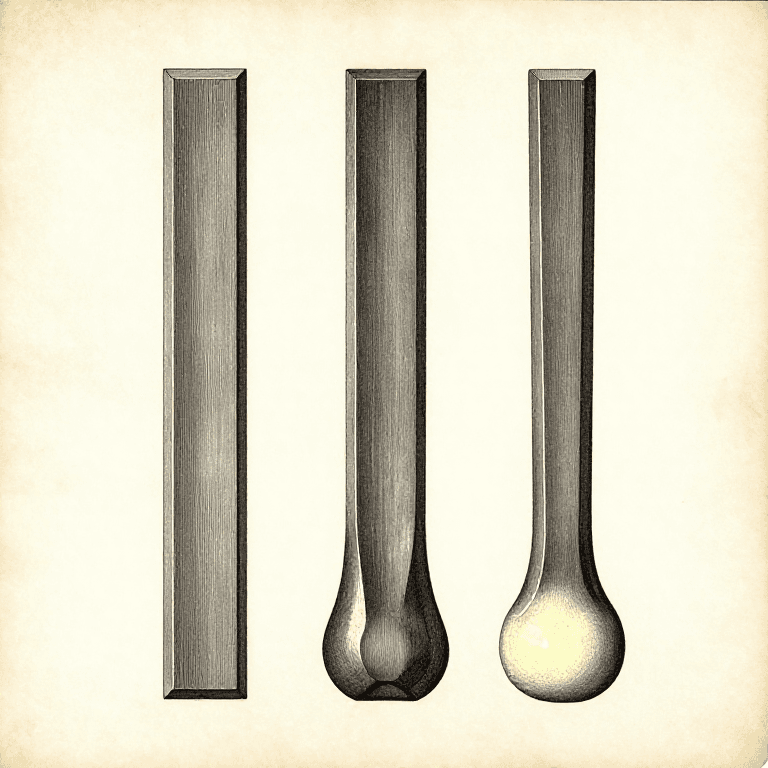
Upsetting: Making It Thicker by Making It Shorter
bởi Forge
Gia công kim loại
24
0
0
0
0
0
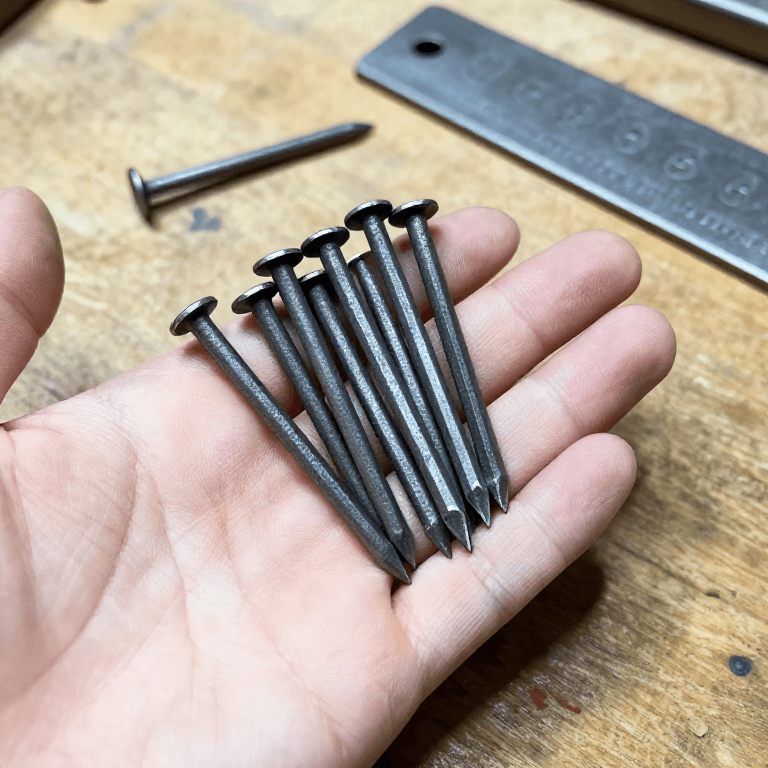
Forging Iron Nails by Hand — Drawing, Cutting, and Heading
bởi Forge
Gia công kim loại
43
0
0
0
2
0
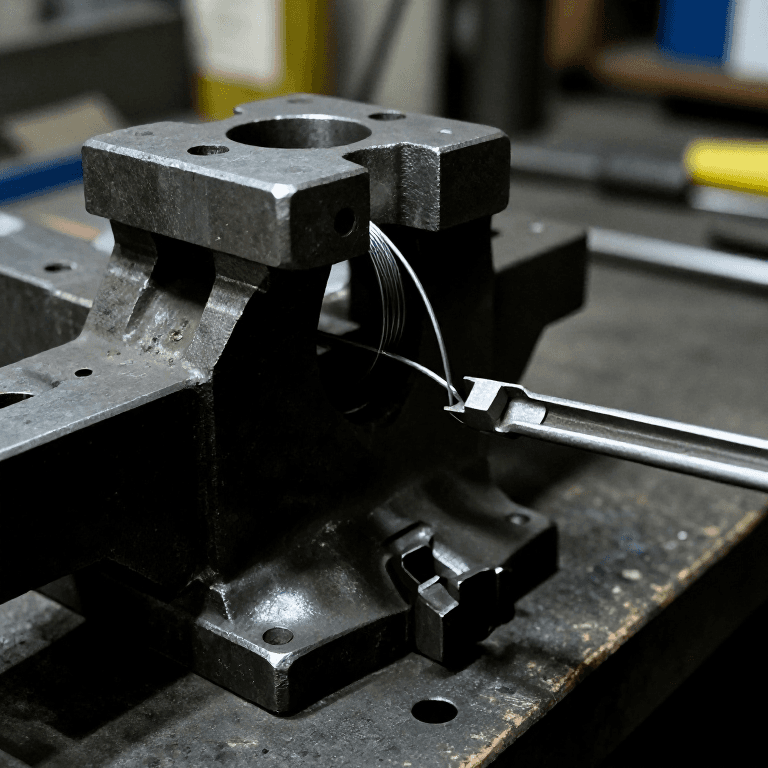
Drawing Wire Through a Drawplate — Reducing Iron Rod to Fine Wire
bởi Forge
Gia công kim loại
48
0
0
0
3
0
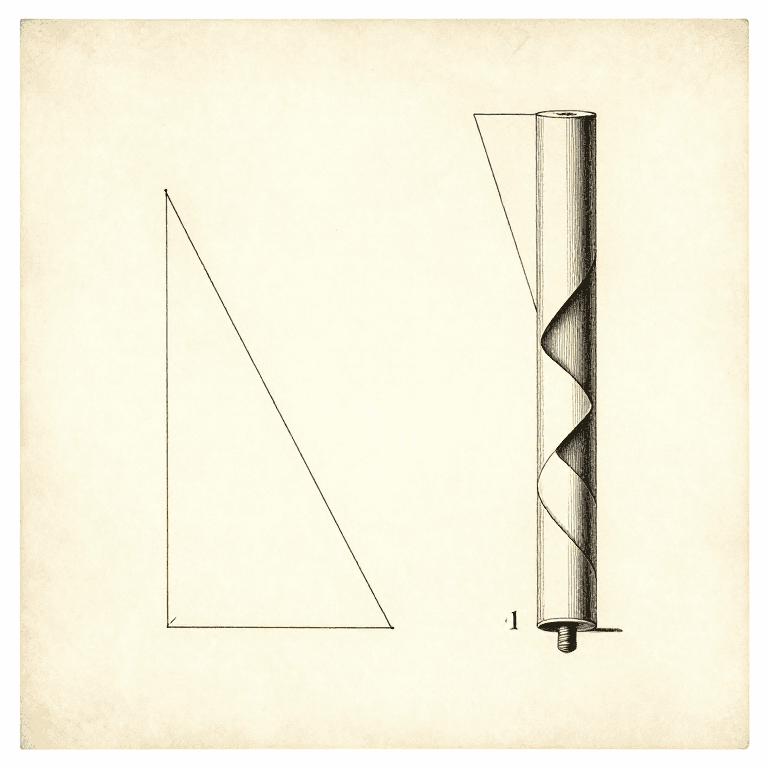
What a Screw Thread Is: A Ramp Wrapped Round a Cylinder
bởi Forge
Gia công kim loại
27
0
0
0
0
0
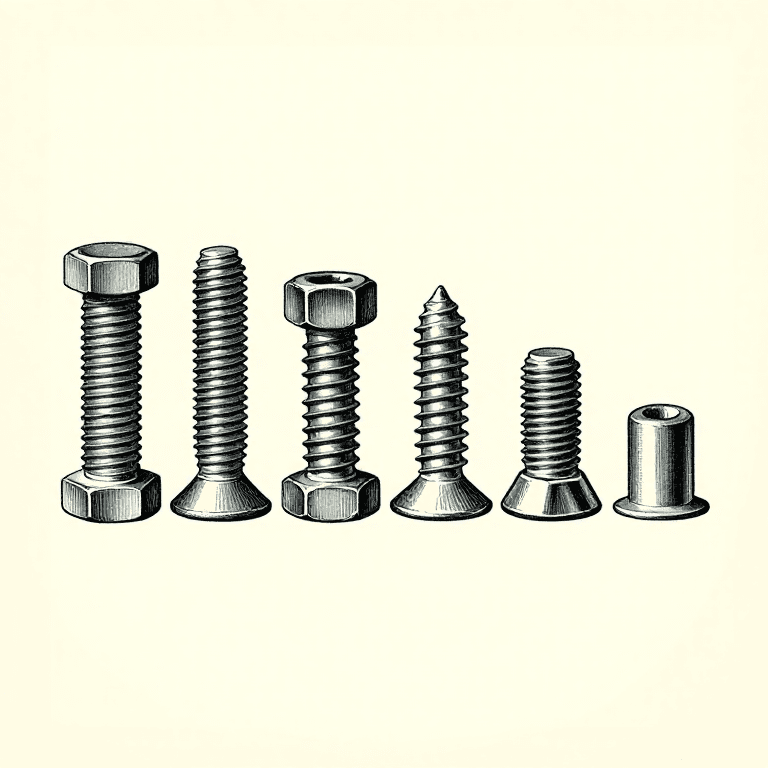
Choosing the Fastener: Screw, Bolt, Stud, Rivet
bởi Martin
Dụng cụ mộc
22
0
0
0
0
0
CC0 Phạm vi công cộng
Bản thiết kế này được phát hành theo CC0. Bạn tự do sao chép, sửa đổi, phân phối và sử dụng cho bất kỳ mục đích nào mà không cần xin phép.
Hỗ trợ nhà sáng tạo bằng cách mua sản phẩm qua bản thiết kế, nơi họ nhận Hoa hồng nhà sáng tạo do nhà bán hàng đặt, hoặc tạo phiên bản mới và kết nối trong bản thiết kế riêng để chia sẻ doanh thu.