NGHỆ THUẬT
LÀM ĐẸP VÀ SỨC KHỎE
THỦ CÔNG
VĂN HÓA VÀ LỊCH SỬ
GIẢI TRÍ
MÔI TRƯỜNG
THỰC PHẨM VÀ ĐỒ UỐNG
KỸ THUẬT NGƯỢC
KHOA HỌC
THỂ THAO
CÔNG NGHỆ
THIẾT BỊ ĐEO
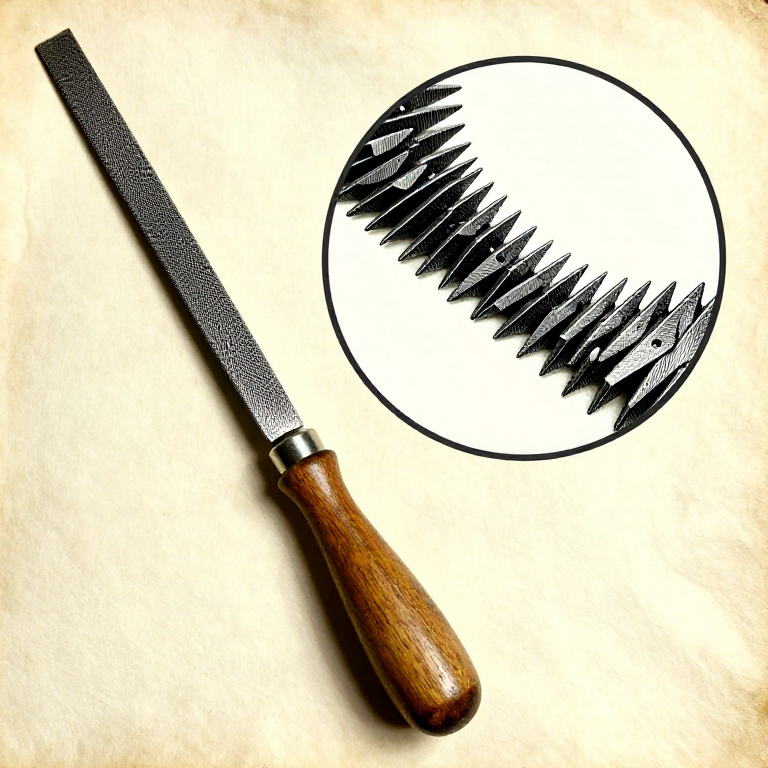


What a File Actually Is: Rows of Tiny Chisels
A file is not an abrasive. It is a hardened steel bar carrying hundreds of tiny chisels, each one cutting a chip exactly the way a plane iron does, and everything a file does well or badly follows from that.
It explains why a file only cuts on the push stroke, why dragging it back wears the teeth for nothing, why it stops cutting when the gullets fill, and why one file glides uselessly over hardened steel while another bites. None of that is true of sandpaper.
Two hundred and thirty-six blueprints on Youblob list a file among their tools and not one of them explains how to use it. This is the first of eight rungs that close that.
Cơ bản
2 hours
Hướng dẫn
1
1
Look at the teeth and see the chisels
Look at the teeth and see the chisels
Put a file under a loupe with the light raking along it. Each tooth is a tiny wedge with a cutting edge across the top and an open space behind it — the gullet — where the chip goes.
The teeth all lean the same way: forward, toward the tip. That is why a file cuts on the PUSH and does nothing on the pull, and why lifting it on the return stroke costs nothing but saves the teeth. Dragging a loaded file backwards under pressure drags trapped chips across the work and scores it.
The other thing visible under the loupe is that the teeth are in rows running diagonally, not straight across. A straight row would cut a groove its own width; the diagonal makes each tooth land on fresh metal.
Công cụ cần thiết:
 Giũa kim loại
 Kính lúp thợ kim hoàn
2
2
Single cut, double cut, and rasp
Single cut, double cut, and rasp
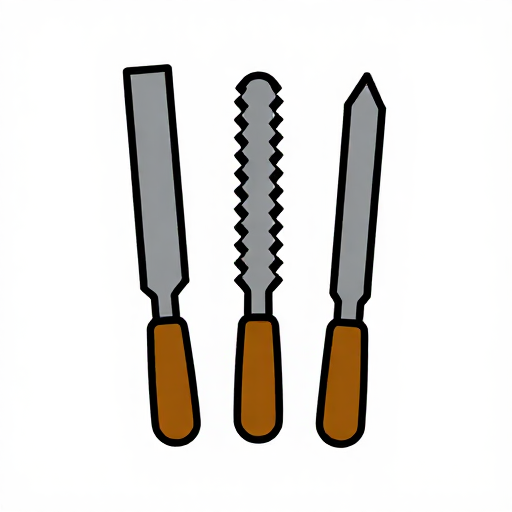
SINGLE CUT has one set of parallel diagonal rows. Each tooth is a long straight edge, it takes a wide shallow chip and leaves a smooth surface — this is what a finishing file and a saw file use.
DOUBLE CUT adds a second set of rows crossing the first, which breaks the long edges into a grid of small pointed teeth. Each takes a small deep chip, so it removes metal far faster and leaves a rougher surface. Most general-purpose hand files are double cut.
A RASP is neither: its teeth are individually raised punched points, widely spaced, with huge gaps between them. That makes it useless on metal and ideal on wood, where the chip is bulky and would instantly clog a file.
Công cụ cần thiết:
Giũa kim loại Dũa mịn
 Giũa thôKính lúp thợ kim hoàn
3
3
Cut, grade and length — reading the name of a file
Cut, grade and length — reading the name of a file
Đang tải sổ tay Jupyter…
Công cụ cần thiết:
 Bộ giũa
 Máy tính bỏ túi
4
4
A file is harder than almost anything you will file
A file is harder than almost anything you will file
File teeth are hardened to around 65 HRC and left untempered, which makes them harder than nearly all working steel and also extremely brittle.
Two consequences. First, a file will cut mild steel, brass, aluminium, cast iron and most tool steel in the annealed state, but it skates uselessly on anything hardened — a hardened blade, a bearing race, a file. That is in fact the classic workshop hardness test: if a file bites, the part is soft.
Second, never use a file as a lever or a pry bar and never strike it. It will snap without bending, and it does so suddenly. Fit a handle before using one: the bare tang is a spike aimed at your palm, and it is the single commonest workshop injury with this tool.
Công cụ cần thiết:
Giũa kim loại Thanh thép mềm
 Kính bảo hộ trong suốt
Blueprint liên quan
Các blueprint này chia sẻ kiến thức — kỹ thuật, vật liệu hoặc nguyên tắc
CC0 Phạm vi công cộng
Bản thiết kế này được phát hành theo CC0. Bạn tự do sao chép, sửa đổi, phân phối và sử dụng cho bất kỳ mục đích nào mà không cần xin phép.
Hỗ trợ nhà sáng tạo bằng cách mua sản phẩm qua bản thiết kế, nơi họ nhận Hoa hồng nhà sáng tạo do nhà bán hàng đặt, hoặc tạo phiên bản mới và kết nối trong bản thiết kế riêng để chia sẻ doanh thu.