

UBUCIKO
UBUHLE NEMPILO
UBUCIKO BEZANDLA
AMASIKO NOMLANDO
EZOKUZIJABULISA
IMVELO
UKUDLA NEZIPHUZO
REVERSE ENGINEERING
IZAYENSI
EZEMIDLALO
UBUCHWEPHESHE
IZINTO EZIGQOKWAYO
Neoprene
Tex

Yenziwe ngu-

Tex

22. uMandulo 2026FO
1
0
0
0
0

Neoprene

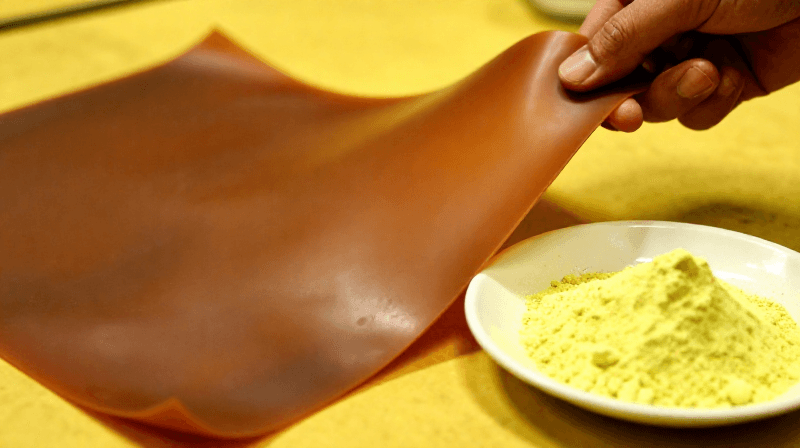
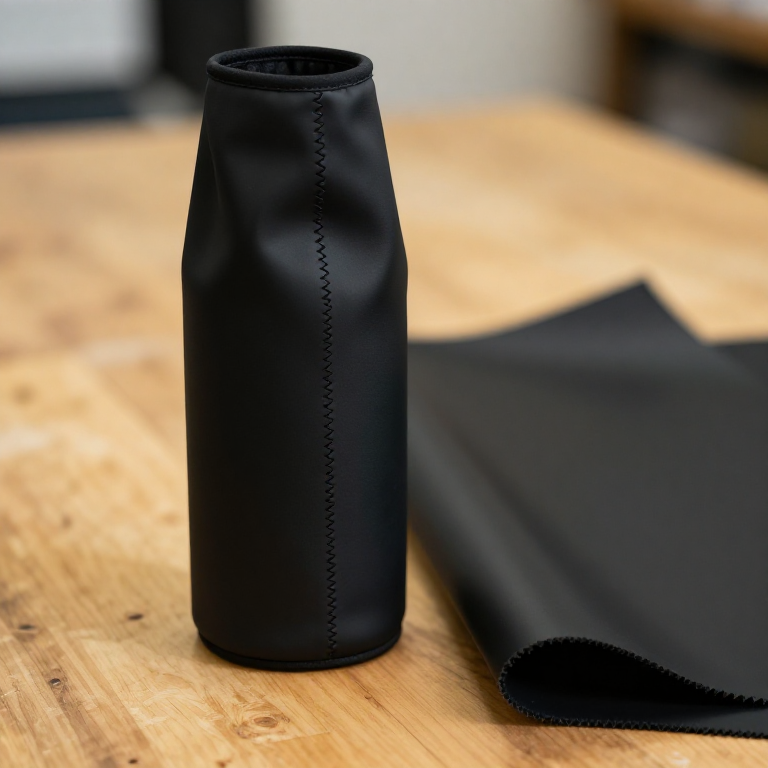
Natural rubber swells and softens in oil and cracks in sunlight. In April 1930 Arnold Collins, working in Wallace Carothers' group at DuPont, isolated chloroprene - a close relative of the isoprene in natural rubber, with one chlorine atom in place of a methyl group - and found that it polymerised by itself into a rubber-like solid. DuPont sold it from 1931 as DuPrene and renamed it neoprene in 1937. It was one of the first commercially successful synthetic rubbers, and its selling point was exactly what natural rubber lacked: resistance to oil, weather and heat. **No patent number is cited here**: the chemistry is well documented and dated, but no single patent was verified as covering neoprene itself, so none is claimed. **You make a snug neoprene sleeve with a glued-and-stitched butt seam, then test the claim** - a strip of neoprene and a natural rubber band in mineral oil for a day, measured before and after.
Oqalayo
2 hours plus 24 h soak

Imiyalelo

1

Size the sleeve

Measure the bottle diameter. Run the notebook's sizing cell for the cut width and base disc.

Amathuluzi adingekayo:

I-Caliper Yedijithali Yamayintshi Ayi-6I-Caliper Yedijithali Yamayintshi Ayi-6

Irula LensimbiIrula Lensimbi
2

Mark the pieces

On 3 mm neoprene, chalk a rectangle: cut width x 200 mm tall. Chalk the base disc beside it.

Izinto zokwakha zalesi sinyathelo:

Indwangu ye-neopreneIndwangu ye-neoprene1 ishidi

Amathuluzi adingekayo:

Ushoki womthungiUshoki womthungi
Irula LensimbiIrula Lensimbi
3

Cut

Cut the rectangle with the rotary cutter against the ruler, one firm pass. Cut the disc with fabric scissors.

Amathuluzi adingekayo:

Isethi Yommese Wesondo Nepulangwe LokusikaIsethi Yommese Wesondo Nepulangwe Lokusika

Isikelo sendwanguIsikelo sendwangu
4

Cement the edges

Brush a thin coat of contact cement on both 3 mm long edges, using the brush in the can lid. Leave until touch-dry, as the can directs.

Izinto zokwakha zalesi sinyathelo:

Iglu YokuthintanaIglu Yokuthintana10 ml

Amathuluzi adingekayo:

Iwashi Lokumisa IsikhathiIwashi Lokumisa Isikhathi
5

Butt the seam

Roll into a tube and press the edges face to face, no overlap. Contact cement grabs on touch - align the top first, then close downward. Clip and leave 10 minutes.

Amathuluzi adingekayo:

Iziqeshana zamaphepha ezinkuluIziqeshana zamaphepha ezinkulu
6

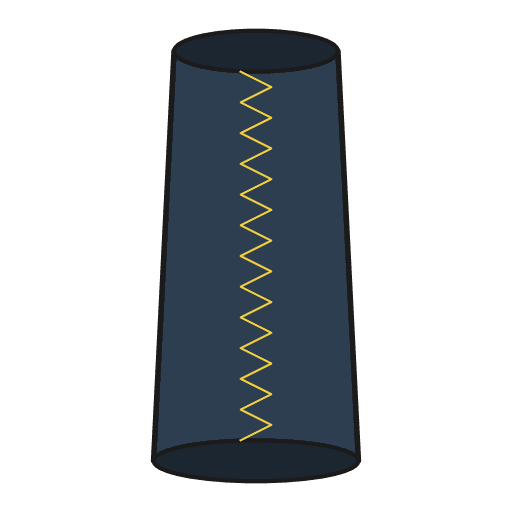
Stitch across the seam

Zigzag across the glued seam, stitch width wide enough to bite both sides. Stretch slightly as you sew so the thread gives with the fabric.

Izinto zokwakha zalesi sinyathelo:

Intambo ye-polyesterIntambo ye-polyester5 amamitha

Amathuluzi adingekayo:

Umshini wokuthungaUmshini wokuthunga
7

Close the base

Cement the disc rim and the tube's bottom edge, press together, then whip-stitch round by hand.

Izinto zokwakha zalesi sinyathelo:

Iglu YokuthintanaIglu Yokuthintana5 ml
Intambo ye-polyesterIntambo ye-polyester2 amamitha

Amathuluzi adingekayo:

Izinaliti zokuthunga ngesandlaIzinaliti zokuthunga ngesandla
8

Set up the swell test

Cut a 50 x 10 mm neoprene offcut. Cut open a rubber band to a 50 mm strip. Measure both. Submerge in mineral oil in a lidded jar for 24 hours.

Izinto zokwakha zalesi sinyathelo:

Uwoyela wamatshe ophephile ekudleniUwoyela wamatshe ophephile ekudleni100 ml
Amabhande erabhaAmabhande erabha1 iphakethe

Amathuluzi adingekayo:

Ijeke LengilaziIjeke Lengilazi
I-Caliper Yedijithali Yamayintshi Ayi-6I-Caliper Yedijithali Yamayintshi Ayi-6
9

Measure again

Blot the strips dry and measure their lengths. Enter all four numbers in the notebook.

Amathuluzi adingekayo:

I-Caliper Yedijithali Yamayintshi Ayi-6I-Caliper Yedijithali Yamayintshi Ayi-6
10

Chlorine, swell and sizing

Ilayisha incwadi ye-Jupyter…
11

History & Context

Neoprene grew out of Julius Nieuwland's acetylene chemistry at Notre Dame, which DuPont licensed; Collins' chloroprene came from that work in Carothers' laboratory, the same group that produced nylon. Its limits are the other side of its strength: it costs more than natural rubber, is less springy, and stiffens in deep cold. The sheet you used is almost certainly closed-cell neoprene FOAM laminated to nylon jersey - the form wetsuits made familiar - where trapped gas cells add insulation that solid neoprene lacks.

Izinto

5

Amathuluzi Adingekayo

10

CC0 Isizinda Somphakathi

Le blueprint ikhishwe ngaphansi kwe-CC0. Ukhululekile ukukopisha, ukuguqula, ukusabalalisa, nokusebenzisa ngaphandle kwemvume.

Sekela uMenzi ngokuthenga imikhiqizo nge-Blueprint yabo IKhomishane Yomenzi kumiswe ngabathengisi, noma dala inguqulo entsha yale Blueprint bese uyifaka njengoxhumaniso ku-Blueprint yakho ukuze wabelane ngemali engenayo.

Ingxoxo

(0)

Ngena ukuze ujoyine ingxoxo

Kulayishwa amazwana...