UBUCIKO
UBUHLE NEMPILO
UBUCIKO BEZANDLA
AMASIKO NOMLANDO
EZOKUZIJABULISA
IMVELO
UKUDLA NEZIPHUZO
REVERSE ENGINEERING
IZAYENSI
EZEMIDLALO
UBUCHWEPHESHE
IZINTO EZIGQOKWAYO


The Cast-Back Curry Comb: Iron Run Around Toothed Plates Held in a Notched Bar
A curry comb's toothed plates have to be fixed to a back and a handle, and riveting or soldering each plate is slow and works loose.
James M. Gardner of Troy, New York, received US 7,986, dated 18 March 1851, for an improvement in the method of casting the backs upon the teeth of curry combs. The teeth are cut in sheet-iron plates with dovetail projections on their other edges; a notched cross-bar in the cope holds the plates while the sand is rammed, and the back is cast onto them, with a ferrule cast onto an iron spike for the wooden handle, so that the plates are "firmly secured in the back by the running of the metal around the dovetail projections."
This rung works out the metal a back takes, then cuts toothed steel plates, holds them in a notched bar in a two-part sand mould and casts a pewter back onto them.
Osezingeni eliphezulu
About 6 hours
Imiyalelo
1
1
Metal for the back
Metal for the back
Ilayisha incwadi ye-Jupyter…
2
2
A two-part sand mould before it
A two-part sand mould before it
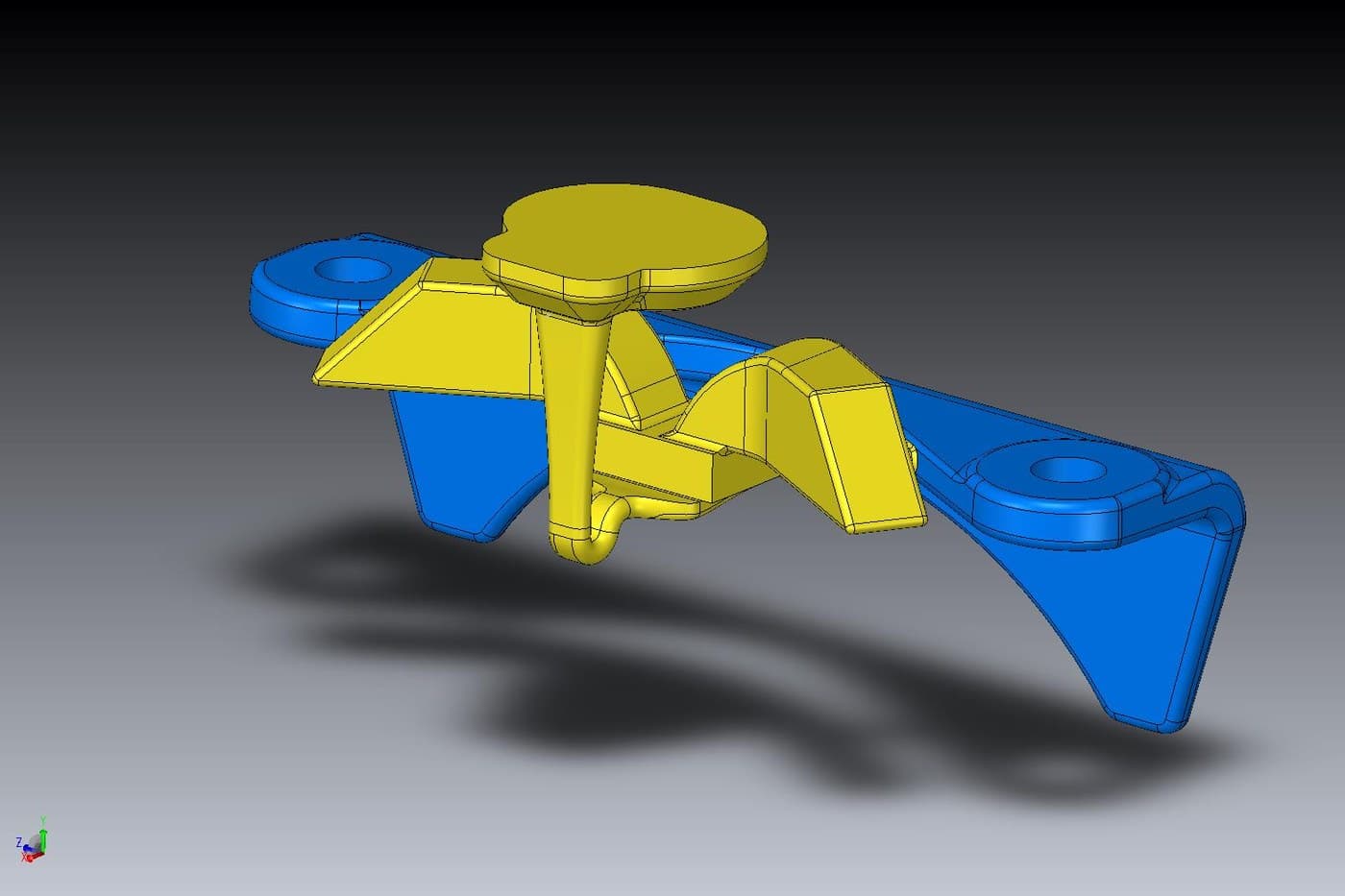
The embedded blueprint rams sand around a pattern in a two-part flask and pours metal into the space it leaves. Gardner uses the same flask and adds a notched bar in the cope that holds the toothed plates, so the back is cast onto them.
3
3
Read US 7,986
Read US 7,986
"In my improved method of making curry combs the teeth are cut in a series of sheet iron plates, which are arranged in a mold together with an iron spike to be driven into a wooden handle, and the back and ferrule cast on to secure the whole together and complete the comb."
"The cope is made with a cross-bar, h, having slots or notches i cut into it from its under edge, and corresponding with grooves j, made in the face d of the plate a."
"These notches and grooves hold the comb plates l in proper position, and then the cope is rammed full of sand, thus taking the impression of the face d of the plate a, and at the same time securing the comb-plates in the sand."
4
4
Mould the comb and cast the back
Mould the comb and cast the back
**Plates.** From 0.8 mm mild steel sheet cut six strips 9 × 2.5 cm with tin snips. Along one long edge snip V-notches 3 mm deep every 3 mm and file the teeth even. Along the other edge cut two tabs 5 mm deep that widen toward their ends, like dovetails.
**Pattern and bar.** Saw a hardwood pattern 11 × 9 cm and 8 mm thick for the back. Across one face saw six kerfs 5 mm deep and 15 mm apart, so a plate's tabs stand in each. Build a two-part flask from oak board. Across the top of the cope fix a hardwood cross-bar with six notches cut up from its under edge, right above the kerfs.
**Ram.** Sieve and temper the sand. Lay the pattern kerfed face down on a board, set the drag over it and ram it full, then turn it over so the kerfs face up. Stand the plates teeth up with their tabs in the kerfs. Dust with talc, set the cope on so each plate stands in its notch, and ram it full. Lift the cope: the plates come away held in its sand. Draw the pattern. Lay a 6 mm steel rod bent at one end in a groove cut from the cavity out through a hole in the drag frame, as the handle spike. Cut a sprue, a riser and vents, and close the flask.
**Pour.** Weigh out the pewter from the notebook. Melt it in the crucible with the torch, skim it, and pour once, steadily, until the riser stands full. When it has cooled, break it out, saw off the sprue and riser, and try to pull each plate out with pliers. Drill a hardwood handle a little under the spike's size and drive it on.
Izinto zokwakha zalesi sinyathelo:
 Ishidi Lensimbi Ethambile1 ucezu
 Ipulangwe Lokhuni Oluqinile1 ucezu
 Ipulangwe le-oak elimhlophe1 ucezu
 Ibhulokhi Lokhuni Oluqinile1 ucezu
 Izikulufu zokhuni16 izicucu
 Isihlabathi sokubumba1 ucezu
 Impushana ye-talcum1 ucezu
 Ubhamu Oluyindilinga Lwensimbi Ethambile0.15 imitha
 Isigaxa se-pewter1 ucezu
Amathuluzi adingekayo:
 Isikeli sensimbi
 Izinsimbi zokuhlikihla (ezesandla)
 Isibambo Sebhentshi
 Isaha Sesandla
 Isaha Sensimbi
 Ibhola Elingenantambo
 Iqoqo Lamakhanda Ebhola
 Isethi yezikulufudrayiva
 Isisefo
 Isikali Sedijithali Sasekhishini
 Isibani Se-propane
 Udlawu Lwesitsha Sokuncibilikisa
 Isivikelo Sobuso
 Amagilavu Amelana Nokushisa
 Irula
Irula Imbiza Yobumba Ejulile
5
5
A back that runs short, blows or lets go
A back that runs short, blows or lets go
Cast-back curry comb troubleshooting.
Flow
Loading...
6
6
History and honest limits
History and honest limits
**James M. Gardner** of Troy, Rensselaer County, New York, received US 7,986, dated 18 March 1851. His pattern plate a had one face b formed like the back of the comb and the other, d, like its under face, with grooves j opposite the ribs k. The plate was rammed face b upward in the nowel, which was turned over, and the cope e was set on with dowel pins f and g. After ramming, the cope came away with the plates; an iron chill or core n with an iron spike o went into the cavity p, the spike pushing out through a hole in the side of the nowel; and molten iron cast the back onto the sheet-iron plates and the ferrule q onto the spike, the chill forming the inside of the ferrule, which binds the wood of the handle r when it is driven on. His claim covers the notched bar with the cope of a two-part flask, holding the plates during the process.
**Honest limits.** Pewter stands in for cast iron, and the back is plain, without Gardner's ribs, ferrule or chill; a pewter back is softer than his. The notebook takes the back as a plain slab; its sizes and allowance are examples. Whether your plates hold is the result.
Izinto
9- 1 ucezuIsibambeli
- 1 ucezuIsibambeli
- 1 ucezuIsibambeli
- 1 ucezuIsibambeli
- 16 izicucuIsibambeli
- 1 ucezuIsibambeli
- 1 ucezuIsibambeli
- 0.15 imithaIsibambeli
- 1 ucezuIsibambeli
Amathuluzi Adingekayo
16- Isibambeli
- Isibambeli
- Isibambeli
- Isibambeli
- Isibambeli
- 1 vendor sell this, none ship to you yetIsibambeli
- Isibambeli
- Isibambeli
- Isibambeli
- Isibambeli
- Isibambeli
- Isibambeli
- Isibambeli
- Isibambeli
- Isibambeli
- Isibambeli
Le blueprint yenza
Ama-blueprint ahlobene
Lama-blueprint abelana ngolwazi — amasu, izinto noma izimiso
Sand Casting
ngu-Forge
UBUCIKO BEZANDLA
47
0
0
0
0
0

Casting Iron in a Cupola Furnace — Re-Melting Pig Iron into Finished Castings
ngu-Piett
Umsebenzi Wensimbi
45
0
0
0
0
0
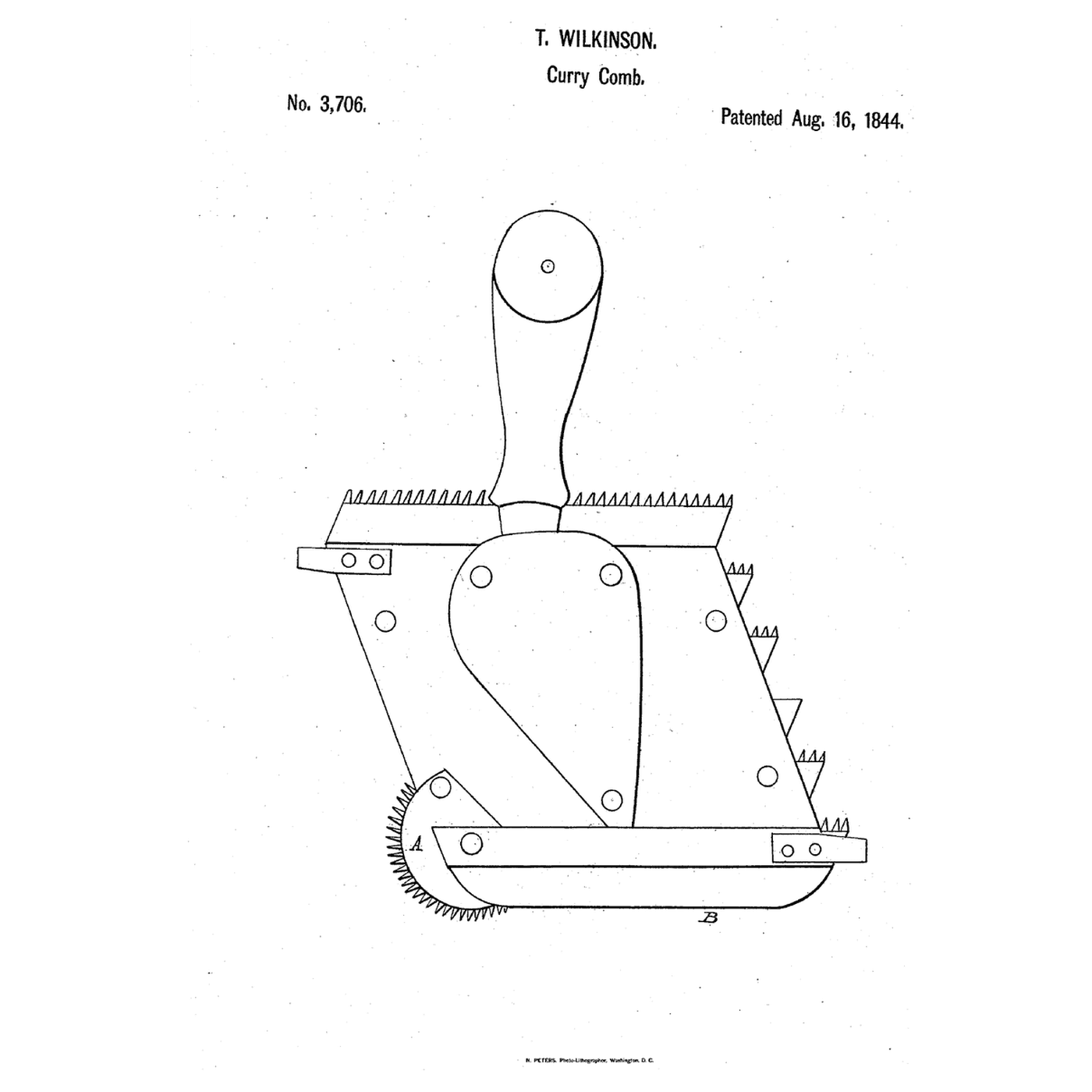
The Hock Curry Comb: A Toothed Half-Circle for the Hollows
ngu-Forge
Umsebenzi Wensimbi
29
0
0
0
0
0
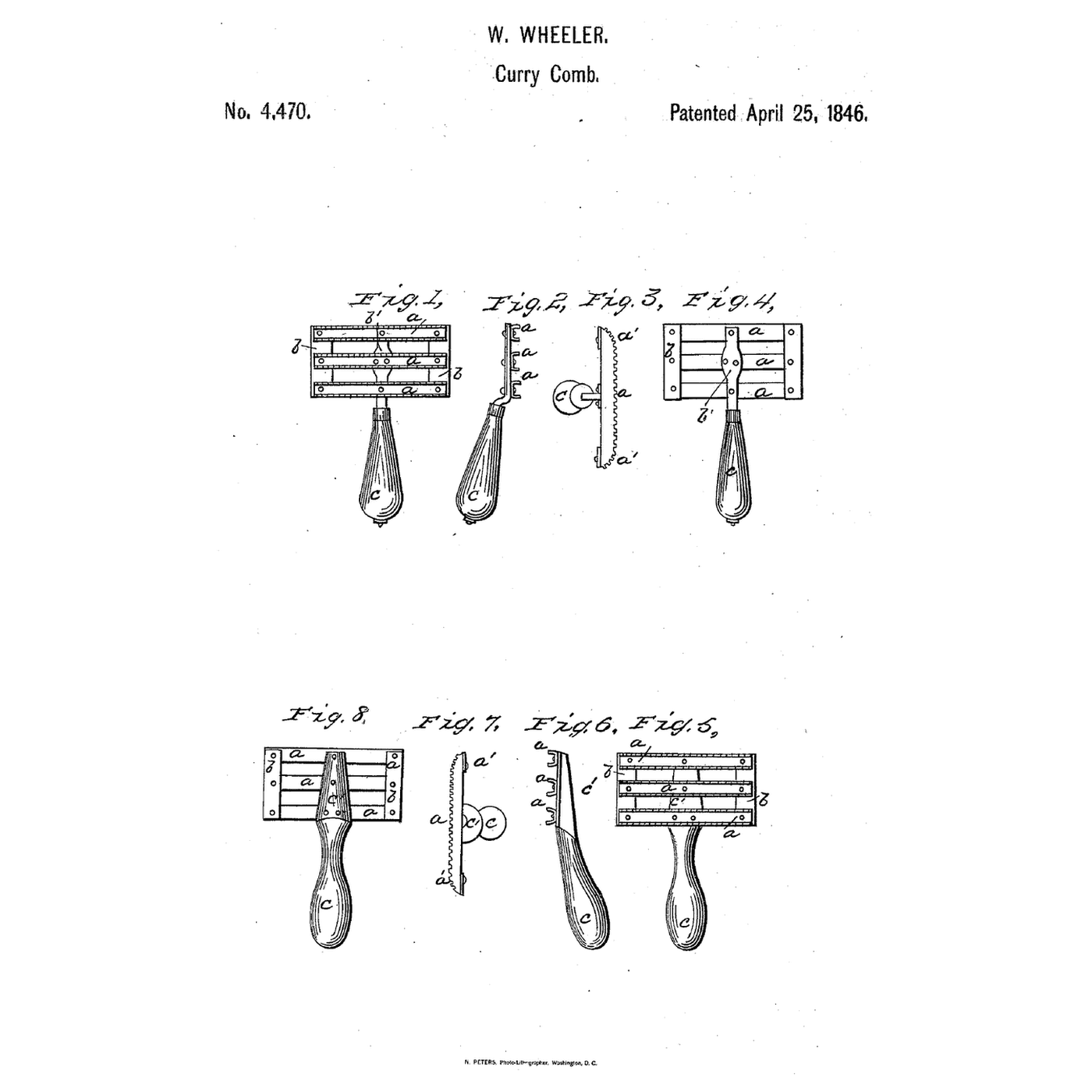
The Open-Back Curry Comb: Three Bent Troughs and No Back to Clog
ngu-Forge
Umsebenzi Wensimbi
37
0
0
0
0
0

The One-Sheet Curry Comb: Cut, Slit and Fold, With No Rivet and No Waste
ngu-Mary
Umsebenzi Wensimbi
30
0
0
0
0
0
CC0 Isizinda Somphakathi
Le blueprint ikhishwe ngaphansi kwe-CC0. Ukhululekile ukukopisha, ukuguqula, ukusabalalisa, nokusebenzisa ngaphandle kwemvume.
Sekela uMenzi ngokuthenga imikhiqizo nge-Blueprint yabo IKhomishane Yomenzi kumiswe ngabathengisi, noma dala inguqulo entsha yale Blueprint bese uyifaka njengoxhumaniso ku-Blueprint yakho ukuze wabelane ngemali engenayo.