ARTE
BELEZA E BEM-ESTAR
ARTESANATO
CULTURA E HISTÓRIA
ENTRETENIMENTO
MEIO AMBIENTE
COMIDA E BEBIDAS
ENGENHARIA REVERSA
CIÊNCIAS
ESPORTES
TECNOLOGIA
TECNOLOGIA VESTÍVEL
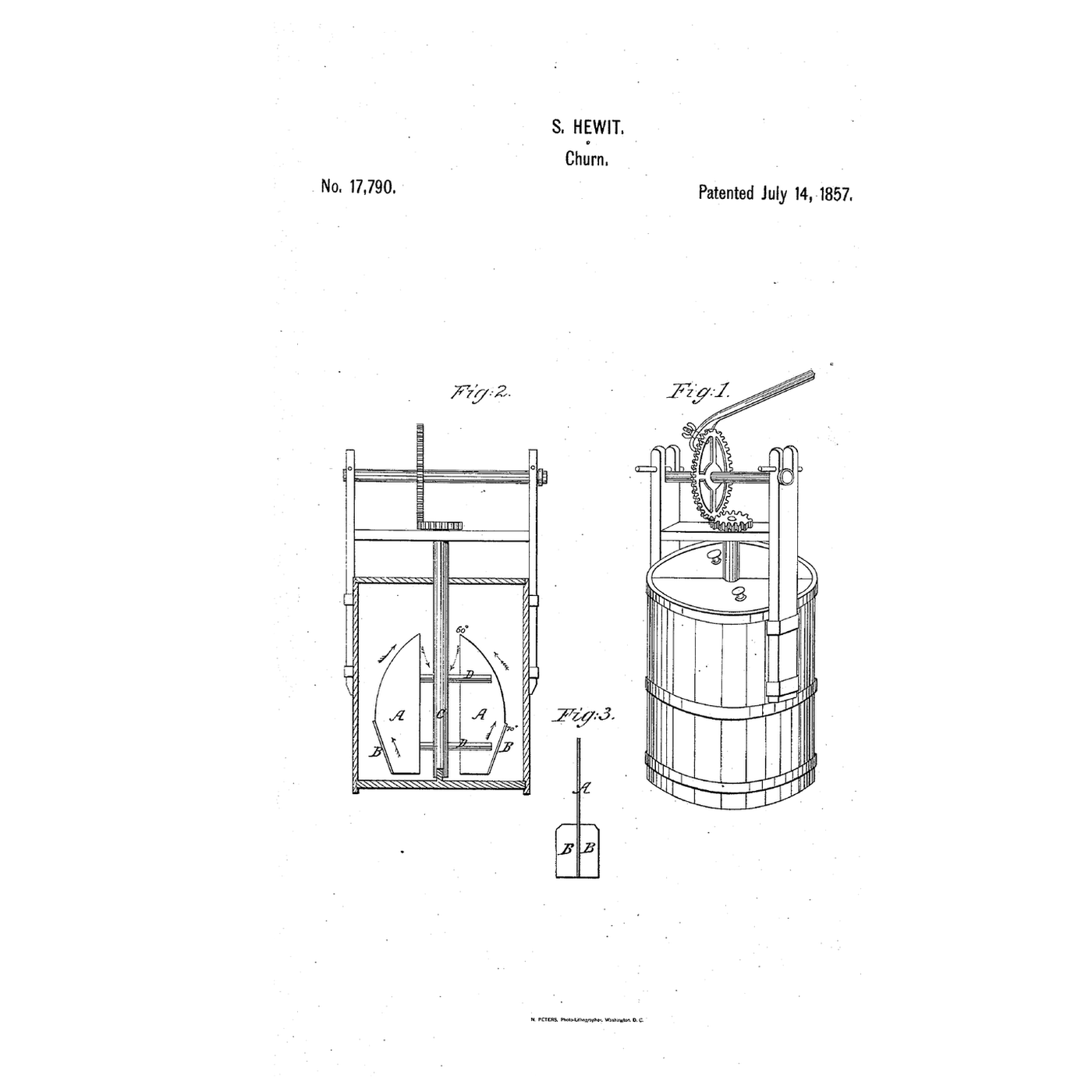


Flanged-Float Upcurrent Churn: Flanges Drive the Cream Up the Sides, It Falls Down the Middle
Silas Hewit of Seneca Falls, New York, received US 17,790, dated 14 July 1857, for floats with a flange on each outward edge "set on an angle of about 70 degrees with the bottom of the churn," their tops curved inward, leaving "about one to two inches" by the shaft for the cream to fall through.
This rung prints the floats, step and gears, builds the churn and makes butter.
Iniciante
About 3 hours, plus printing
Instruções
1
1
Up the sides, down the middle
Up the sides, down the middle
A carregar o notebook Jupyter…
2
2
A loop up and down before it
A loop up and down before it
Wade sends the cream up the sides and down a disk's aperture; Hewit up the floats and down by the shaft.
3
3
Read US 17,790
Read US 17,790
"The great advantage of the flanges consists in their forcing the cream continually in an upward current, and the angle of the floats at the top inclining inward the cream thus forced up is allowed to fall around the shaft downward through the center of the churn to the bottom of the tub, where it is again caught by the flanges and is again forced upward."
4
4
Print the parts
Print the parts
Print two floats (/uploads/blueprints/flanged-float-upcurrent-churn-float.stl), the step (/uploads/blueprints/flanged-float-upcurrent-churn-step.stl), the crown wheel (/uploads/blueprints/flanged-float-upcurrent-churn-crown-wheel.stl), the pinion (/uploads/blueprints/flanged-float-upcurrent-churn-pinion.stl) and the standard (/uploads/blueprints/flanged-float-upcurrent-churn-standard.stl). Print in PETG at 0.2 mm layers, 30 % infill, 4 walls; wash before first use.
Materiais para este passo:
 Filamento PETG1 peça
Ferramentas necessárias:
 Impressora 3D de filamento (FDM)
5
5
Shaft and floats
Shaft and floats
Drill two 8 mm holes through a 10 mm square hardwood shaft, 75 mm apart, and push 8 mm dowels through them as the arms. Glue a float onto each pair of arm ends, about 35 mm out from the shaft, pitched at 70 degrees to the bottom. Stand the shaft in the step in a tapered food-grade bucket.
Materiais para este passo:
 Cavilhas de madeira dura1 peça
 Cola de madeira1 peça
 Balde de 20 litros1 peça
Ferramentas necessárias:
 Serrote
 Berbequim sem fios
 Jogo de brocas
6
6
Lid, gears and crank
Lid, gears and crank
Fix half the lid with a hole for the shaft, the pinion on its top and the standard with the crown wheel meshing it; screw a dowel handle into the wheel.
Materiais para este passo:
 Varão de aço macio1 peçaCavilhas de madeira dura1 peça
 Parafuso para madeira n.º 8 x 1"1 peça
Ferramentas necessárias:
 Conjunto de chaves de fendasBerbequim sem fios
7
7
The build in 3D
The build in 3D
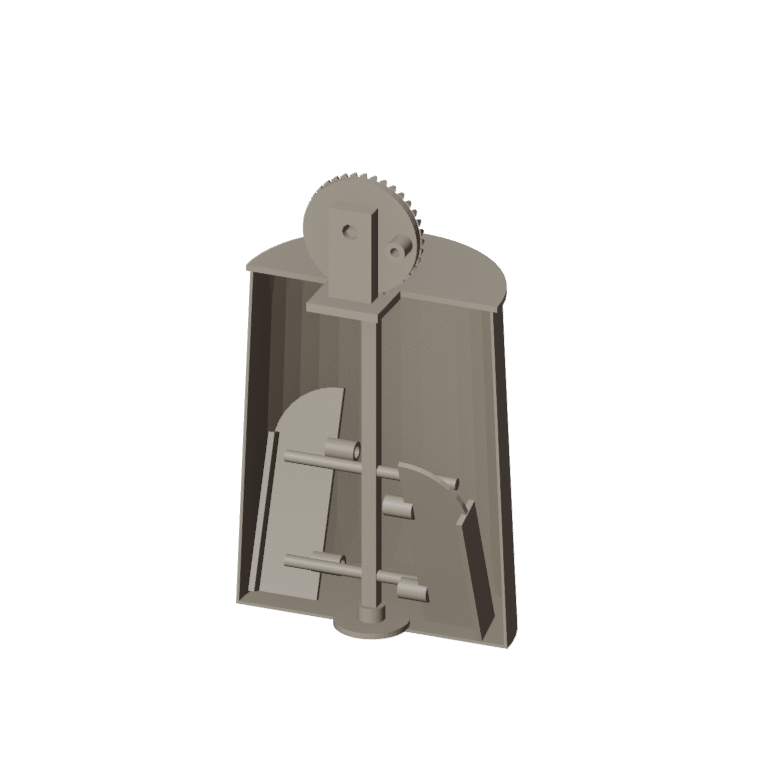
FreeCAD model of this build: the bucket cut away to show the two flanged floats on their arms, pitched at 70 degrees, the gap by the shaft, and the crown wheel and pinion.
8
8
Churn
Churn
Let the heavy cream stand until it reaches about 15 °C, checked with the thermometer. Pour in 2 litres. Crank steadily so the cream rises at the sides and falls by the shaft; time until the butter comes. Pour off the buttermilk, add cold water, churn a little and pour off again until it runs clear; work in a pinch of salt and weigh the butter.
Materiais para este passo:
 Natas para bater2000 ml
 Sal marinho grosso1 peça
 Água1 peça
Ferramentas necessárias:
 Termómetro de sonda permanente
 Cronómetro
 Balança digital de cozinha
 Taça grande de aço inoxidável
9
9
Troubleshooting
Troubleshooting
Flanged-float churn troubleshooting.
Flow
Loading...
10
10
History and honest limits
History and honest limits
**Silas Hewit** of Seneca Falls, Seneca County, New York, US 17,790, 14 July 1857. He wrote that he had "found by experiment" these angles gave the most powerful agitation. He claimed the floats in combination with the flanges. A bucket and printed parts stand in for his tub. FDM prints hold food in their layer lines, so wash well and replace when worn.
Materiais
9- 1 peçaReferência
- 1 peçaReferência
- 1 peçaReferência
- 1 peçaReferência
- 1 peçaReferência
- Referência
- 2000 mlReferência
- 1 peçaReferência
- 1 peçaReferência
Ferramentas necessárias
9- Referência
- Referência
- 1 vendor sell this, none ship to you yetReferência
- Referência
- Referência
- Referência
- Referência
- Referência
- Referência
Ficheiros de design
1Blueprints relacionados
Estes blueprints compartilham conhecimento — técnicas, materiais ou princípios
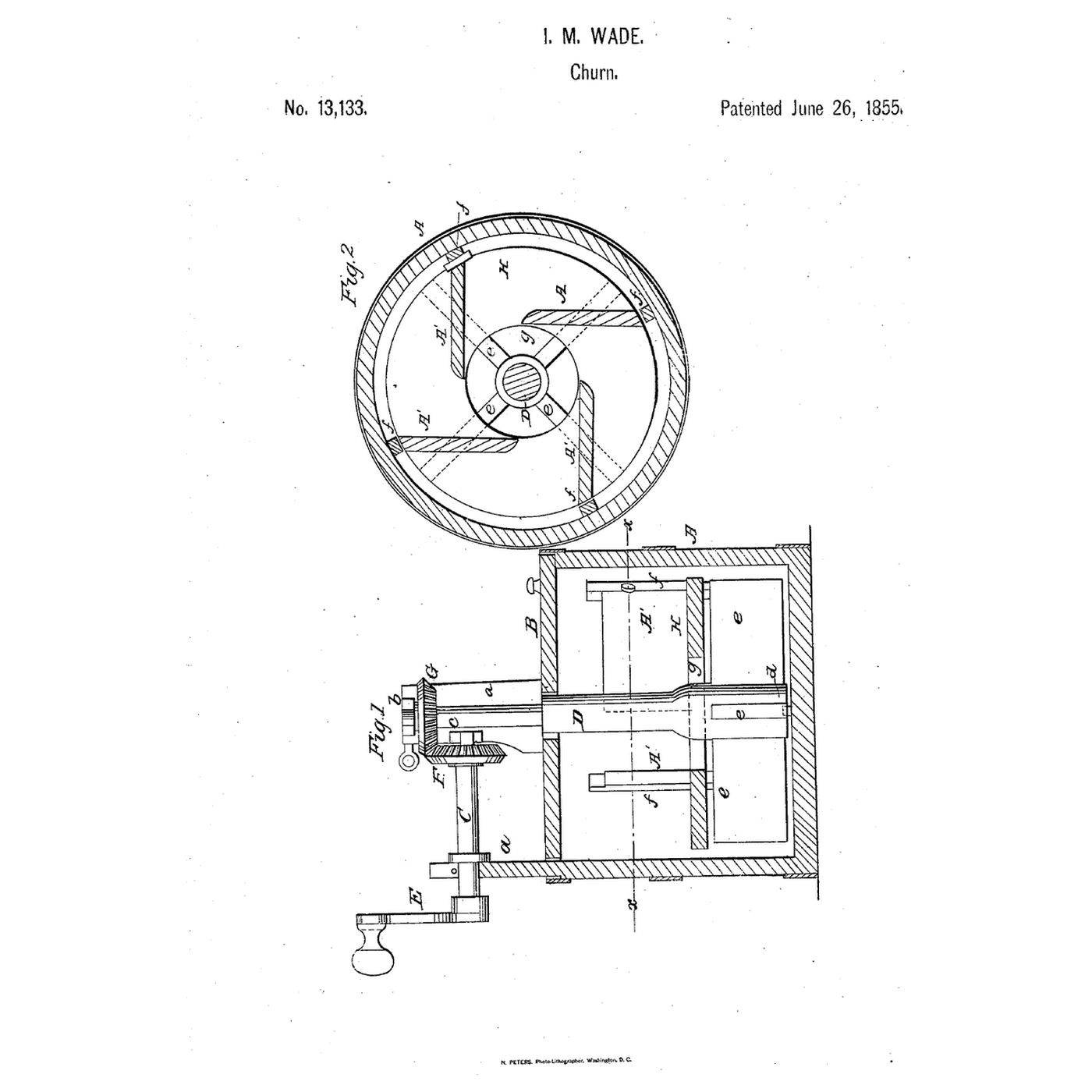
Braked-Disk Slat-and-Wing Churn: Up Between the Slats, Down Through the Disk
por Martin
COMIDA E BEBIDAS
2
0
0
0
0
0
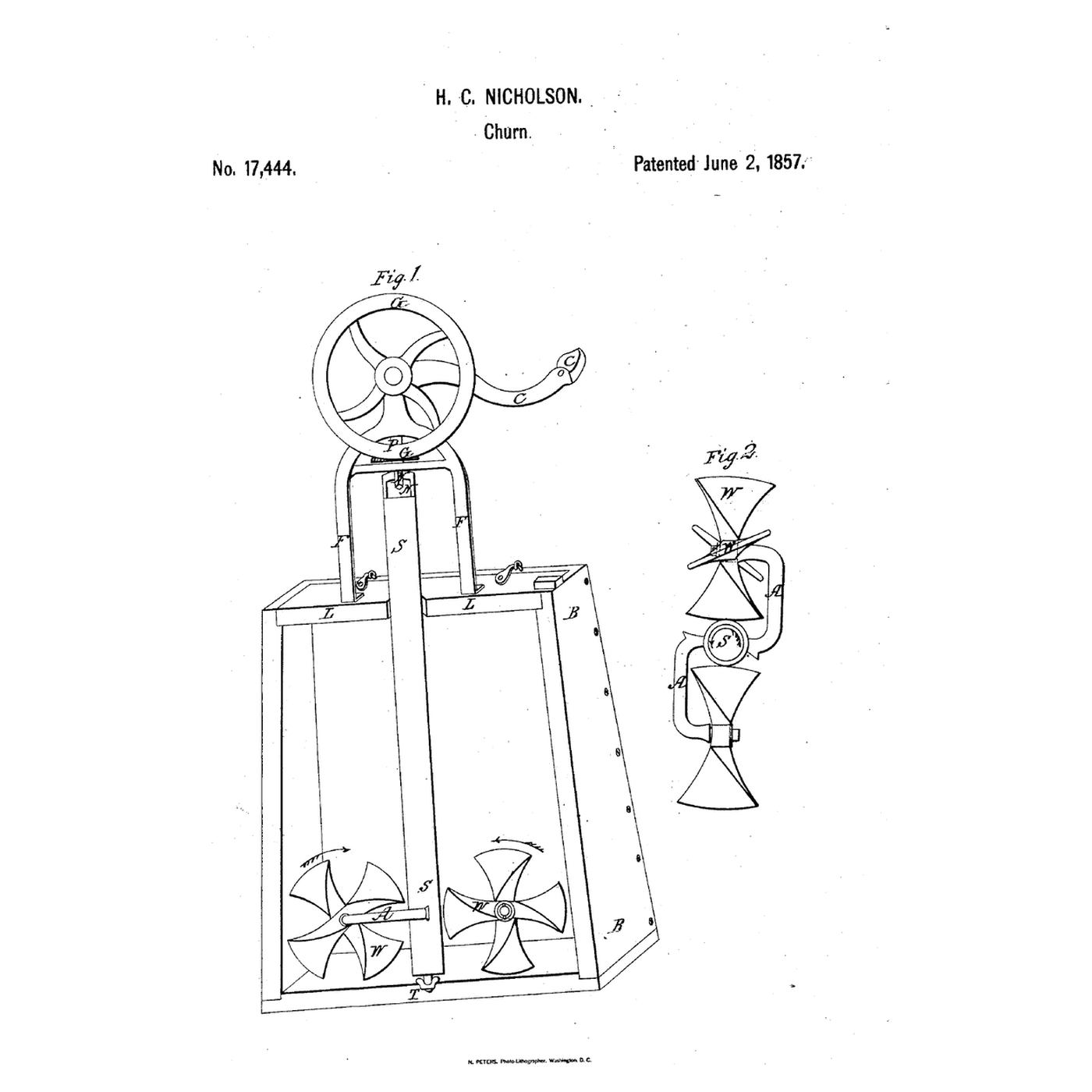
Flutter-Wheel Bent-Arm Churn: Wind Wheels Carried Round, Spinning on Their Own Journals
por Jinx
COMIDA E BEBIDAS
3
0
0
0
0
0
Churning Butter from Cream — The 5,000-Year-Old Fat Separation
por TheChef
ARTESANATO
47
0
0
0
0
0
CC0 Domínio Público
Este blueprint é liberado sob CC0. Você é livre para copiar, modificar, distribuir e usar este trabalho para qualquer finalidade, sem pedir permissão.
Apoie o Maker comprando produtos através do Blueprint, onde ele ganha uma Comissão Maker definida pelos vendedores, ou crie uma nova versão deste Blueprint e inclua-o como conexão no seu próprio Blueprint para compartilhar receita.