ARTE
BELEZA E BEM-ESTAR
ARTESANATO
CULTURA E HISTÓRIA
ENTRETENIMENTO
MEIO AMBIENTE
COMIDA E BEBIDAS
ENGENHARIA REVERSA
CIÊNCIAS
ESPORTES
TECNOLOGIA
TECNOLOGIA VESTÍVEL
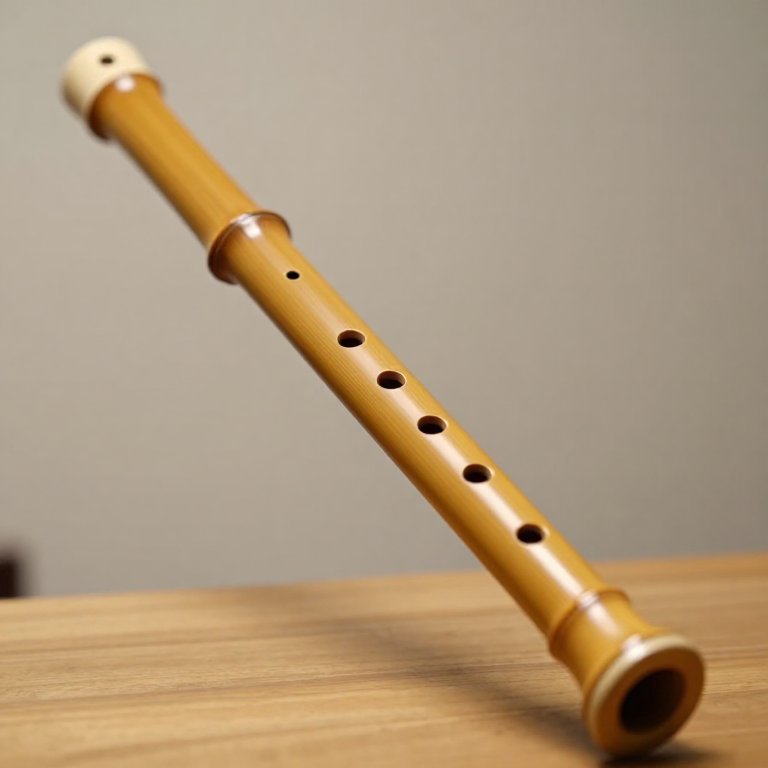


Making a Bamboo Recorder — A Fipple Flute with a Full Scale
Build a recorder: fit a fipple block into a bamboo tube to make the whistle, then bore finger holes to play a full scale. A buildable school project in the fipple (duct) flute and open-pipe physics — why an open tube sounds an octave higher than a closed panpipe of the same length.
Iniciante
45 minutes
Instruções
1
1
A built-in whistle you can play
A built-in whistle you can play
A recorder is a fipple flute: a block in the mouthpiece makes the whistle for you, and a row of finger holes turns that whistle into a full melody.
2
2
Choose a straight tube
Choose a straight tube
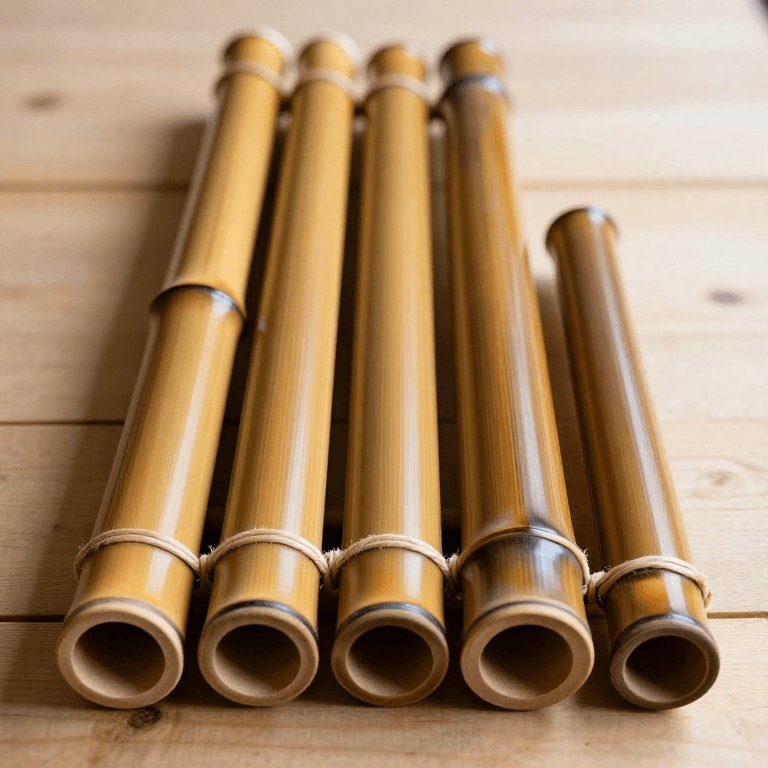
Pick a straight bamboo tube about 30 cm long and 2 cm across, with smooth walls.
Materiais para este passo:
 Bambu1 peça
3
3
Clear the bore
Clear the bore
Push out all the inner nodes so air flows freely from the top of the tube straight through to the open bottom.
Ferramentas necessárias:
 Sovela
4
4
Cut the mouth window
Cut the mouth window
A few centimetres from the top, cut a small rectangular window with one sharp, clean far edge — the labium. This edge is what makes the sound.
Ferramentas necessárias:
 Faca de talha sloyd
5
5
Shape the fipple block
Shape the fipple block
Carve a cork plug to fit snugly in the top, but shave one flat face so a thin channel — the windway — is left along the top of the tube.
Materiais para este passo:
 Placa de cortiça1 peça
Ferramentas necessárias:
Faca de talha sloyd6
6
Set the windway
Set the windway
Push the block in so the flat channel aims a thin ribbon of breath straight at the sharp edge of the window, with no gaps around the block.
7
7
Test the whistle
Test the whistle
Blow gently through the windway. Nudge the block and trim the sharp edge until you get a clear, steady whistle.
8
8
Mark the finger holes
Mark the finger holes
Along the front, mark seven holes spaced to fall under your fingers, plus one on the back for your thumb.
9
9
Pierce the holes
Pierce the holes
Pierce each mark with an awl and open it out. Start small — you can always widen a hole, but you cannot un-drill one.
Ferramentas necessárias:
Sovela10
10
Open holes to tune
Open holes to tune
Cover all holes for the lowest note and open them one by one to climb the scale. Enlarge a hole slightly to raise its note if it sounds flat.
Ferramentas necessárias:
Faca de talha sloyd11
11
Compare it with the panpipe
Compare it with the panpipe
Both ends of a recorder are open, so it is an OPEN pipe — it sounds about an octave higher than a closed panpipe tube of the same length.
12
12
Play a tune
Play a tune
Practise covering the holes cleanly with the soft pads of your fingers. With eight holes you can play a full scale and simple melodies.
13
13
Compendium — the fipple flute
Compendium — the fipple flute
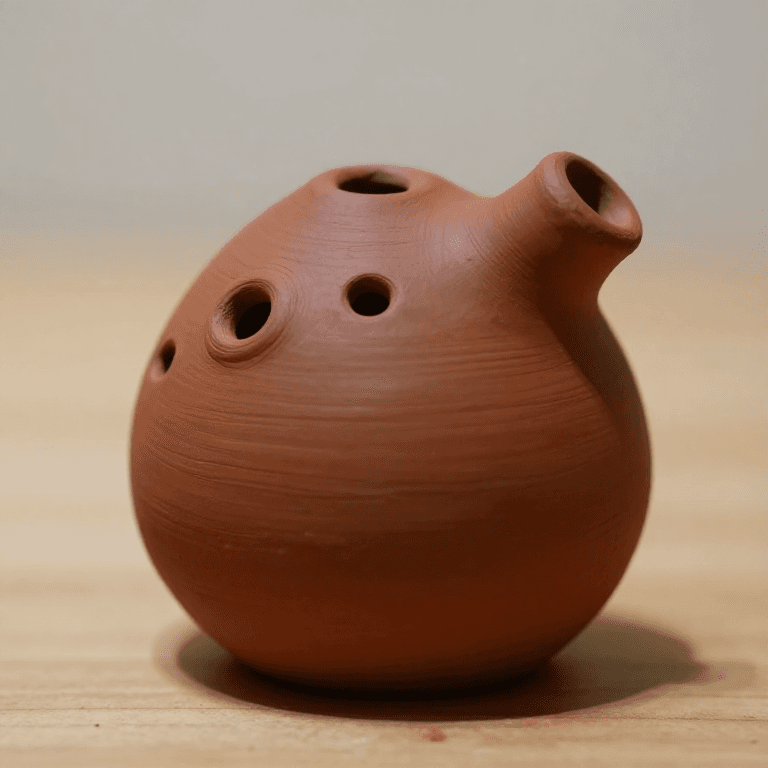
A recorder is a fipple, or duct, flute. The block squeezes your breath into a thin flat ribbon and aims it at the sharp edge of the window; the ribbon flaps rapidly above and below that edge (an edge-tone), and this drives the air column in the tube — the same sound source as a panpipe, an ocarina and an organ flue pipe, except the windway is built in so you do not have to aim your own breath. The pitch is set by the length of the vibrating air column. With the far end and the finger holes open, the recorder behaves as an OPEN pipe, whose longest wave is about twice its length, so its frequency is roughly f = v / (2L), where v is the speed of sound. That is a full octave higher than a CLOSED panpipe tube of the same length, where f = v / (4L) — open and closed pipes are the two great families of wind instruments. Opening a finger hole shortens the effective air column and raises the note, and blowing harder makes the column jump to its next harmonic (overblowing) to reach the higher register. Medieval recorders were bored from hardwoods such as boxwood and maple; a bamboo or elder tube gives a simple folk version with exactly the same physics.
Blueprints relacionados
Estes blueprints compartilham conhecimento — técnicas, materiais ou princípios


CC0 Domínio Público
Este blueprint é liberado sob CC0. Você é livre para copiar, modificar, distribuir e usar este trabalho para qualquer finalidade, sem pedir permissão.
Apoie o Maker comprando produtos através do Blueprint, onde ele ganha uma Comissão Maker definida pelos vendedores, ou crie uma nova versão deste Blueprint e inclua-o como conexão no seu próprio Blueprint para compartilhar receita.