ARTE
BELEZA E BEM-ESTAR
ARTESANATO
CULTURA E HISTÓRIA
ENTRETENIMENTO
MEIO AMBIENTE
COMIDA E BEBIDAS
ENGENHARIA REVERSA
CIÊNCIAS
ESPORTES
TECNOLOGIA
TECNOLOGIA VESTÍVEL
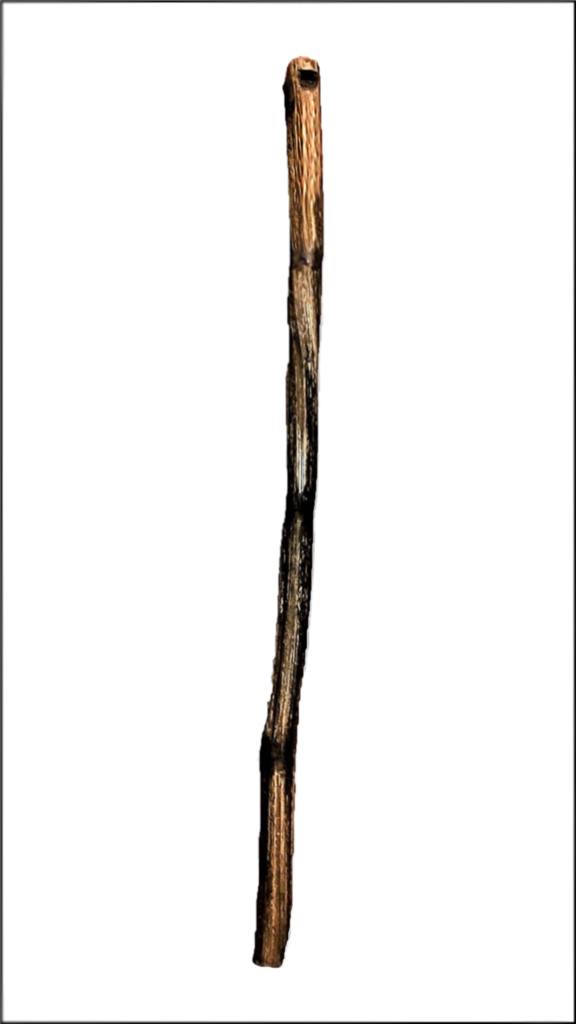


Making a Kalyuka — The Russian Overtone Flute with No Finger Holes
Cut a hollow elder stem into a Russian shepherd's overtone flute that has NO finger holes at all. You play a whole melody just by overblowing the harmonic series and covering the far end with a finger. A buildable school project in the harmonic series and open-versus-stopped pipes.
Iniciante
30 minutes
Instruções
1
1
A flute with no finger holes
A flute with no finger holes
The kalyuka is a Russian shepherd's overtone flute. It has NO finger holes — you play a whole tune from the tube's natural harmonics by blowing harder and covering the far end.
2
2
Cut a hollow stem
Cut a hollow stem
Cut a straight hollow stem — elder, willow or reed — about 60 to 70 cm long and a thumb thick. Shepherds cut theirs from tall weeds after the hay harvest.
Materiais para este passo:
 Ramo de sabugueiro (oco)1 peça
Ferramentas necessárias:
 Faca de talha sloyd
3
3
Clear the bore
Clear the bore
Push out all the soft inner pith so the tube is open and smooth from end to end, with both ends fully open.
Ferramentas necessárias:
 Sovela
4
4
Bevel the blowing rim
Bevel the blowing rim
Shave the top rim thin and clean at a slight angle, so when you blow across it your breath splits into a clear tone, like blowing over a bottle.
Ferramentas necessárias:
Faca de talha sloyd5
5
Find the fundamental
Find the fundamental
Blow gently across the top rim, both ends open, until you get the lowest clear note. This is the tube's fundamental — its slowest natural vibration.
6
6
Overblow to climb the harmonics
Overblow to climb the harmonics
Now blow harder and faster. The note jumps UP to the next harmonic — two, three, four times the fundamental — with no finger holes to change anything.
7
7
Cover the far end
Cover the far end
Cover the bottom end with a finger and blow again. The flute now plays a DIFFERENT set of notes, because a closed-end tube has its own harmonic series.
8
8
Play a melody from overtones
Play a melody from overtones
By choosing how hard you blow AND whether the far end is open or closed, you can pick a whole folk melody out of the overtones alone.
9
9
See the harmonics
See the harmonics
Watch the frequencies on a free tuner app as you overblow. Each note is a whole-number multiple of the fundamental — that is the harmonic series, made visible.
10
10
Compendium — the overtone flute
Compendium — the overtone flute
With no finger holes, the kalyuka can only sound the natural harmonic series of the air column inside it: the fundamental and its whole-number multiples (2x, 3x, 4x, 5x...). You choose which one sounds by how hard and fast you blow — overblowing — the same way a bugle, the conch or the Gjallarhorn leap between harmonics with lip tension, except here it is breath speed that does it. Covering the far end turns the OPEN pipe into a STOPPED pipe: that sounds an octave lower and gives only the ODD harmonics (1x, 3x, 5x...), while the open pipe gives them all. Switching between the two series and picking different overtones fills in a surprisingly complete scale from one plain tube — the 'overtone scale', whose naturally out-of-tune seventh and eleventh harmonics give these flutes their haunting folk sound. It is the exact opposite way of playing to the panpipe or recorder: instead of changing the tube's length with holes to pick a note, you leave the length fixed and hunt through its harmonics. Russian and Ukrainian shepherds cut kalyukas from hollow weeds like angelica and motherwort; the Slovak fujara and the Norwegian willow flute (seljefloyte) are close cousins.
Materiais
1- 1 peçaReferência
Blueprints relacionados
Estes blueprints compartilham conhecimento — técnicas, materiais ou princípios

CC0 Domínio Público
Este blueprint é liberado sob CC0. Você é livre para copiar, modificar, distribuir e usar este trabalho para qualquer finalidade, sem pedir permissão.
Apoie o Maker comprando produtos através do Blueprint, onde ele ganha uma Comissão Maker definida pelos vendedores, ou crie uma nova versão deste Blueprint e inclua-o como conexão no seu próprio Blueprint para compartilhar receita.