ARTE
BELEZA E BEM-ESTAR
ARTESANATO
CULTURA E HISTÓRIA
ENTRETENIMENTO
MEIO AMBIENTE
COMIDA E BEBIDAS
ENGENHARIA REVERSA
CIÊNCIAS
ESPORTES
TECNOLOGIA
TECNOLOGIA VESTÍVEL
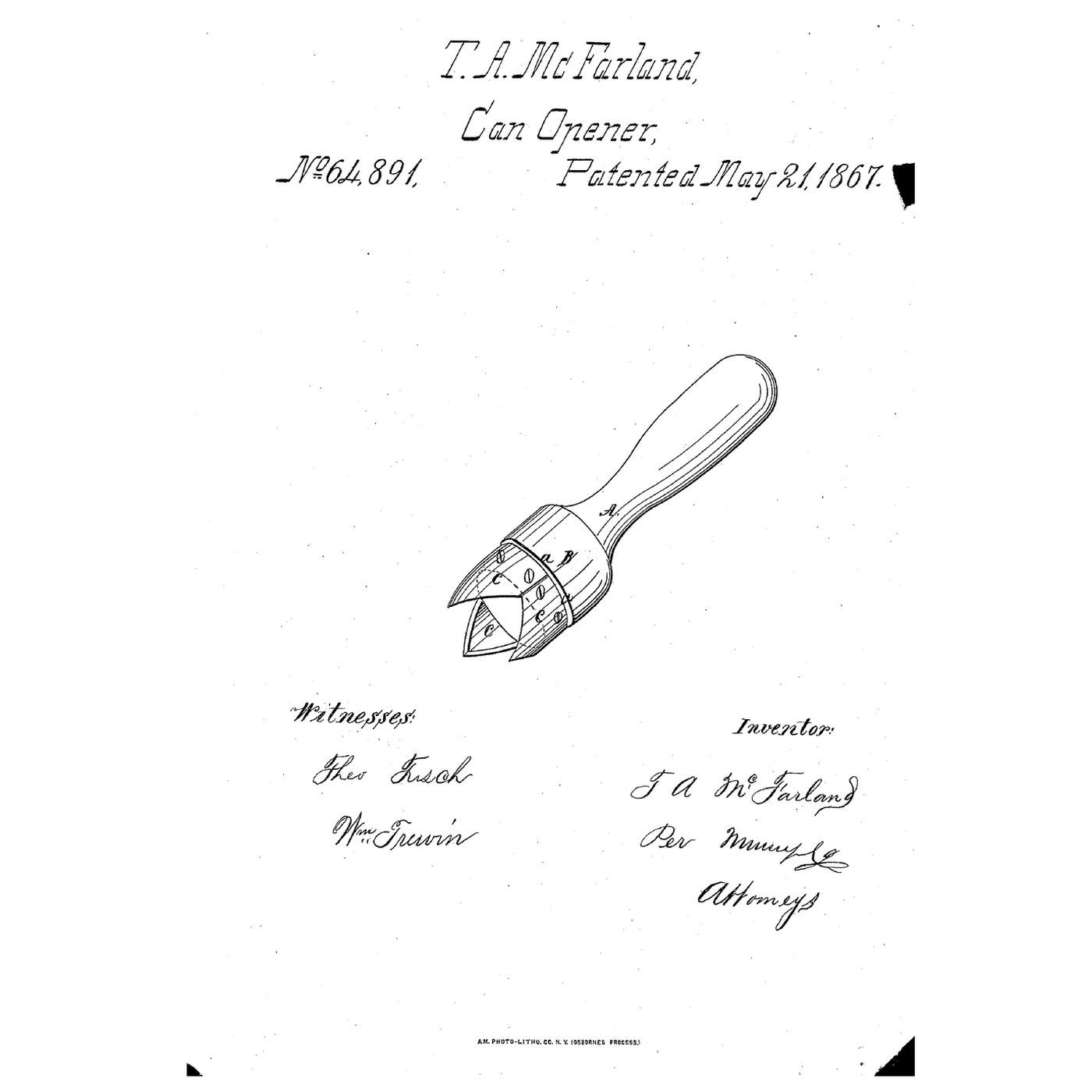


The Single-Blow Can Opener: A Ring of Pointed Teeth Punches the Hole
Cutting into a can with a single blade takes several cuts or blows.
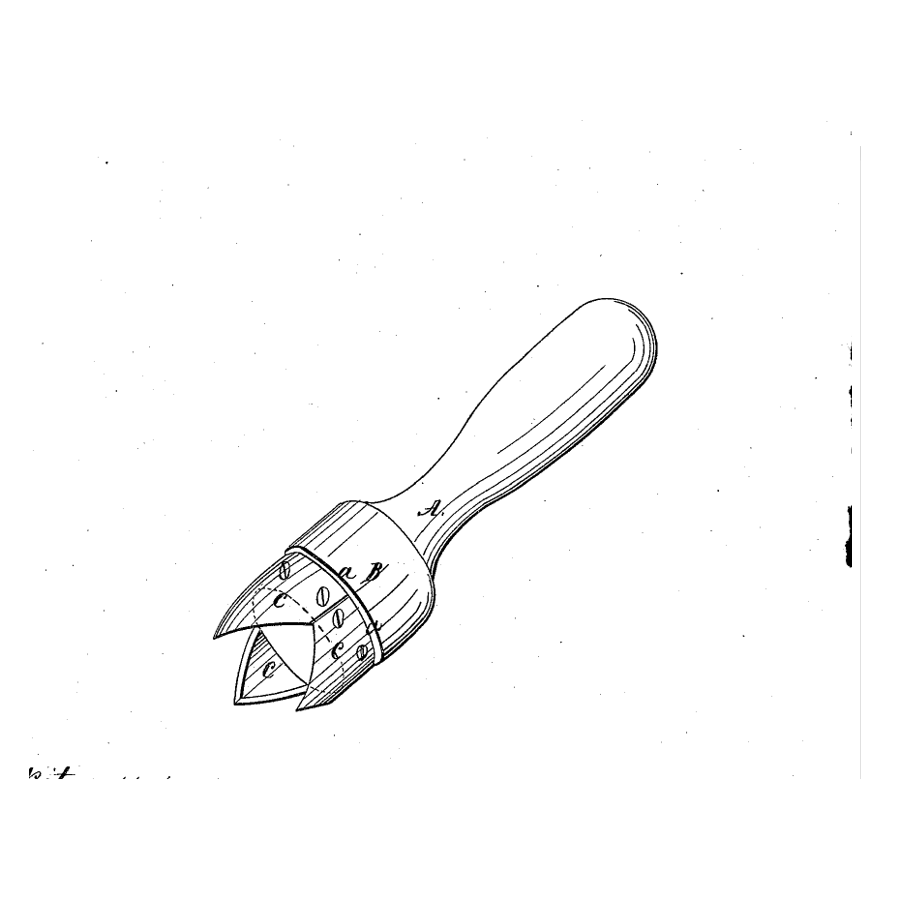
Thomas A. McFarland of Meadville, Pennsylvania, received US 64,891, dated 21 May 1867, for "a cheap, simple, and effective implement for cutting an opening in a can by a single blow": a ring of curved pointed teeth on a handle's head, bevelled inside, whose points enter first and whose edges widen until they meet, punching out a plug that stays inside the cutter.
This rung works out why pointed teeth need so little force, then files the teeth on a steel tube and punches a can top with one blow.
Intermediário
About 3 hours
Instruções
1
1
Peak force and work
Peak force and work
A carregar o notebook Jupyter…
2
2
A single blade before it
A single blade before it
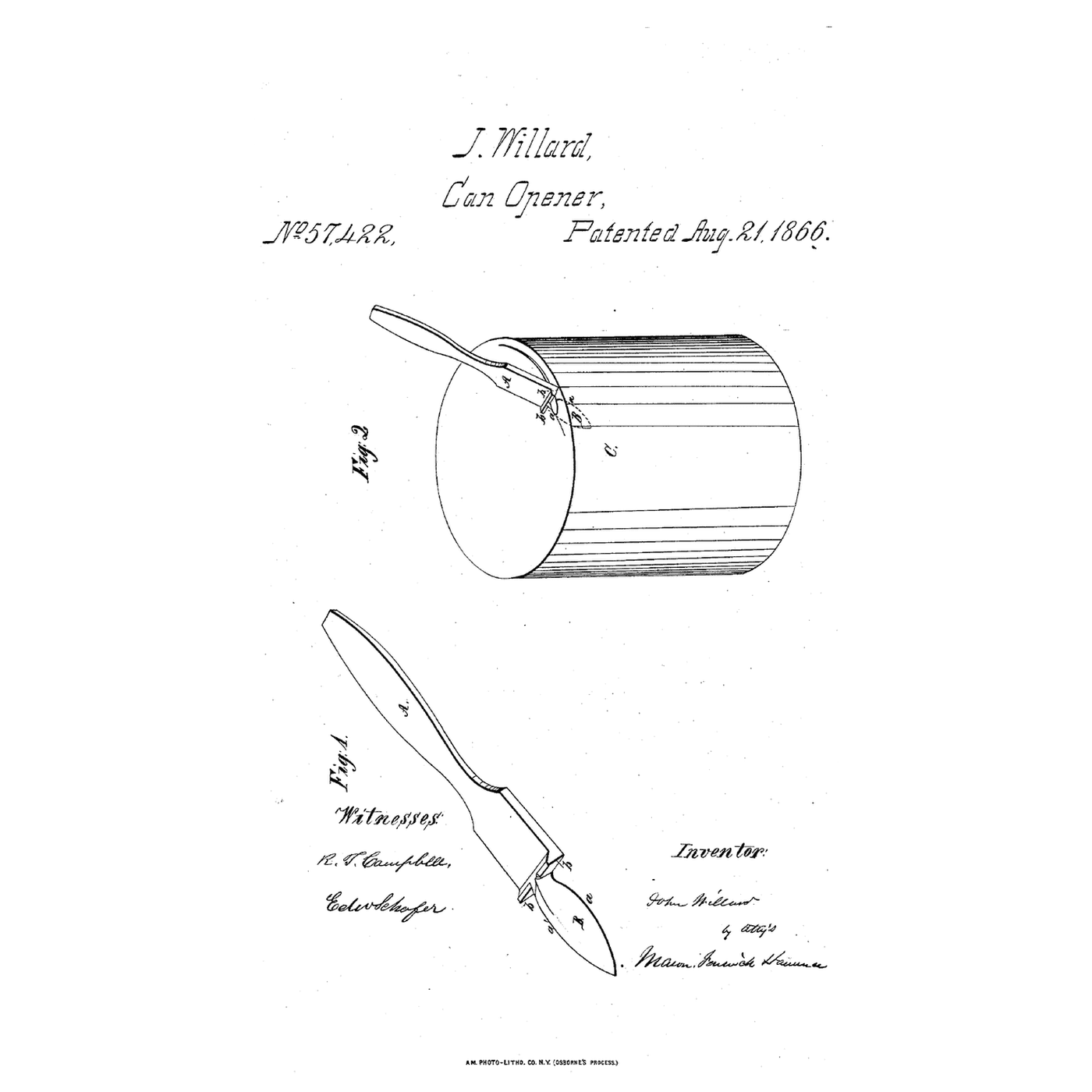
The embedded blueprint cuts a can top a slit at a time with one blade. McFarland rings the blade round into teeth so one blow cuts the whole opening.
3
3
Read US 64,891
Read US 64,891
"In operation the tool is placed on the head of the can, and the points of the teeth driven in by a smart blow, and the cutters forced down until their forks or bases have cut through the can, when a piece will have been cut out of the form of the cutters."
"The teeth being bevelled on the inside tend to compress the plug removed, and cause it to remain inside the cutter, thus facilitating its removal from the can."
4
4
Cut and mark the tube
Cut and mark the tube
Cut 40 mm of 25 mm steel tube. Mark six teeth round one end, 12 mm tall, their bases touching.
Materiais para este passo:
 Tubo de aço1 peça
Ferramentas necessárias:
 Serra de arco para metais
 Torno de bancada
 Marcador permanente
 Régua
Régua5
5
File the teeth
File the teeth
Saw a V between each pair of marks and file the teeth to points. Bevel each tooth's inside edge with a round needle file; leave the outside flush.
Ferramentas necessárias:
Serra de arco para metais Limas (lima de mão)
 Jogo de limas de agulhaTorno de bancada
 Óculos de segurança transparentes
6
6
Fit the handle
Fit the handle
Sand a hardwood dowel to fit the tube's other end, glue 20 mm of it in with epoxy, and leave 100 mm as the handle.
Materiais para este passo:
 Cavilhas de madeira dura1 peça
 Epóxi de dois componentes1 peça
Ferramentas necessárias:
 Lixa
Lixa Paquímetro digital de 6 polegadas
7
7
The build in 3D
The build in 3D
FreeCAD model of this build, not of the patent: a 25 mm steel tube with six 12 mm pointed teeth bevelled inside, on a hardwood handle.
8
8
Punch a can top
Punch a can top
Stand a sealed can on a hardwood block. Set the teeth on its top and strike the handle once with the mallet; count the blows needed, and measure the plug with the caliper.
Materiais para este passo:
 Lata1 peça
 Bloco de madeira dura1 peça
Ferramentas necessárias:
 Maço de borrachaPaquímetro digital de 6 polegadas
 Luvas de trabalho em couroÓculos de segurança transparentes
9
9
Teeth that bend, skid or leave the plug
Teeth that bend, skid or leave the plug
Single-blow can opener troubleshooting.
Flow
Loading...
10
10
History and honest limits
History and honest limits
**Thomas A. McFarland** of Meadville, Pennsylvania, received US 64,891, dated 21 May 1867, for opening oyster, fruit and other cans. The cutters are curved to fit a shoulder on the handle's head and fastened by screws; they may be one piece or sections. He disclaimed cutting an opening broadly, single shear-like cutters, and cork borers with spring handles, and claimed the handle and cutters cutting a plug at a single blow.
**Honest limits.** Mild steel tube is not hardened; the notebook's shear figures are estimates. Your blow counts are the result.
Materiais
5- 1 peçaReferência
- 1 peçaReferência
- Referência
- 1 peçaReferência
- 1 peçaReferência
Ferramentas necessárias
11- Referência
- Referência
- Referência
- Referência
- Referência
- Referência
- Referência
- Referência
- Referência
- Referência
- Referência
Ficheiros de design
1Blueprints relacionados
Estes blueprints compartilham conhecimento — técnicas, materiais ou princípios


CC0 Domínio Público
Este blueprint é liberado sob CC0. Você é livre para copiar, modificar, distribuir e usar este trabalho para qualquer finalidade, sem pedir permissão.
Apoie o Maker comprando produtos através do Blueprint, onde ele ganha uma Comissão Maker definida pelos vendedores, ou crie uma nova versão deste Blueprint e inclua-o como conexão no seu próprio Blueprint para compartilhar receita.