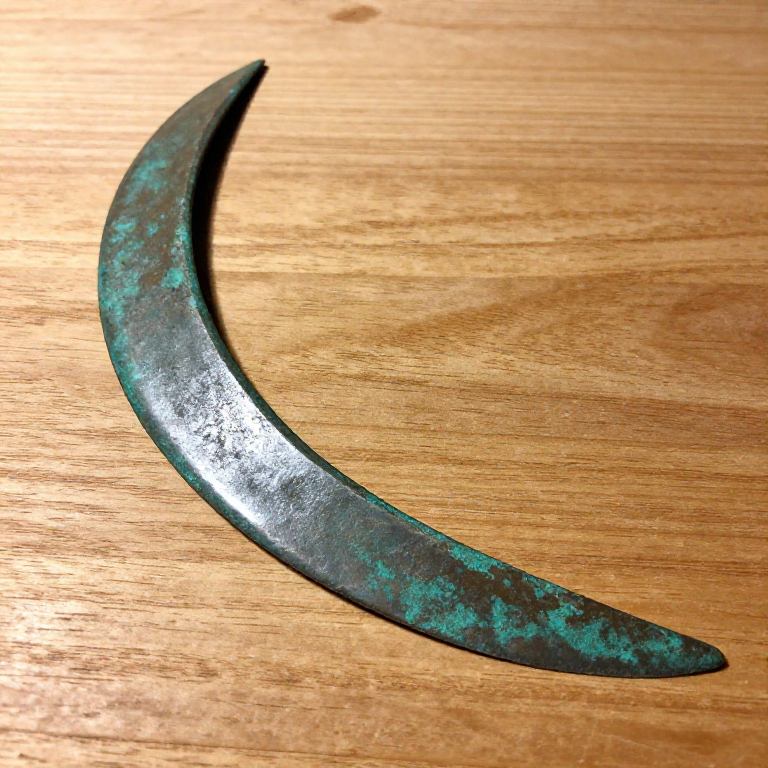


Casting a Bronze Sickle — The Harvesting Tool That Fed Civilisation
The bronze sickle was the tool that made large-scale grain agriculture possible. Its curved blade could cut a handful of wheat or barley stalks in a single sweeping motion — ten times faster than plucking individual seed heads by hand. When bronze sickles replaced flint-toothed sickles around 2000 BCE, a single farmer's harvest yield increased enough to feed several non-farming specialists, enabling the growth of cities, armies, and craft guilds.
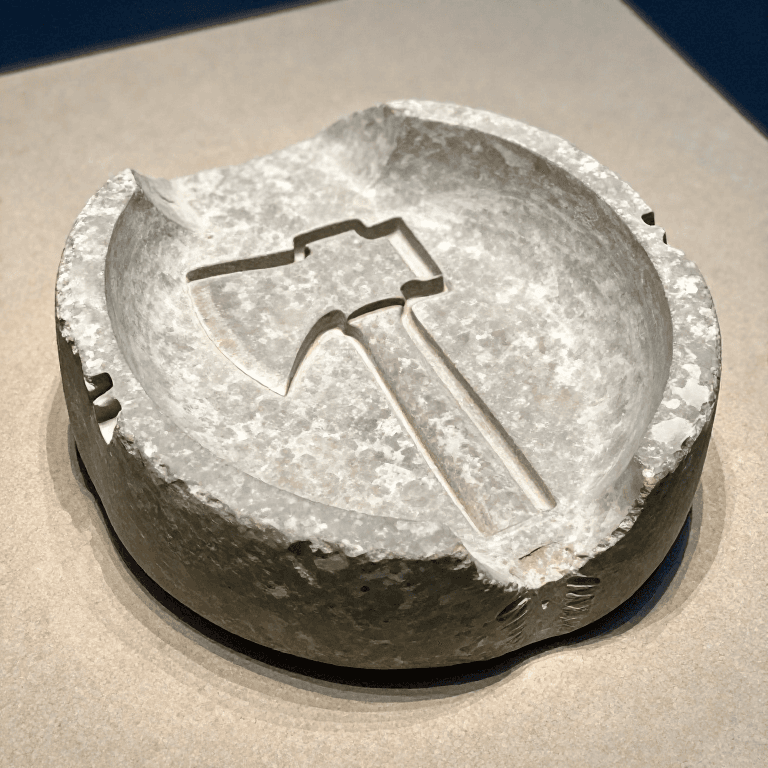
The sickle is cast in a bivalve stone mould as a flat crescent blade with a tang for hafting. The inner (cutting) edge is cold-hammered and ground sharp while the outer edge remains thick for rigidity. The curved form naturally guides the stalks into the blade as the farmer sweeps through a stand of grain.
Archaeological examples show distinctive wear polish (sickle sheen) on the cutting edge from contact with silica-rich grass stems — a telltale sign that identifies even fragmentary bronze sickles in the archaeological record.
说明
Prepare the bivalve mould
Prepare the bivalve mould
此步骤所需材料:
 皂石块2 个
Assemble and bind the mould
Assemble and bind the mould
此步骤所需材料:
 生皮条1 m
Melt and pour the bronze
Melt and pour the bronze
此步骤所需材料:
 木炭3 公斤
所需工具:
 坩埚钳
坩埚钳Cool, demould, and remove sprue
Cool, demould, and remove sprue
此步骤所需材料:
 砂岩(磨料)1 个
Cold-hammer the cutting edge
Cold-hammer the cutting edge
所需工具:
 石锤(打制石器)
 平整石板
平整石板Grind and sharpen
Grind and sharpen
此步骤所需材料:
 磨刀石1 个
Shape the wooden handle
Shape the wooden handle
Haft the sickle and secure
Haft the sickle and secure
已连接蓝图材料
此蓝图制作

相关蓝图
这些蓝图共享知识——技术、材料或原理
CC0 公共领域
此蓝图以 CC0 协议发布。你可以自由复制、修改、分发和使用此作品,无需征得许可。
通过购买蓝图中的产品支持创客,他们将获得 创客佣金 (由供应商设定),或创建此蓝图的新版本并将其作为连接包含在你自己的蓝图中以分享收入。