


Casting a Bronze Socketed Spearhead — Bivalve Mould Method
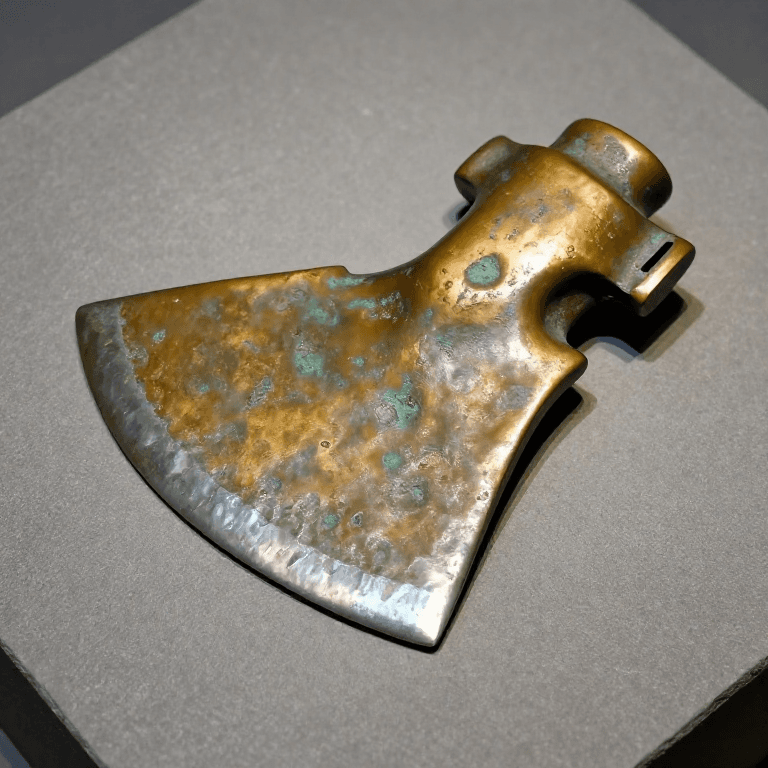
The socketed spearhead was a major advance over the flat tanged point — the hollow socket allowed the shaft to be inserted directly into the head, creating a stronger and more aerodynamic weapon. This design appeared across the Bronze Age world from approximately 2000 BCE and remained in use for over a thousand years.
Creating the socket requires a bivalve mould with a clay core inserted between the two stone halves. The core occupies the space where the socket will be, so when the bronze solidifies around it and the core is broken out, a hollow tube remains. This is one of the earliest examples of core-casting — a technique that later evolved into the lost-wax process for complex hollow sculptures.
The leaf-shaped blade is cast with a raised midrib for rigidity, then the edges are cold-hammered and ground sharp. Two small holes at the socket base allow a pin or binding to lock the shaft in place.
说明
Prepare the bivalve mould
Prepare the bivalve mould
此步骤所需材料:
 Soapstone Block2 个
Form the clay core for the socket
Form the clay core for the socket
此步骤所需材料:
 Refractory Clay200 克
 Fine Sand100 克
Assemble the mould with core
Assemble the mould with core
此步骤所需材料:
 Rawhide Strips1 m
Pre-heat the assembled mould
Pre-heat the assembled mould
Melt and pour the bronze
Melt and pour the bronze
此步骤所需材料:
 Charcoal4 公斤
所需工具:
 Crucible Tongs (long-handled)
Cool and separate the mould halves
Cool and separate the mould halves
Remove the clay core
Remove the clay core
所需工具:
 Antler Tine
Remove sprue and grind the parting line
Remove sprue and grind the parting line
此步骤所需材料:
 Sandstone (Abrasive)1 个
Cold-hammer and sharpen the blade edges
Cold-hammer and sharpen the blade edges
此步骤所需材料:
 Whetstone1 个
所需工具:
 Hammerstone
 Flat Stone Slab
Drill the rivet holes and haft
Drill the rivet holes and haft
材料
9- 占位符
- 200 克占位符
- 100 克占位符
- 占位符
- 4 公斤占位符
- 占位符
- 1 个占位符
- 1 个占位符
- 1 个占位符
所需工具
5- 占位符
- 占位符
- 占位符
已连接蓝图材料
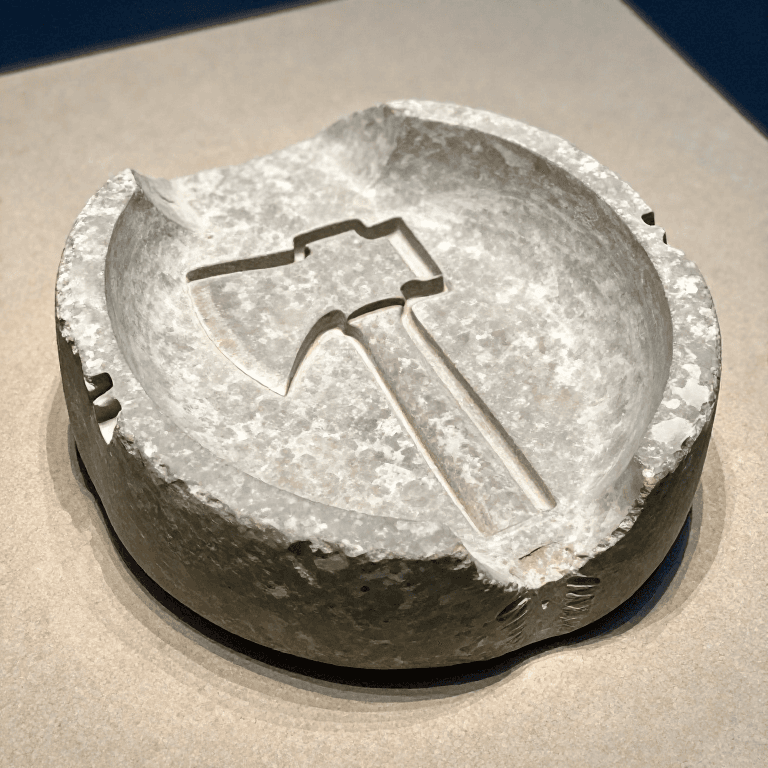
相关蓝图
这些蓝图共享知识——技术、材料或原理
CC0 公共领域
此蓝图以 CC0 协议发布。你可以自由复制、修改、分发和使用此作品,无需征得许可。
通过购买蓝图中的产品支持创客,他们将获得 创客佣金 (由供应商设定),或创建此蓝图的新版本并将其作为连接包含在你自己的蓝图中以分享收入。