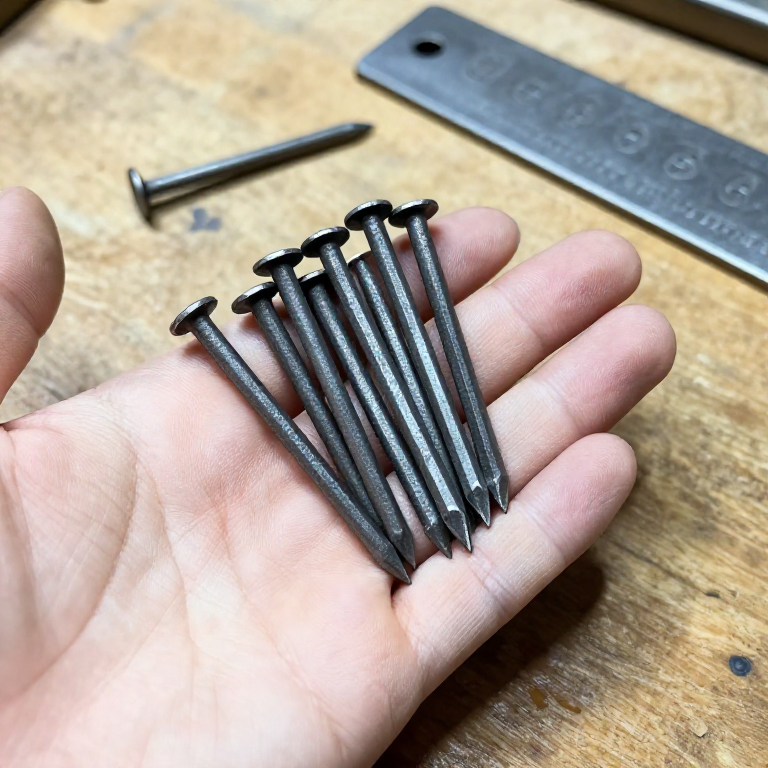


Forging Iron Nails by Hand — Drawing, Cutting, and Heading
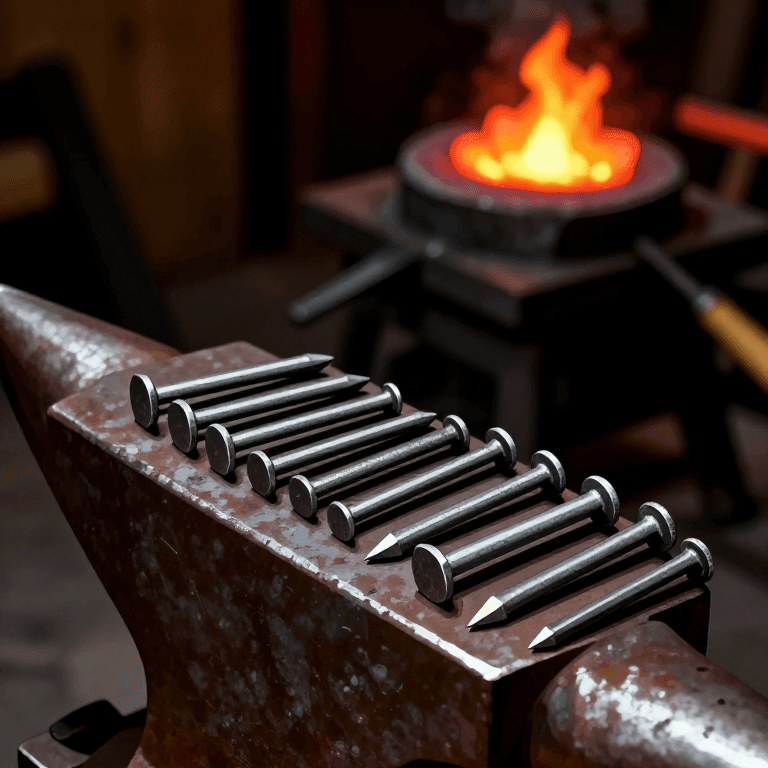
Before wire-drawing machines and nail-cutting factories, every nail was forged individually by hand. A skilled nailer could produce 200-300 nails per day — and millions were needed. The Roman army alone consumed an estimated 7 tonnes of iron nails for a single fortress. Medieval cathedrals, Viking longships, and colonial farmhouses all depended on hand-forged nails.
The process is deceptively simple: heat an iron rod, draw it to a taper, cut it to length, insert the cut end into a heading plate, and hammer the protruding end into a head. Each nail takes about 30 seconds for an experienced nailer — making it one of the fastest and most repetitive forge operations.
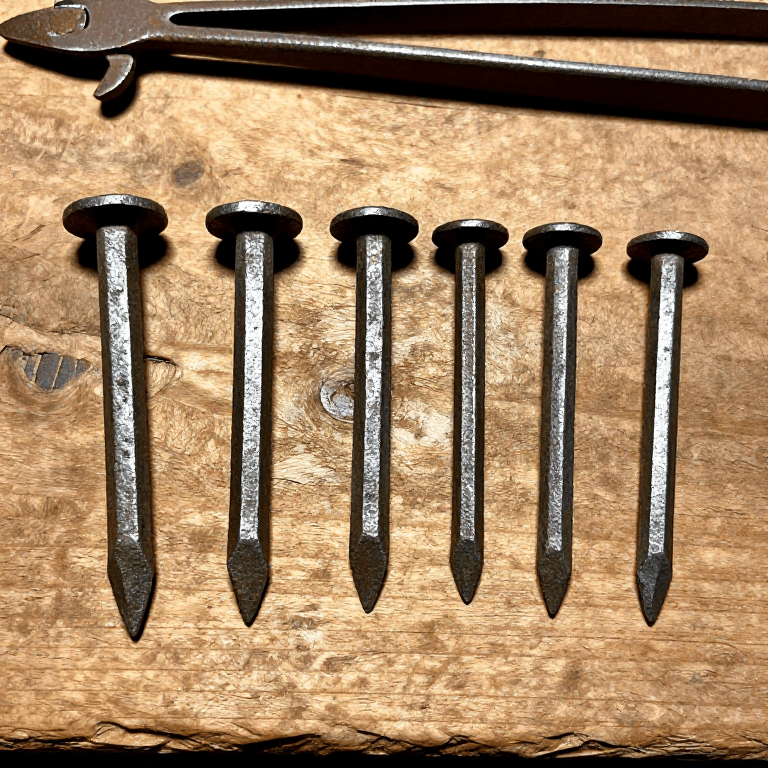
Hand-forged nails have a characteristic square cross-section (from the square rod stock) and an irregular rose head from the final heading blows. This is the blueprint for the most-produced iron object in human history.
说明
Prepare the nail rod
Prepare the nail rod
此步骤所需材料:
 木炭2 公斤
Heat the tip to forging temperature
Heat the tip to forging temperature
所需工具:
 炉膛(锻火)
Draw the taper
Draw the taper
所需工具:
 锻打锤
锻打锤 锻造钳
锻造钳Cut nearly through at the nail length
Cut nearly through at the nail length
Insert into the heading plate
Insert into the heading plate
Forge the head
Forge the head
Snap free and quench
Snap free and quench
此步骤所需材料:
 水2 l
水2 lRepeat for the batch
Repeat for the batch
已连接蓝图材料



相关蓝图
这些蓝图共享知识——技术、材料或原理
CC0 公共领域
此蓝图以 CC0 协议发布。你可以自由复制、修改、分发和使用此作品,无需征得许可。
通过购买蓝图中的产品支持创客,他们将获得 创客佣金 (由供应商设定),或创建此蓝图的新版本并将其作为连接包含在你自己的蓝图中以分享收入。