
Making Bone Black Pigment — Calcining Animal Bones into the Warm Black of Old Master Painters
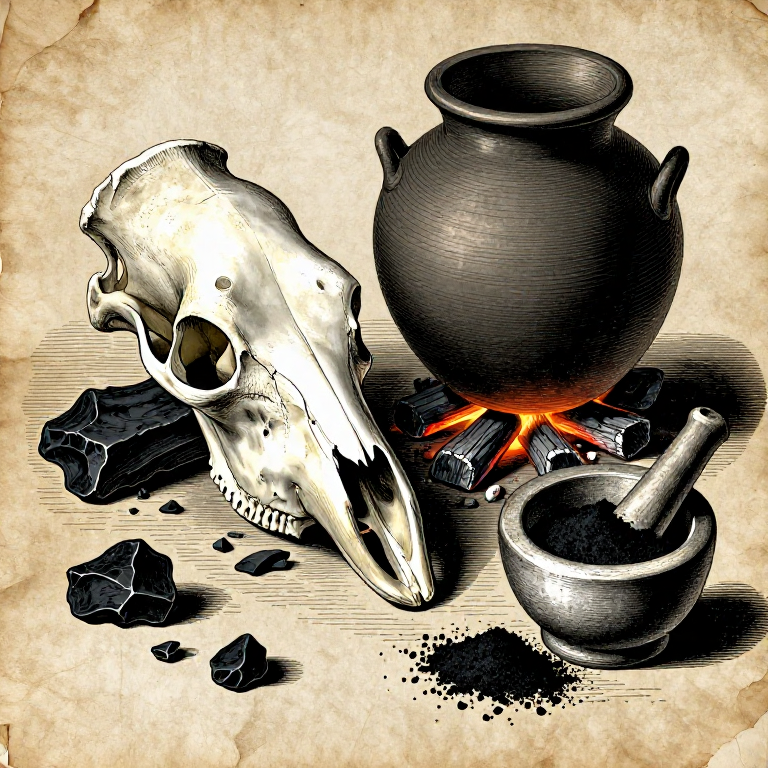
Bone black (also known as bone char or, historically, ivory black when made from elephant ivory) is a distinctive warm, brownish-black pigment produced by calcining animal bones in a sealed vessel without oxygen. Unlike pure carbon blacks such as lampblack or vine black, bone black is a composite material: approximately 10-15% carbon dispersed in a matrix of 80-85% calcium phosphate (hydroxyapatite, Ca₅(PO₄)₃OH) with small amounts of calcium carbonate. This mineral content gives bone black its unique properties — it is more opaque than lampblack, has a warmer undertone, and acts as a mild drying agent in oil paint (calcium phosphate promotes oxidation of linseed oil).
The technique is ancient. Charred bones have been found at Paleolithic cave painting sites alongside ochres and manganese oxide, though it is unclear whether these were used as pigment or were simply fire debris. By the medieval period, bone black was a standard palette item — Cennini lists it alongside lampblack and vine black. It became the preferred black for many Old Master painters because of its excellent opacity, warm tone (pure carbon blacks can appear cold and hollow), and superior handling in oil. When mixed with white, bone black produces beautiful warm greys that carbon blacks cannot match.
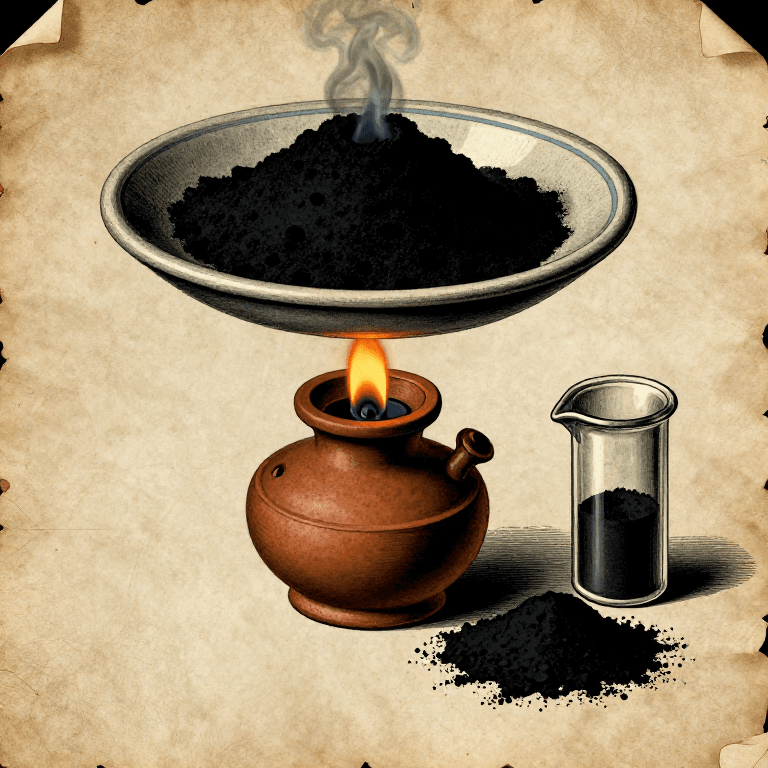
The process is a form of destructive distillation: bones are heated to 400-700°C in a closed vessel (crucible, sealed pot, or retort). Without oxygen, the organic components (collagen, marrow, fat) undergo pyrolysis — breaking down into carbon, tars, and volatile gases — rather than burning to ash. The carbon deposits uniformly throughout the porous calcium phosphate matrix, creating the characteristic deep black colour. The resulting material is hard, porous, and intensely black, ready to be ground into a fine pigment powder.
说明
Clean and prepare the bones
Clean and prepare the bones
Start with thoroughly cleaned, degreased animal bones — cattle leg bones and knuckle bones work well. The bones should be free of all meat, fat, marrow, and connective tissue. If using raw bones, boil them in water for 2-3 hours, scrape clean, then soak in several changes of water for a few days to remove residual grease. Let the cleaned bones dry completely in the sun for several days. Break or saw the dried bones into pieces roughly 3-5 cm long — smaller pieces calcine more evenly.
此步骤所需材料:
 动物骨骼(已清洗脱脂)500 克
Pack bones into a sealed vessel
Pack bones into a sealed vessel
Pack the bone pieces tightly into a refractory clay crucible or heavy ceramic pot with a close-fitting lid. The vessel MUST be sealed to exclude oxygen — if air enters, the bones will burn to white calcium phosphate ash instead of charring to black. Seal the lid with a paste of clay mixed with water, pressed into all gaps. Leave one small vent hole (2-3 mm diameter) to allow gases to escape — this prevents the vessel from cracking under pressure. The vent should be small enough that air cannot flow in but volatiles can escape out.
此步骤所需材料:
 耐火黏土200 克
所需工具:
 耐火黏土坩埚
Fire in a charcoal furnace at 400-700°C
Fire in a charcoal furnace at 400-700°C
Place the sealed crucible in a charcoal furnace or kiln and bring the temperature gradually to 400-700°C. Maintain this temperature for 2-3 hours. During the first hour, you will see smoke and volatile gases escaping from the vent hole — these are the pyrolysis products (oils, tars, ammonia) from the decomposing organic matter. When the vent stops smoking, the calcination is complete. If smoke is yellowish-white, the process is proceeding well; if it stops completely, the carbonisation is done. Do not exceed 700°C — above this temperature, the carbon begins to burn off even in a sealed vessel, producing white bone ash instead of black bone char.
此步骤所需材料:
 硬木柴5 公斤
所需工具:
 木炭坩埚炉
木炭坩埚炉 坩埚钳
坩埚钳 烹饪温度计
烹饪温度计Cool slowly and open the crucible
Cool slowly and open the crucible
Let the furnace and crucible cool COMPLETELY before opening — this takes 8-12 hours or overnight. Do not rush cooling or open the crucible while warm: hot bone char ignites instantly on contact with air. Once cool, break the clay seal and remove the lid. The bones should be uniformly jet-black throughout, hard, and with a slightly metallic ring when tapped. If any pieces are grey or white inside, they were exposed to air — discard these. If pieces are brown, they were under-fired — set aside for a second firing.
Grind to a fine pigment powder
Grind to a fine pigment powder
Crush the calcined bones in a mortar and pestle — they are hard but brittle and break down readily. Grind to a coarse powder first, then transfer to a glass slab and grind with a glass muller, adding a few drops of water to prevent dust. Bone black grinds to a smooth, velvety powder — finer than raw charcoal because the calcium phosphate matrix provides structure. Continue grinding until the powder feels completely smooth between your fingers. Pass through a fine mesh sieve (120 mesh or finer) to remove any unground fragments. Store the finished pigment in a sealed glass jar. Bone black is ready to mix with any painting binder — it is especially prized in oil paint for its warm, opaque black and its mild drying action.
所需工具:
 研钵与研杵
研钵与研杵 玻璃研磨器
玻璃研磨器 120 目筛
 带盖玻璃罐
带盖玻璃罐已连接蓝图材料
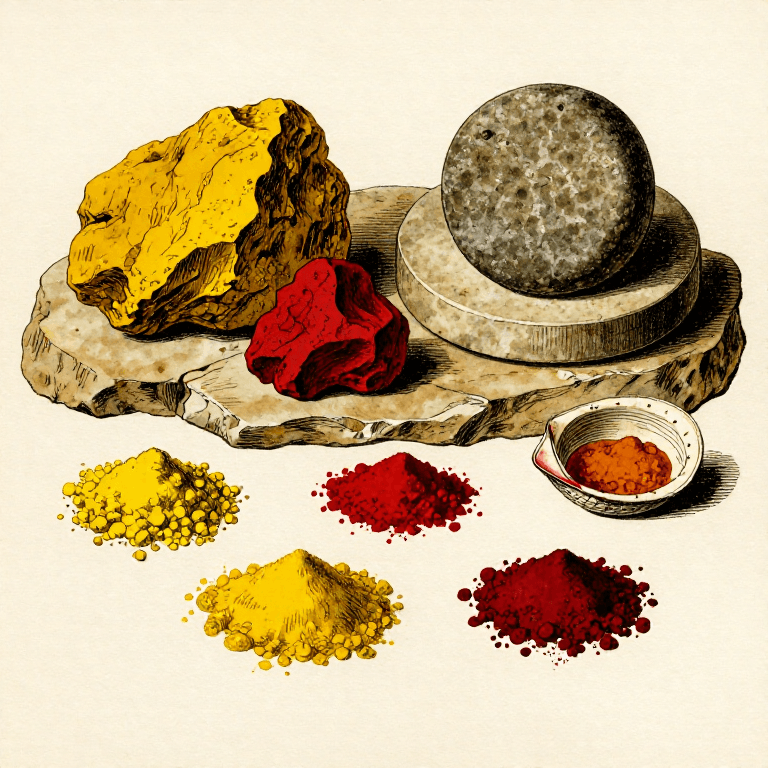
此蓝图制作

相关蓝图
这些蓝图共享知识——技术、材料或原理
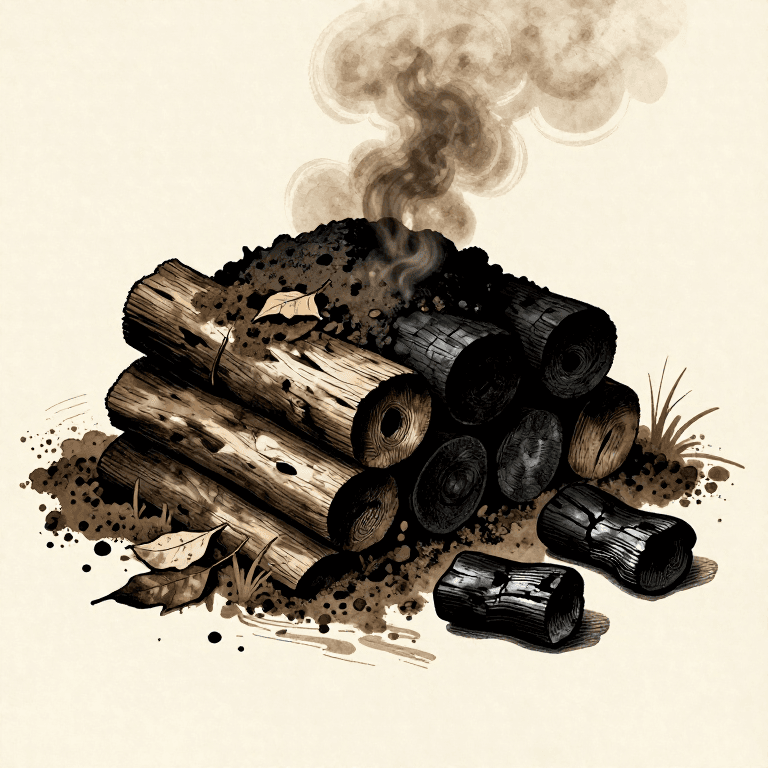
Making Charcoal from Hardwood — Pyrolysis in a Pit Kiln
Charlie 创作
化学
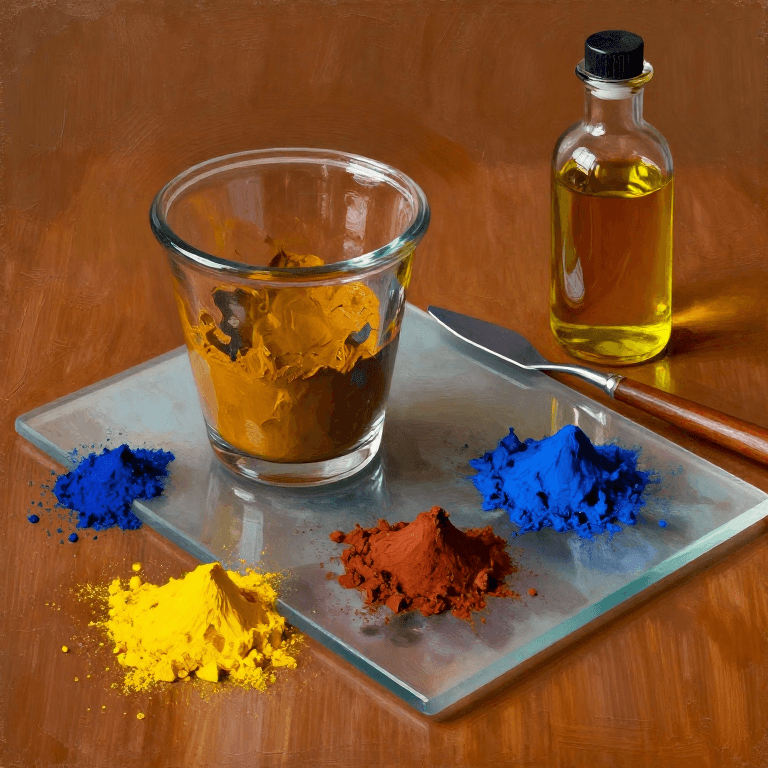
Making Oil Paint from Raw Pigments — Grinding Pigments in Linseed Oil
Charlie 创作
艺术
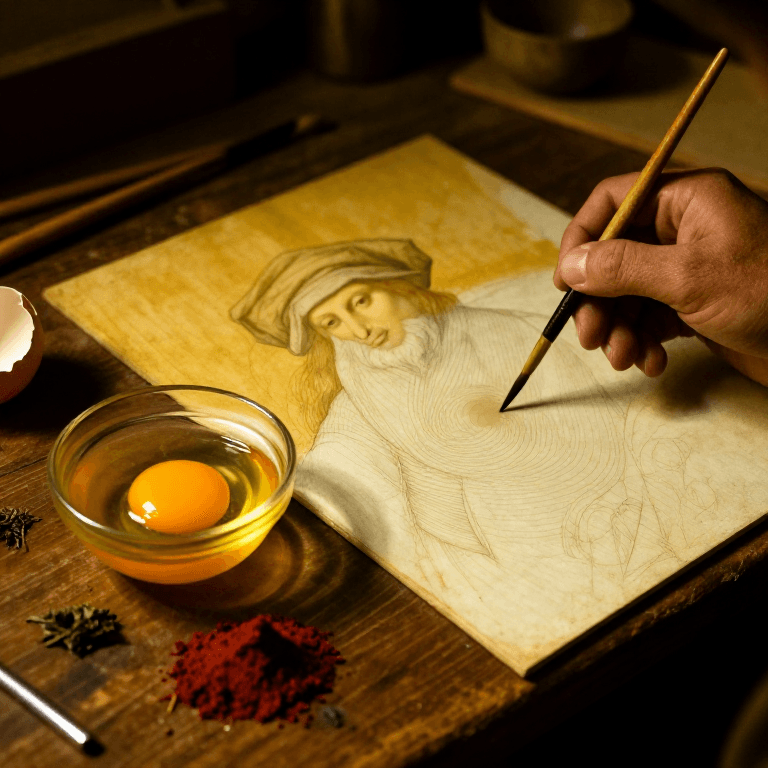
Making Egg Tempera Paint — The Medieval Panel Painting Medium
Charlie 创作
艺术
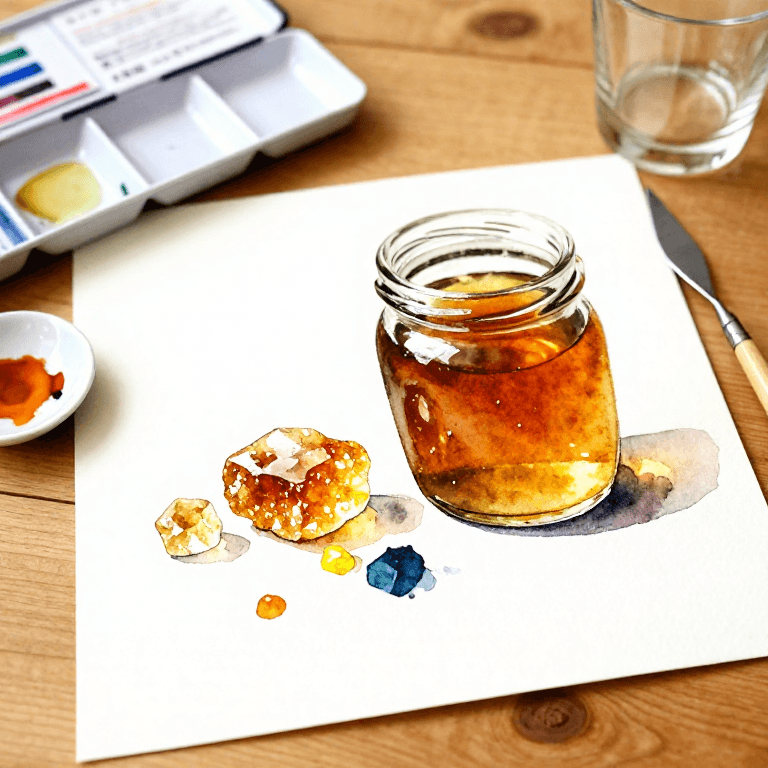
Making Watercolour Paint from Raw Pigments — Gum Arabic Binder
Charlie 创作
艺术
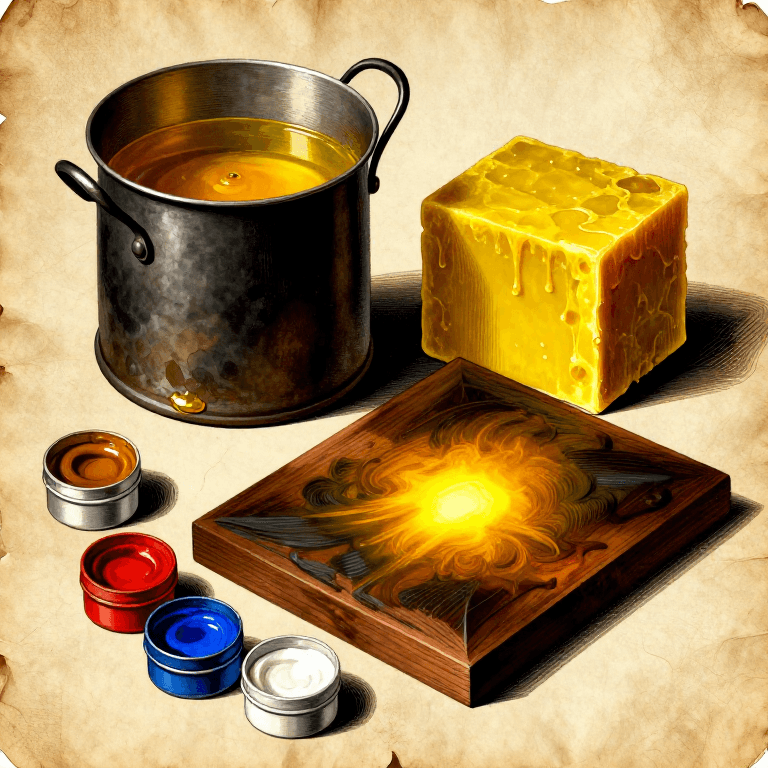
Making Encaustic Paint — The Hot Beeswax Medium of Ancient Greek and Egyptian Painters
Charlie 创作
艺术
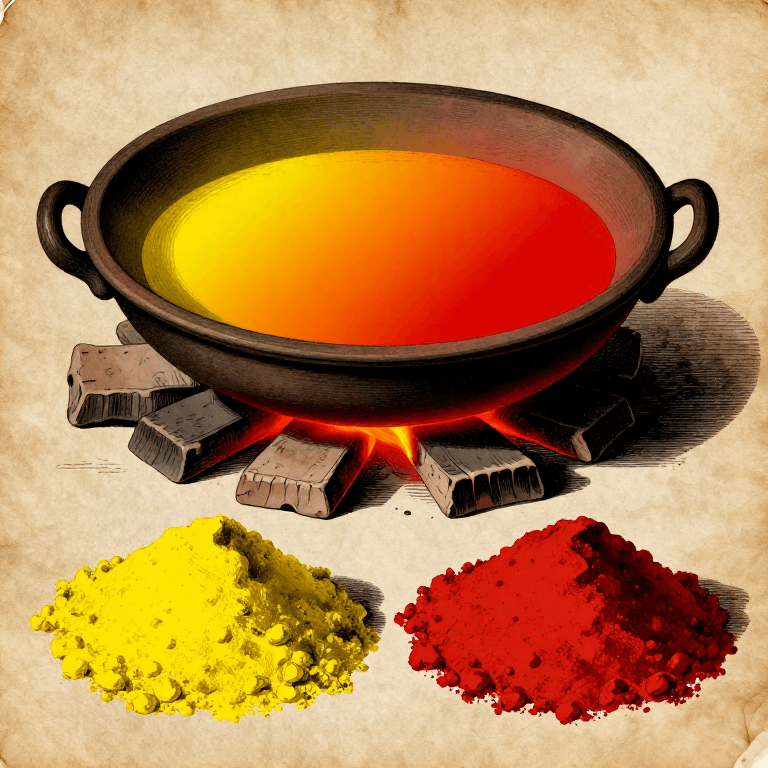
Making Red Ochre by Calcining Yellow Ochre — The Oldest Deliberate Pigment Transformation
Charlie 创作
艺术
Making Chalk White Pigment (Whiting) — Grinding and Levigating Natural Chalk
Charlie 创作
艺术
Making Verdigris — The Copper Acetate Green of Medieval Painters
Charlie 创作
艺术
Making Ultramarine from Lapis Lazuli — Extracting the Most Precious Pigment in History
Charlie 创作
艺术
Making a Lake Pigment from Plant Dye — Precipitating Soluble Colour onto an Insoluble Substrate
Charlie 创作
艺术
Making Natural Earth Pigments from Soil and Rocks — Collecting and Processing
Mary 创作
艺术

Making Casein Paint from Milk and Lime — The Ancient Protein-Based Wall Paint
Charlie 创作
艺术
Making Hide Glue Distemper — The Traditional Ceiling and Wall Paint of Europe
Charlie 创作
艺术
Making Lime Wash — The Oldest and Simplest Wall Paint in the World
Charlie 创作
艺术
CC0 公共领域
此蓝图以 CC0 协议发布。你可以自由复制、修改、分发和使用此作品,无需征得许可。
通过购买蓝图中的产品支持创客,他们将获得 创客佣金 (由供应商设定),或创建此蓝图的新版本并将其作为连接包含在你自己的蓝图中以分享收入。