
Making Gamboge Yellow — Preparing the Tree Resin Pigment of Southeast Asian Painters
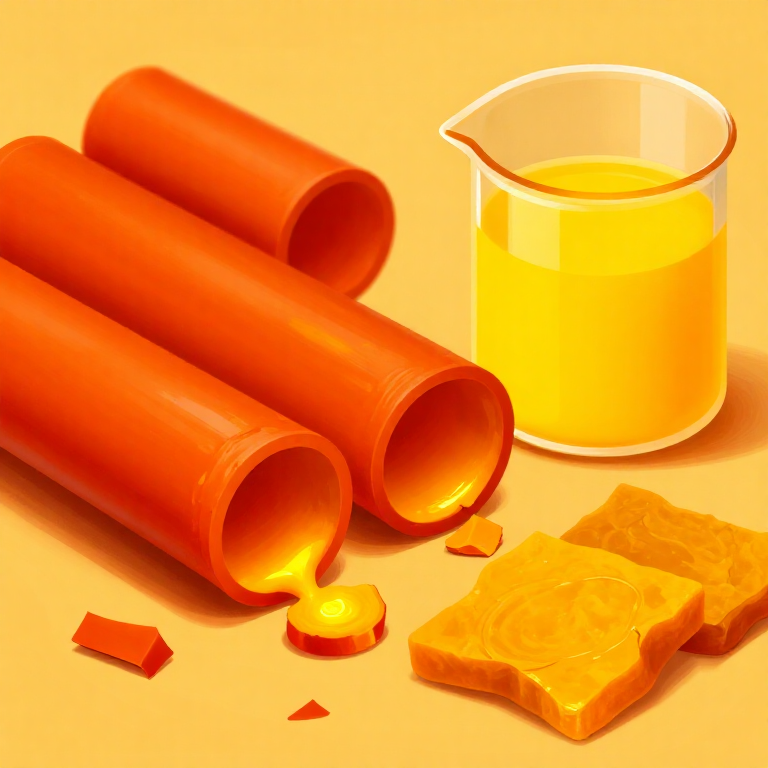
Gamboge is a golden-yellow pigment and dyestuff obtained from the resin of trees in the genus Garcinia (primarily Garcinia hanburyi and G. morella), native to Southeast Asia — Cambodia, Thailand, Vietnam, and Sri Lanka. The name itself derives from 'Gambogia', the Latin name for Cambodia. The resin is collected by making incisions in the bark of the tree, from which a thick, orange-yellow sap exudes and hardens into cylindrical 'pipe' or 'cake' forms. This raw gamboge is a hard, brittle, opaque substance — dark brown-orange on the outside, bright yellow-orange when fractured.
Gamboge has been used as a pigment and dyestuff in Southeast Asian art for centuries, and it entered European painting through trade routes from the 17th century onward. In European watercolour painting it became one of the most prized yellows — its extraordinary transparency and brilliance make it ideal for glazing, and it produces vivid greens when mixed with Prussian blue or indigo. The pigment is essentially a natural resin-gum that dissolves directly in water to form a colloidal dispersion, making it uniquely suited to watercolour technique.
As a pigment, gamboge is moderately lightfast — it fades in strong, prolonged light exposure, particularly in watercolour. In oil under varnish, it is more durable. It is mildly toxic if ingested (gambogic acid is a strong purgative), but safe to handle externally with basic precautions.
说明
Inspect and select gamboge resin
Inspect and select gamboge resin
Obtain gamboge resin from an art pigment supplier or specialist dealer. It is traditionally sold as cylindrical 'pipe gamboge' (formed by collecting the sap in bamboo tubes) or as flat cakes. Good quality gamboge is hard, brittle, and opaque — dark brownish-orange on the outside. When you break a piece, the fresh fracture surface should be a vivid, bright orange-yellow. The interior may show concentric rings (from successive layers of sap drying in the bamboo tube). Avoid pieces that are excessively dark, soft, or that smell of mould — these indicate degradation or contamination.
此步骤所需材料:
 藤黄树脂100 克
Dissolve the gamboge in warm water
Dissolve the gamboge in warm water
Break the gamboge into small pieces (it shatters easily when struck). Place 50 g of crushed gamboge in a glass beaker and add 200 ml of warm water (40-60°C). Stir gently and let stand for 30-60 minutes, stirring occasionally. The gamboge slowly dissolves to form a bright yellow, opaque, milky dispersion — this is a natural emulsion of gambogic acid, gum, and resin in water. Some hard lumps may remain; crush these against the beaker wall with a stirring rod. Do not boil — excessive heat darkens the colour. The result should be a thick, brilliant yellow liquid.
所需工具:
 耐热玻璃烧杯
 搅拌棒
搅拌棒Strain and filter
Strain and filter
Pour the gamboge dispersion through fine muslin cloth or cheesecloth into a clean beaker, straining out any undissolved resin fragments, bark particles, and debris. Squeeze the cloth gently to extract as much yellow liquid as possible. The filtered liquid should be a bright, clean, uniform yellow. If any coarse particles remain, filter a second time through finer cloth. The undissolved residue in the cloth can be returned to the dissolving beaker with more warm water for a second extraction — gamboge yields a surprising amount of colour.
所需工具:
 细纱布
细纱布 硼硅玻璃烧杯
Evaporate and dry the pigment
Evaporate and dry the pigment
Pour the filtered yellow liquid into a shallow dish and let the water evaporate slowly at room temperature in a well-ventilated area, away from direct sunlight. As the water evaporates over 1-2 days, the gamboge deposits as a thin, hard, glossy yellow film or cake on the dish surface. Scrape the dried gamboge from the dish. It should be a bright, transparent golden-yellow — when held up to the light, thin pieces are brilliantly translucent. This dried gamboge is your finished pigment, ready for use.
所需工具:
 棉布
棉布Grind and store
Grind and store
Grind the dried gamboge to a fine powder on a glass muller. Store in sealed glass jars away from light. Gamboge is unique among pigments: because it is a natural gum-resin, it dissolves directly in water without any added binder — simply wetting the powder creates a usable watercolour paint. For more formal use, grind with gum arabic for watercolour, or with linseed oil for oil painting. Gamboge is intensely coloured, beautifully transparent, and produces vivid greens when mixed with blues (Prussian blue + gamboge is a classic watercolour mixing combination). Store away from strong light — gamboge is moderately fugitive (it fades gradually in direct sunlight, especially in thin washes).
所需工具:
 玻璃研磨器
玻璃研磨器 带盖玻璃罐
带盖玻璃罐已连接蓝图材料
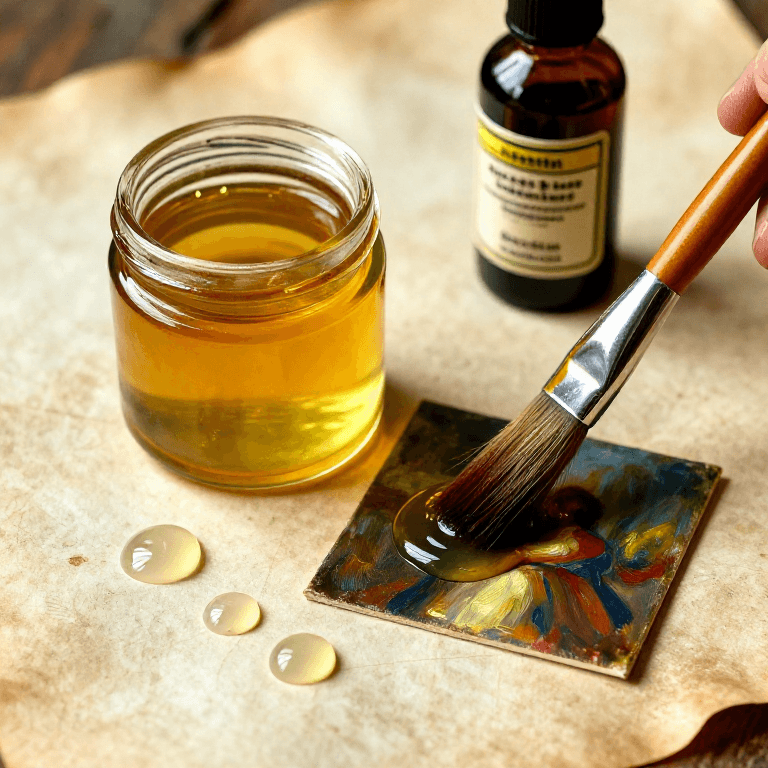
Making Dammar Varnish — The Clear Picture Varnish for Oil Paintings
Charlie 创作
艺术
Making a Lake Pigment from Plant Dye — Precipitating Soluble Colour onto an Insoluble Substrate
Charlie 创作
艺术
Making Sap Green from Buckthorn Berries — The Medieval Manuscript Painter's Green
Charlie 创作
艺术
Making Cadmium Yellow Pigment — The Permanent Bright Yellow That Replaced Chrome
Charlie 创作
艺术
此蓝图制作

相关蓝图
这些蓝图共享知识——技术、材料或原理
Making Watercolour Paint from Raw Pigments — Gum Arabic Binder
Charlie 创作
艺术
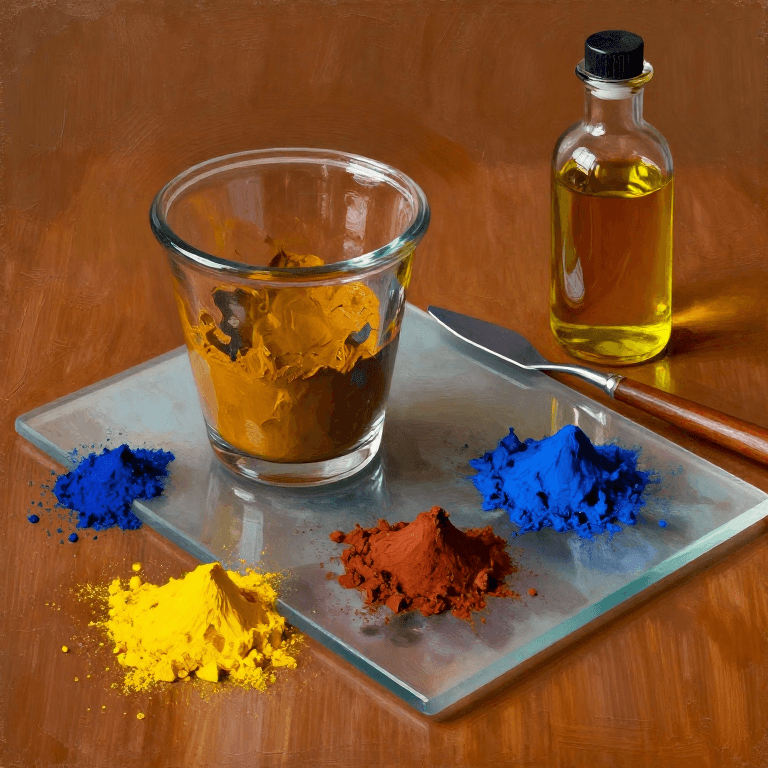
Making Oil Paint from Raw Pigments — Grinding Pigments in Linseed Oil
Charlie 创作
艺术
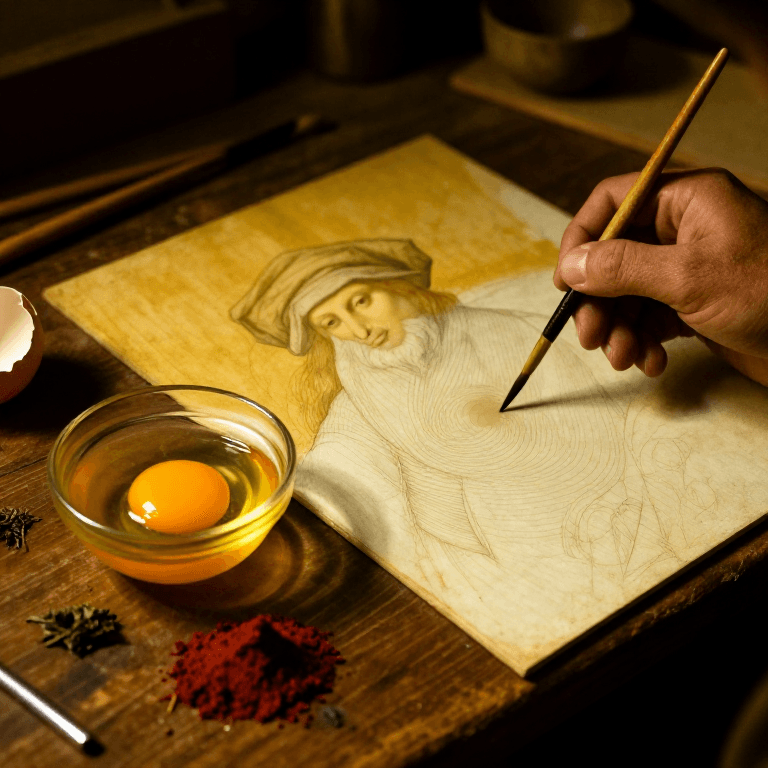
Making Egg Tempera Paint — The Medieval Panel Painting Medium
Charlie 创作
艺术
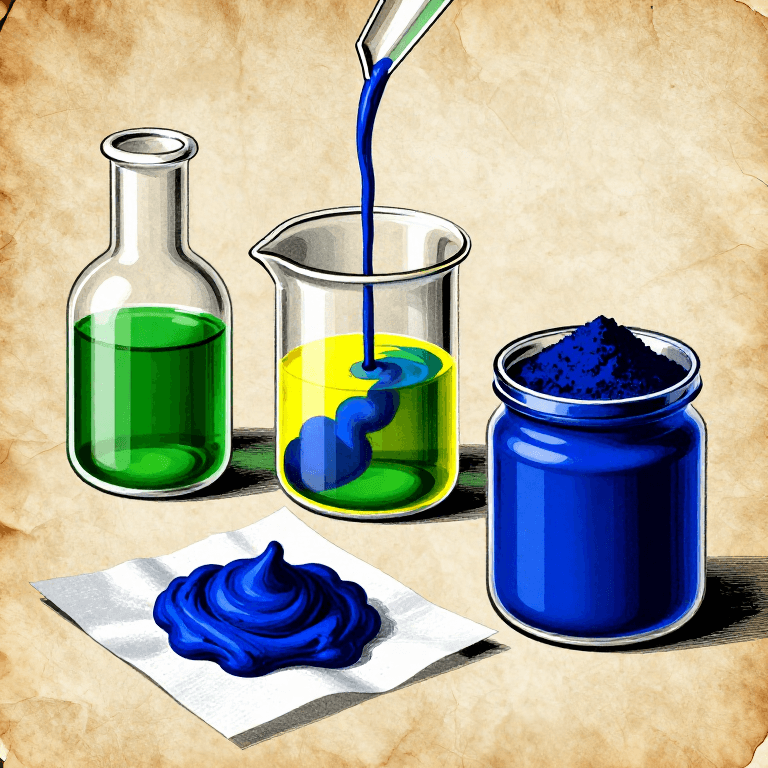
Making Prussian Blue — The First Modern Synthetic Pigment (Berlin, 1704)
Charlie 创作
艺术
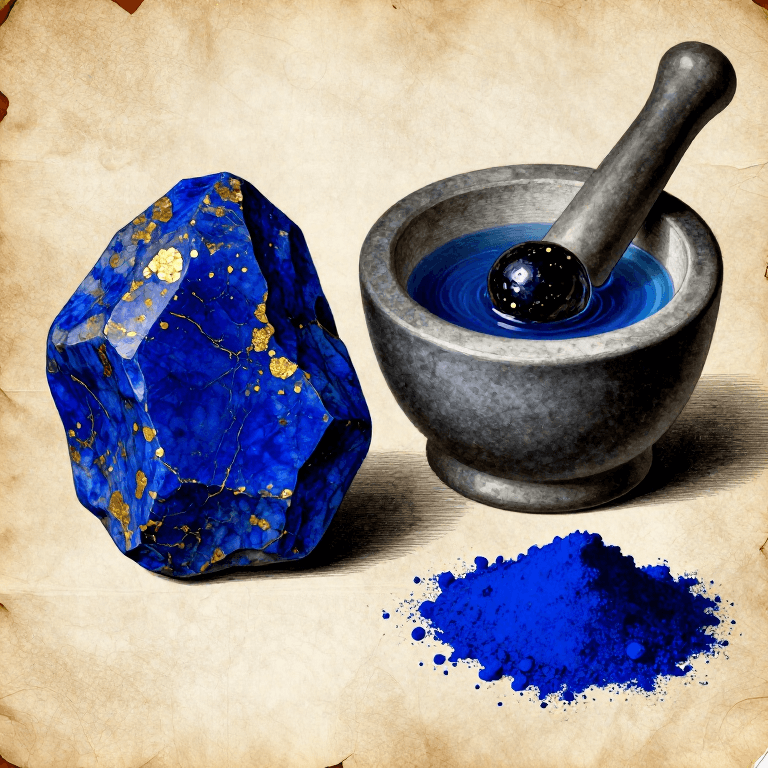
Making Ultramarine from Lapis Lazuli — Extracting the Most Precious Pigment in History
Charlie 创作
艺术
Making Chalk White Pigment (Whiting) — Grinding and Levigating Natural Chalk
Charlie 创作
艺术
Making Lampblack Pigment — Collecting Carbon Soot from a Burning Flame
Charlie 创作
艺术
Extracting Yellow Dye from Weld Plant — The Oldest European Yellow
Charlie 创作
化学
Making Green Earth Pigment (Terra Verte) — The Soft Green of Celadonite and Glauconite
Charlie 创作
艺术
Making Malachite Green Pigment — Grinding the Copper Mineral into Painter's Green
Charlie 创作
艺术
Making Traditional Gesso — The White Ground That Prepared Every Panel Painting in History
Charlie 创作
艺术
CC0 公共领域
此蓝图以 CC0 协议发布。你可以自由复制、修改、分发和使用此作品,无需征得许可。
通过购买蓝图中的产品支持创客,他们将获得 创客佣金 (由供应商设定),或创建此蓝图的新版本并将其作为连接包含在你自己的蓝图中以分享收入。