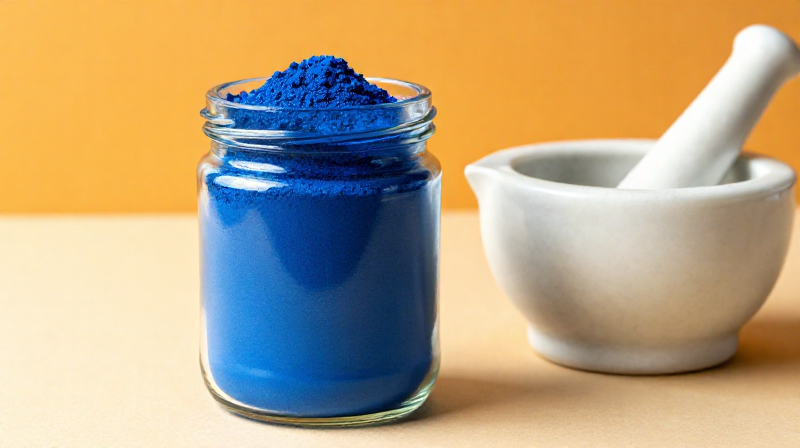

Making Phthalocyanine Blue — The Copper Complex That Became the World's Most Used Blue Pigment
Phthalocyanine Blue (Pigment Blue 15, CI 74160) is the single most important blue pigment developed in the 20th century. Discovered accidentally in 1928 at Scottish Dyes Ltd when a batch of phthalimide reacted with iron from a cracked enamel reactor lining, copper phthalocyanine was subsequently characterised by R.P. Linstead at Imperial College London and commercialised by ICI in 1935 as 'Monastral Blue'.
The molecule is a flat, sixteen-membered macrocyclic ring surrounding a central copper atom — structurally related to the porphyrins that colour blood (haemoglobin) and chlorophyll. This large, stable, planar structure absorbs orange-red light intensely, producing a vivid, strong blue with tinting power that dwarfs all earlier blue pigments. A single gram of phthalo blue can tint ten times more paint than an equivalent mass of ultramarine.
The laboratory synthesis involves heating phthalic anhydride (or phthalonitrile) with urea and a copper salt in a high-boiling solvent with a catalytic amount of ammonium molybdate. The reaction proceeds at 180–200 °C as the phthalic units cyclise around the copper ion, building the macrocyclic ring four units at a time.
Phthalo Blue has near-perfect lightfastness, extraordinary chemical resistance (surviving boiling in concentrated sulfuric acid), and complete insolubility in all common solvents. It is used in automotive paints, printing inks, plastics, artists' paints, and industrial coatings worldwide.
SAFETY WARNING: The synthesis involves heating to 200 °C in a high-boiling solvent. Urea decomposes to release ammonia. Use a fume hood or work outdoors. Phthalic anhydride is an irritant and sensitiser — avoid inhaling dust.
说明
Prepare workspace with fume extraction
Prepare workspace with fume extraction
This synthesis requires sustained heating to 200 °C in a solvent that releases ammonia and organic vapours. Set up in a fume hood or outdoors with wind at your back. Wear chemical splash goggles, heat-resistant gloves, a lab coat, and a respirator with organic vapour cartridges. Keep a fire extinguisher accessible — the solvent is combustible at elevated temperatures.
所需工具:
 化学防溅护目镜
 丁腈橡胶手套
 实验服
实验服 配酸性气体滤盒的呼吸器
Weigh phthalic anhydride
Weigh phthalic anhydride
Weigh out 15 g of phthalic anhydride — white crystalline flakes with a characteristic sharp, acrid smell. This is the building block of the phthalocyanine ring: four phthalic units will cyclise to form the macrocyclic pigment molecule. Phthalic anhydride is a respiratory sensitiser — handle in the fume hood and avoid inhaling the dust.
此步骤所需材料:
 邻苯二甲酸酐15 克
所需工具:
 精密数字天平
Weigh urea
Weigh urea
Weigh 20 g of urea — white crystalline granules. Urea serves a dual purpose: it is the nitrogen source that provides the four bridging nitrogen atoms of the phthalocyanine ring, and its thermal decomposition at 130–180 °C generates ammonia that drives the cyclisation reaction. The large excess ensures complete reaction of all four phthalic units.
此步骤所需材料:
 颗粒尿素20 克
Weigh copper chloride
Weigh copper chloride
Weigh 3 g of anhydrous copper(II) chloride — a yellow-brown powder. This provides the central copper atom around which the four phthalic units assemble. Copper phthalocyanine is by far the most stable and most vivid of the metallophthalocyanines — the copper ion fits perfectly into the cavity of the macrocyclic ring, creating an exceptionally stable complex.
此步骤所需材料:
 氯化铜(无水)3 克
Weigh ammonium molybdate catalyst
Weigh ammonium molybdate catalyst
Weigh 0.5 g of ammonium molybdate — a white crystalline salt. This is the catalyst that dramatically accelerates the cyclisation reaction. Without it, the reaction requires much higher temperatures and longer times, producing lower yields and more impurities. The molybdate ion facilitates the ring-closure by coordinating the intermediate isoindoline fragments.
此步骤所需材料:
 钼酸铵0.5 克
Combine reactants in reaction vessel
Combine reactants in reaction vessel
Add all four dry powders — phthalic anhydride, urea, copper chloride, and ammonium molybdate — to a 500 ml round-bottom flask or a deep stainless steel vessel. Mix thoroughly with a glass rod. The mixture should be a uniform pale greenish-yellow powder. The vessel needs to withstand sustained heating to 200 °C.
所需工具:
 耐热玻璃烧杯
 玻璃搅拌棒
玻璃搅拌棒Add high-boiling solvent
Add high-boiling solvent
Add 50 ml of nitrobenzene to the mixed powders. Nitrobenzene (bp 211 °C) serves as both solvent and oxidant — it keeps the reaction mixture fluid at 200 °C while helping oxidise the intermediate to the fully aromatic phthalocyanine. Stir until the powders are wetted and form a thick slurry. Nitrobenzene is toxic by inhalation and skin absorption — handle in the fume hood only.
此步骤所需材料:
 硝基苯50 毫升
Heat slowly to 120 °C — urea begins decomposing
Heat slowly to 120 °C — urea begins decomposing
Place the vessel on a sand bath or oil bath on the hot plate. Heat gradually, raising the temperature by about 10 °C every five minutes. At 120–130 °C, the urea begins to decompose, releasing ammonia gas. The mixture starts bubbling vigorously. The ammonia provides the nitrogen atoms that will bridge the four phthalic units. Stir occasionally — the mixture thickens as the reaction begins.
所需工具:
 实验室温度计
Raise to 180–200 °C — cyclisation begins
Raise to 180–200 °C — cyclisation begins
Continue heating to 180–200 °C. At this temperature, the phthalic fragments cyclise around the copper ion, assembling the macrocyclic ring four units at a time. The mixture gradually turns from greenish-yellow to deep blue-green as the phthalocyanine complex forms. The ammonia evolution subsides. Stir every ten minutes to prevent the product from caking on the bottom of the vessel.
Hold at 200 °C for three hours
Hold at 200 °C for three hours
Maintain the temperature at 190–200 °C for three full hours. The mixture progressively darkens from blue-green to an intense, almost black blue — the hallmark colour of concentrated copper phthalocyanine. By the end of three hours, the reaction is essentially complete. The ammonia evolution has stopped and the mixture is a thick, dark blue-black paste suspended in the solvent.
Cool and dilute with solvent
Cool and dilute with solvent
Remove the vessel from the heat and allow it to cool to 80 °C. Add 100 ml of methanol to thin the mixture — the crude phthalocyanine is virtually insoluble in methanol, so the solvent washes away the nitrobenzene and any soluble by-products. Stir thoroughly. The mixture is now a dark blue suspension in a clear brownish liquid.
此步骤所需材料:
 蒸馏水100 毫升
Filter the crude pigment
Filter the crude pigment
Filter the suspension through filter paper in a funnel. The deep blue pigment collects on the filter paper. The filtrate is a brown liquid containing dissolved nitrobenzene, unreacted materials, and by-products — dispose as organic solvent waste. The filter cake should be a dark, almost black-blue mass. Wash with 200 ml of hot water to remove inorganic salts.
此步骤所需材料:
 滤纸2 个
滤纸2 个所需工具:
 带颈玻璃漏斗
Acid wash to remove copper residues
Acid wash to remove copper residues
Return the filter cake to a beaker and add 200 ml of dilute hydrochloric acid (10% HCl). Stir for 20 minutes at 60 °C. The acid dissolves any unreacted copper chloride and free copper compounds without affecting the extremely acid-resistant phthalocyanine complex. Copper phthalocyanine survives boiling concentrated sulfuric acid — dilute HCl is harmless to it. Filter again and wash with hot water until the filtrate is pH-neutral.
此步骤所需材料:
 盐酸200 毫升蒸馏水300 毫升
Alkali wash to remove organic impurities
Alkali wash to remove organic impurities
Return the acid-washed pigment to the beaker and add 200 ml of dilute sodium hydroxide (5% NaOH). Stir for 20 minutes at 60 °C. This dissolves any residual phthalic acid and other organic acid by-products. Filter again and wash with hot distilled water until the filtrate is neutral. The purified pigment should now be a clean, intense blue.
此步骤所需材料:
 氢氧化钠——实验室级10 克蒸馏水400 毫升
Dry the purified pigment
Dry the purified pigment
Spread the washed filter cake on a clean glass plate and dry at 100 °C for 4–6 hours. Unlike most organic pigments, phthalocyanine blue is thermally stable to over 500 °C — oven-drying poses no risk. The dried pigment is a hard, dark blue-black mass that appears almost black in bulk but reveals an intense, vivid blue when spread thin.
Grind to final pigment fineness
Grind to final pigment fineness
Transfer the dried mass to a porcelain mortar and grind vigorously. Phthalocyanine blue is extremely hard for an organic pigment — it requires sustained effort to reduce to fine powder. As particle size decreases, the colour transforms dramatically: bulk crystals appear dark blue-black, but finely ground powder is a vivid, intense cyan-blue. The tinting strength becomes apparent when a tiny amount colours a large volume of white paint. Pass through a 120-mesh sieve.
所需工具:
 研钵与研杵
研钵与研杵 120 目筛
Store finished phthalocyanine blue
Store finished phthalocyanine blue
Transfer the sieved pigment to a glass jar with a tight-fitting lid. Label with the pigment name (Phthalocyanine Blue, PB15, CI 74160), date, and a note on its exceptional properties: lightfastness ASTM I (excellent), heat stability to 500 °C, resistant to acids, alkalis, and all common solvents. Expected yield from 15 g phthalic anhydride: approximately 8–12 g of finished pigment. This single molecule — copper phthalocyanine — accounts for more blue pigment by tonnage than all other blue pigments combined.
所需工具:
 带盖玻璃储存罐
材料
11- 15 克占位符
- 20 克占位符
- 3 克占位符
- 0.5 克占位符
- 50 毫升占位符
- 800 毫升占位符
- 2 个占位符
- 200 毫升占位符
- 10 克占位符
- 1 个占位符
- 1 个占位符
已连接蓝图材料
Making Prussian Blue — The First Modern Synthetic Pigment (Berlin, 1704)
Charlie 创作
艺术
Making Cobalt Blue (Thénard's Blue) — The First Modern Synthetic Blue Pigment
Charlie 创作
艺术
Making Ultramarine from Lapis Lazuli — Extracting the Most Precious Pigment in History
Charlie 创作
艺术
Making Phthalocyanine Green — The Halogenated Phthalo That Replaced Viridian
Charlie 创作
艺术
此蓝图制作

相关蓝图
这些蓝图共享知识——技术、材料或原理
Making Egyptian Blue — The World's First Synthetic Pigment
Charlie 创作
艺术
Making Smalt — Grinding Cobalt Blue Glass into the Renaissance Painter's Blue Pigment
Charlie 创作
艺术
Making Cerulean Blue — The Sky Blue Pigment of the Impressionists
Charlie 创作
艺术
Making Indigo Pigment for Painting — Extracting the Blue Pigment Cake from Indigo Plant
Charlie 创作
艺术
Making Hansa Yellow — The Monoazo Pigment in Every Paint Box Since 1910
Charlie 创作
艺术
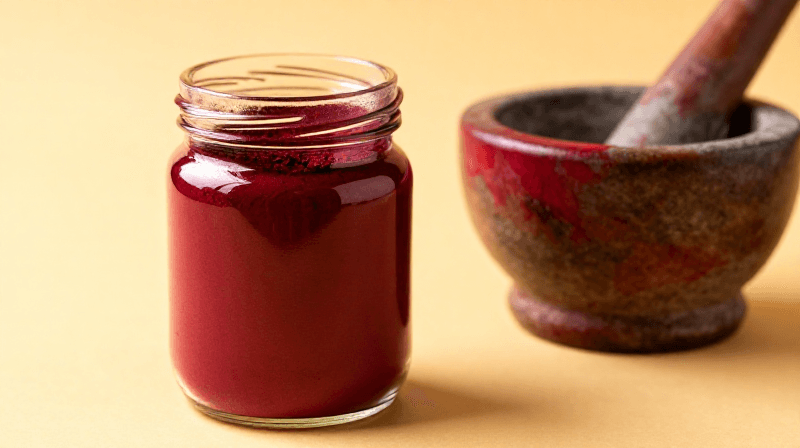
Making Synthetic Alizarin Crimson — The Coal Tar Pigment That Destroyed the Madder Industry
Charlie 创作
艺术
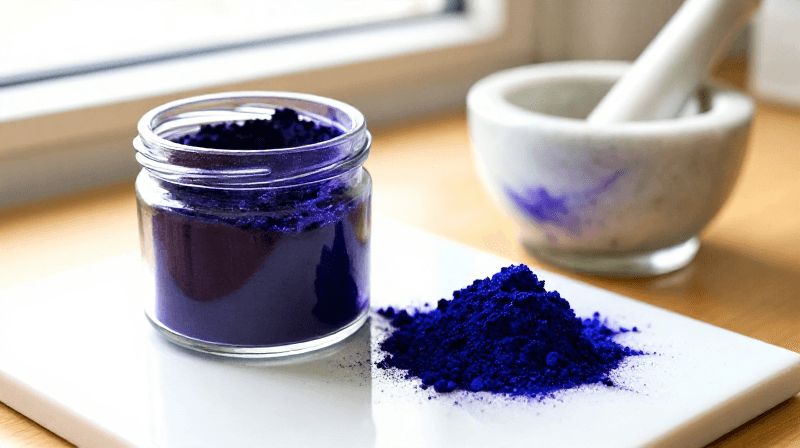
Making Dioxazine Violet — The Staggeringly Powerful Purple That Replaced Cobalt Violet
Charlie 创作
艺术
CC0 公共领域
此蓝图以 CC0 协议发布。你可以自由复制、修改、分发和使用此作品,无需征得许可。
通过购买蓝图中的产品支持创客,他们将获得 创客佣金 (由供应商设定),或创建此蓝图的新版本并将其作为连接包含在你自己的蓝图中以分享收入。