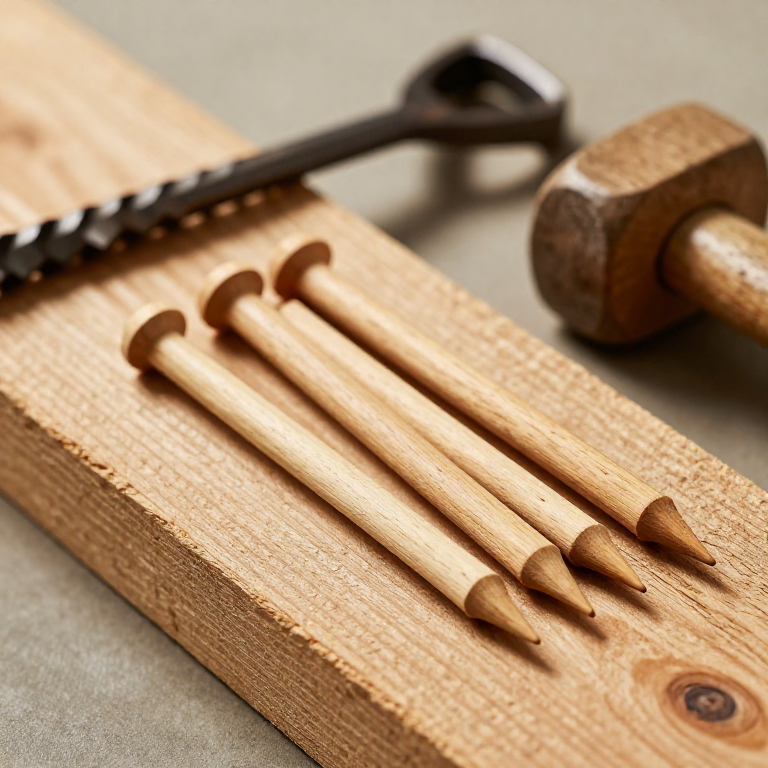


Making Treenails — Wooden Pegs for Timber Framing and Shipbuilding
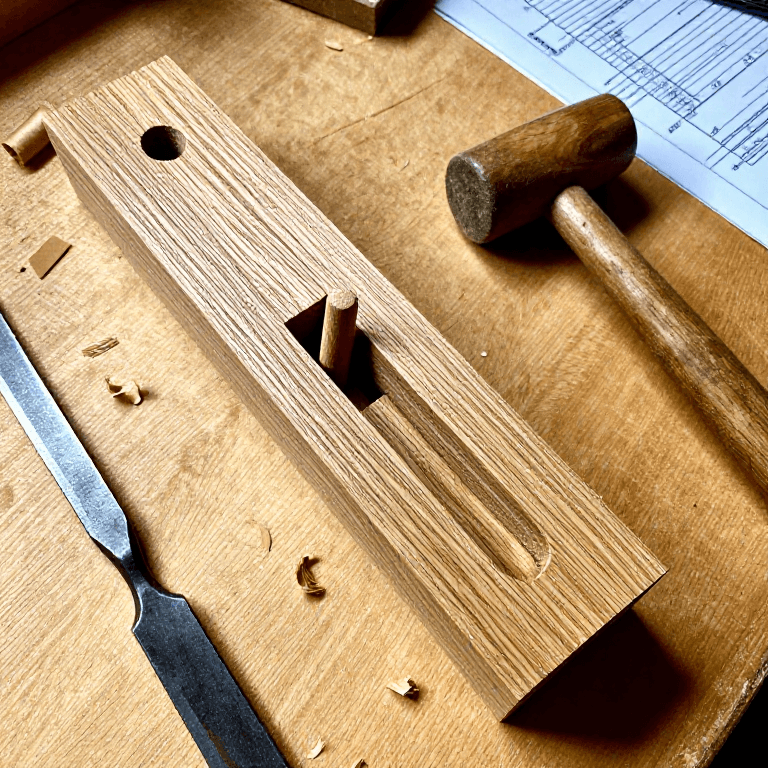
Before iron nails were cheap, wood was fastened with wood. A treenail (pronounced 'trunnel') is a cylindrical wooden peg driven into a bored hole to lock a timber joint together. Treenails held together medieval roof trusses, Viking longships, and post-and-beam barns for centuries. In many applications they outperform iron nails — they do not rust, they swell when wet to tighten the joint, and they flex with the timber instead of working loose.
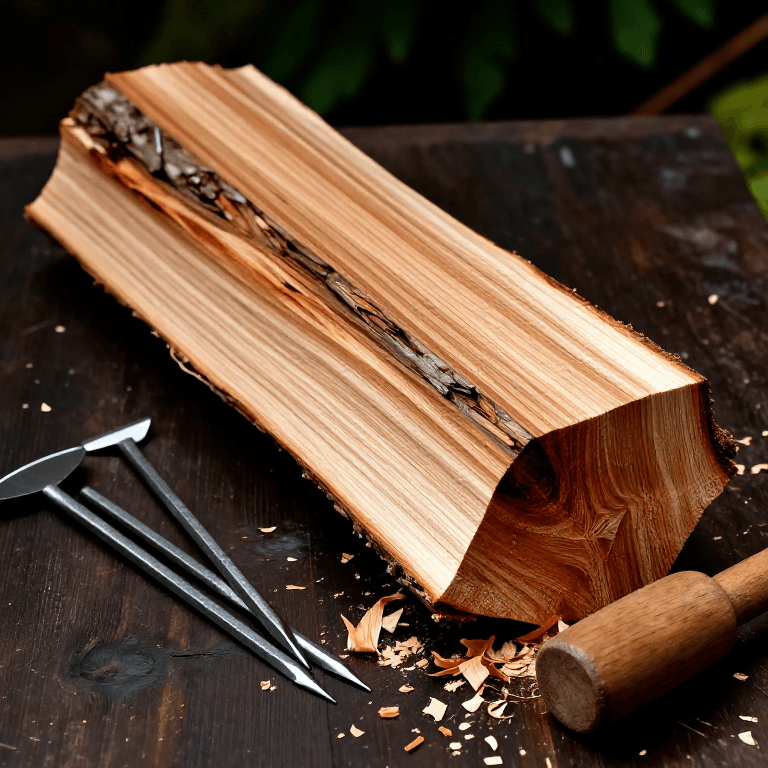
Treenails are always made from a wood harder or at least as hard as the timber they join. Oak treenails in oak frames, or locust treenails in softwood construction. They are riven from straight-grained stock, never sawn — riving preserves the grain continuity that gives the peg its shear strength. A sawn peg has cut fibres that snap under load.
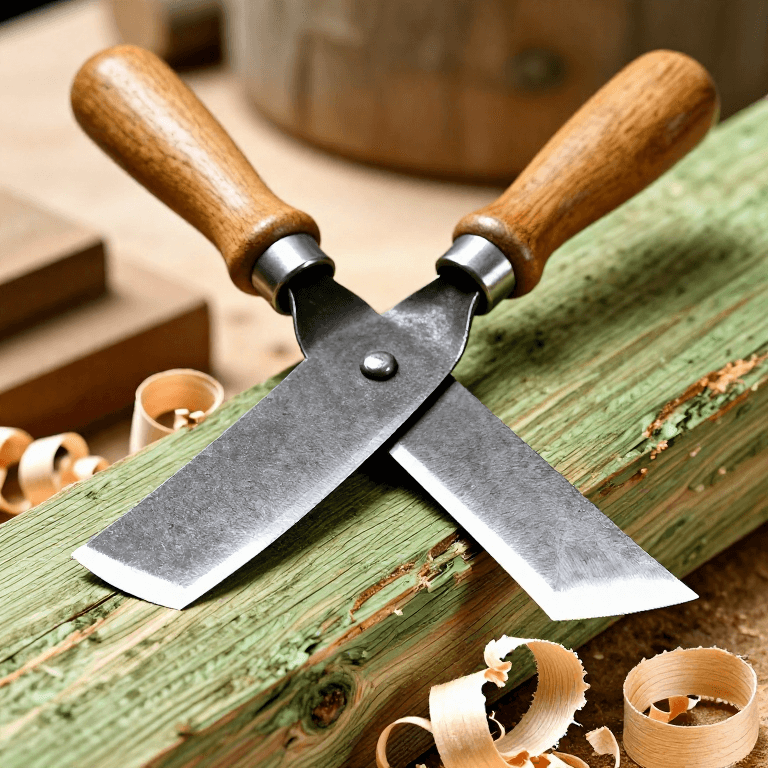
The technique is simple: rive a billet into rough square sections, then round them by driving through a steel plate with a round hole (a rounding die) or by shaving with a drawknife. The finished treenail is slightly tapered so it can be started in the hole and driven home with a mallet. Some traditions split the protruding end and drive a small hardwood wedge into the split, locking the treenail permanently.
说明
Select straight-grained hardwood
Select straight-grained hardwood
此步骤所需材料:
 红橡木材1 个
Rive the billet into square blanks
Rive the billet into square blanks
所需工具:
 劈刀(froe)
Round the blanks
Round the blanks
所需工具:
 双柄刮刀
双柄刮刀 削木凳
削木凳 木槌
木槌Taper the leading end
Taper the leading end
所需工具:
双柄刮刀Bore the holes and drive the treenails
Bore the holes and drive the treenails
所需工具:
 手摇螺旋钻木槌
Wedge the protruding end (optional lock)
Wedge the protruding end (optional lock)
此步骤所需材料:
 硬木楔1 个
所需工具:
 木工凿子套装
已连接蓝图材料
此蓝图制作

相关蓝图
这些蓝图共享知识——技术、材料或原理
CC0 公共领域
此蓝图以 CC0 协议发布。你可以自由复制、修改、分发和使用此作品,无需征得许可。
通过购买蓝图中的产品支持创客,他们将获得 创客佣金 (由供应商设定),或创建此蓝图的新版本并将其作为连接包含在你自己的蓝图中以分享收入。