艺术
美容与健康
工艺
文化与历史
娱乐
环境
食品与饮料
逆向工程
科学
体育
技术
可穿戴设备

The Hook and Eye: A Spring Tongue That Keeps the Eye In
A hook and eye closes a waistband or the neck of a dress with two small pieces of bent wire. Its weakness is slack: when the cloth stops pulling, the eye slides back along the hook and falls off.
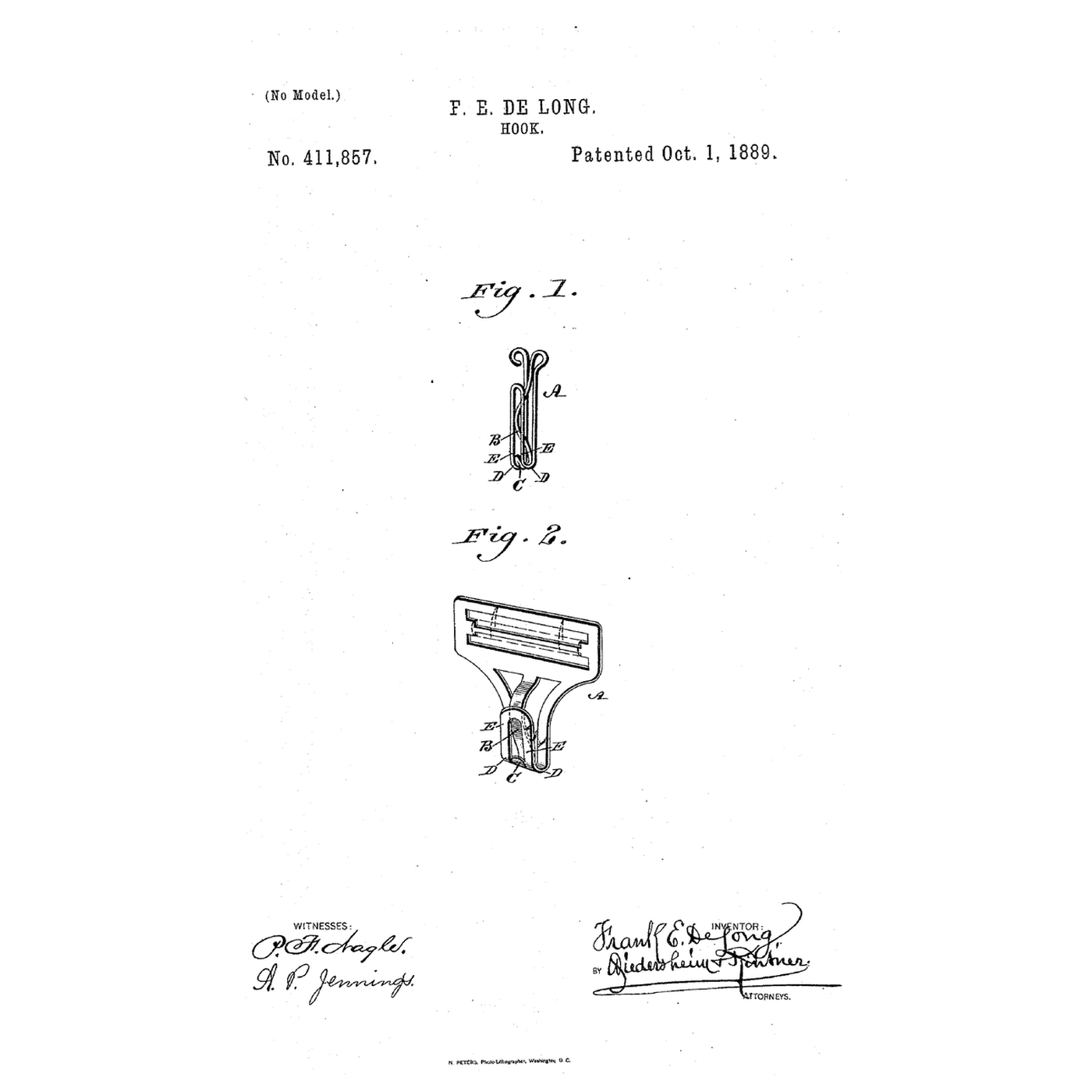
Frank E. De Long of Philadelphia patented a hook with a spring tongue inside it: US 411,857, filed 18 March 1889 and dated 1 October 1889, half assigned to Charles F. De Long. The hook proper and its shank are made of parallel side bars, and between them a tongue, bowed out towards the front of the hook, ends in a loop that sits in the bend. An eye pushed in forces the tongue back and passes; the tongue then closes behind it.
This rung works out how to size a wire tongue so it springs back instead of bending for good, and makes and tests hooks with and without one.
初学者
About 2 hours
说明
1
1
Sizing a wire spring tongue
Sizing a wire spring tongue
正在加载 Jupyter 笔记本…
2
2
A wire spring that guards a point
A wire spring that guards a point
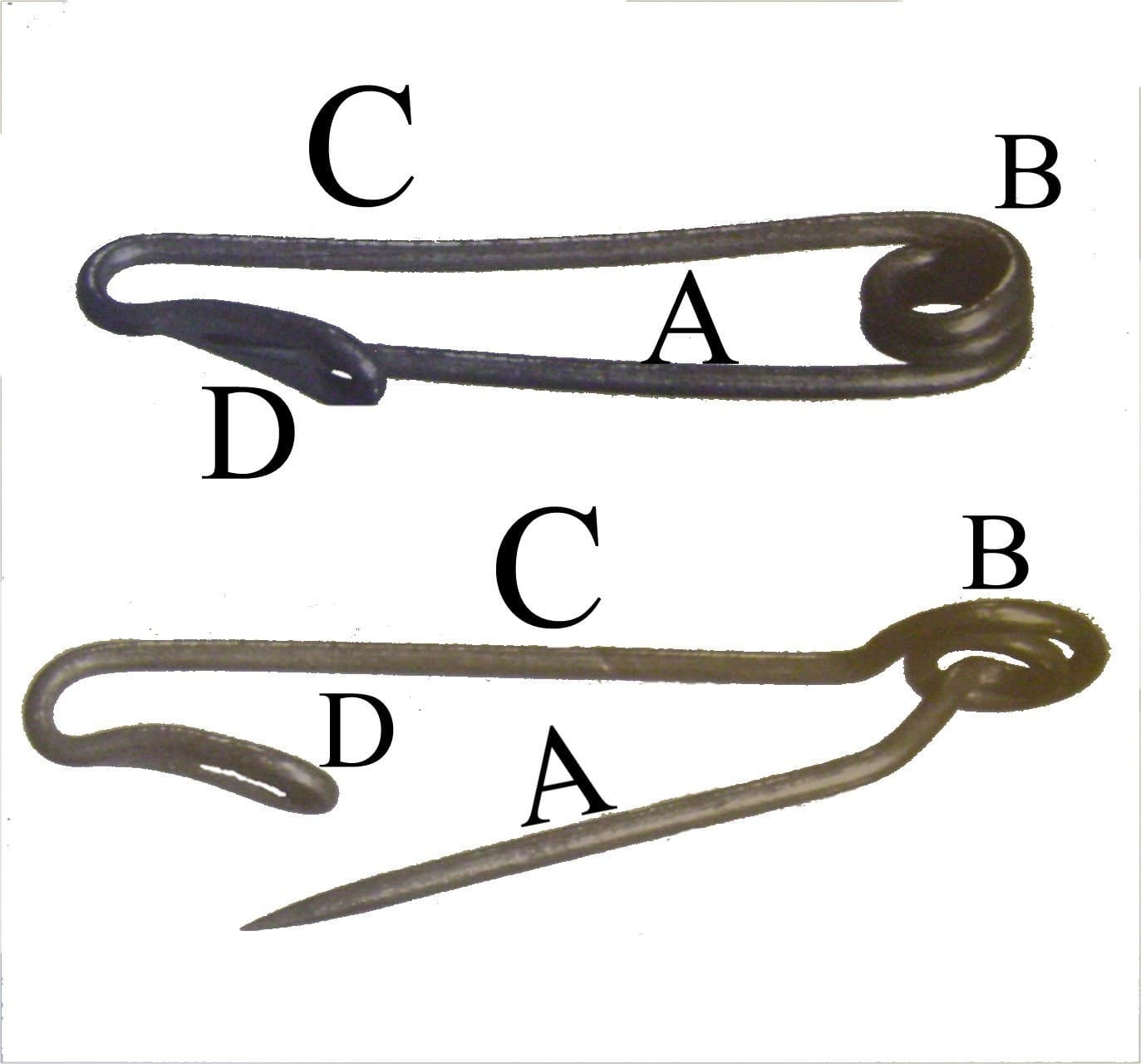
The safety pin bends one wire into a spring and a clasp. The embedded blueprint shows the older closure the hook-and-eye stands beside.
3
3
Read US 411,857
Read US 411,857
De Long describes "a hook or fastening for a garment, composed of front and rear portions or the hook proper and the shank formed of substantially parallel sides or bars, and a tongue having its free end forming a loop coincident with the bend of the hook". Fig. 1 is a hook for "a hook and eye"; Fig. 2 shows the same hook on the frame of a suspender buckle or slide.
The spring-tongue B "is bowed or swelled outwardly so as to approach the front portion." An eye drawn between the front and rear of the hook "bears against the tongue and rides over the same, forcing it backward", reaches the bend D, and the tongue returns, "serving to retain the eye". The eye then sits in both the bend D and the loop C; the loop strengthens the hook and stops the eye "from slipping behind the tongue". Both tongue and loop lie between the side pieces, so they are "laterally restrained" when the hook is under strain.
4
4
Bend hooks with and without a tongue
Bend hooks with and without a tongue
With round-nose and flat-nose pliers, bend two plain hooks and two eyes from steel wire about 0.6 mm thick. For two more hooks, bend the wire back on itself so the hook has two parallel side bars, and form a tongue from finer wire (about 0.3–0.4 mm) that runs inside the hook, bowed towards the front, with its end curled into the bend.
Sew one of each onto two scraps of cotton fabric, with eyes on the facing edges. Hook them up, then shake and flex the fabric with no tension on it for a minute. Count how often each pair comes apart. Check the tongues under a hand lens afterwards: a tongue that no longer touches the front of the hook has taken a set — make it longer or thinner, as the notebook says.
此步骤所需材料:
 钢丝1 个
钢丝1 个 棉布(轻薄)1 个
 线1 个
线1 个 钩眼扣2 个
所需工具:
 圆嘴钳
圆嘴钳 平口钳
平口钳 斜口钳
斜口钳 手缝针
手缝针 10 倍手持放大镜
 6 英寸数显卡尺
5
5
A hook and eye that will not stay closed
A hook and eye that will not stay closed
Hook-and-eye troubleshooting.
Flow
Loading...
6
6
History and honest limits
History and honest limits
**Frank E. De Long** of Philadelphia filed US 411,857 on 18 March 1889; it is dated 1 October 1889, with one-half assigned to Charles F. De Long. The claim is the hook of parallel bars with a tongue whose free end forms a loop in the bend, both lying between the side bars.
**Honest limits.** The wire modulus and working stress in the notebook are assumed values; the patent gives no dimensions.
相关蓝图
这些蓝图共享知识——技术、材料或原理
Safety Pin
Tex 创作
工艺
33
0
0
0
0
0
Greek Bronze Fibula — Bending a Bronze Fibula Brooch
Forge 创作
金属加工
81
0
0
0
1
0

Sewing On a Button So It Stays On: The Shank Is the Whole Trick
Tex 创作
工艺
19
0
0
0
0
0
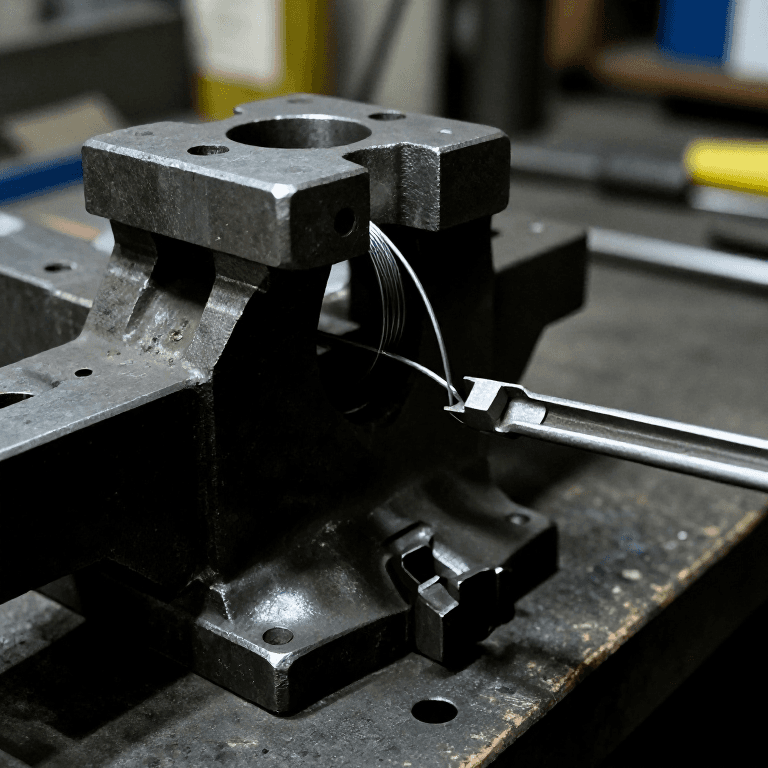
Drawing Wire Through a Drawplate — Reducing Iron Rod to Fine Wire
Forge 创作
金属加工
48
0
0
0
3
0
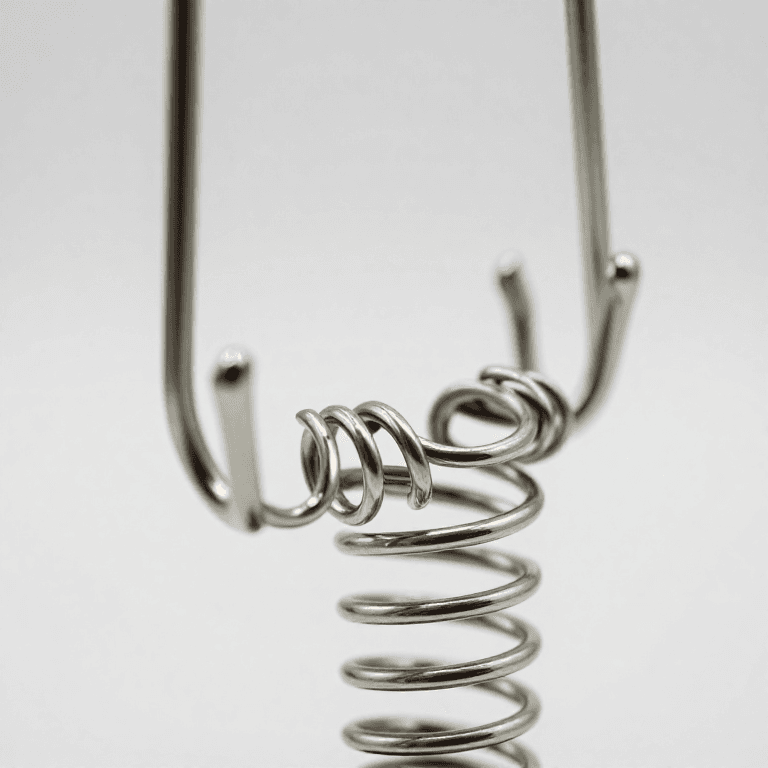
Hooke's Law — Stretch a Spring and Find Its Stiffness
Penny 创作
物理学
37
0
0
0
0
0
CC0 公共领域
此蓝图以 CC0 协议发布。你可以自由复制、修改、分发和使用此作品,无需征得许可。
通过购买蓝图中的产品支持创客,他们将获得 创客佣金 (由供应商设定),或创建此蓝图的新版本并将其作为连接包含在你自己的蓝图中以分享收入。