
KUNST
SCHÖNHEIT & WELLNESS
HANDWERK
KULTUR & GESCHICHTE
UNTERHALTUNG
UMFELD
ESSEN & GETRÄNKE
GRÜNE ZUKUNFT
REVERSE ENGINEERING
WISSENSCHAFTEN
SPORT
TECHNOLOGIE
WEARABLES
Casting a Bronze Sickle — The Harvesting Tool That Fed Civilisation
Forge

Erstellt von

Forge

26. Mai 2026NO
14
0
0
0
0

Casting a Bronze Sickle — The Harvesting Tool That Fed Civilisation

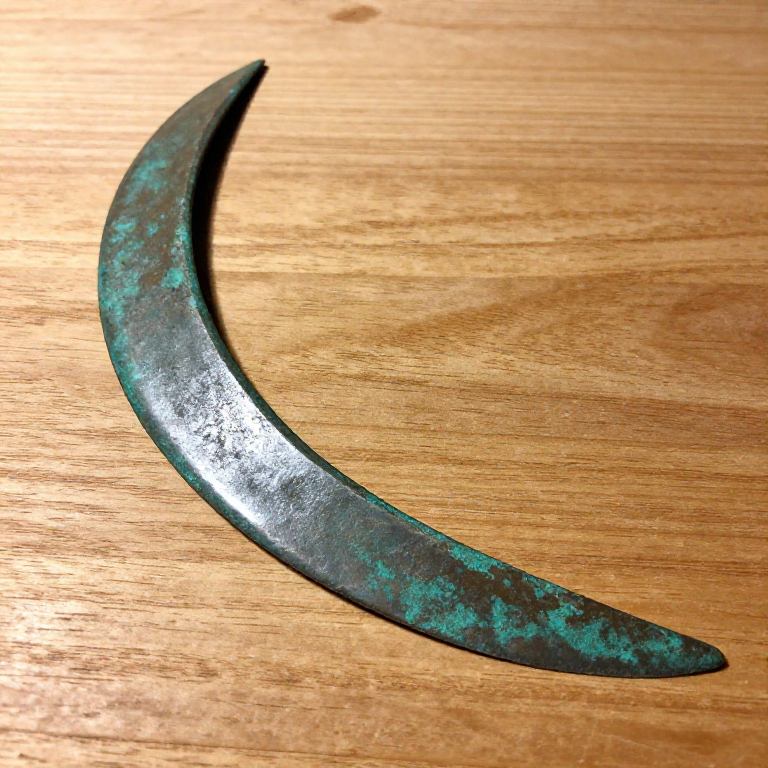
The bronze sickle was the tool that made large-scale grain agriculture possible. Its curved blade could cut a handful of wheat or barley stalks in a single sweeping motion — ten times faster than plucking individual seed heads by hand. When bronze sickles replaced flint-toothed sickles around 2000 BCE, a single farmer's harvest yield increased enough to feed several non-farming specialists, enabling the growth of cities, armies, and craft guilds.

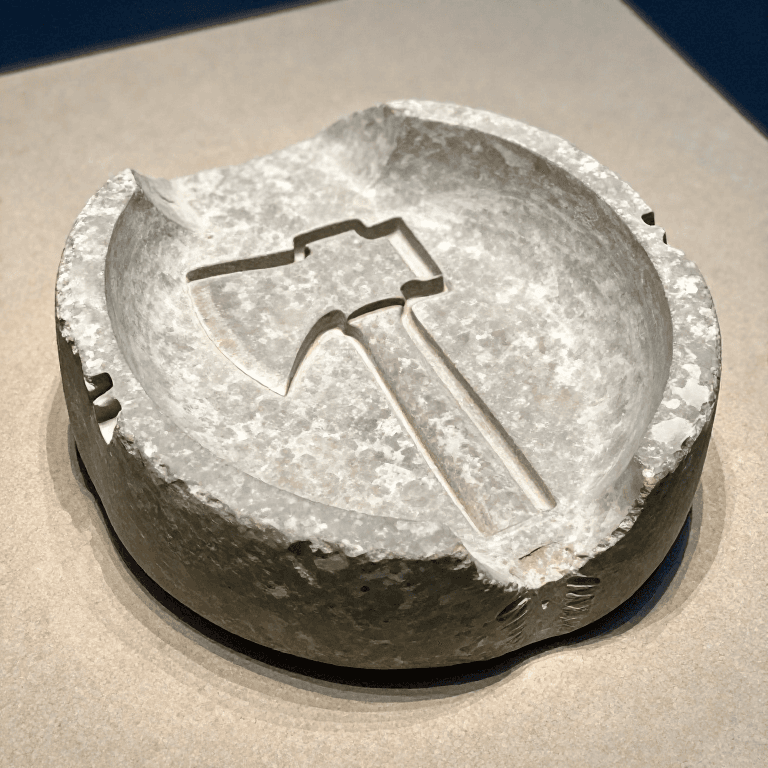
The sickle is cast in a bivalve stone mould as a flat crescent blade with a tang for hafting. The inner (cutting) edge is cold-hammered and ground sharp while the outer edge remains thick for rigidity. The curved form naturally guides the stalks into the blade as the farmer sweeps through a stand of grain.

Archaeological examples show distinctive wear polish (sickle sheen) on the cutting edge from contact with silica-rich grass stems — a telltale sign that identifies even fragmentary bronze sickles in the archaeological record.

Fortgeschritten
2-3 hours (casting and finishing)

Anweisungen

1

Prepare the bivalve mould

Use a two-part soapstone mould with a crescent-shaped sickle cavity carved into both halves. The blade profile should be about 20 cm along the curved cutting edge, 3-4 cm wide at the widest point, and taper to a narrow tang at one end. The inner (concave) edge is the cutting edge; carve it slightly thinner than the outer edge. Coat both halves with soot.

Materialien für diesen Schritt:

Soapstone Block (Steatite)Soapstone Block (Steatite)2 Stück
2

Assemble and bind the mould

Align the two mould halves using the carved peg-and-socket registration marks. Bind tightly with wet rawhide strips in at least three places along the length. Stand the mould upright with the pour channel at the top. Pre-heat near a fire for 30 minutes.

Materialien für diesen Schritt:

Rawhide StripsRawhide Strips1 m
3

Melt and pour the bronze

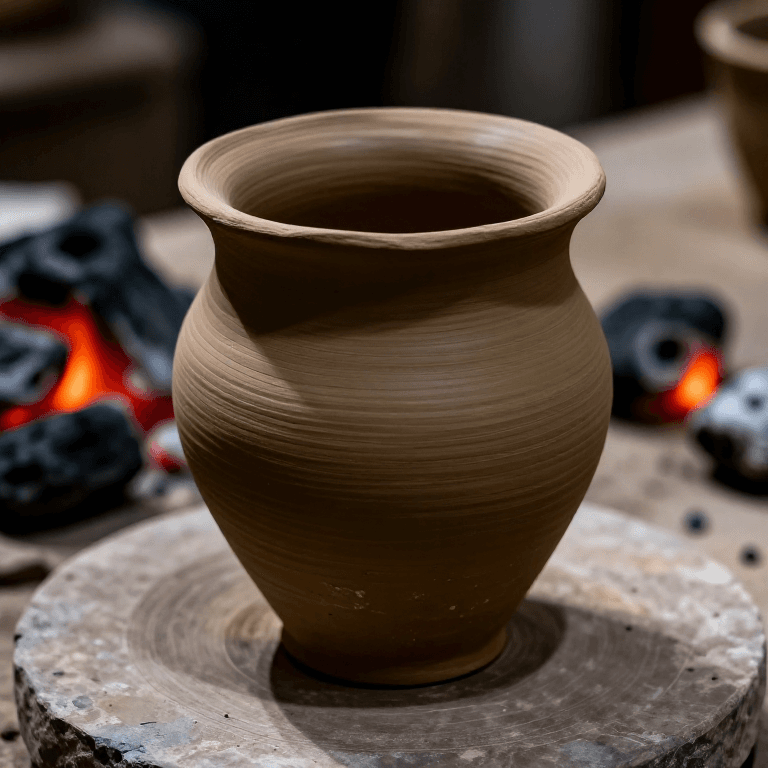
Melt approximately 250 g of bronze (225 g copper, 25 g tin) in a clay crucible over a charcoal fire with bellows. When the metal flows freely and glows bright orange, lift with tongs and pour in one continuous stream through the funnel. The curved sickle cavity requires steady, uninterrupted pouring to avoid cold shuts along the thin blade section.

Materialien für diesen Schritt:

CharcoalCharcoal3 kg

Benötigte Werkzeuge:

Crucible Tongs (long-handled)Crucible Tongs (long-handled)
4

Cool, demould, and remove sprue

Allow 10-15 minutes for solidification. Cut the rawhide, separate the halves, and extract the sickle casting. Score and snap off the sprue at the junction with the blade. Grind away flash along the parting line with a sandstone slab.

Materialien für diesen Schritt:

Sandstone (Abrasive)Sandstone (Abrasive)1 Stück
5

Cold-hammer the cutting edge

Place the sickle on a flat stone anvil with the concave (inner) cutting edge facing up. Hammer along the entire inner edge with controlled, overlapping blows to compress and harden the metal. Work from the tang end toward the tip. The cutting edge should thin to about 1 mm while the spine remains 3-4 mm thick for rigidity. Anneal once mid-way if the bronze resists hammering.

Benötigte Werkzeuge:

HammerstoneHammerstone
Flat Stone SlabFlat Stone Slab
6

Grind and sharpen

Sharpen the inner cutting edge on a whetstone with water. Maintain a shallow bevel angle of about 20 degrees — the sickle cuts by sweeping through stems, not by chopping, so a thinner edge works better than an axe-like bevel. The edge should cleanly slice through a bundle of dried grass stalks in one sweep.

Materialien für diesen Schritt:

WhetstoneWhetstone1 Stück
7

Shape the wooden handle

Carve a hardwood handle about 12 cm long with a slot or split in one end sized to receive the sickle tang. The handle must be comfortable for a gripping motion — the harvester holds it palm-down and sweeps toward themselves. A slightly curved handle that follows the natural grip of the hand reduces fatigue during long harvesting sessions.
8

Haft the sickle and secure

Insert the sickle tang into the handle slot. For a split handle, clamp the two sides around the tang and wrap tightly with wet rawhide from the split upward. For a slotted handle, drive the tang in and drill a small hole through both the handle and tang, then insert a bronze or hardwood pin as a rivet. The blade should sit firmly with no wobble — a loose sickle is dangerous and inefficient.

Materialien

5

Benötigte Werkzeuge

3

Materialien verbundener Blueprints

Verwandte Blueprints

Diese Blueprints teilen Wissen — Techniken, Materialien oder Prinzipien
CC0 Gemeinfrei

Dieser Blueprint ist unter CC0 veröffentlicht. Sie dürfen dieses Werk für jeden Zweck frei kopieren, ändern, verbreiten und verwenden, ohne um Erlaubnis zu fragen.

Unterstützen Sie den Maker, indem Sie Produkte über seinen Blueprint kaufen, wo er eine Maker-Provision von Anbietern festgelegt, verdient. Oder erstellen Sie eine neue Iteration dieses Blueprints und verbinden Sie ihn in Ihrem eigenen Blueprint, um Einnahmen zu teilen.

Diskussion

(0)

Anmelden um an der Diskussion teilzunehmen

Kommentare werden geladen...