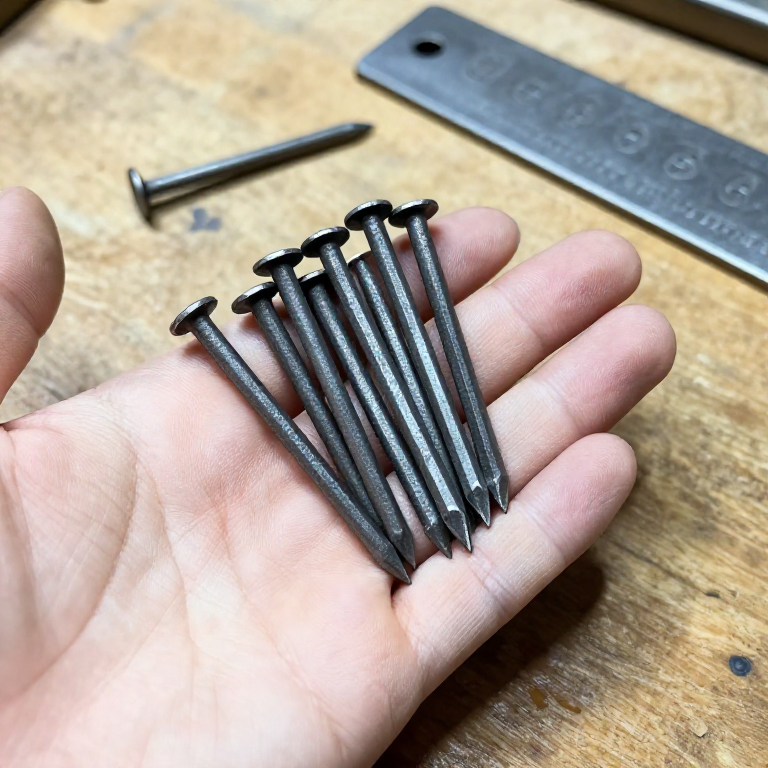


Forging Iron Nails by Hand — Drawing, Cutting, and Heading
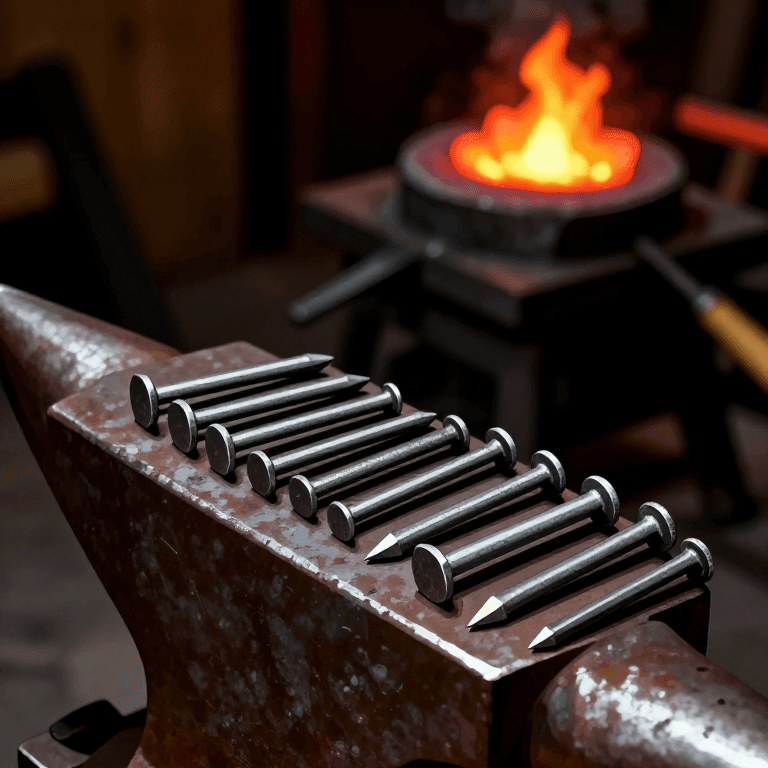
Before wire-drawing machines and nail-cutting factories, every nail was forged individually by hand. A skilled nailer could produce 200-300 nails per day — and millions were needed. The Roman army alone consumed an estimated 7 tonnes of iron nails for a single fortress. Medieval cathedrals, Viking longships, and colonial farmhouses all depended on hand-forged nails.
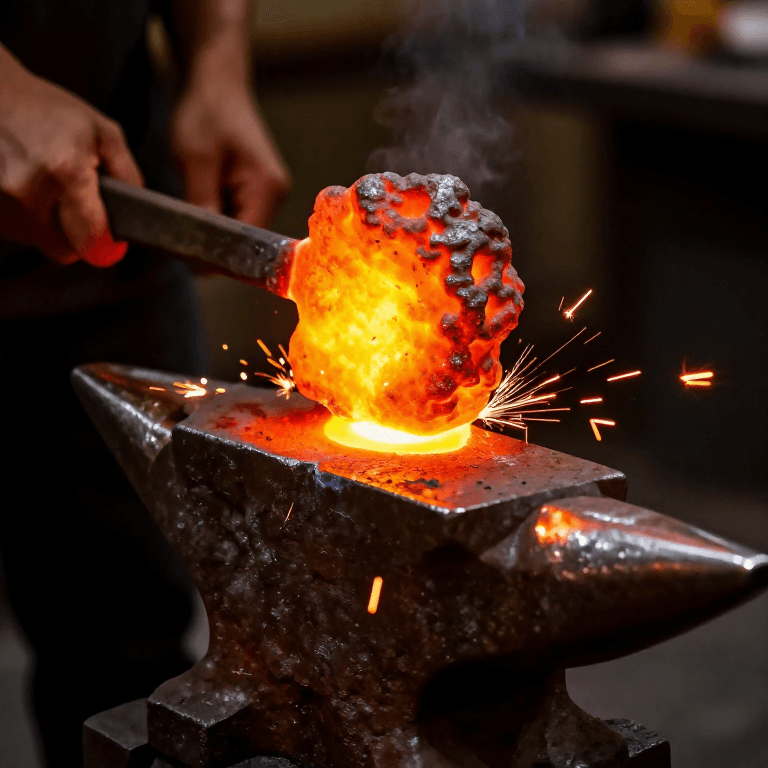
The process is deceptively simple: heat an iron rod, draw it to a taper, cut it to length, insert the cut end into a heading plate, and hammer the protruding end into a head. Each nail takes about 30 seconds for an experienced nailer — making it one of the fastest and most repetitive forge operations.
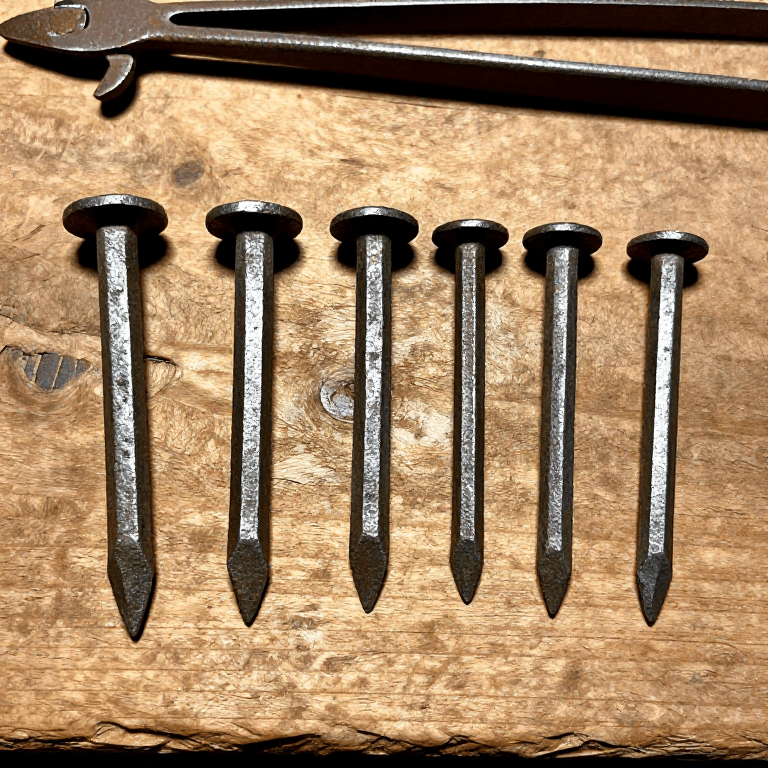
Hand-forged nails have a characteristic square cross-section (from the square rod stock) and an irregular rose head from the final heading blows. This is the blueprint for the most-produced iron object in human history.
Anweisungen
Prepare the nail rod
Prepare the nail rod
Materialien für diesen Schritt:
 Holzkohle2 kg
Heat the tip to forging temperature
Heat the tip to forging temperature
Benötigte Werkzeuge:
 Herd (Schmiedefeuer)
Draw the taper
Draw the taper
Benötigte Werkzeuge:
 Schmiedehammer
 Schmiedezange
Cut nearly through at the nail length
Cut nearly through at the nail length
Insert into the heading plate
Insert into the heading plate
Forge the head
Forge the head
Snap free and quench
Snap free and quench
Materialien für diesen Schritt:
 Wasser2 l
Repeat for the batch
Repeat for the batch
Benötigte Werkzeuge
3- Platzhalter
- Platzhalter
- Platzhalter
Materialien verbundener Blueprints
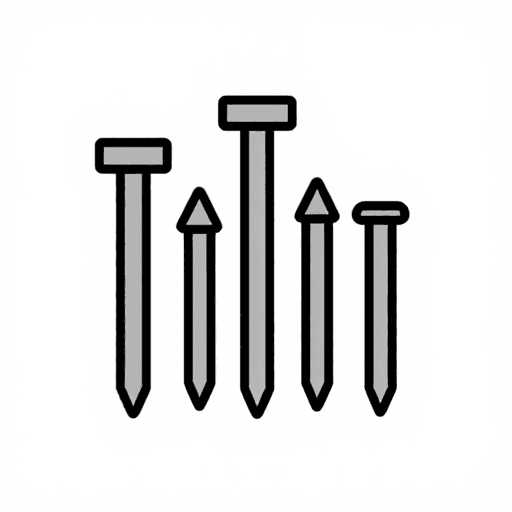
Dieser Bauplan stellt her



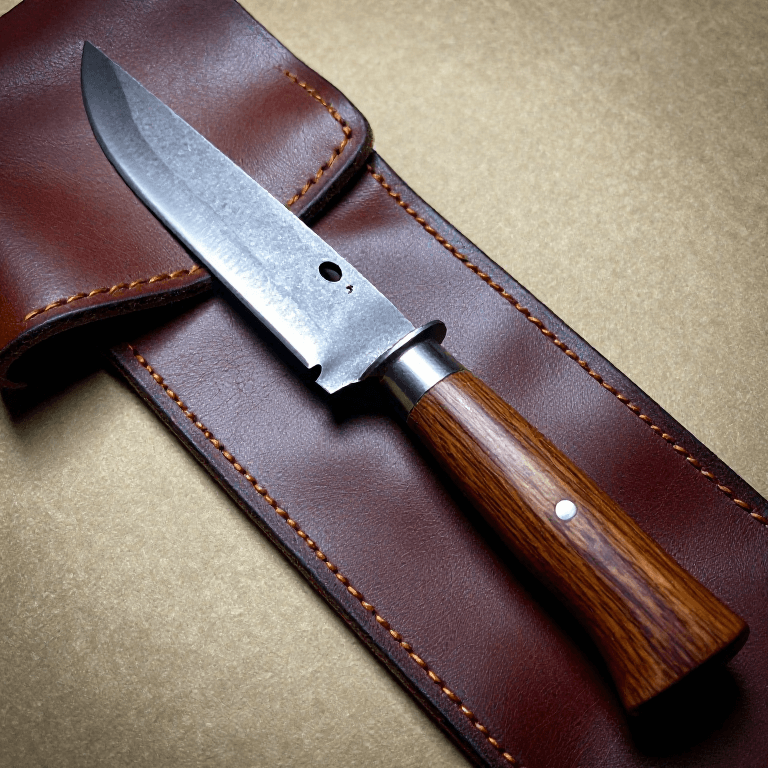
Verwandte Blueprints
Diese Blueprints teilen Wissen — Techniken, Materialien oder Prinzipien
CC0 Gemeinfrei
Dieser Blueprint ist unter CC0 veröffentlicht. Sie dürfen dieses Werk für jeden Zweck frei kopieren, ändern, verbreiten und verwenden, ohne um Erlaubnis zu fragen.
Unterstützen Sie den Maker, indem Sie Produkte über seinen Blueprint kaufen, wo er eine Maker-Provision von Anbietern festgelegt, verdient. Oder erstellen Sie eine neue Iteration dieses Blueprints und verbinden Sie ihn in Ihrem eigenen Blueprint, um Einnahmen zu teilen.