
ARTE
BELLEZA Y BIENESTAR
ARTESANÍA
CULTURA E HISTORIA
ENTRETENIMIENTO
MEDIO AMBIENTE
COMIDA Y BEBIDAS
INGENIERÍA INVERSA
CIENCIAS
DEPORTES
TECNOLOGÍA
TECNOLOGÍA VESTIBLE
Pinwheel Air-Tube Churn: A Beater Cut From One Tin Sheet, Tubes That Feed the Wave
YourGrandma

Creado por

YourGrandma

6. octubre 2026IS
41
0
0
0
0

Pinwheel Air-Tube Churn: A Beater Cut From One Tin Sheet, Tubes That Feed the Wave

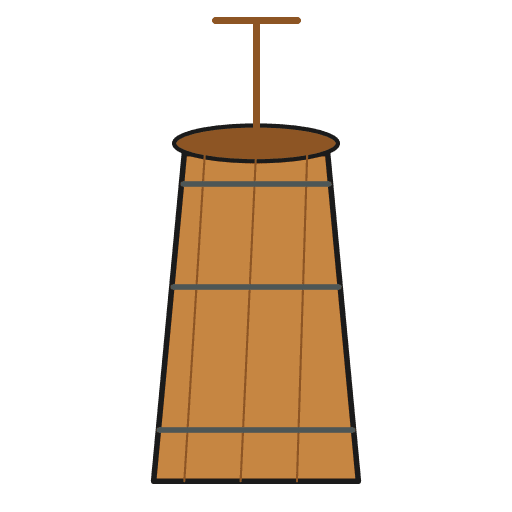
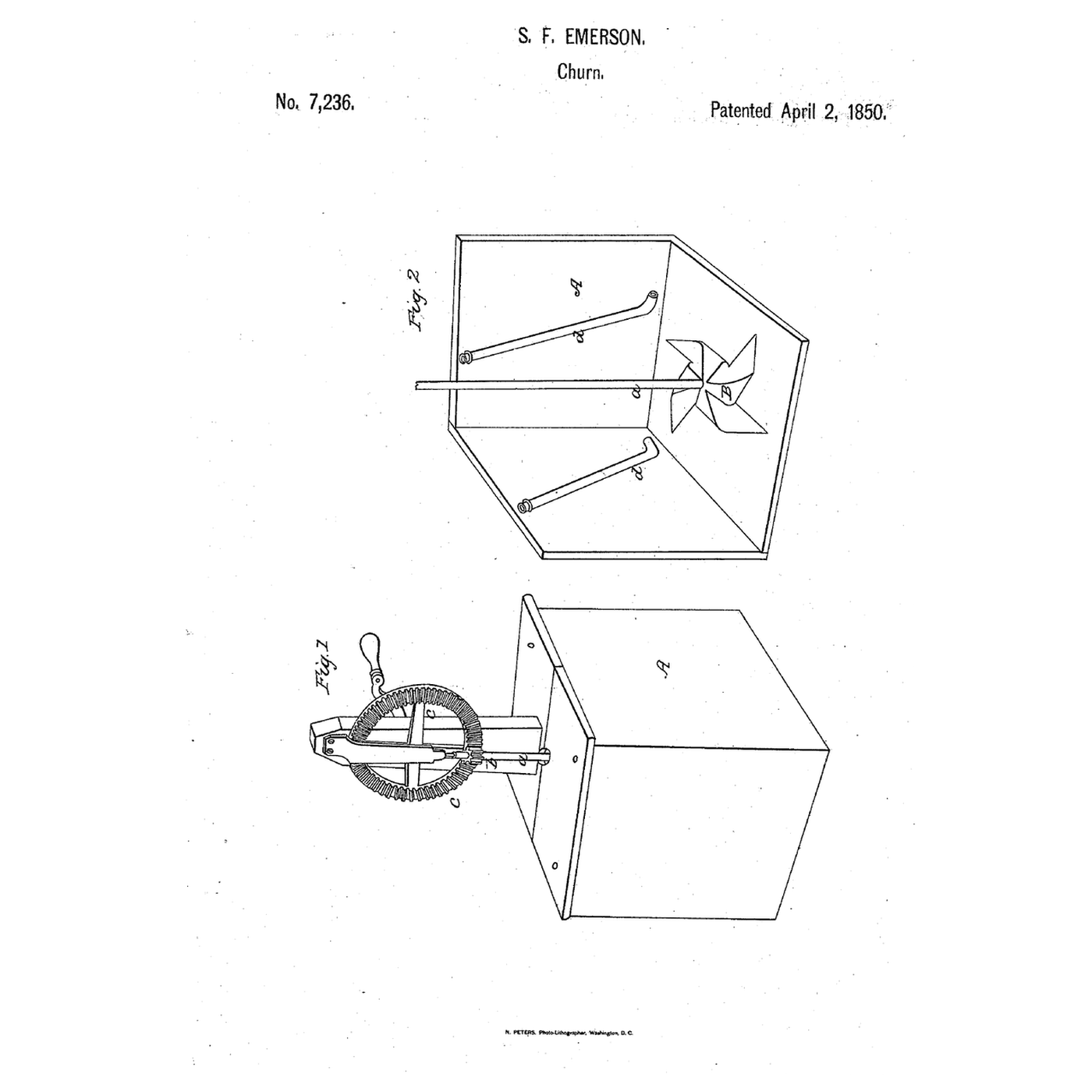
Emerson wanted a dasher "which unites simplicity with efficiency." Simeon F. Emerson of Canaan, Ohio, received US 7,236, dated 2 April 1850, for an atmospheric churn in a square box whose cover is in two pieces, one removable to inspect the cream. The beater is a squared sheet of tin plate "slit from each of the corners toward the center of the sheet for rather more than half the distance," every other corner turned in, on an upright spindle turned by a crank and wheel. "Inclined tubes, d, are secured to the sides of the churn tub; these incline forward, as they descend, in the direction in which the dasher is revolved." This rung works out the cuts, then makes the beater from stainless sheet with a printed template (or prints it), fits inclined tubes in a box, and makes butter.
Principiante
About 2 hours, plus printing

Instrucciones

1

The cuts

Cargando el cuaderno de Jupyter…
2

Air fed into the whirl before it

The embedded blueprint lets the whirl bring air into a cone. Emerson breaks the whirl with tubes on the walls that feed air into its wave.
3

Read US 7,236

"A squared sheet of tin plate or other metal is slit from each of the corners toward the center of the sheet for rather more than half the distance from the corner to the center. Every other one of the eight corners thus produced is turned inward toward the center of the sheet, and the four are united there thus forming a beater B, with four arms."
4

Make the beater

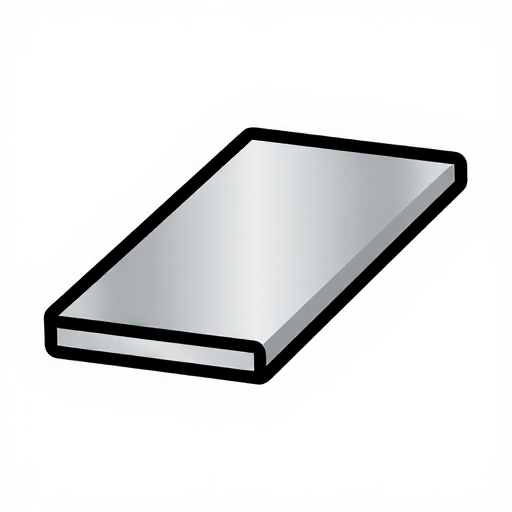
Print the template, lay it on a 150 mm square of 0.5 mm stainless sheet, mark the four slits and the centre hole, and cut them with snips and a drill. Deburr, then bend every other point in toward the centre and rivet or bolt the four together through a hole, as he united them. Or print the finished pinwheel. Print in PETG at 0.2 mm layers, 30 % infill, 4 walls; wash before first use.

Materiales para este paso:

Chapa de acero inoxidable - 304Chapa de acero inoxidable - 3041 pieza
Tornillos de máquinaTornillos de máquina1 pieza
Tuerca hexagonalTuerca hexagonal1 pieza
Filamento PETGFilamento PETG1 pieza

Herramientas necesarias:

Tijeras de chapaTijeras de chapa
DesbarbadorDesbarbador
Taladro inalámbricoTaladro inalámbrico
Juego de brocasJuego de brocas
Impresora 3D de filamento (FDM)Impresora 3D de filamento (FDM)
5

Print the pinwheel template

The pinwheel template, printed as step 4 describes.
Archivo de DisenoSTLCC0 - Free
6

Print the finished pinwheel

The finished pinwheel, printed as step 4 describes.
Archivo de DisenoSTLCC0 - Free
7

Tubes on the sides

Print six tube clips. Cut three 200 mm lengths of 16 mm food-grade tube and clip one to each of three sides of a food-safe square box, open at both ends, leaning about 18° forward as they go down in the direction the beater will turn.

Materiales para este paso:

Tubo de PVCTubo de PVC1 pieza
Recipiente de almacenaje de grado alimentarioRecipiente de almacenaje de grado alimentario1 pieza

Tornillo para madera n.º 8 x 1"Tornillo para madera n.º 8 x 1"1 pieza

Herramientas necesarias:

Sierra para metalesSierra para metales
Juego de destornilladoresJuego de destornilladores
8

Print the tube clip

The tube clip, printed as step 7 describes.
Archivo de DisenoSTLCC0 - Free
9

Spindle and crank

Fix the beater near the foot of a 10 mm square hardwood spindle and stand it in a seat drilled in the box's floor. Cut a two-piece plywood lid, one piece removable, with a hole for the spindle; glue a crank arm and handle on top.

Materiales para este paso:

Espigas de madera duraEspigas de madera dura1 pieza
Tablero contrachapadoTablero contrachapado1 pieza
Cola de carpinteroCola de carpintero1 pieza

Herramientas necesarias:

SerruchoSerrucho
Segueta (sierra de marquetería)Segueta (sierra de marquetería)
Taladro inalámbricoTaladro inalámbrico
10

The build in 3D

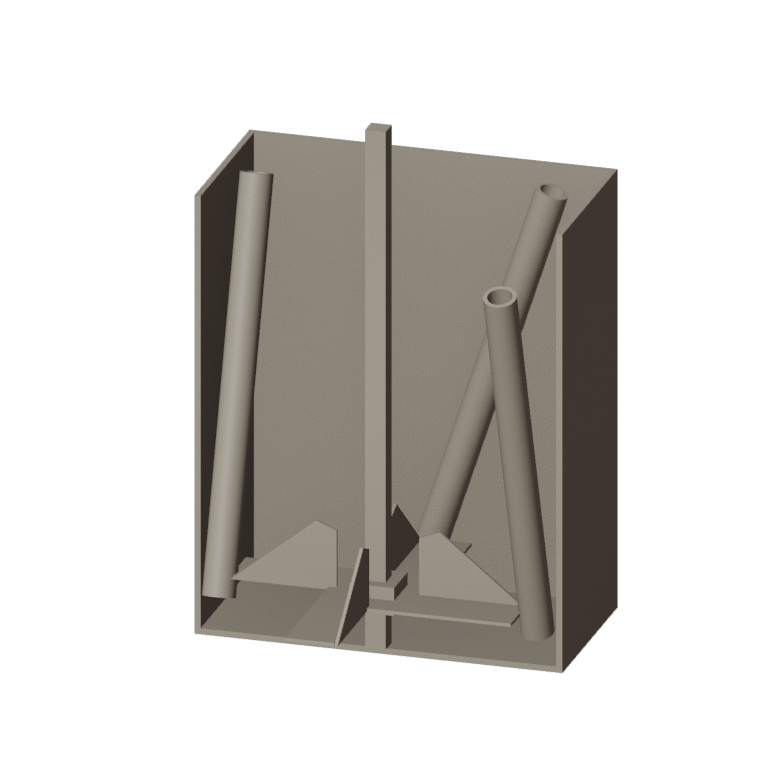
FreeCAD model of this build, not of the patent: the box cut away to show the four-armed pinwheel beater on its spindle and the inclined air tubes on its sides.
Archivo de DisenoBLENDCC0 - Free
11

Crank and make butter

Let the heavy cream stand until it reaches about 15 °C, checked with the thermometer. Pour in 2 litres, below the tubes' tops. Crank steadily the way the tubes lean; time until the butter comes. Pour off the buttermilk, add cold water, churn a little and pour off again until it runs clear; work in a pinch of salt and weigh the butter.
Paso 11 - Image 1

Materiales para este paso:

Crema de leche espesaCrema de leche espesa2000 ml
Sal marina gruesaSal marina gruesa1 pieza
AguaAgua1 pieza

Herramientas necesarias:

Termómetro de sonda permanenteTermómetro de sonda permanente
CronómetroCronómetro
Báscula digital de cocinaBáscula digital de cocina
Bol grande de acero inoxidableBol grande de acero inoxidable
12

Cream up the tubes, a beater that bends

Pinwheel air-tube churn troubleshooting.

Flow

Loading...
13

History and honest limits

**Simeon F. Emerson** of Canaan, Wayne County, Ohio, received US 7,236, dated 2 April 1850. The spindle was stepped in the tub's bottom and turned through a wheel and crank on the cover; the parts could be of "such materials as the manufacturer may deem best suited" for "efficiency, cheapness, and facility for cleaning." He claimed the combination of the dasher with the stationary inclined air channels on the churn tub. **Honest limits.** Stainless sheet stands in for his tin plate; our crank turns the spindle directly. FDM prints hold food in their layer lines, so wash well and replace when worn. Your times and weights are the result.

Materiales

13

Herramientas requeridas

13

Archivos de diseño

4

CC0 Dominio público

Este Blueprint se publica bajo CC0. Eres libre de copiar, modificar, distribuir y usar este trabajo para cualquier propósito, sin pedir permiso.

Apoya al Maker comprando productos a través de su Blueprint, donde gana una Comisión del Maker establecida por los vendedores, o crea una nueva iteración de este Blueprint e inclúyela como conexión en tu propio Blueprint para compartir ingresos.

Discusión

(0)

Iniciar sesión para unirte a la discusión

Cargando comentarios...