ARTE
BELLEZA Y BIENESTAR
ARTESANÍA
CULTURA E HISTORIA
ENTRETENIMIENTO
MEDIO AMBIENTE
COMIDA Y BEBIDAS
INGENIERÍA INVERSA
CIENCIAS
DEPORTES
TECNOLOGÍA
TECNOLOGÍA VESTIBLE
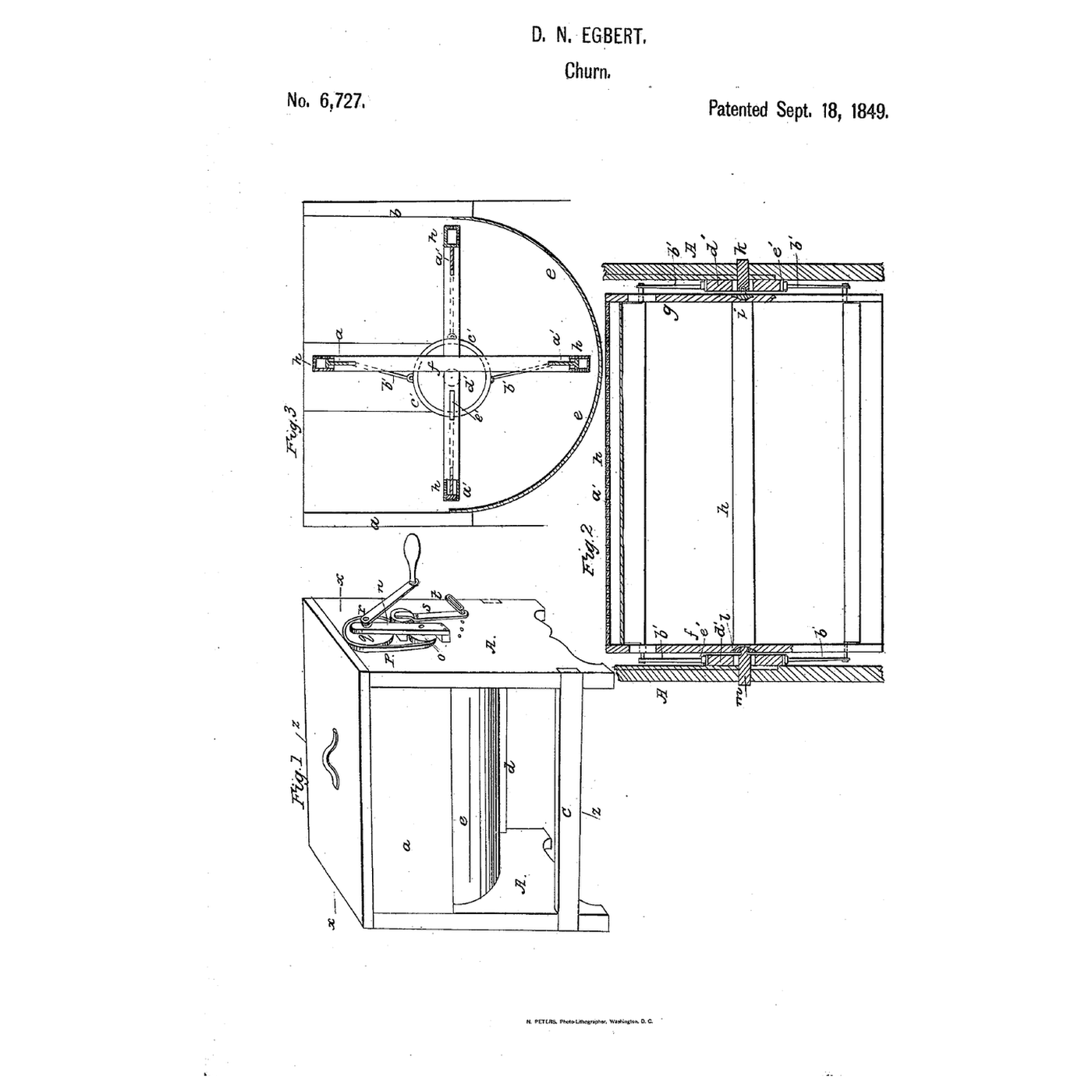

Piston-Float Air Churn: Hollow Floats With Pistons Worked by a Fixed Eccentric
Egbert wanted the air "forcibly discharged in small jets at the very point where it is most required, viz, the moving surface of the dasher."
D. N. Egbert of Hudson, Ohio, received US 6,727, dated 18 September 1849, for a rotary churn-dasher in a case with a zinc bottom: two sets of arms joined by hollow floats whose sides are pierced with small holes, each fitted with a piston. Connecting rods join the pistons to an eccentric ring running on an eccentric fixed to the end piece, so each float fills with air as it ascends and discharges it as it descends. A strap from a large pulley on the crank shaft to a small one on the dasher's shaft turns it fast.
This rung works out the air each float pumps, then prints the floats, pistons, eccentric and arms, builds them over a stainless bottom, and makes butter.
Avanzado
About 6 hours, plus printing
Instrucciones
1
1
Air per float
Air per float
Cargando el cuaderno de Jupyter…
2
2
A dasher that is also an air pump before it
A dasher that is also an air pump before it
The embedded blueprint pumps air with a tube over a loose plunger. Egbert builds the pump into each float of a rotary dasher.
3
3
Read US 6,727
Read US 6,727
"It will now be perceived that as the floats ascend above their horizontal position by the revolution of the dasher, each piston is in turn withdrawn in its appropriate float and the hollow cavity filled with air; as the floats descend below their horizontal position this air is forcibly discharged through the perforations of the floats, below the surface of the liquid."
4
4
Print the parts
Print the parts
Print two hollow floats and two pistons, the fixed eccentric and its ring, two arm sets and the crank arm. Print in PETG at 0.2 mm layers, 30 % infill, 4 walls; wash before first use.
Materiales para este paso:
 Filamento PETG1 pieza
Herramientas necesarias:
 Impresora 3D de filamento (FDM)
5
5
Print the hollow float
Print the hollow float
The hollow float, printed as step 4 describes.
6
6
Print the piston
Print the piston
The piston, printed as step 4 describes.
7
7
Print the eccentric
Print the eccentric
The eccentric, printed as step 4 describes.
8
8
Print the eccentric's ring
Print the eccentric's ring
The eccentric's ring, printed as step 4 describes.
9
9
Print the arm sets
Print the arm sets
The arm sets, printed as step 4 describes.
10
10
Print the crank arm
Print the crank arm
The crank arm, printed as step 4 describes.
11
11
The case
The case
Make two plywood end pieces with a 90 mm radius half circle grooved in each, and bend a 0.5 mm stainless sheet into the bottom, seated in the grooves with silicone, as his zinc bottom. Screw the eccentric to the inside of one end on the axis, offset upward as printed.
Materiales para este paso:
 Tablero contrachapado1 pieza
 Chapa de acero inoxidable - 3041 pieza
 Sellador de silicona1 pieza
 Tornillo para madera n.º 8 x 1"1 pieza
Herramientas necesarias:
 Segueta (sierra de marquetería)
 Tijeras de chapa
 Desbarbador
 Maza de goma
 Juego de destornilladores
12
12
Dasher, pistons and rods
Dasher, pistons and rods
Slide the two arm sets onto a 10 mm square hardwood shaft and screw a float to the ends of each pair of arms, holes outward. Fit a piston in each float. Fit the ring over the eccentric and join each piston to the ring with two thin pine rods on M3 screws, so the ring is carried round by the arms. Pass the shaft through the other end and glue the crank arm and handle on.
Materiales para este paso:
 Espigas de madera dura1 pieza
 Tabla de pino1 pieza
 Tornillos de máquina1 pieza
 Tuerca hexagonal1 pieza
 Cola de carpintero1 pieza
Herramientas necesarias:
 Serrucho
 Taladro inalámbrico
 Juego de brocasJuego de destornilladores
13
13
The patent drawing
The patent drawing
US 6,727 drawing sheet, public domain (expired patent).
14
14
Crank and make butter
Crank and make butter
Let the heavy cream stand until it reaches about 15 °C, checked with the thermometer. Pour in 1.5 litres. Crank steadily and watch for jets of bubbles as each float goes down; time until the butter comes. Pour off the buttermilk, add cold water, churn a little and pour off again until it runs clear; work in a pinch of salt and weigh the butter.
Materiales para este paso:
 Crema de leche espesa1500 ml
 Sal marina gruesa1 pieza
 Agua1 pieza
Herramientas necesarias:
 Termómetro de sonda permanente
 Cronómetro
 Báscula digital de cocina
 Bol grande de acero inoxidable
15
15
Pistons that stick, no jets
Pistons that stick, no jets
Piston-float air churn troubleshooting.
Flow
Loading...
16
16
History and honest limits
History and honest limits
**D. N. Egbert** of Hudson, Summit County, Ohio, received US 6,727, dated 18 September 1849. A tightening pulley on a spring lever kept the strap taut. He claimed the combination of the pistons moved by stationary eccentrics with the floats of a revolving dasher.
**Honest limits.** Our crank turns the shaft directly, without his strap and pulleys; stainless sheet and printed parts stand in for his zinc and wooden floats. The notebook gives an upper bound. FDM prints hold food in their layer lines, so wash well and replace when worn. Your times and weights are the result.
Materiales
13- 1 piezaMarcador de posición
- 1 piezaMarcador de posición
- Marcador de posición
- 1 piezaMarcador de posición
- Marcador de posición
- 1 piezaMarcador de posición
- 1 piezaMarcador de posición
- 1 piezaMarcador de posición
- 1 piezaMarcador de posición
- 1 piezaMarcador de posición
- 1500 mlMarcador de posición
- 1 piezaMarcador de posición
- 1 piezaMarcador de posición
Herramientas requeridas
13- Marcador de posición
- Marcador de posición
- Marcador de posición
- Marcador de posición
- Marcador de posición
- Marcador de posición
- Marcador de posición
- 1 vendor sell this, none ship to you yetMarcador de posición
- Marcador de posición
- Marcador de posición
- Marcador de posición
- Marcador de posición
- Marcador de posición
Archivos de diseño
6Este plano hace
Blueprints relacionados
Estos blueprints comparten conocimiento — técnicas, materiales o principios
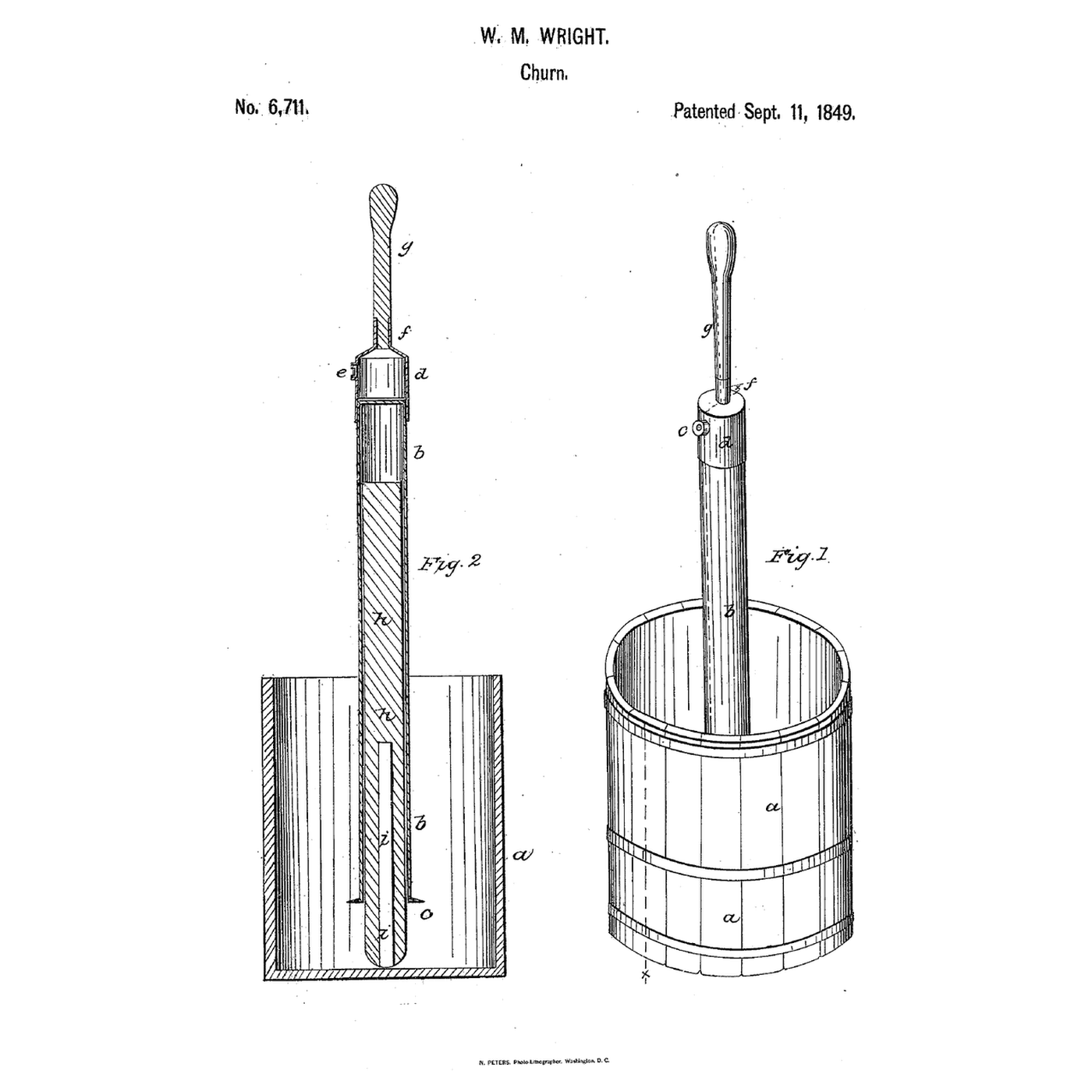
Air-Pump Tube Dasher: A Tube Over a Loose Plunger Pumps Air at Every Stroke
por Emma
COMIDA Y BEBIDAS
30
0
0
0
0
0
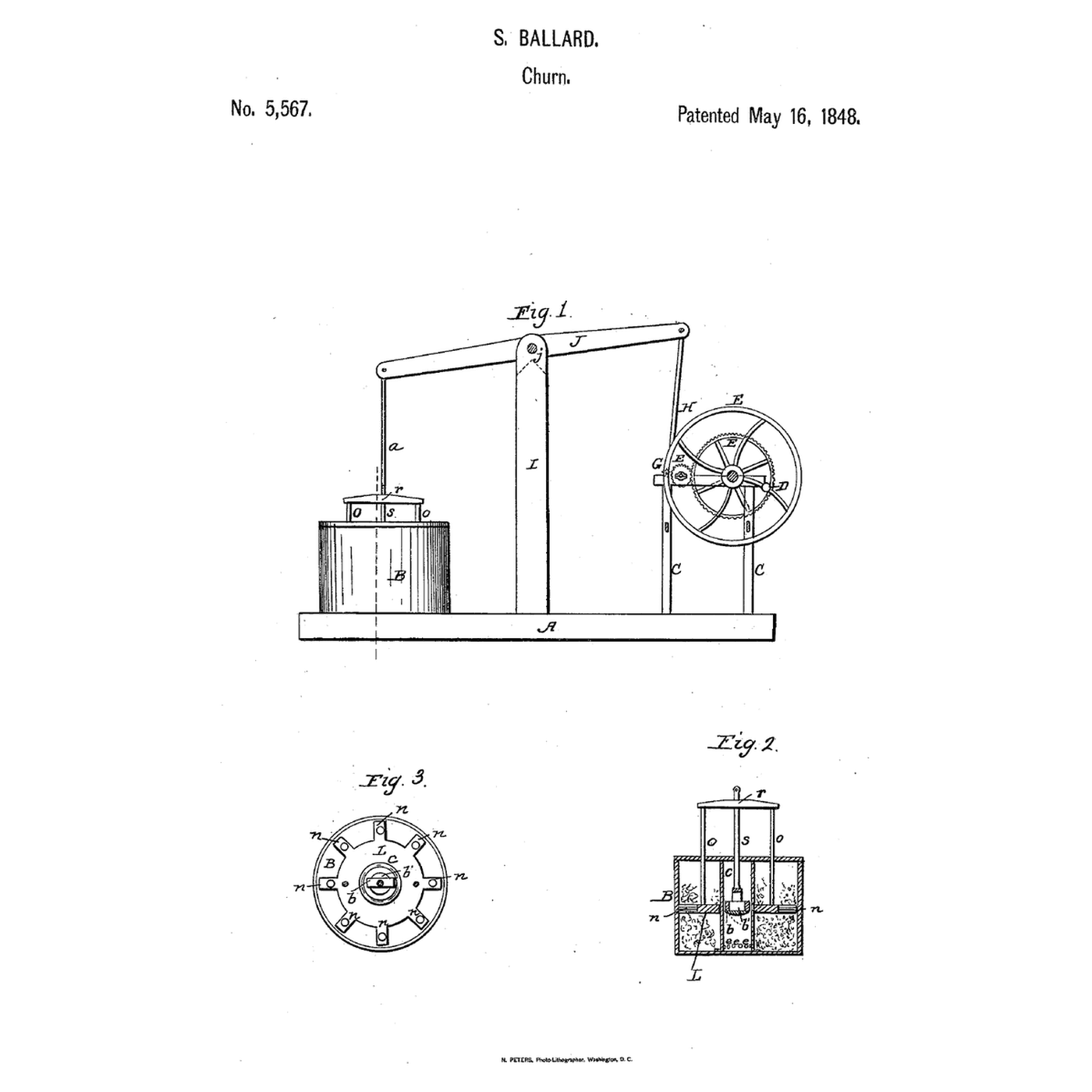
Air-Pump Annular Dasher Churn: A Pump in the Middle, a Ring Dasher Round It
por Martin
COMIDA Y BEBIDAS
32
0
0
0
0
0
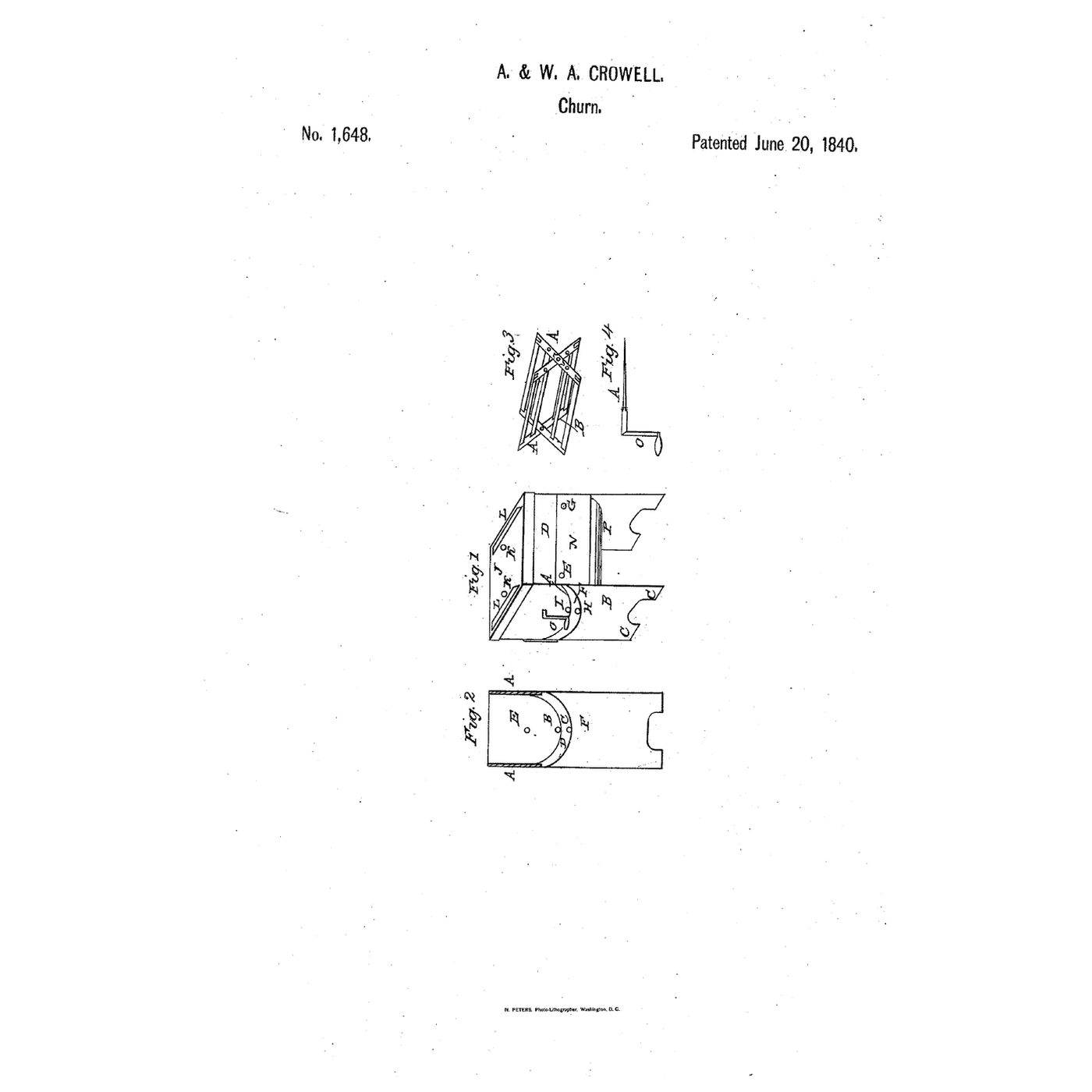
Water-Jacketed Churn: Hot or Cold Water Under a Metal Plate Tempers the Cream
por Karen
COMIDA Y BEBIDAS
34
0
0
0
0
0
CC0 Dominio público
Este Blueprint se publica bajo CC0. Eres libre de copiar, modificar, distribuir y usar este trabajo para cualquier propósito, sin pedir permiso.
Apoya al Maker comprando productos a través de su Blueprint, donde gana una Comisión del Maker establecida por los vendedores, o crea una nueva iteración de este Blueprint e inclúyela como conexión en tu propio Blueprint para compartir ingresos.