ARTE
BELLEZA Y BIENESTAR
ARTESANÍA
CULTURA E HISTORIA
ENTRETENIMIENTO
MEDIO AMBIENTE
COMIDA Y BEBIDAS
INGENIERÍA INVERSA
CIENCIAS
DEPORTES
TECNOLOGÍA
TECNOLOGÍA VESTIBLE
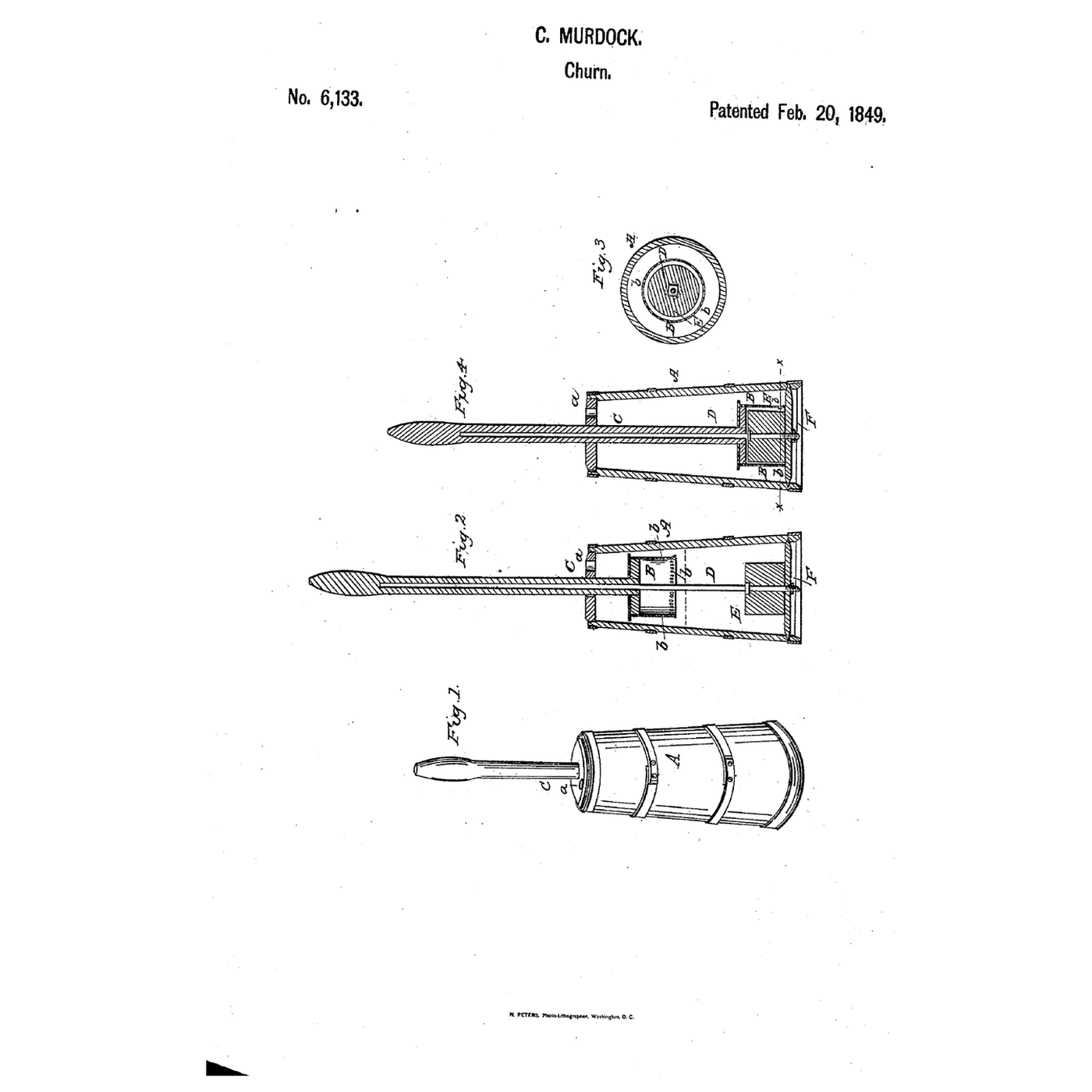

Trapped-Air Cylinder Dash Churn: A Hollow Dash That Squeezes Air Into the Cream
Murdock wanted the air carried down through the cream by the common up-and-down dash itself.
Charles Murdock of Baltimore, Maryland, received US 6,133, dated 20 February 1849, for "Murdock's Atmospheric Churn": a hollow cylindrical dash, perforated round its lower open end, on the common dash staff, which is bored to slide over a fixed central spindle. The spindle stands in a stationary cylindrical block, smaller than the dash, held to the churn's bottom by a nut. At each stroke the dash fills with air above the cream, carries it down, and when it meets the block the air "is compressed in the cylinder forced radially through the apertures."
This rung works out the air squeezed out each stroke, then prints the dash and block, fits them to a churn, and makes butter.
Principiante
About 2 hours, plus printing
Instrucciones
1
1
Air per stroke
Air per stroke
Cargando el cuaderno de Jupyter…
2
2
An air pump in the churn before it
An air pump in the churn before it
The embedded blueprint puts a pump and a ring dasher in the churn. Murdock makes the dash itself the pump.
3
3
Read US 6,133
Read US 6,133
"The air, however, may be let into the cylinder through a valve in its top or side instead of open end which will do away with the necessity of raising the cylinder above the surface of the cream to receive air. The aperture in the staff must be a little larger than the spindle but must not extend through it nor be intersected by any lateral opening."
4
4
Print the dash and block
Print the dash and block
Print the dash open end up: a 90 mm cylinder with sixteen small holes near its open edge and a socket for the staff. Print the block. Print in PETG at 0.2 mm layers, 30 % infill, 4 walls; wash before first use.
Materiales para este paso:
 Filamento PETG1 pieza
Herramientas necesarias:
 Impresora 3D de filamento (FDM)
5
5
Print the dash
6
6
Print the block
Print the block
The block, printed as step 4 describes.
7
7
Spindle and block
Spindle and block
Drill an 8 mm hole in the centre of a tall food-grade bucket's floor. Pass an M8 threaded rod up through it and the block, with a washer and nut under the floor and silicone round the hole, so the rod stands upright as the spindle.
Materiales para este paso:
 Cubo de 20 litros1 pieza
 Varilla roscada1 pieza
 Tuerca hexagonal1 pieza
 Arandela plana1 pieza
 Sellador de silicona1 pieza
Herramientas necesarias:
 Taladro inalámbrico
 Juego de brocas
 Llave inglesa ajustable
 Sierra para metales
8
8
Staff and lid
Staff and lid
Bore a 25 mm hardwood dowel lengthwise, 10 mm, deep enough to slide over the spindle's full height but not through its top, and glue the dash on its foot. Drill the lid for the staff and fit a knob on top.
Materiales para este paso:
 Espigas de madera dura1 pieza
 Bloque de madera dura1 pieza
 Cola de carpintero1 pieza
Herramientas necesarias:
Taladro inalámbricoJuego de brocas Serrucho
 Papel de lija
9
9
The build in 3D
The build in 3D
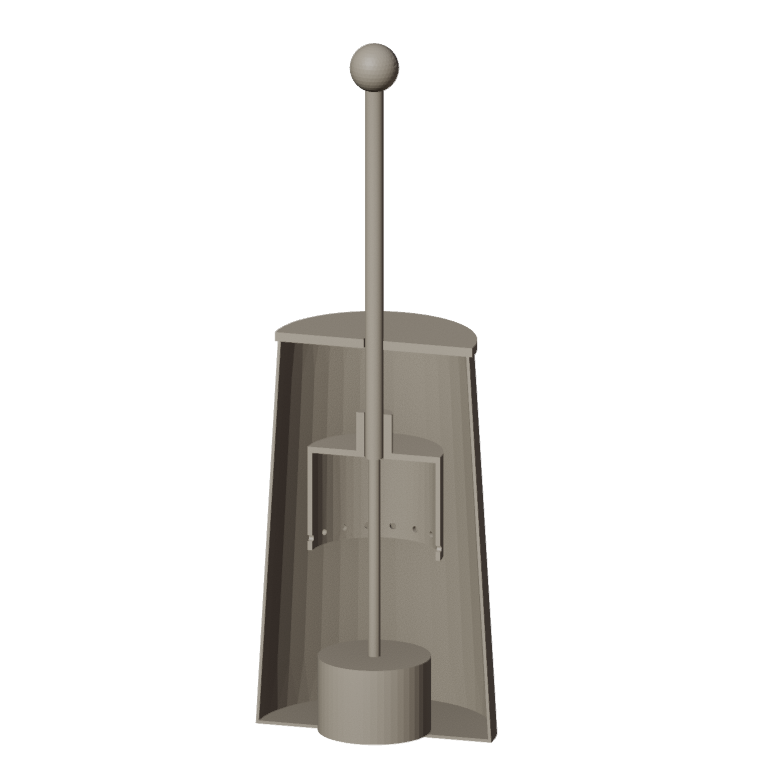
FreeCAD model of this build, not of the patent: the churn and dash cut away to show the hollow dash with its holes near the open end, the bored staff over the fixed spindle, and the stationary block it closes over.
10
10
Dash and make butter
Dash and make butter
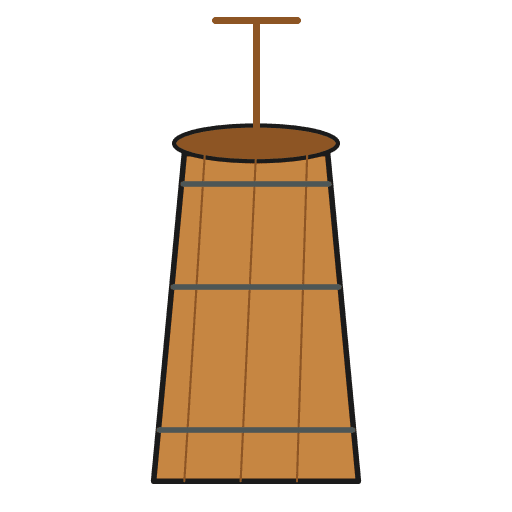
Let the heavy cream stand until it reaches about 15 °C, checked with the thermometer. Pour in 1.5 litres. Work the staff up and down, lifting the dash above the cream each time to fill it with air; bubbles burst from the holes at the foot of each stroke. Time until the butter comes. Pour off the buttermilk, add cold water, churn a little and pour off again until it runs clear; work in a pinch of salt and weigh the butter.
Materiales para este paso:
 Crema de leche espesa1500 ml
 Sal marina gruesa1 pieza
 Agua1 pieza
Herramientas necesarias:
 Termómetro de sonda permanente
 Cronómetro
 Báscula digital de cocina
 Bol grande de acero inoxidable
11
11
No bubbles, a staff that sticks
No bubbles, a staff that sticks
Trapped-air cylinder dash churn troubleshooting.
Flow
Loading...
12
12
History and honest limits
History and honest limits
**Charles Murdock** of Baltimore, Maryland, received US 6,133, dated 20 February 1849, signed 21 November 1848. The dash could be formed in the underside of the dash block, or as a cylinder fixed to the dash's periphery; in a stone churn the spindle's hole could be drilled and bushed. He claimed the combination of the hollow perforated cylinder dash and the central guide spindle and stationary block with the ordinary upright tub churn.
**Honest limits.** A bucket, threaded rod and printed parts stand in for his churn, spindle and dash. FDM prints hold food in their layer lines, so wash well and replace when worn. Your times and weights are the result.
Materiales
12- 1 piezaMarcador de posición
- 1 piezaMarcador de posición
- 1 piezaMarcador de posición
- 1 piezaMarcador de posición
- 1 piezaMarcador de posición
- 1 piezaMarcador de posición
- 1 piezaMarcador de posición
- 1 piezaMarcador de posición
- 1 piezaMarcador de posición
- 1500 mlMarcador de posición
- 1 piezaMarcador de posición
- 1 piezaMarcador de posición
Herramientas requeridas
11- Marcador de posición
- 1 vendor sell this, none ship to you yetMarcador de posición
- Marcador de posición
- Marcador de posición
- Marcador de posición
- Marcador de posición
- Marcador de posición
- Marcador de posición
- Marcador de posición
- Marcador de posición
- Marcador de posición
Archivos de diseño
3Este plano hace
Blueprints relacionados
Estos blueprints comparten conocimiento — técnicas, materiales o principios
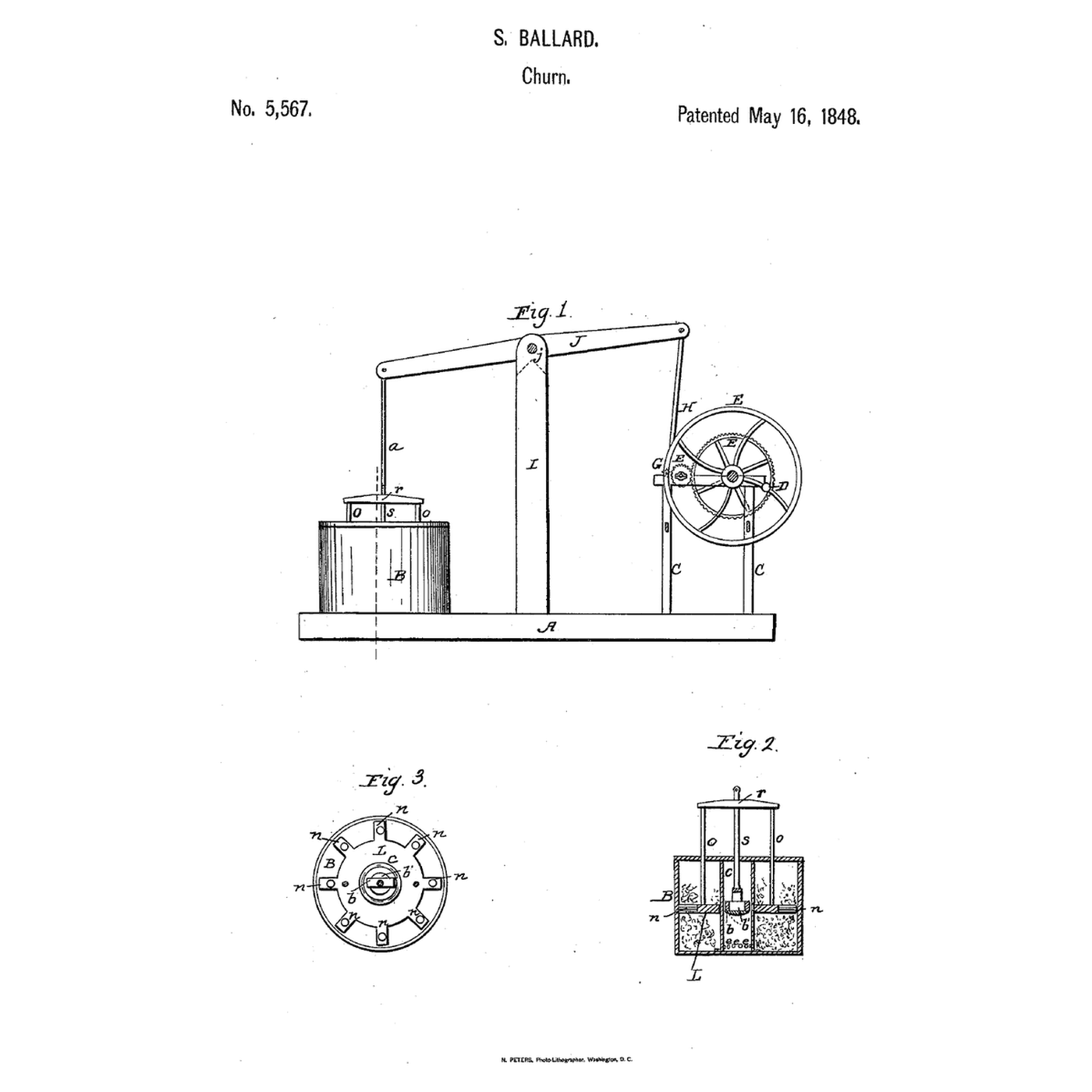
Air-Pump Annular Dasher Churn: A Pump in the Middle, a Ring Dasher Round It
por Martin
COMIDA Y BEBIDAS
32
0
0
0
0
0
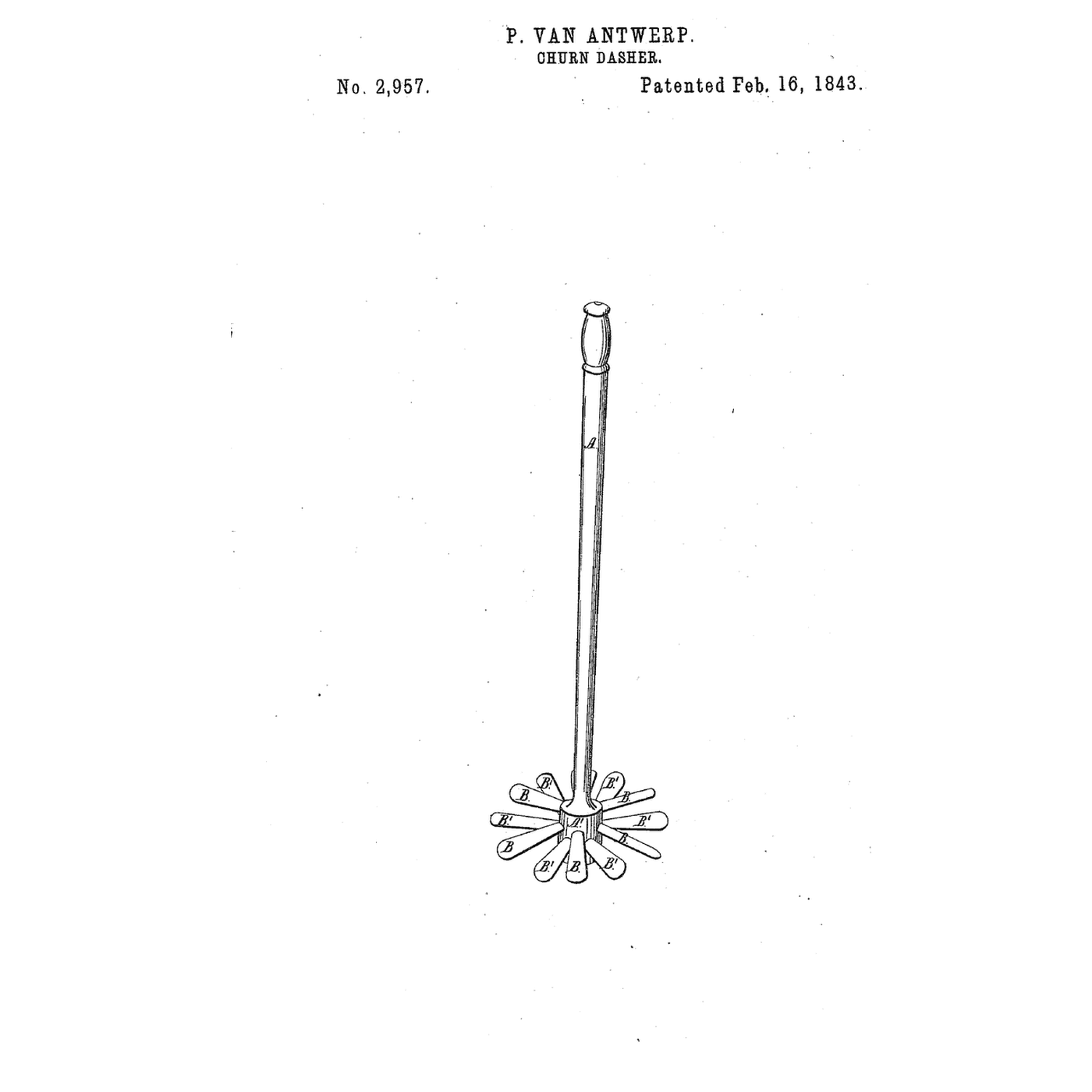
Reacting Churn Dasher: Two Rows of Oars Pitched Opposite Ways
por TheChef
COMIDA Y BEBIDAS
37
0
0
0
0
0
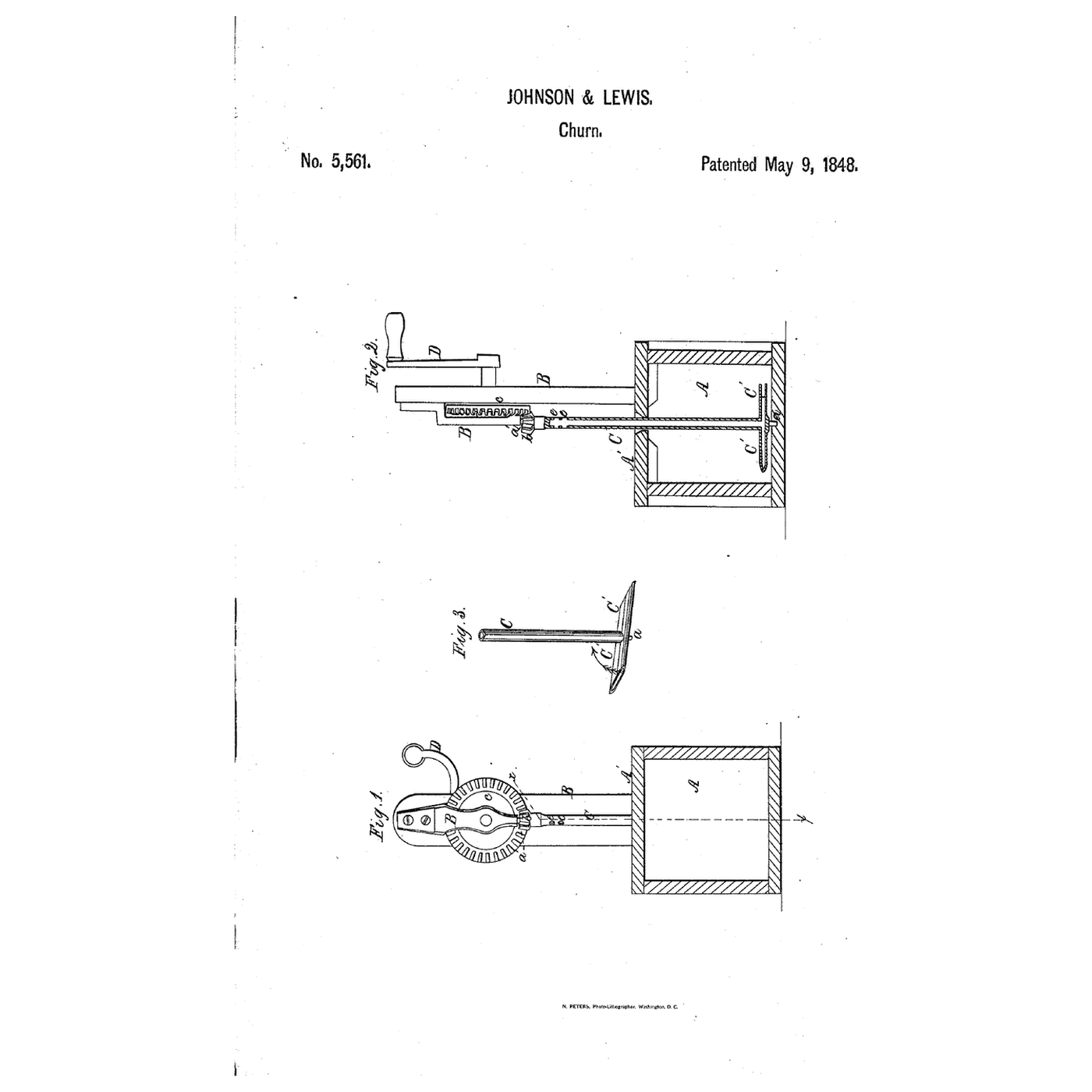
Hollow-Arm Air Churn: A Spinning Dasher That Breathes Air Into the Cream
por Emma
COMIDA Y BEBIDAS
29
0
0
0
0
0
CC0 Dominio público
Este Blueprint se publica bajo CC0. Eres libre de copiar, modificar, distribuir y usar este trabajo para cualquier propósito, sin pedir permiso.
Apoya al Maker comprando productos a través de su Blueprint, donde gana una Comisión del Maker establecida por los vendedores, o crea una nueva iteración de este Blueprint e inclúyela como conexión en tu propio Blueprint para compartir ingresos.