LIST
FEGURÐ OG VELLÍÐAN
HANDVERK
MENNING OG SAGA
SKEMMTUN
UMHVERFI
MATUR OG DRYKKUR
GRÆN FRAMTÍÐ
ÖFUGVERKFRÆÐI
VÍSINDI
ÍÞRÓTTIR
TÆKNI
KLÆÐANLEG TÆKNI
Casting a Bronze Socketed Spearhead — Bivalve Mould Method
Forge

Búin til af

Forge

26. maí 2026NO
12
0
0
1
0

Casting a Bronze Socketed Spearhead — Bivalve Mould Method

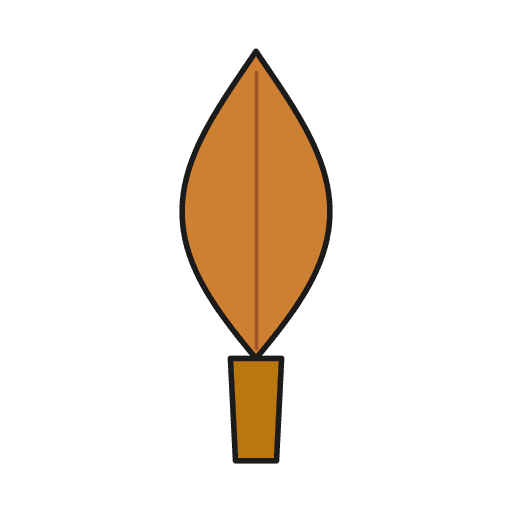
The socketed spearhead was a major advance over the flat tanged point — the hollow socket allowed the shaft to be inserted directly into the head, creating a stronger and more aerodynamic weapon. This design appeared across the Bronze Age world from approximately 2000 BCE and remained in use for over a thousand years.

Creating the socket requires a bivalve mould with a clay core inserted between the two stone halves. The core occupies the space where the socket will be, so when the bronze solidifies around it and the core is broken out, a hollow tube remains. This is one of the earliest examples of core-casting — a technique that later evolved into the lost-wax process for complex hollow sculptures.

The leaf-shaped blade is cast with a raised midrib for rigidity, then the edges are cold-hammered and ground sharp. Two small holes at the socket base allow a pin or binding to lock the shaft in place.

Lengra kominn
3-4 hours (casting, core removal, and finishing)

Leiðbeiningar

1

Prepare the bivalve mould

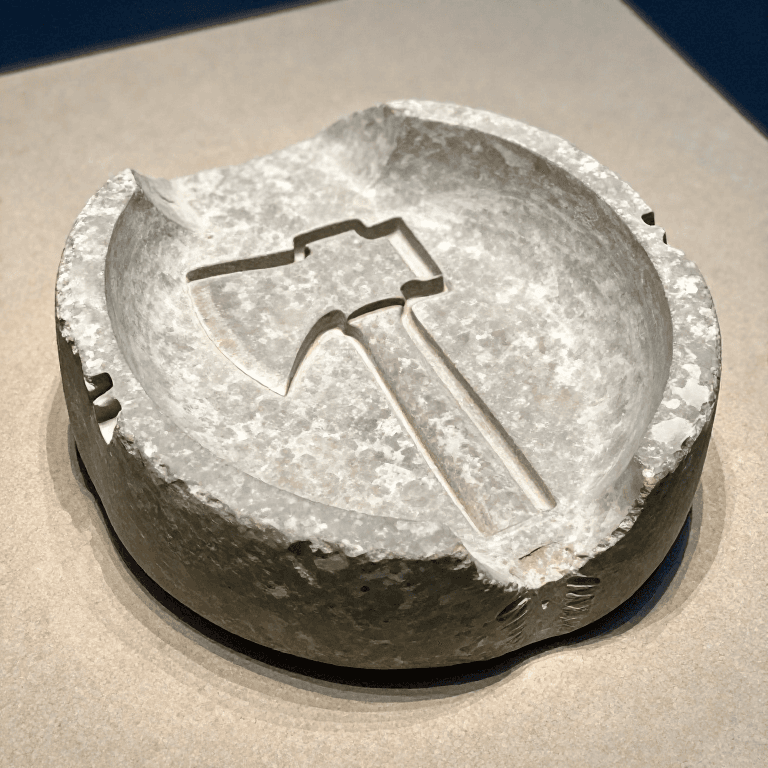
Use a two-part soapstone mould with a leaf-shaped spearhead cavity carved into both halves. The cavity should include a raised ridge down the centre of each half — when assembled, these form the midrib channel. Ensure the alignment pegs seat correctly and both halves close without gaps. Coat the cavity surfaces with soot from a smoky fire.

Efni fyrir þetta skref:

Soapstone Block (Steatite)Soapstone Block (Steatite)2 piece
2

Form the clay core for the socket

Mix refractory clay with fine sand to make a stiff paste. Shape it into a tapered cylinder matching the socket cavity — typically 8-10 cm long and 2-2.5 cm in diameter, tapering to a blunt point. Let the core dry thoroughly for at least one day, then fire it gently near a flame to drive out all moisture. A wet core in contact with molten bronze explodes.

Efni fyrir þetta skref:

Refractory ClayRefractory Clay200 g
Fine SandFine Sand100 g
3

Assemble the mould with core

Place the fired clay core into the socket cavity of one mould half, resting it against the small clay chaplets (support pegs) that keep it centred. Close the second half over it, engaging the alignment pegs. Bind the two halves tightly with wet rawhide strips. Stand the mould upright with the pour funnel at the top and the blade cavity pointing downward.

Efni fyrir þetta skref:

Rawhide StripsRawhide Strips1 m
4

Pre-heat the assembled mould

Place the bound mould near the fire for 30 minutes, rotating occasionally. Both the stone and the clay core must be hot before pouring. The temperature difference between cold stone and 1,050 °C bronze causes the metal to freeze before filling thin sections like the blade edges.
5

Melt and pour the bronze

Melt 400 g of bronze (360 g copper, 40 g tin) in a pre-heated clay crucible. When the metal is fluid and glowing bright orange, lift the crucible with tongs and pour into the mould funnel in one continuous stream. Bronze flows around the clay core and into the blade cavity. Continue pouring until metal appears at the vent holes, confirming the mould is full.

Efni fyrir þetta skref:

CharcoalCharcoal4 kg

Nauðsynleg verkfæri:

Crucible Tongs (long-handled)Crucible Tongs (long-handled)
6

Cool and separate the mould halves

Allow the mould to cool for 15-20 minutes. Cut the rawhide bindings, separate the mould halves, and extract the casting. The spearhead emerges with the clay core still inside the socket, the sprue still attached at the pour channel, and thin flash lines along the mould parting line.
7

Remove the clay core

Break the clay core out of the socket using a pointed bone tool or antler tine. Chip away in small pieces, working from the open end inward. The fired clay should crumble relatively easily. Clean out all core fragments — any remaining clay prevents the shaft from seating fully.

Nauðsynleg verkfæri:

Antler TineAntler Tine
8

Remove sprue and grind the parting line

Score and snap off the sprue. Grind away flash along both sides of the blade where the mould halves met, using a sandstone slab with water. The parting line must be completely smooth — any ridge catches in a wound and weakens the penetration.

Efni fyrir þetta skref:

Sandstone (Abrasive)Sandstone (Abrasive)1 piece
9

Cold-hammer and sharpen the blade edges

Hammer both blade edges on a flat stone anvil to work-harden the bronze. Strike with controlled overlapping blows, working from the midrib outward toward the edge. This compresses the grain structure and dramatically increases hardness. Finish by grinding on a whetstone to a razor-sharp edge along the full length of the blade.

Efni fyrir þetta skref:

WhetstoneWhetstone1 piece

Nauðsynleg verkfæri:

HammerstoneHammerstone
Flat Stone SlabFlat Stone Slab
10

Drill the rivet holes and haft

Using a small flint drill bit rotated between the palms or in a bow drill, bore two small holes through the socket wall near the base — one on each side. Shape a straight ash or hazel shaft to fit snugly in the socket. Insert the shaft, then drive bronze or bone pins through the holes and through the shaft to lock it in place. The spearhead is complete.

Efni

7

Nauðsynleg verkfæri

4

Efni úr tengdum teikningum

CC0 opinbert ríki

Þessi teikning er gefin út undir CC0. Þér er frjálst að afrita, breyta, dreifa og nota þetta verk í hvaða tilgangi sem er, án þess að biðja um leyfi.

Studdu smiðinn með því að kaupa vörur í gegnum teikningu hans þar sem hann fær þóknun smiða sem seljendur ákvarða, eða búðu til nýja endurskoðun á þessari teikningu og tengdu hana sem tengingu í þinni eigin teikningu til að deila tekjum.

Umræða

(0)

Skrá inn til að taka þátt í umræðunni

Hleður athugasemdum...