LIST
FEGURÐ OG VELLÍÐAN
HANDVERK
MENNING OG SAGA
SKEMMTUN
UMHVERFI
MATUR OG DRYKKUR
GRÆN FRAMTÍÐ
ÖFUGVERKFRÆÐI
VÍSINDI
ÍÞRÓTTIR
TÆKNI
KLÆÐANLEG TÆKNI
Making a Bronze Torc — Twisting and Bending a Neck Ring
Forge

Búin til af

Forge

26. maí 2026NO
22
0
0
0
0

Making a Bronze Torc — Twisting and Bending a Neck Ring

The torc (torque) was the defining ornament of Bronze Age and Celtic cultures — a rigid open-ended neck ring worn by warriors, chieftains, and gods in the art of the period. From Ireland to Persia, gold and bronze torcs symbolised status, wealth, and divine favour. Some of the most famous examples, like the Snettisham Great Torc, are among the finest metalwork ever produced.

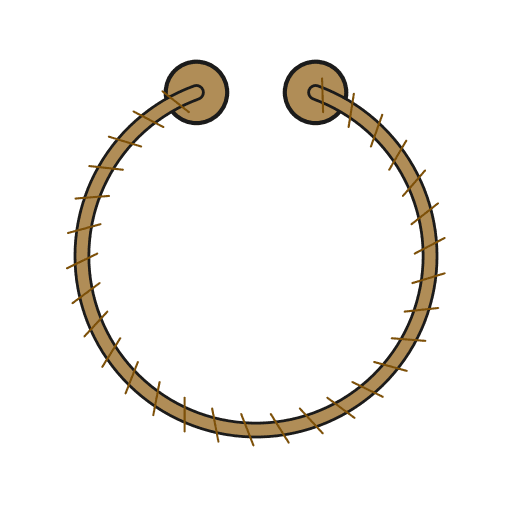
A bronze torc is made by casting a long rod, twisting it while hot to create the characteristic spiral pattern, then bending the twisted rod into a C-shape that fits around the neck. The terminals (ends) are hammered flat and curled into decorative finials, or cast separately and soldered on.

The twist is both decorative and structural — the spiral cross-section is stiffer than a plain round rod of the same weight, allowing the torc to spring open slightly when placed over the head and then grip the neck firmly.

Miðlungs
2-3 hours

Leiðbeiningar

1

Cast a long bronze rod

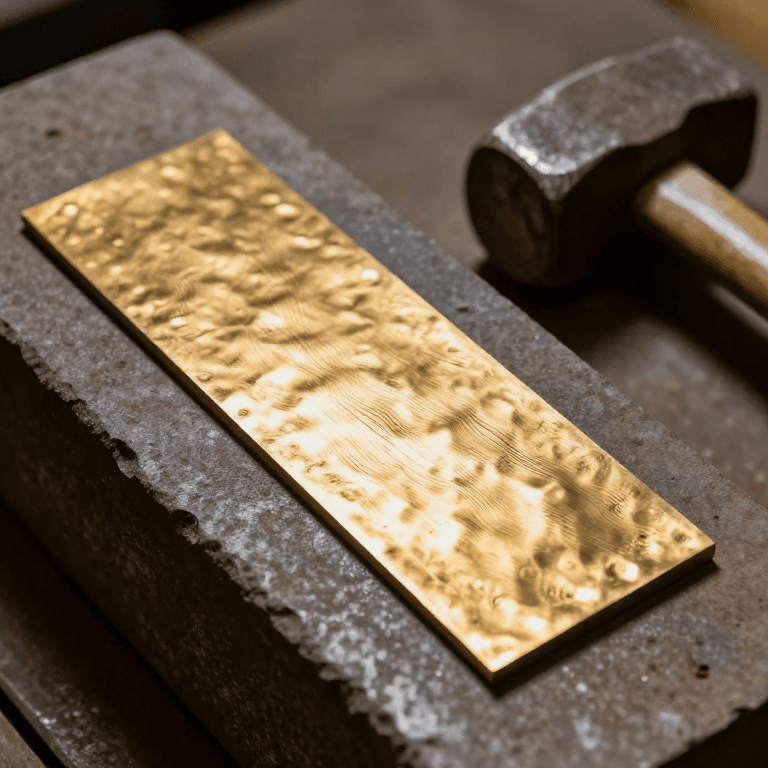
Carve a straight groove about 40 cm long and 8 mm wide in a flat stone slab. Pour molten bronze to fill the groove — about 200 g of metal. A square-section groove produces a rod that twists more visibly than a round one. Allow to cool completely and demould.

Efni fyrir þetta skref:

Copper Sheet (0.5-1mm)Copper Sheet (0.5-1mm)180 g
2

Hammer the rod to uniform cross-section

The cast rod will have slight irregularities from the mould surface. Hammer the entire length on a flat stone anvil, rotating 90 degrees between passes, to produce a uniform square cross-section about 6-7 mm per side. Anneal whenever the rod resists hammering.

Nauðsynleg verkfæri:

HammerstoneHammerstone
Flat Stone SlabFlat Stone Slab
3

Anneal the rod for twisting

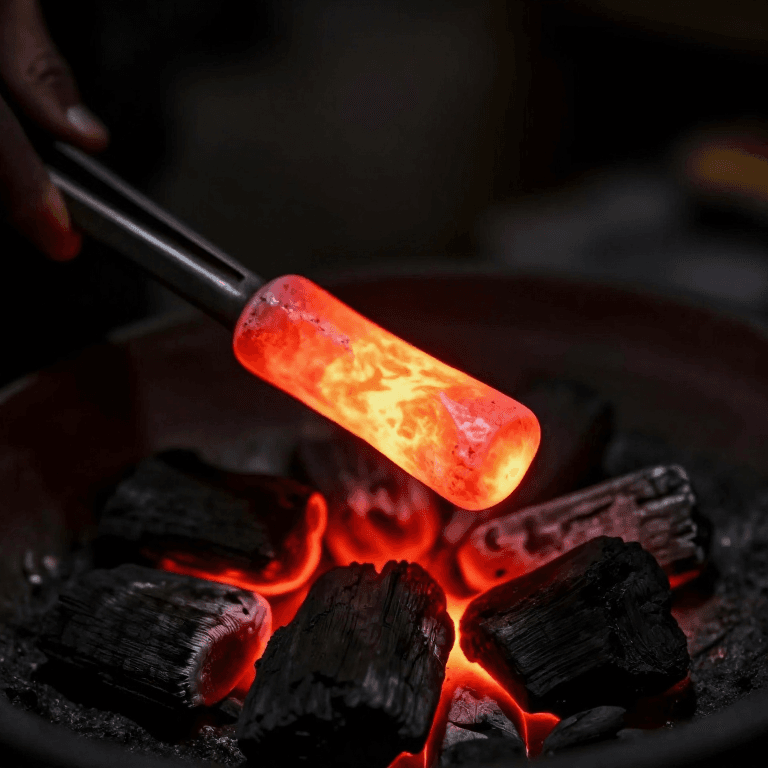
Heat the entire rod in a charcoal fire until it glows dull cherry red along its full length. The rod must be uniformly soft for the twist — a cold spot creates an uneven twist or a kink. Use a long fire bed and rotate the rod to heat evenly.

Efni fyrir þetta skref:

CharcoalCharcoal2 kg

Nauðsynleg verkfæri:

Long-Handled TongsLong-Handled Tongs
4

Twist the rod

While the rod is still hot and soft, clamp one end firmly (in a forked stick driven into the ground, or between two heavy stones). Grip the other end with tongs and twist slowly and evenly. Aim for about 1 full turn per 3 cm of length — tight enough to show a clear spiral pattern but not so tight that the rod kinks. Work quickly before the bronze cools and work-hardens. If it stiffens mid-twist, stop, re-anneal, and continue.
5

Straighten the twisted rod

Twisting often introduces slight bends and warps. While still warm, or after annealing again, lay the twisted rod on a flat surface and gently tap out any curves with a wooden mallet. The rod should lie flat and straight before bending into the torc shape. Rolling it under a flat board also helps straighten it.

Nauðsynleg verkfæri:

Wooden MalletWooden Mallet
6

Bend into a neck ring

Anneal the straightened twisted rod. Bend it gradually around a log or large stone of roughly head diameter (about 15-18 cm across) to form a C-shape. The opening should be about 3-4 cm — wide enough to slip over the neck from the front. Bend slowly and evenly to avoid kinking. The twist pattern should remain uniform around the curve.
7

Form the terminals

The two ends of the torc are the terminals — the most visible part when worn. For a simple torc, hammer each end flat and curl it outward into a small spiral using pliers or by bending around a narrow rod. For a more elaborate torc, hammer the ends into flat discs, or cast separate decorative knobs and attach them by wrapping with fine bronze wire.
8

Polish and finish

Rub the entire torc with fine sand on a leather pad to remove scale and oxidation from the annealing steps. Polish the twisted body to a bright golden sheen. Pay extra attention to the terminals. A final rub with animal fat protects the surface and gives it the warm glow seen in museum examples. The finished torc should spring slightly when the opening is pulled apart, then grip the neck when released.

Efni fyrir þetta skref:

Fine SandFine Sand50 g
Animal Fat (Tallow)Animal Fat (Tallow)20 g

Efni

4

Nauðsynleg verkfæri

4

Efni úr tengdum teikningum

CC0 opinbert ríki

Þessi teikning er gefin út undir CC0. Þér er frjálst að afrita, breyta, dreifa og nota þetta verk í hvaða tilgangi sem er, án þess að biðja um leyfi.

Studdu smiðinn með því að kaupa vörur í gegnum teikningu hans þar sem hann fær þóknun smiða sem seljendur ákvarða, eða búðu til nýja endurskoðun á þessari teikningu og tengdu hana sem tengingu í þinni eigin teikningu til að deila tekjum.

Umræða

(0)

Skrá inn til að taka þátt í umræðunni

Hleður athugasemdum...