Collaborazione
ARTE
BELLEZZA E BENESSERE
MESTIERE
CULTURA E STORIA
DIVERTIMENTO
AMBIENTE
CIBO E BEVANDE
INGEGNERIA INVERSA
SCIENZE
SPORT
TECNOLOGIA
INDOSSABILI
Sliding-Strip Cylinder Dash Churn: Strips on the Slats Open the Gaps One Way and Close Them the Other
Buttercup

Creato da

Buttercup

10. novembre 2026IE
1
0
0
0
0

Sliding-Strip Cylinder Dash Churn: Strips on the Slats Open the Gaps One Way and Close Them the Other

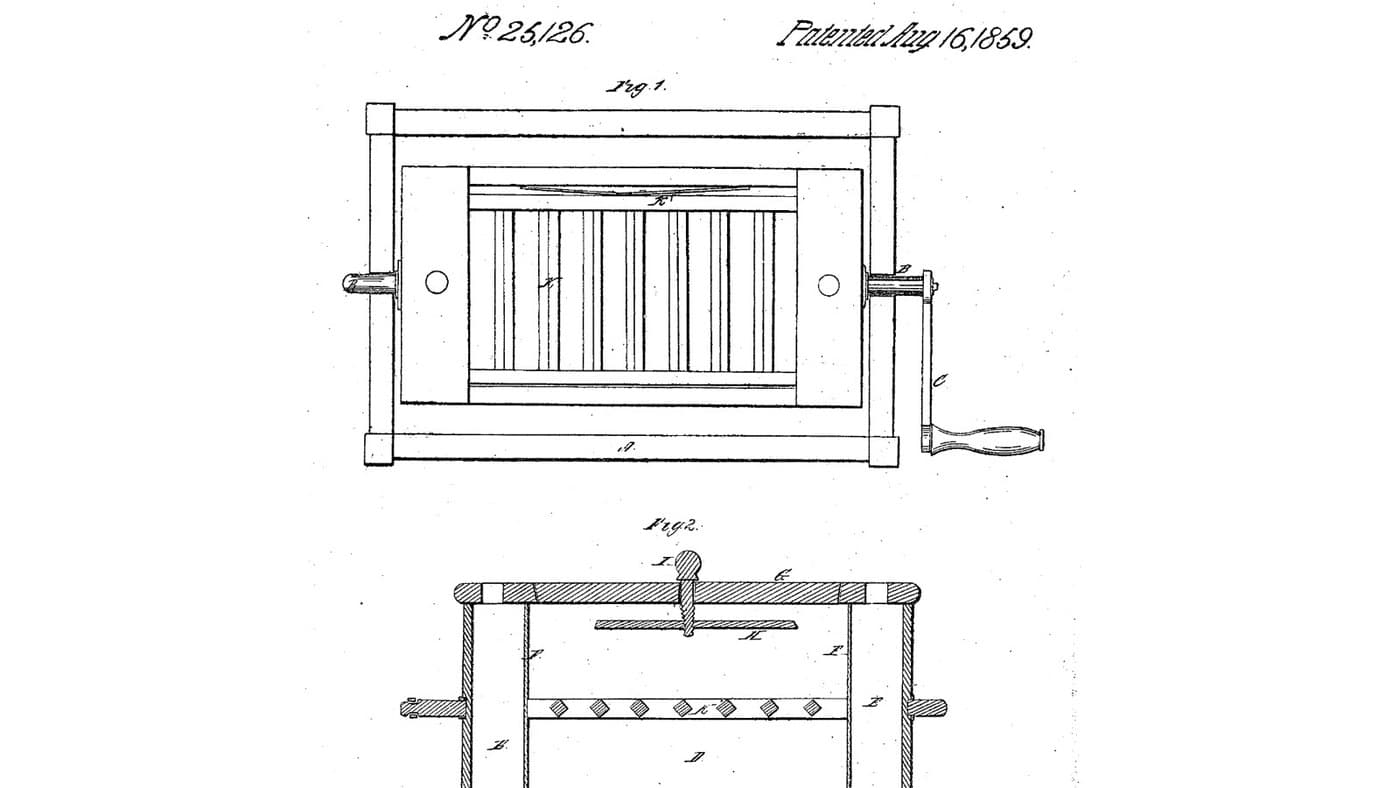
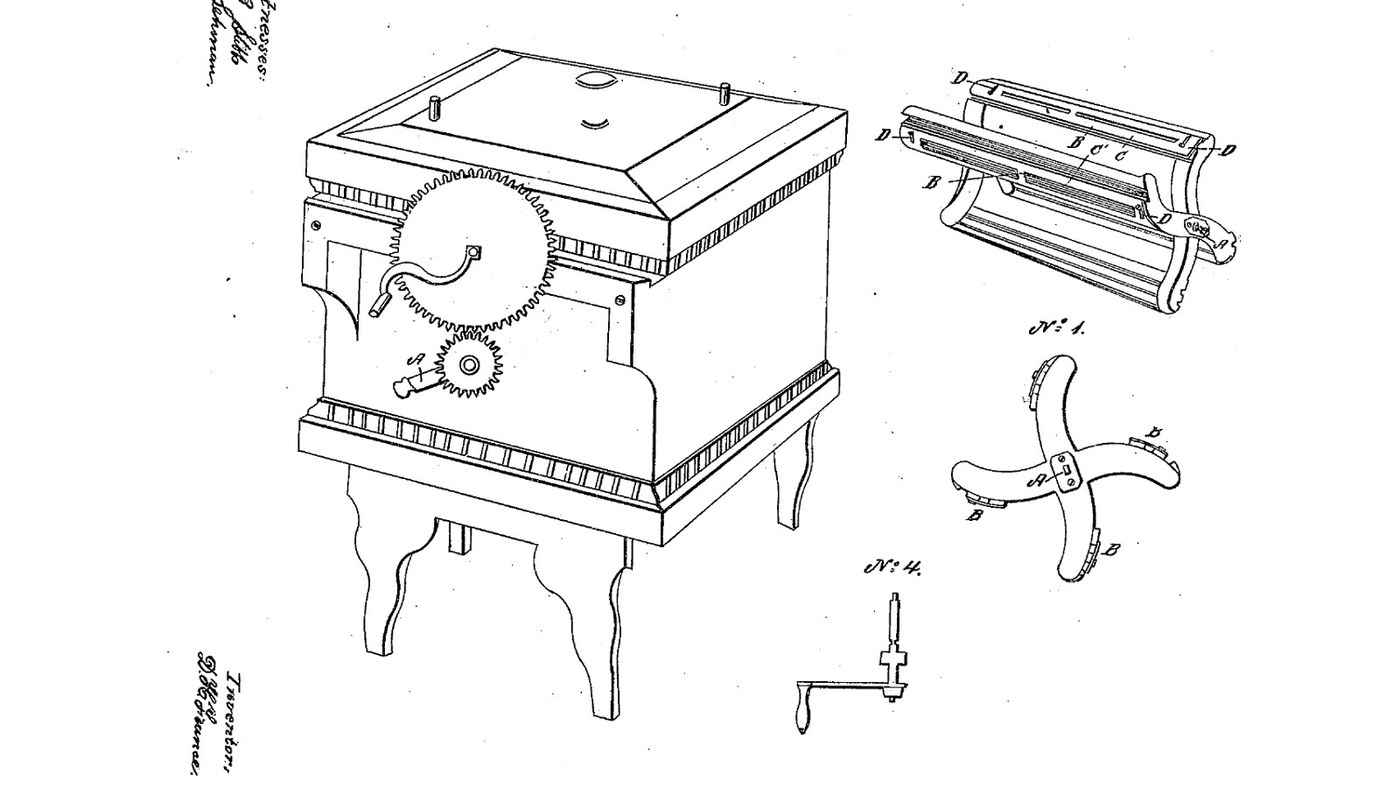
Daniel K. France of Congress, Ohio, received US 25,404, dated 13 September 1859, for a cylindrical churn-dash. Two crosses of curved arms carry four groups of three slats, each slat half by one inch. On each group a metal strip with a slot down its middle is held by screws in short slots, so it slides when the dash changes direction and opens or closes the spaces between the slats. Turned one way the dash churns; reversed, it gathers the butter into a corner. Two cog wheels at three to one drive it. France gives one size, the slats; every other size here is ours.
Intermedio
About 2 days, plus printing

Istruzioni

1

France's slats, and the wheels' three to one

Caricamento del notebook Jupyter…
2

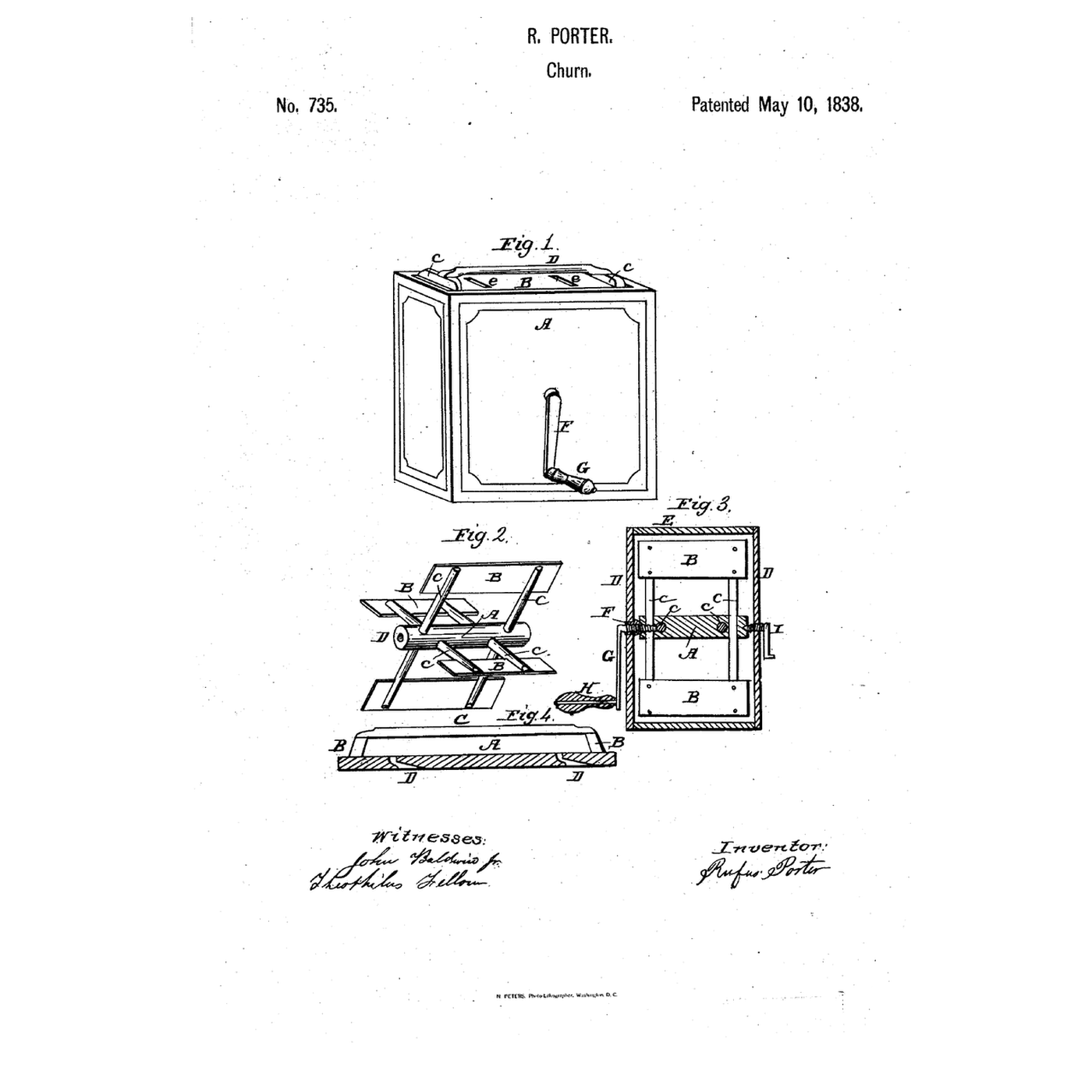
A turning dasher on crossed arms in a box, before it

That dasher's boards were fixed. France's slats carry strips that open and close the gaps with the turning.
3

Read US 25,404

"The motion of the dash to be to the left in the direction of the curve of the arms while churning, thereby producing the greatest amount of friction in the cream. When butter is produced the motion of the dash is reversed and the butter gathered in the lower left corner of the churn by the reversed action thereon of the dash and self adjusting slide."
4

Print the large cog wheel

The 48-tooth spur wheel (module 3) with a hub, bored 20.4 mm, for the crank's stud. PETG, 0.2 mm layers, 40 % infill, 4 walls.
File di designSTLCC0 - Free
5

Print the small cog wheel

The 16-tooth spur pinion (module 3) with a hub, bored 20.4 mm, for the dash's shaft. PETG, 0.2 mm layers, 40 % infill, 4 walls.
File di designSTLCC0 - Free
6

Box with legs and lid

From 20 mm hardwood cut a bottom 440 x 340 mm, two sides 440 x 300 mm, two ends 300 x 300 mm and a lid 440 x 340 mm. Bore each end 20.8 mm through its middle, 150 mm above the floor, for the shaft. Glue and screw the ends between the sides and the box onto the bottom, and screw four legs of 70 mm timber, 350 mm long, under it. Fill the box with water overnight so it swells tight, then empty it.

Materiali per questo passaggio:

Tavola di legno duroTavola di legno duro3 pezzi
Legno tenero 70x70 mmLegno tenero 70x70 mm1 pezzo
Colla da legnoColla da legno1 pezzo
Viti da legnoViti da legno30 pezzi

Strumenti necessari:
Sega circolare da bancoSega circolare da banco
Sega a manoSega a mano
Trapano a batteriaTrapano a batteria
Set di punte a lanciaSet di punte a lancia
Morsetto a barraMorsetto a barra
Squadra fissaSquadra fissa
Metro a nastroMetro a nastro
AcquaAcqua
7

Dash: arms, hubs and slats

Cut eight curved arms from 22 mm hardwood with the jigsaw, each 18 mm wide, sweeping 30 degrees from a 20 mm hub radius out to 112 mm. Glue four into a 56 mm hardwood hub to make a cross, twice, all curving the same way, and bore the hubs 20.4 mm. Cut twelve slats 12.7 x 25.4 mm, 340 mm long, and screw them to the arms' ends in groups of three, 9 mm apart, flat side out, so their faces are 125 mm from the middle.

Materiali per questo passaggio:

Tavola di legno duroTavola di legno duro1 pezzo
Colla da legnoColla da legno1 pezzo
Viti da legnoViti da legno24 pezzi

Strumenti necessari:

Seghetto alternativoSeghetto alternativo
Sega circolare da bancoSega circolare da banco
Trapano a batteriaTrapano a batteria
Set di punte a lanciaSet di punte a lancia
Serie di punte da trapanoSerie di punte da trapano
Metro a nastroMetro a nastro
8

Strips B with slots C and screws D

Cut four strips of 0.8 mm stainless sheet, 324 mm long and as wide as a group of slats (94 mm). Cut a slot C 9 mm wide along the middle of each, stopping 30 mm from the ends, and a short slot across each end. Lay each strip on its group's outer face and fix it with an M4 screw through each end slot into the arm's end, just loose enough to slide sideways. Turned one way, the cream pushes each strip so its slot lies over the slats; the other way, over a space.

Materiali per questo passaggio:

Lamiera di acciaio inossidabileLamiera di acciaio inossidabile1 pezzo
Viti da metalloViti da metallo8 pezzi
Rondella pianaRondella piana8 pezzi

Strumenti necessari:

Cesoie da lattoniereCesoie da lattoniere
Lime (lima a mano)Lime (lima a mano)
Trapano a batteriaTrapano a batteria
Serie di punte da trapanoSerie di punte da trapano
Set di cacciavitiSet di cacciaviti
9

Shaft, cog wheels and crank

Pass a 20 mm stainless shaft through one end of the box, the two hubs and the other end, and pin the hubs to it. On the outside of the geared end, screw a hardwood block 96 mm above the shaft, fix a 20 mm stud in it, and fit the large wheel on the stud with a crank and handle. Pin the small wheel on the shaft's end meshing with it.

Materiali per questo passaggio:

Barra di acciaio inossidabileBarra di acciaio inossidabile2 pezzi
Tavola di legno duroTavola di legno duro1 pezzo
Tasselli di legno duroTasselli di legno duro1 pezzo
Assortimento di bulloni a testa esagonaleAssortimento di bulloni a testa esagonale3 pezzi

Dado autobloccante con inserto in nylonDado autobloccante con inserto in nylon3 pezzi

Filamento PETGFilamento PETG1 pezzo

Strumenti necessari:

Stampante 3D a filamento (FDM)Stampante 3D a filamento (FDM)
Seghetto per metalliSeghetto per metalli
Trapano a batteriaTrapano a batteria
Serie di punte da trapanoSerie di punte da trapano
Chiave regolabile a rullinoChiave regolabile a rullino
10

The build in 3D

FreeCAD model of this build, front side cut away: the dash's two crosses of curved arms, the four groups of slats with their strips, slots and screws, the shaft through the box's ends, and the two cog wheels and crank outside. The dash was turned through 16 angles.
File di designBLENDCC0 - Free
11

Churn, then gather

Pour about 6 litres of heavy cream at about 15 °C into the box, checked with the thermometer, and put the lid on. Turn the crank so the dash turns with the curve of its arms, timing it. When the butter comes, turn the crank the other way so the strips slide over and the dash gathers the butter into a corner. Lift it out, drain the buttermilk, wash the butter in cold water until it runs clear, work in a pinch of salt and weigh it.

Materiali per questo passaggio:

Panna da montarePanna da montare6 l
Sale marino grossoSale marino grosso1 pezzo
AcquaAcqua1 pezzo

Strumenti necessari:

Termometro a sonda permanenteTermometro a sonda permanente
CronometroCronometro
Bilancia digitale da cucinaBilancia digitale da cucina
Grande ciotola da impasto in acciaio inossidabileGrande ciotola da impasto in acciaio inossidabile
12

Troubleshooting

Sliding-strip churn troubleshooting.

Flow

Loading...
13

History and honest limits

**Daniel K. France** of Congress, Wayne County, Ohio, US 25,404, 13 September 1859, "Churn-Dash". He claimed the metallic strips B on the convex surface of the slats, held by slots and screws. He disclaimed slats or beaters hinged to the arms. His slats, half by one inch, are kept; every other size is ours. His plates A, changed to reverse the dash when the crank is used alone, are not built.

Materiali

15

Strumenti richiesti

20

File di progetto

3

CC0 Pubblico dominio

Questo progetto è rilasciato sotto CC0. Sei libero di copiare, modificare, distribuire e utilizzare quest'opera per qualsiasi scopo, senza chiedere permesso.

Supporta il Maker acquistando prodotti tramite il suo progetto dove guadagna una Commissione Maker stabilita dai venditori, oppure crea una nuova iterazione di questo progetto e includilo come collegamento nel tuo progetto per condividere i ricavi.

Commenti

(0)

Accedi per partecipare alla discussione

Caricamento commenti...