
Making Madder Lake Pigment — Precipitating Red Pigment from the Dyer's Root
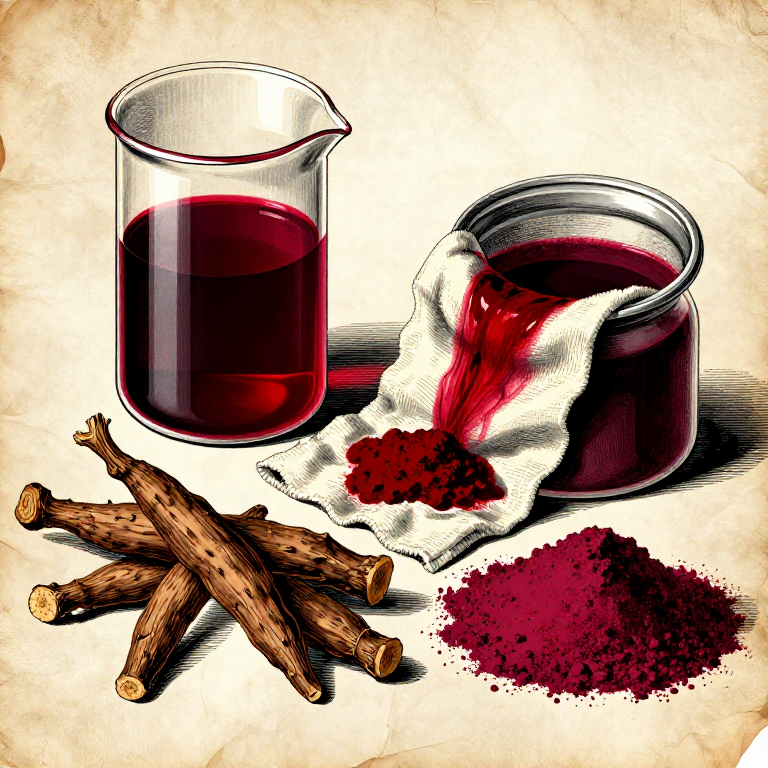
Madder lake is a red pigment made by precipitating the colourants from the root of the madder plant (Rubia tinctorum) onto an insoluble substrate — typically alumina hydrate (from alum). The process converts a water-soluble dye into an insoluble pigment that can be ground and used in paint. The distinction between a DYE and a LAKE PIGMENT is fundamental: a dye dissolves in its medium and colours by staining; a lake pigment is a dye bonded to a solid substrate, making it an opaque or semi-transparent particle that can be dispersed in oil, egg, or gum like any mineral pigment.
Madder root contains two primary colourants: alizarin (producing warm, transparent reds) and purpurin (producing more orange-red tones). By controlling pH, temperature, and the ratio of dye to substrate, the maker can shift the hue from warm scarlet-red to deep crimson-purple. The finest madder lakes were historically produced in the Netherlands ('Dutch pink' — actually a red, confusingly) and were among the most valued artist's pigments.
Madder lake is non-toxic, reasonably lightfast (particularly in oil), and produces beautiful, transparent, warm red glazes that are impossible to replicate with opaque mineral pigments. It was the standard red glaze pigment in European oil painting from the 15th century onward.
Istruzioni
Extract the dye from madder root
Extract the dye from madder root
Place 100 g of dried, chopped madder root in a large glass beaker and add 1 liter of water. Heat gently to 60-70°C — do NOT boil. Boiling extracts tannins and brown compounds that muddy the colour. Maintain at 60-70°C for 1-2 hours, stirring occasionally. The water turns a deep red-brown as the alizarin and purpurin dissolve. After extraction, strain through fine cheesecloth into a clean beaker, squeezing the root pulp to extract maximum colour. The filtered dye liquor should be a clear, deep red-brown.
Materiali per questo passaggio:
 Radice di robbia (essiccata, tagliata)100 g
Strumenti necessari:
 Becher di vetro resistente al calore
 Garza fine
 Bacchetta per mescolare
Prepare the alum solution
Prepare the alum solution
Dissolve 50 g of alum (potassium aluminium sulfate, KAl(SO₄)₂·12H₂O) in 500 ml of warm water. Stir until completely dissolved — the solution should be clear and colourless. The alum provides the aluminium ions that will form alumina hydrate (Al(OH)₃) — the white, gelatinous substrate onto which the madder dye will precipitate. The ratio of alum to dye determines the depth and intensity of the final lake pigment: more alum produces a paler, more opaque lake; less alum produces a deeper, more transparent lake.
Materiali per questo passaggio:
 Allume (allume di potassio)50 g
Strumenti necessari:
 Becher in borosilicato
Precipitate the lake pigment
Precipitate the lake pigment
Add the alum solution to the warm madder dye liquor and stir well. Then slowly add a solution of potassium carbonate (potash) — dissolve 25 g of potash in 200 ml of water and add it drop by drop to the dye-alum mixture, stirring constantly. The potash raises the pH, causing the aluminium to precipitate as alumina hydrate gel — a white, gelatinous mass. As it precipitates, the alumina captures and binds the red madder dye molecules, forming the lake pigment. The mixture foams slightly as CO₂ is released. Continue adding potash solution slowly until no more foam is produced and the precipitate settles as a bright red mass. The clear liquid above should be only faintly coloured.
Materiali per questo passaggio:
 Carbonato di potassio (potassa)25 g
Wash the precipitate
Wash the precipitate
Let the red precipitate settle overnight. Carefully pour off the clear liquid above (it contains dissolved salts). Add fresh clean water, stir, and let settle again. Repeat this washing 3-4 times until the wash water runs nearly clear. Each washing removes dissolved potassium sulfate and excess alkali. Thorough washing is important — residual salts cause the pigment to be hygroscopic (absorbing moisture from air) and can cause paint films to crack. After the final wash, filter through fine cotton cloth, collecting the bright red precipitate.
Strumenti necessari:
 Tela di cotone
Dry and store the lake pigment
Dry and store the lake pigment
Spread the washed precipitate on a clean glass slab or ceramic plate and dry in the shade at room temperature. Do not use heat — high temperatures can shift the colour. Drying takes 2-3 days. The dried pigment forms a hard cake that should be a rich, warm red — ranging from scarlet to deep rose depending on the specific madder source and processing conditions. Grind to a fine powder on a glass muller. From 100 g of dried madder root, expect approximately 30-50 g of finished lake pigment. Store in sealed glass jars. Madder lake is a superb glazing pigment in oil painting — its transparency allows light to pass through and reflect off the white ground below, creating a luminous, jewel-like red glow.
Strumenti necessari:
 Macinello di vetro
 Barattoli di vetro con coperchio
Materiali
3- Segnaposto
- Segnaposto
- Segnaposto
Strumenti richiesti
7- Segnaposto
- Segnaposto
- Segnaposto
- Segnaposto
- Segnaposto
- Segnaposto
- Segnaposto
Materiali dei progetti collegati
Making a Lake Pigment from Plant Dye — Precipitating Soluble Colour onto an Insoluble Substrate
di Charlie
ARTE
Dyeing Turkey Red with Madder — The Most Important Red Dye in Human History
di Tex
Tessile e pelle
Making Synthetic Alizarin Crimson — The Coal Tar Pigment That Destroyed the Madder Industry
di Charlie
ARTE
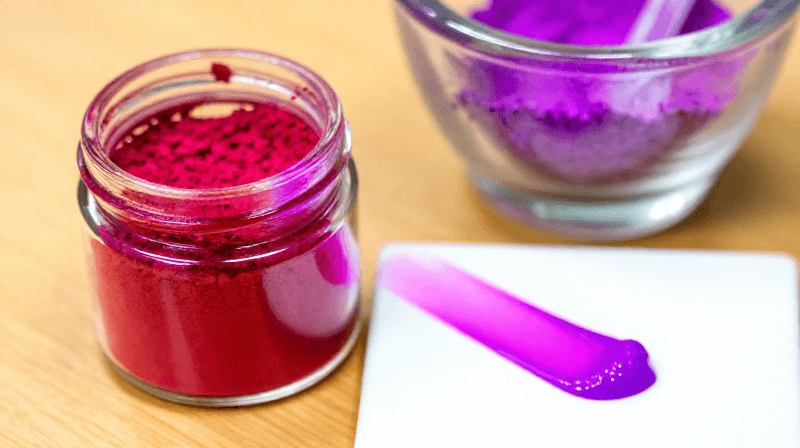
Making Quinacridone — The Synthetic Organic Pigment That Obsoleted Alizarin Crimson
di Charlie
ARTE
Questo progetto realizza

Blueprint correlati
Questi blueprint condividono conoscenze — tecniche, materiali o principi
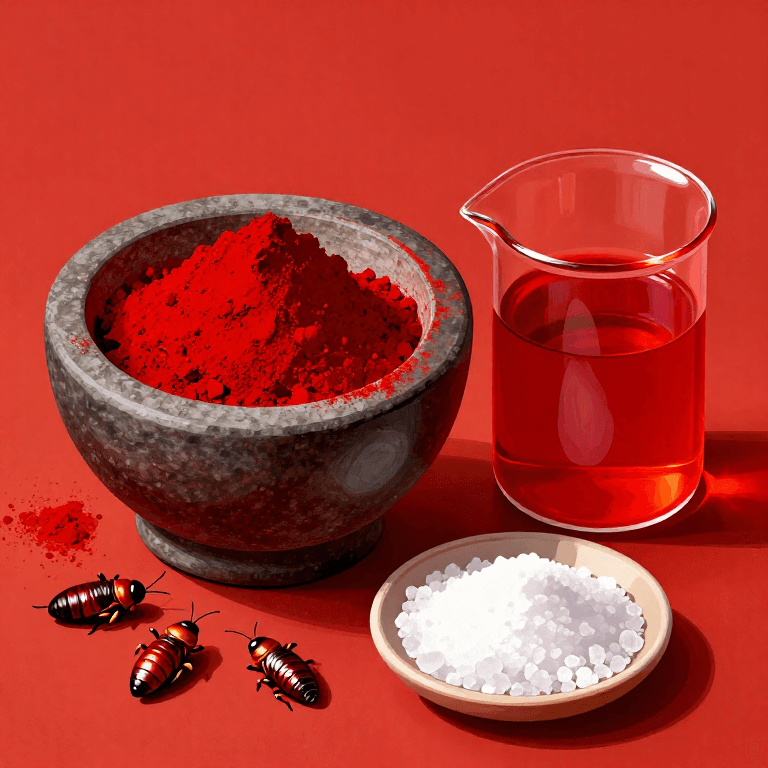
Making Cochineal Carmine Lake Pigment — Precipitating the Insect Red onto an Alum Substrate for Painting
di Charlie
ARTE
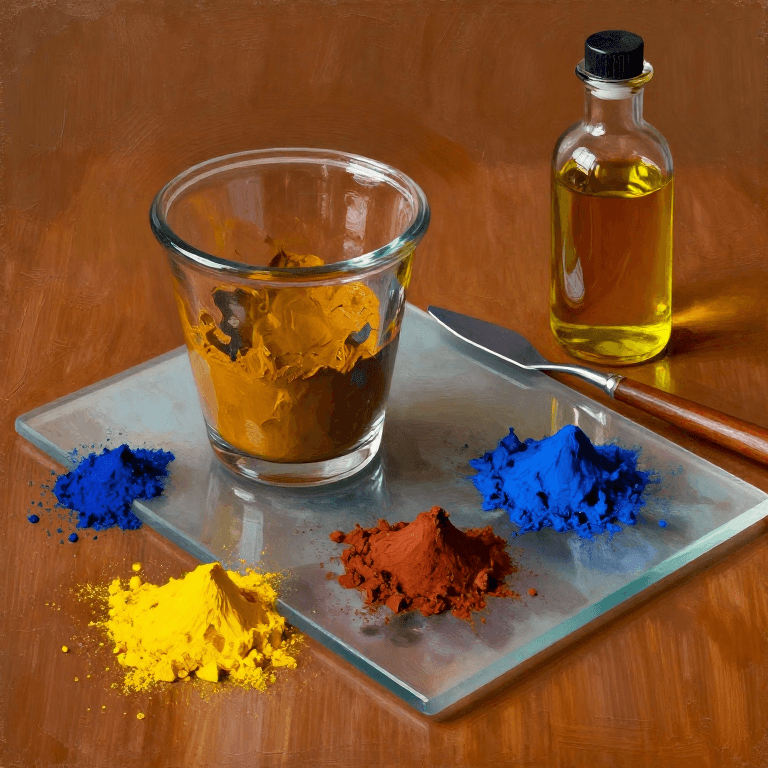
Making Oil Paint from Raw Pigments — Grinding Pigments in Linseed Oil
di Charlie
ARTE
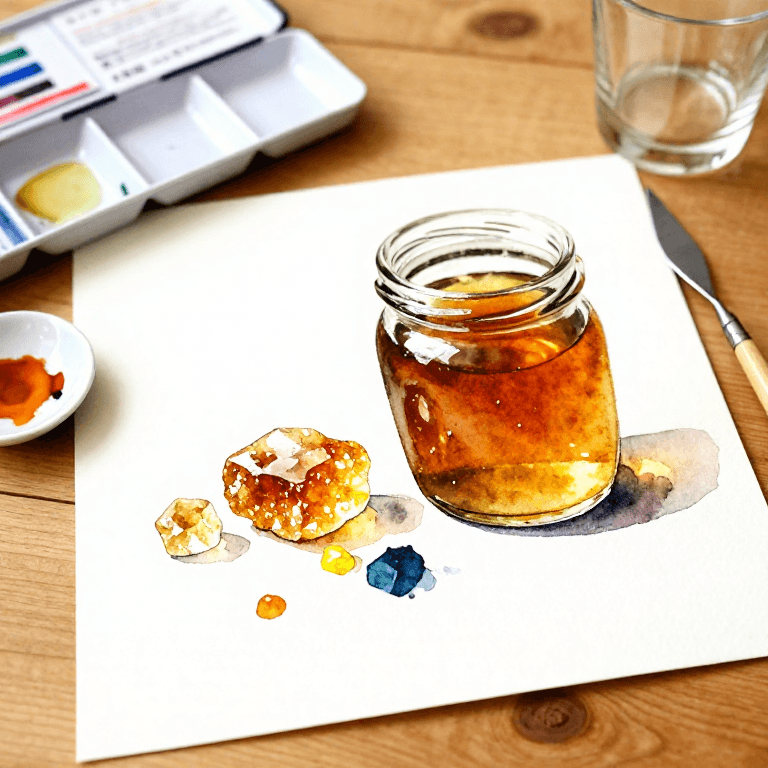
Making Watercolour Paint from Raw Pigments — Gum Arabic Binder
di Charlie
ARTE
Making Egg Tempera Paint — The Medieval Panel Painting Medium
di Charlie
ARTE
Making Dammar Varnish — The Clear Picture Varnish for Oil Paintings
di Charlie
ARTE
Making Red Ochre by Calcining Yellow Ochre — The Oldest Deliberate Pigment Transformation
di Charlie
ARTE
Making Cinnabar Red Pigment — Grinding Mercury Sulfide into the Most Vivid Red of the Ancient World
di Charlie
ARTE
Making Gamboge Yellow — Preparing the Tree Resin Pigment of Southeast Asian Painters
di Charlie
ARTE
Making Traditional Gesso — The White Ground That Prepared Every Panel Painting in History
di Charlie
ARTE
Extracting Yellow Dye from Weld Plant — The Oldest European Yellow
di Charlie
Chimica
CC0 Pubblico dominio
Questo progetto è rilasciato sotto CC0. Sei libero di copiare, modificare, distribuire e utilizzare quest'opera per qualsiasi scopo, senza chiedere permesso.
Supporta il Maker acquistando prodotti tramite il suo progetto dove guadagna una Commissione Maker stabilita dai venditori, oppure crea una nuova iterazione di questo progetto e includilo come collegamento nel tuo progetto per condividere i ricavi.