コラボレーション
アート
美容とウェルネス
工芸
文化と歴史
エンターテインメント
環境
食品と飲料
リバースエンジニアリング
科学
スポーツ
テクノロジー
ウェアラブル
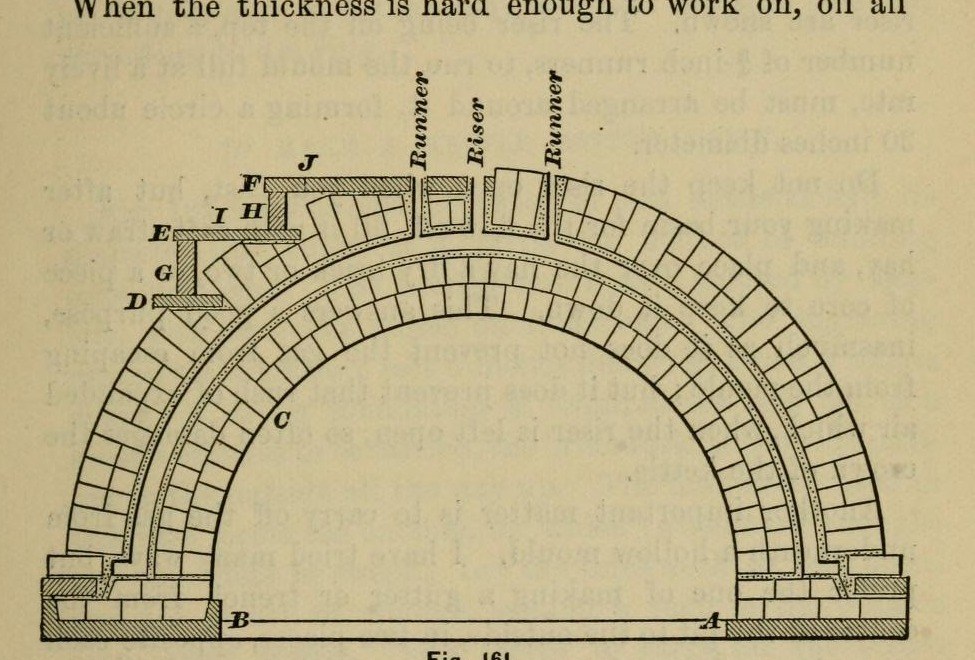

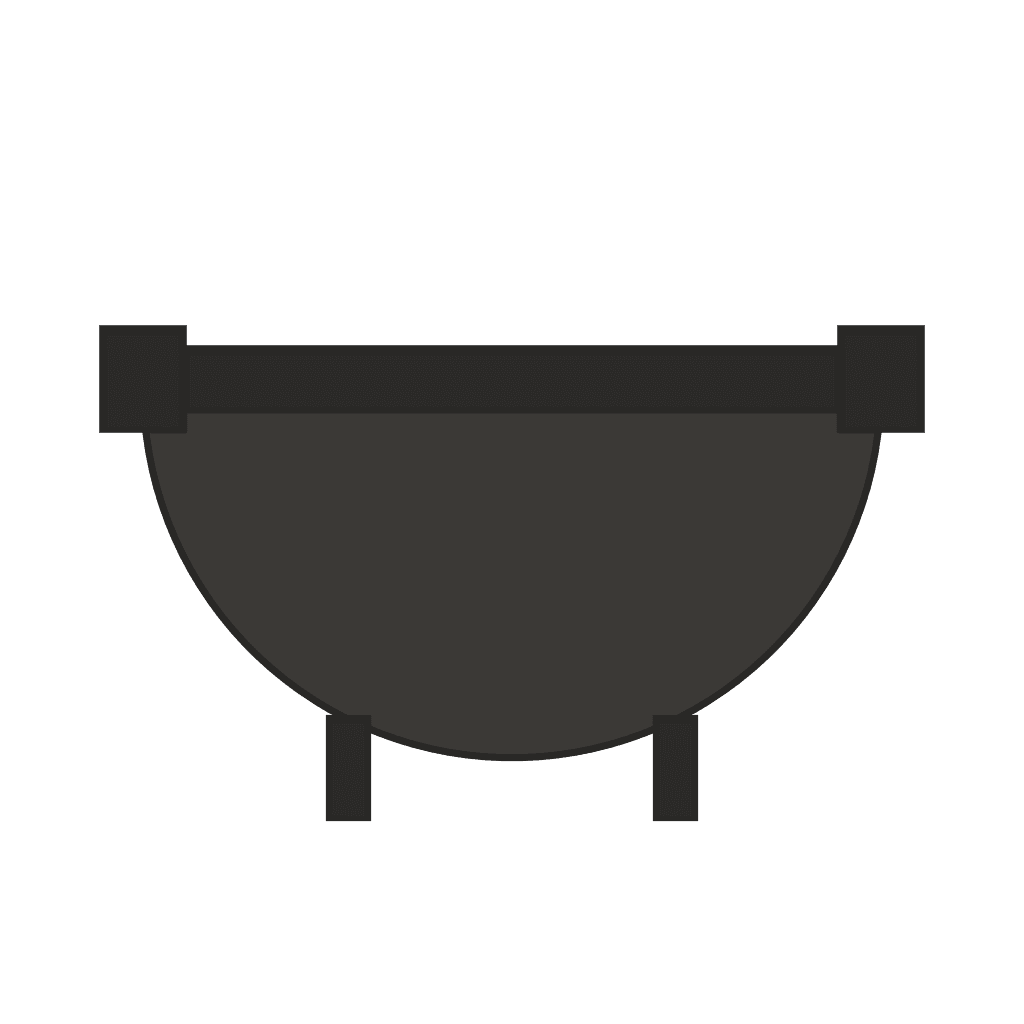
Cast Iron Pot: a Kettle Moulded in Loam, Bottom Up (Bolland, The Iron-Founder, 1892)
How a founder moulds an iron kettle or pot without a pattern: a brick core is built and coated with loam, swept to the inside shape with a turning board; a layer of sand swept on top stands for the metal's thickness; the cope is built over it, and the space the sand stood for is filled with iron. Bolland's example is an 8 ft kettle 1 3/4 in thick; the same steps serve any size.
Variable: the size and wall thickness, set by the sweeps.
Source: S. Bolland, The Iron-Founder (1892), pp. 180-183. Unknown: the loam mix and drying. Picture: Fig. 161 of the book.
エキスパート
Unknown
手順
1
1
Build and sweep the core
Build and sweep the core
Set the core on a foundation plate strong enough to lift it without springing: a plain plate at least 3 in thick, or a ribbed one 2 in thick. Build the core of bricks in open, coarse mud, bricks well apart so air passes, with half-bricks crossing the joints on the top course and a tie-course here and there. Scrape the joints, rub on soft loam and sweep it to shape as you go round; the first sweep also strikes the flange, the guide and the seat for the cope ring. Finish with a skimming coat of the same loam sifted fine. Ours: sand and clay for the loam. Not given: the loam mix, the size.
必要な工具:
 鋳鉄品
 焼成粘土れんが
 砂
 採土場の生粘土
 製材板
 左官ごて
 不明な寸法
2
2
Strike on the thickness
Strike on the thickness
When the loam is hard enough, change to the thickness sweep. Ram fine-sifted old sand at green-sand temper on by hand from the bottom up, sweeping carefully, dampen and slick it, leaving it about 1/16 in clear of the sweep, and press the flange corner sharp with the trowel. Have all the skinning loam ready first; it must be done in one pass. When it is hard, oil it all over and throw on parting sand. Ours: linseed oil.
必要な工具:
砂 亜麻仁油
 離型粉左官ごて
3
3
Build the cope and gates
Build the cope and gates
Set on the cope ring and build the cope over the thickness, best with building rings and packing so it can be bound down under a cross at once. Bed plates on the sand and bind them down with the cross or binders. Put the riser at the top and enough 3/4 in runners round it, in a circle about 30 in across, to fill the mould quickly. The sand thickness stands for the metal. Not given in these pages: lifting the cope to take the thickness off before closing.
必要な工具:
焼成粘土れんが鋳鉄品砂左官ごて4
4
Vent and pour
Vent and pour
Cut two gutters from the centre of the pit to the outside, sloping gently to the centre, and just before casting pour a little iron down to warm the air so the core gas draws off. Do not fill the trench with shavings and wood, which flash and crack the core. Fill the riser basin with soft straw or hay held down by a dry brick, so gas escapes but no rush of air damages the crown. Pour the iron through the runners. Ours: pig iron melted in a cupola.
このステップの材料:
 銑鉄の塊1 the kettle
必要な工具:
 わら
 キュポラ炉
 鋳造用の柄杓
接続ブループリントの材料

10%帰属
Smelting Pig Iron in a Coke Blast Furnace — Molten Iron at Industrial Scale
Elrond 作
金属加工
64
0
0
0
5
0

10%帰属
Casting Iron in a Cupola Furnace — Re-Melting Pig Iron into Finished Castings
Piett 作
金属加工
53
0
0
0
6
0
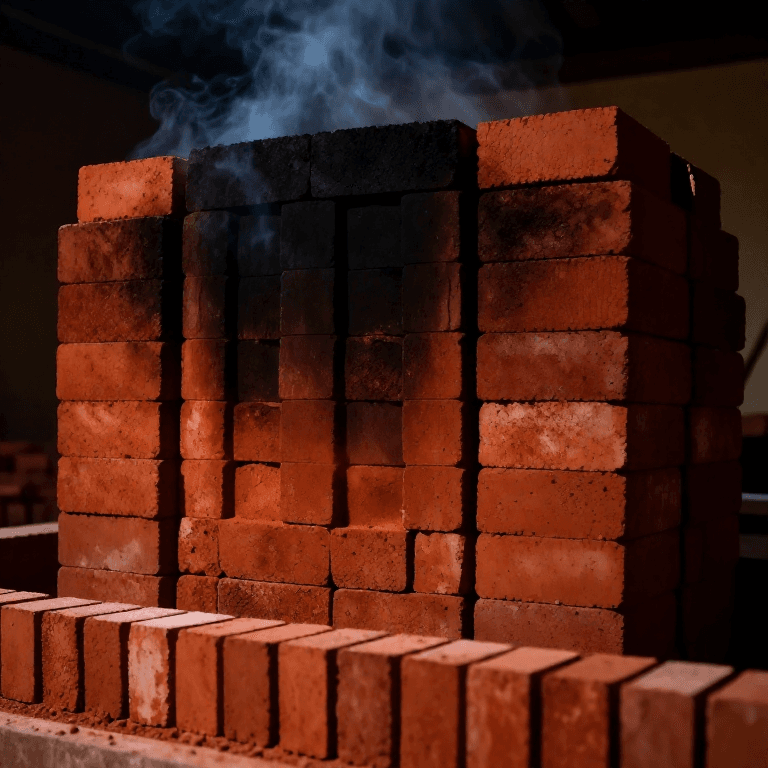
10%帰属
Firing Clay Bricks in a Clamp Kiln — The Building Block of Civilization
Clay 作
工芸
164
0
0
0
3
0
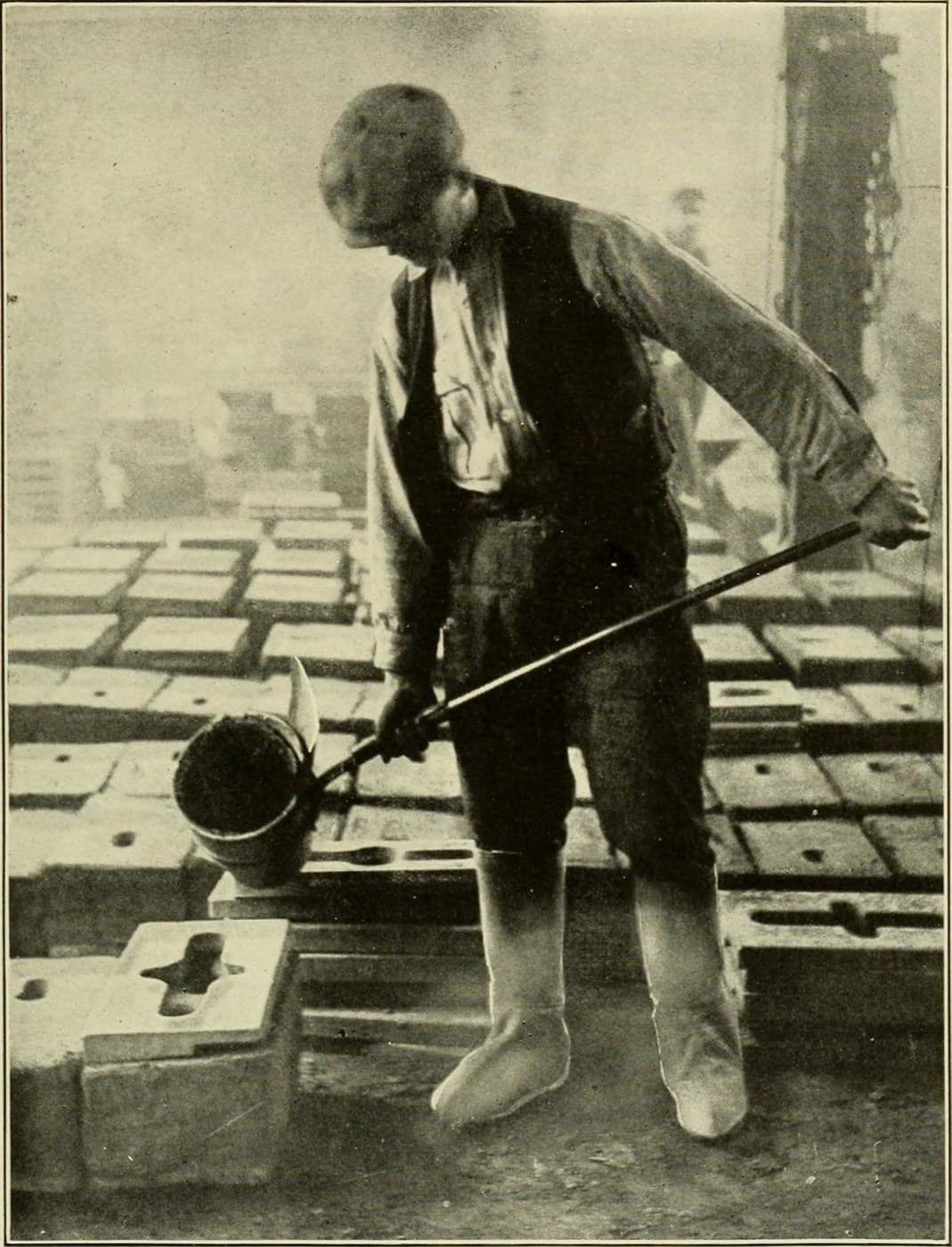
10%帰属
Foundry Hand Ladle: Iron Bowl, Long Shank, Clay Lining
Forge 作
金属加工
25
0
0
0
1
0
この設計図で作るもの
CC0 パブリックドメイン
このブループリントはCC0で公開されています。許可を求めずに、自由にコピー、修正、配布、あらゆる目的で使用できます。
メイカーを応援するには、ブループリント経由で製品を購入してください。メイカーには メイカーコミッション がベンダーにより設定されています。または、このブループリントの新しいイテレーションを作成し、自分のブループリントにコネクションとして含めて収益を共有できます。