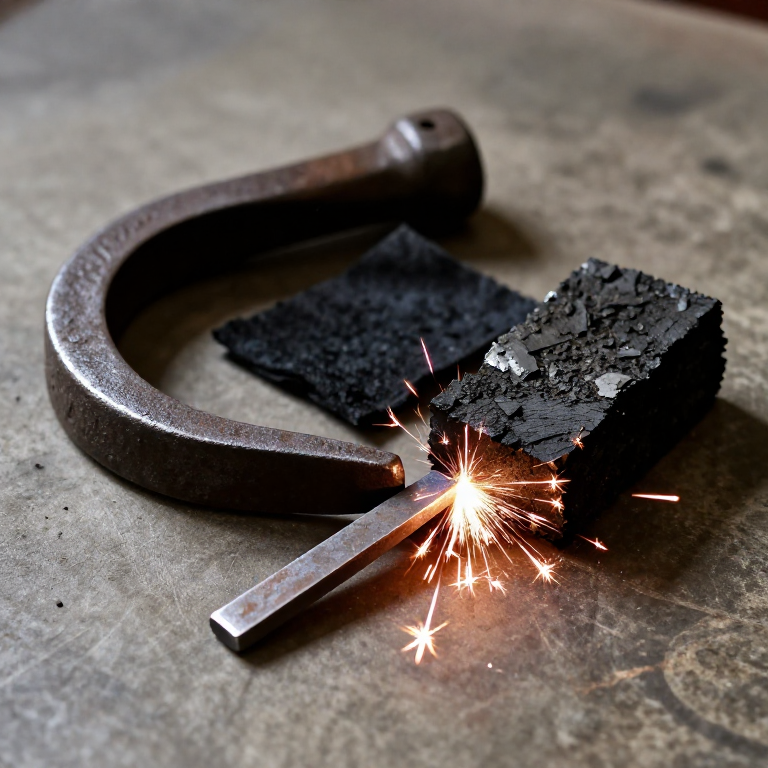


Striking Fire with Flint and Steel — The Iron Age Upgrade to Fire Starting
The moment iron became available, someone struck it against flint and noticed the sparks were hotter and more reliable than the old flint-on-pyrite method. Flint and steel replaced friction fire-starting and flint-on-pyrite across the entire Old World and remained the primary fire-starting technology for over two thousand years — from the Iron Age through the invention of friction matches in the 1830s.
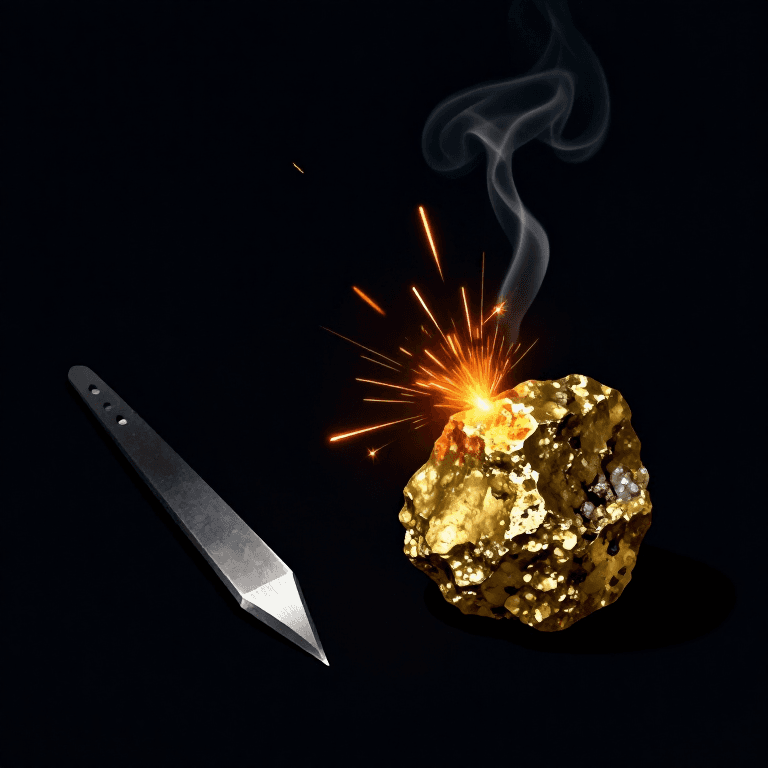
The principle is simple: striking a hardened steel edge sharply against the sharp edge of flint shears off tiny curls of steel. The impact heats these curls to their ignition temperature (about 1,500 °C) and they burn in air as bright white sparks. These sparks are caught in a prepared tinder — charcloth, dried fungus, or charred plant pith — which smoulders and is blown into flame.
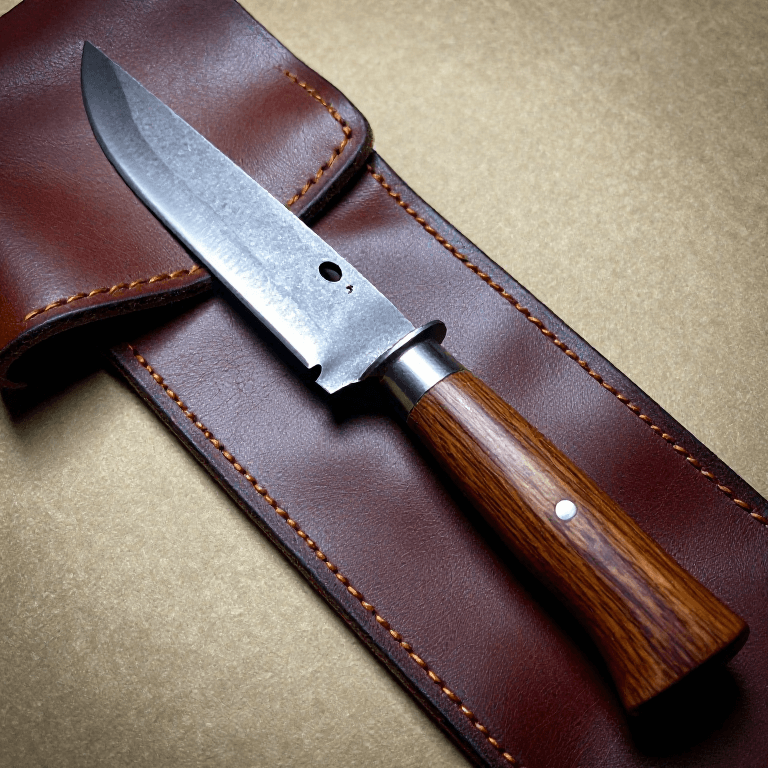
The steel used must be high-carbon steel (case-carburised wrought iron or proper spring steel). Soft wrought iron does not produce good sparks — the flint simply scrapes off cold shavings. A properly made fire steel is one of the most important personal tools in pre-match society.
手順
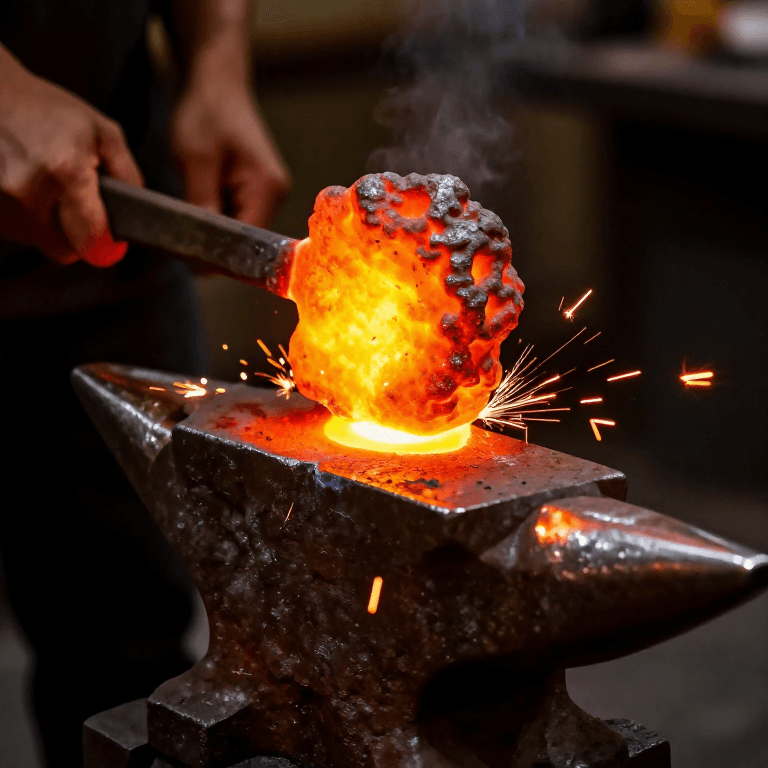
Forge the fire steel blank
Forge the fire steel blank
このステップの材料:
 木炭2 kg
必要な工具:
 鍛造槌
鍛造槌 鍛冶ばさみ(やっとこ)
 炉床(鍛冶の火)
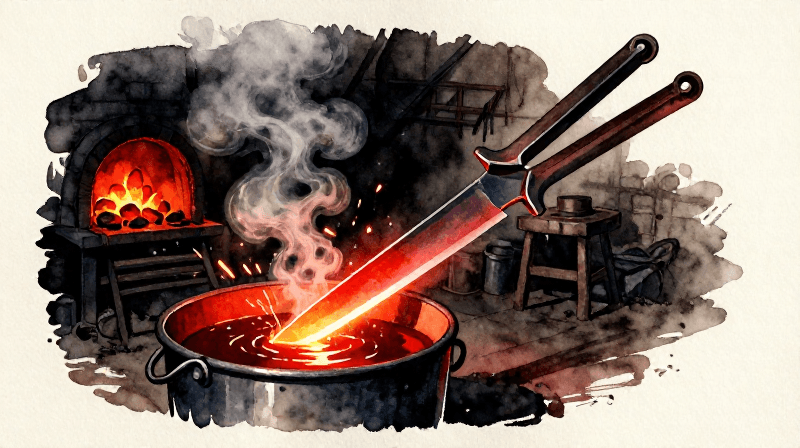
Harden the striking edge
Harden the striking edge
Select and prepare flint
Select and prepare flint
Make charcloth tinder
Make charcloth tinder
Strike sparks onto the tinder
Strike sparks onto the tinder
Blow the ember into flame
Blow the ember into flame
接続ブループリントの材料
この設計図で作るもの
関連ブループリント
これらのブループリントは知識を共有しています — 技術、材料、原理

CC0 パブリックドメイン
このブループリントはCC0で公開されています。許可を求めずに、自由にコピー、修正、配布、あらゆる目的で使用できます。
メイカーを応援するには、ブループリント経由で製品を購入してください。メイカーには メイカーコミッション がベンダーにより設定されています。または、このブループリントの新しいイテレーションを作成し、自分のブループリントにコネクションとして含めて収益を共有できます。