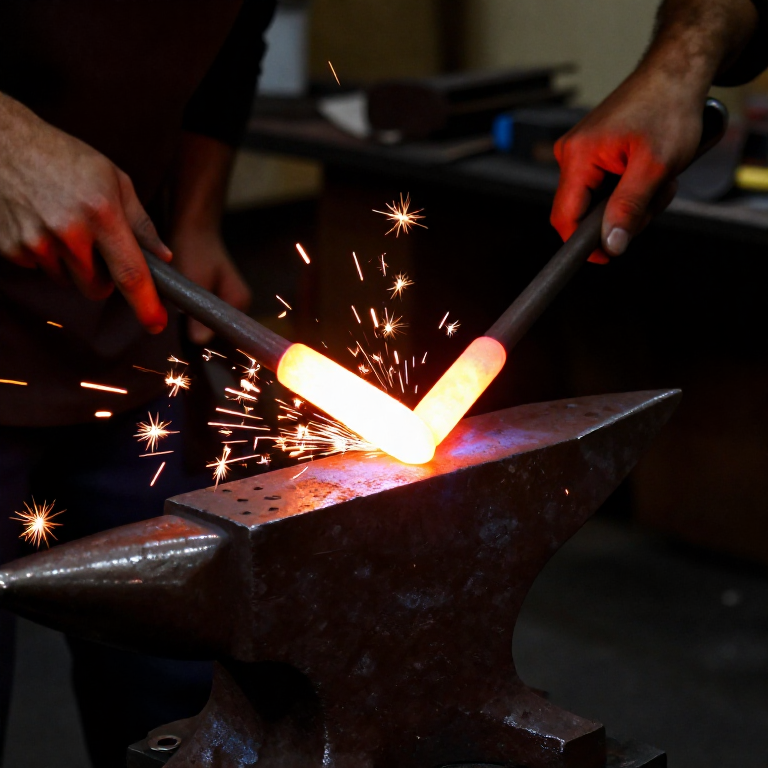


Forge Welding Iron — Joining Two Pieces into One
Forge welding is the oldest method of joining metals — predating riveting, brazing, and soldering. Two pieces of iron are heated to bright yellow-white heat (around 1,300 °C), then hammered together on the anvil. At this temperature the iron surfaces bond permanently at the atomic level, creating a joint that is as strong as the parent metal.
This single technique made possible every complex iron object of the pre-industrial world: chain links, gate hinges, plough shares, barrel hoops, and swords. Without forge welding, a blacksmith can only make objects from a single piece of iron. With it, the smith can build up any shape from simple stock by joining, scarfing, and folding.
The critical challenge is preventing oxide scale from forming on the surfaces during heating. A flux — traditionally clean sand or borax — is sprinkled on the joint surfaces. The flux melts at a lower temperature than the iron's welding heat, dissolving the oxide and floating it away as liquid slag when the hammer blows land.
手順
Prepare the scarf joint
Prepare the scarf joint
必要な工具:
 鍛造槌
鍛造槌 鍛冶ばさみ(やっとこ)
 炉床(鍛冶の火)
Clean the forge fire
Clean the forge fire
このステップの材料:
 塊炭(木炭)4 kg
Heat to initial welding temperature
Heat to initial welding temperature
Apply flux
Apply flux
このステップの材料:
 石英砂50 g
Reach welding heat
Reach welding heat
Weld the joint
Weld the joint
Refine the weld
Refine the weld
Test the weld
Test the weld
接続ブループリントの材料
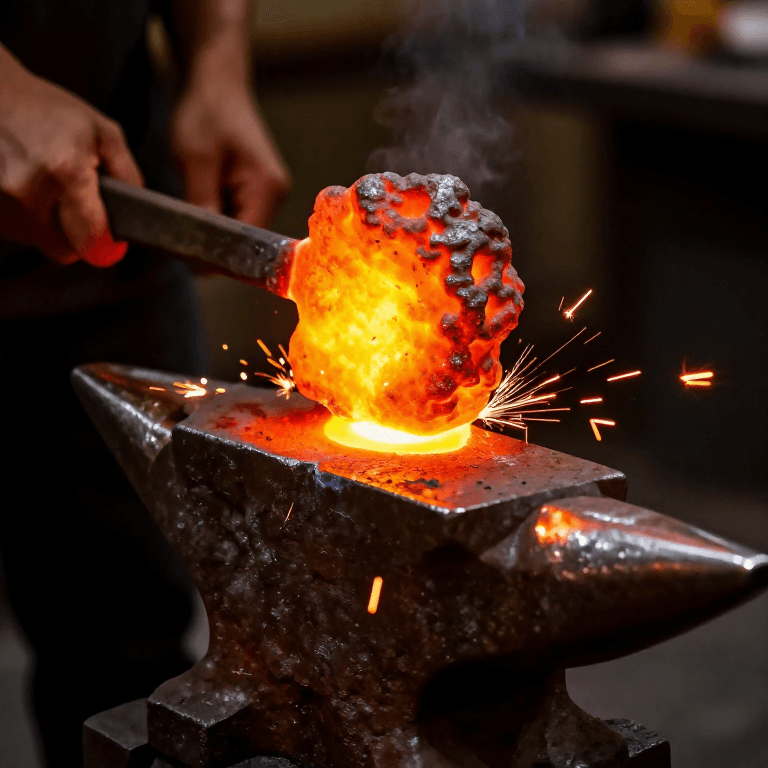
関連ブループリント
これらのブループリントは知識を共有しています — 技術、材料、原理
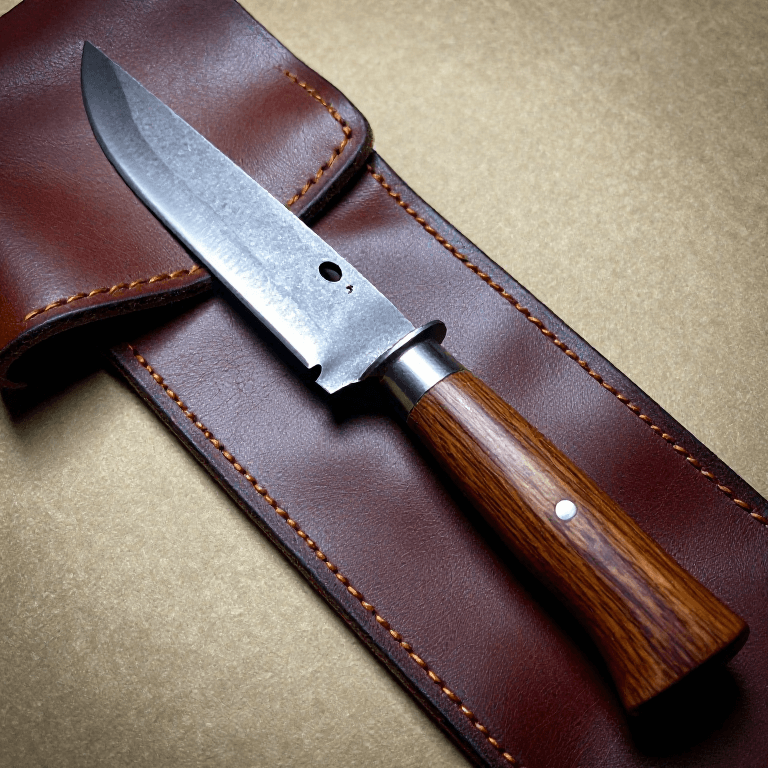

CC0 パブリックドメイン
このブループリントはCC0で公開されています。許可を求めずに、自由にコピー、修正、配布、あらゆる目的で使用できます。
メイカーを応援するには、ブループリント経由で製品を購入してください。メイカーには メイカーコミッション がベンダーにより設定されています。または、このブループリントの新しいイテレーションを作成し、自分のブループリントにコネクションとして含めて収益を共有できます。