예술
뷰티 및 웰니스
공예
문화 및 역사
엔터테인먼트
환경
음식 및 음료
역공학
과학
스포츠
기술
웨어러블
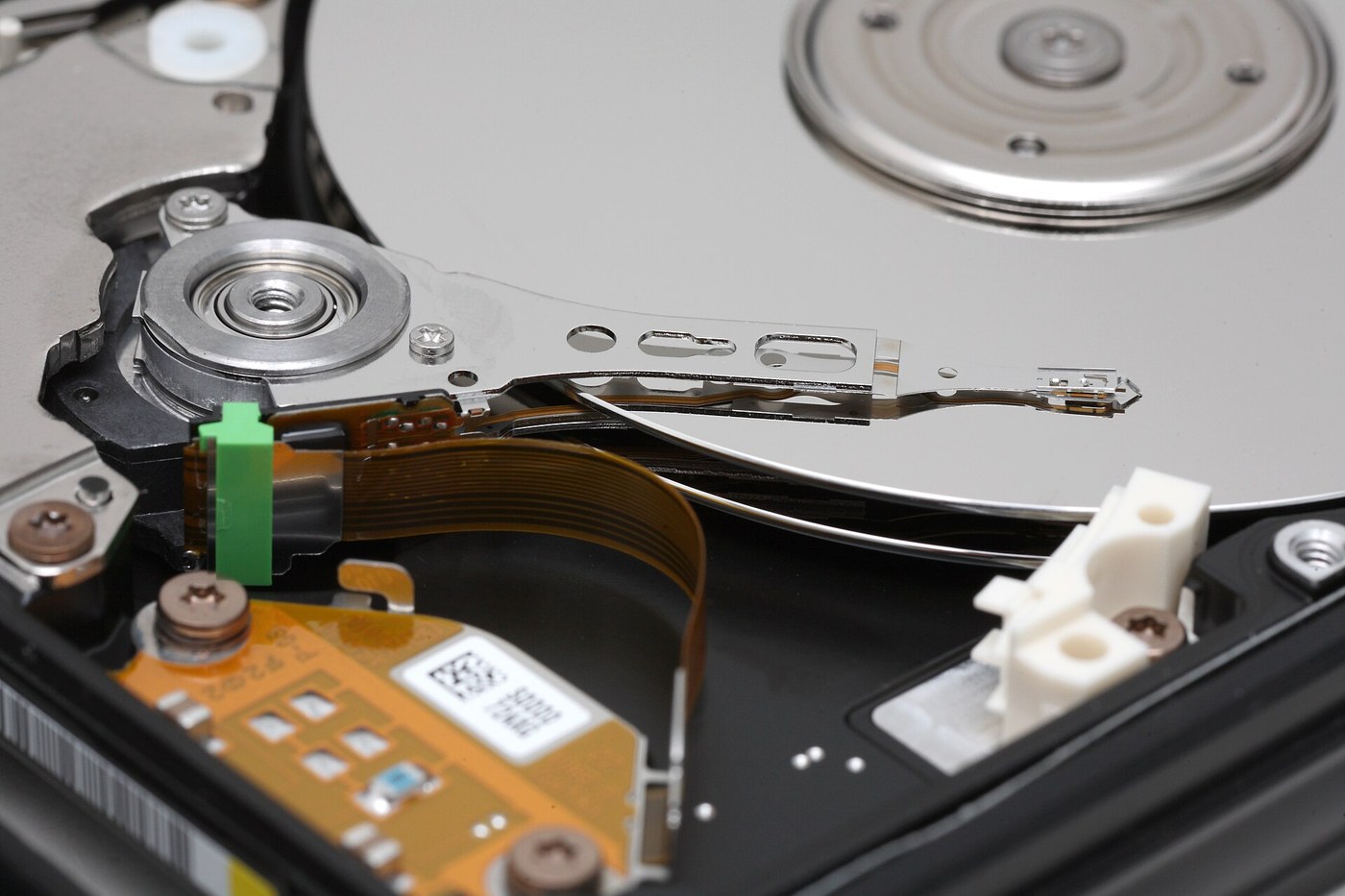


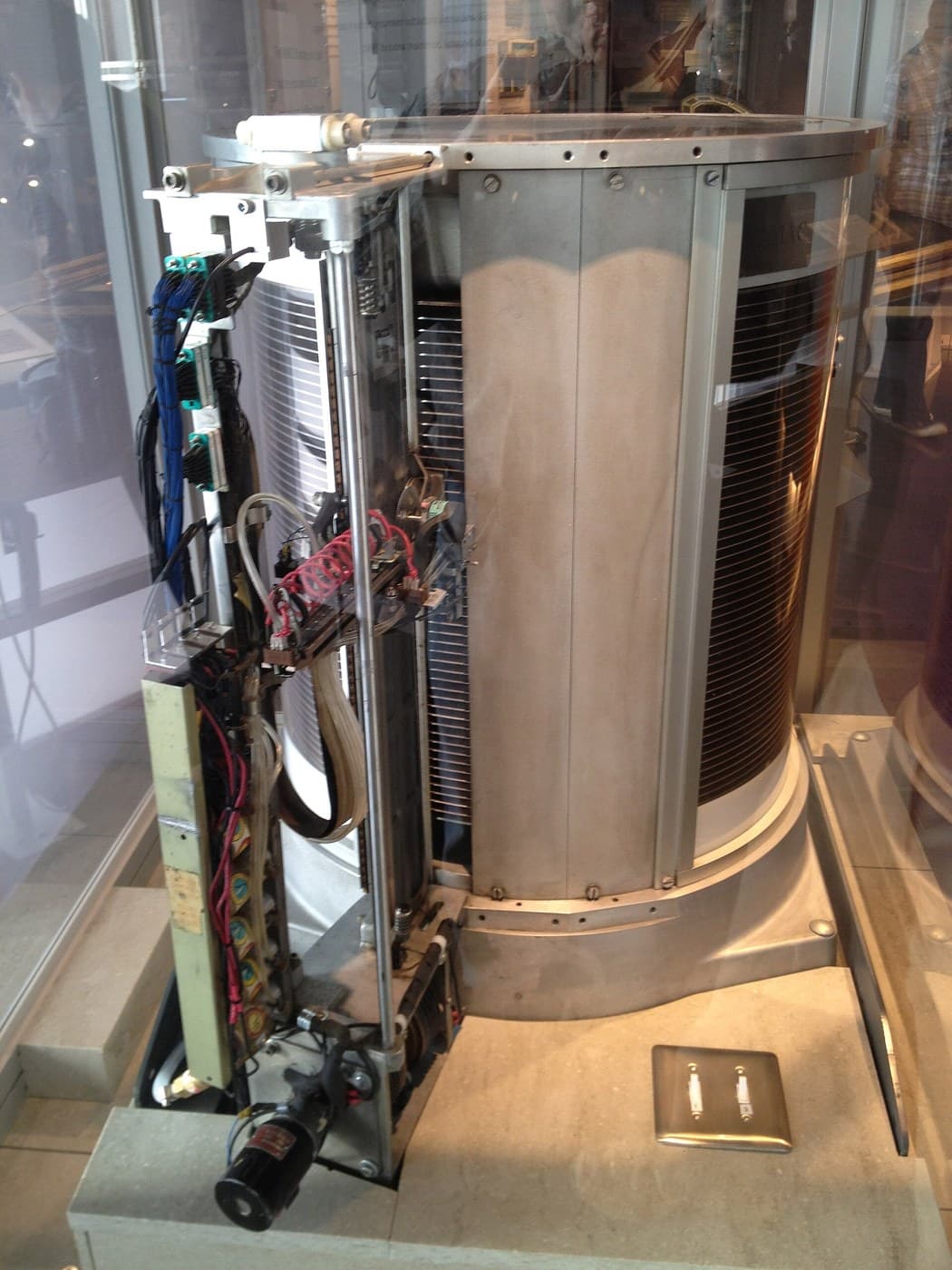
The Winchester Sealed Drive
IBM's 3340, shipped in 1973 under Ken Haughton, was designed around two 30-megabyte spindles. Somebody in the project noticed that 30-30 was also a Winchester rifle cartridge, the codename stuck, and for the next twenty years every drive of this type was called a Winchester whether IBM made it or not.
Three changes arrived together and they only work together. The head-disc assembly was SEALED, with its own filter and its own air, so room dust never reached the surface. The head was made light — about five grams where its predecessor was sixteen — so it followed the surface better and did less damage when it did not. And the head was allowed to LAND on the disc when the drive stopped, on a dedicated lubricated band that holds no data, instead of being lifted clear by a mechanism that could fail.
That third change is the one that sounds like a step backwards and is not. Every previous drive needed a way to retract the head before the disc slowed below flying speed, and that mechanism was a single point of failure that destroyed the whole pack when it failed. Letting the head land somewhere harmless is simpler, and simpler survives.
MEASURED, NOT FABRICATED. Nobody builds a sealed head-disc assembly on a bench. What this blueprint does is compute the two numbers that forced the design — what a dust particle costs at half a micrometre of flying height, and how much energy a head carries when it touches — and then find the landing zone on a real drive and look at what fifty thousand landings did to it.
중급
3 hours
안내
1
1
Find the landing zone and the filter
Find the landing zone and the filter
Go back to the scrap drive from blueprint 2. Look at the platter under a bright light at a glancing angle and turn it slowly.
Near the inner diameter there is a band that catches the light differently from the rest — duller, sometimes visibly textured. That is the landing zone. On a drive with real hours on it you may see fine circumferential marks in it. Every one of those is a start or a stop.
Now find the filter. There is a small pleated element inside the casting, usually near the outer edge where the airflow from the spinning platters is strongest. It is a RECIRCULATING filter: the enclosure is sealed, so its job is not to clean incoming air but to catch debris the drive generates itself. There is often a second, much smaller breather filter with a labyrinth path, which lets pressure equalise with altitude without letting particles in.
Measure the landing zone's inner and outer radius with the caliper.
이 단계의 재료:
 하드 디스크 드라이브(회수품)1 개
필요한 도구:
 Torx 드라이버 세트
 디지털 캘리퍼스 6인치
 휴대용 확대경 10배
2
2
Weigh the head and time the spin-down
Weigh the head and time the spin-down
Detach the arm assembly and weigh it on the scale. Then weigh just the slider end if you can get it off cleanly. Modern sliders are around a milligram and a half; you will not resolve that on a kitchen scale, which is itself the lesson — the mass has fallen below what ordinary instruments measure.
Reassemble a working drive, if you have one you do not need, and power it. Listen. Spin it up, then cut power and time how long the platters take to stop, using the stopwatch.
During that spin-down the head is flying, then it is not. The transition is the moment the air wedge collapses, and on a drive that parks on the disc it is the moment the head touches. On a drive that parks on a ramp you hear a distinct click BEFORE the platters slow much at all — that is the actuator swinging the head off the edge while there is still enough air to fly on.
이 단계의 재료:
하드 디스크 드라이브(회수품)1 개필요한 도구:
 디지털 주방 저울
 스톱워치Torx 드라이버 세트
3
3
Dirt, energy, and fifty metres of sliding
Dirt, energy, and fifty metres of sliding
Jupyter 노트북 불러오는 중…
필요한 도구:
 데스크톱 컴퓨터
4
4
Compendium: sealed, light, and allowed to land
Compendium: sealed, light, and allowed to land
THE THREE CHANGES ARE ONE CHANGE. Sealing lets you fly lower, because the only particles left are ones the drive makes itself and a recirculating filter catches those. Flying lower needs a lighter head, because a heavy one cannot follow a disc that is never flat. And a lighter head makes LANDING survivable, because it arrives with thousandths of the energy. Remove any one and the other two stop working.
WHY THE LANDING ZONE IS TEXTURED. Two perfectly flat clean surfaces in contact STICK. A head stiction-welded to a platter overnight will not let go when the motor tries to start. Roughening the zone cuts the real contact area to a few asperities. Later drives avoided the problem entirely by unloading onto a ramp outside the disc.
THE BREATHER, AND ALTITUDE. A sealed drive is not airtight — it has a filtered breather with a labyrinth path so pressure tracks the outside while particles cannot get in. Hence the altitude limit, typically about 3000 m: thinner air, weaker wedge, lower flying, and eventually no flying. Helium-filled drives exist partly to escape that.
재료
1- 플레이스홀더
관련 블루프린트
이 블루프린트들은 지식을 공유합니다 — 기술, 재료 또는 원리


CC0 퍼블릭 도메인
이 블루프린트는 CC0로 공개되었습니다. 어떤 목적으로든 자유롭게 복사, 수정, 배포 및 사용할 수 있습니다.
제품 구매를 통해 메이커를 지원하세요. 판매자가 설정한 메이커 커미션 을 받거나, 이 블루프린트의 새로운 반복을 만들어 연결로 포함시킬 수 있습니다.