IṢẸ́ ỌNÀ
ẸWÀ ÀTI ÌLERA
IṢẸ́ ỌWỌ́
ÀṢÀ ÀTI ÌTÀN
ÌṢERÉ
ÀYÍKÁ
OÚNJẸ ÀTI OHUN MÍMU
REVERSE ENGINEERING
SÁYẸ́ǸSÌ
ERÉ ÌDÁRAYÁ
ÌMỌ̀-Ẹ̀RỌ
ÀWỌN OHUN WÍWỌ̀
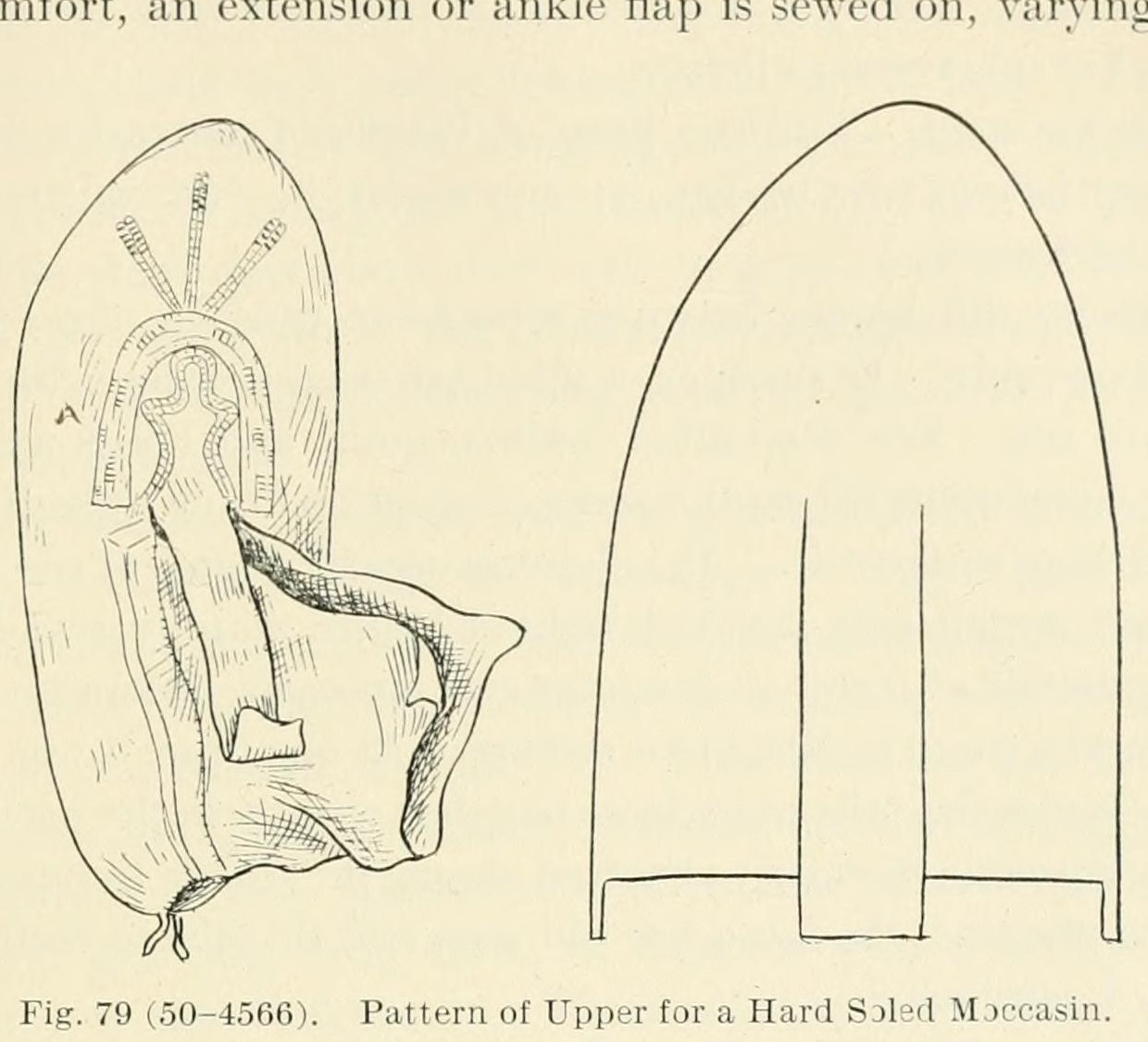

Blackfoot Hard-Soled Moccasin: Rawhide Sole Cut to the Foot, Soft Upper, Sewn Inside Out from the Toe (Wissler, 1910)
The Blackfoot (Niitsitapi) moccasin most worn in 1910, from Clark Wissler: a stiff rawhide sole cut to the outline of each foot, often from an old parfleche, a soft-tanned upper with its tongue, decorated before joining, then sewn to the sole inside out starting at the toe and turned before the last stitches, with a lace round the ankle.
Àárín
An afternoon a pair
Ìlànà
1
1
Read Wissler
Read Wissler
"The moccasin generally worn to-day is of two or more pieces and usually provided with a rawhide sole."
2
2
Cut the soles
Cut the soles
Draw round each foot on rawhide and cut a right and a left sole (worn parfleche were often used, their paint showing inside).
Àwọn ohun èlò fún ìgbésẹ̀ yìí:
 Ewé awọ tútù1 ẹyọ
Àwọn irinṣẹ́ tí a nílò:
 Ọ̀bẹ
3
3
Cut and decorate the upper
Cut and decorate the upper
Cut the soft-skin upper to the Fig. 79 shape: a pointed toe piece with the tongue continuous, or sewn on separately. Finish all painting, quill or bead work now, before it is joined to the sole.
Àwọn ohun èlò fún ìgbésẹ̀ yìí:
 Awọ àgbọ̀nrín rírọ̀1 ẹyọ
Àwọn irinṣẹ́ tí a nílò:
Ọ̀bẹ4
4
Sew to the sole
Sew to the sole
Turn the parts wrong side out and sew upper to sole starting at the toe; turn it right side out before the seam is finished, then close it. Ours: dampen the rawhide edge so the awl goes through, and use sinew.
Àwọn ohun èlò fún ìgbésẹ̀ yìí:
 Òwú Iṣan Ẹranko1 ẹyọ
 Omi1 ẹyọ
Àwọn irinṣẹ́ tí a nílò:
 Ọ̀kọ̀ Ìlùhò
5
5
Finish the ankle
Finish the ankle
Add a high top if wanted, which with the tongue covers the ankle, and a lace round the ankle (sometimes looped through the heel, or two laces fixed near the heel seam). Many had a fold of red cloth round the ankle.
Àwọn ohun èlò fún ìgbésẹ̀ yìí:
 Okùn awọ tútù1 ẹyọAwọ àgbọ̀nrín rírọ̀1 ẹyọ
Àwọn irinṣẹ́ tí a nílò:
Ọ̀kọ̀ ÌlùhòỌ̀bẹ6
6
Troubleshooting
Troubleshooting
Moccasin troubleshooting.
Flow
Loading...
7
7
History and honest limits
History and honest limits
From Clark Wissler, *Material Culture of the Blackfoot Indians*, **Anthropological Papers of the American Museum of Natural History** vol. V (1910), pp. 63-64, 129-130 and Figs. 79-80 (checked on the archive.org scan materialcultureo00wiss). In summer plain canvas moccasins were usual. Sizing, soaking the rawhide and the thread are ours.
Àwọn ohun-èlò
5- 1 ẹyọÀyè
- 1 ẹyọÀyè
- 1 ẹyọÀyè
- 1 ẹyọÀyè
- 1 ẹyọÀyè
Ìtọ́nisọ́nà yìí ń ṣe
Blueprint tó jọra
Àwọn blueprint wọ̀nyí pín ìmọ̀ — ọ̀nà, ohun-èlò tàbí ìlànà
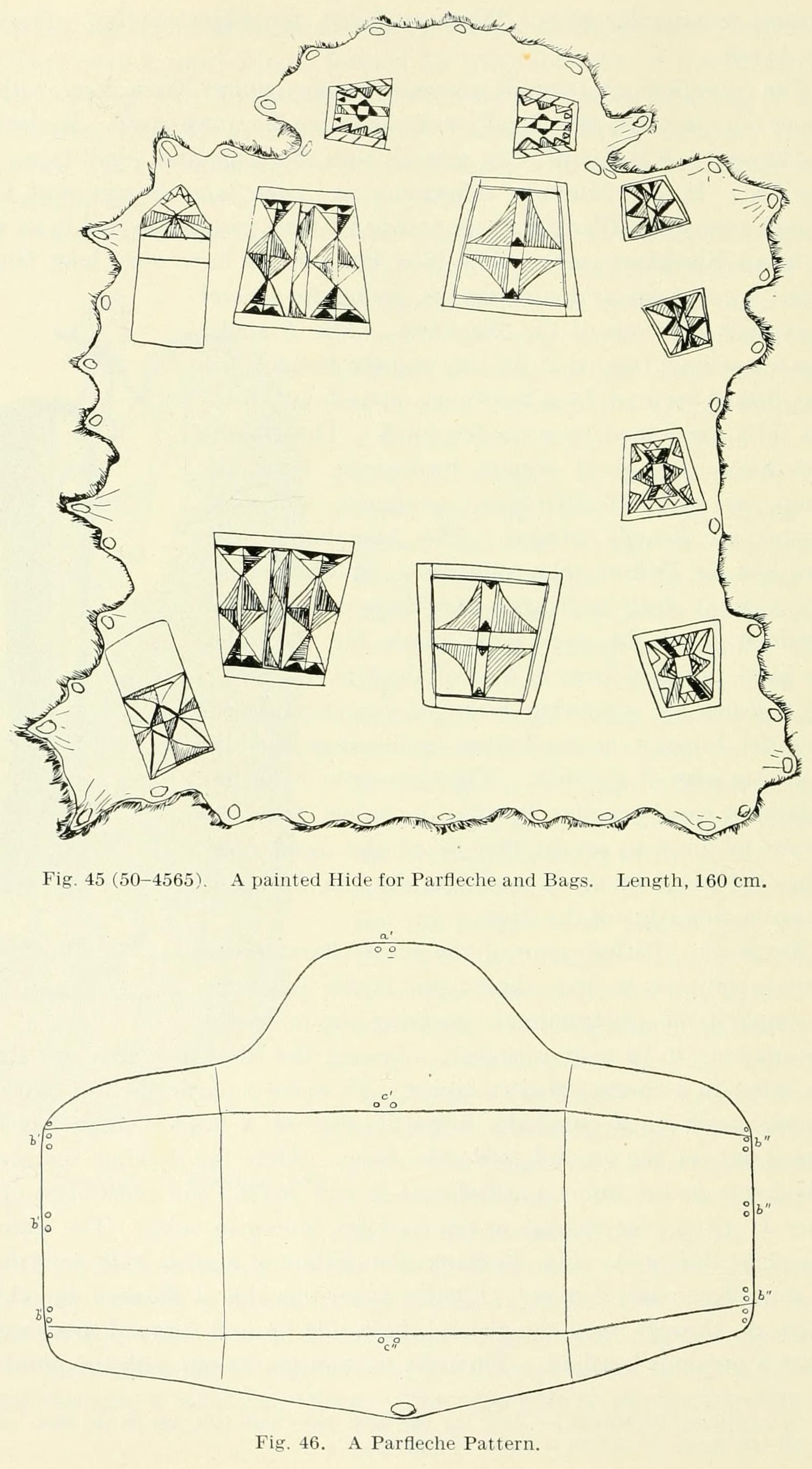
Blackfoot Parfleche: Rawhide Pegged Out, Fleshed, Painted While Staked, Scraped Even, Cut and Folded Like an Envelope (Wissler, 1910)
láti ọwọ́ Tex
Aṣọ àti Awọ
7
0
0
0
0
0
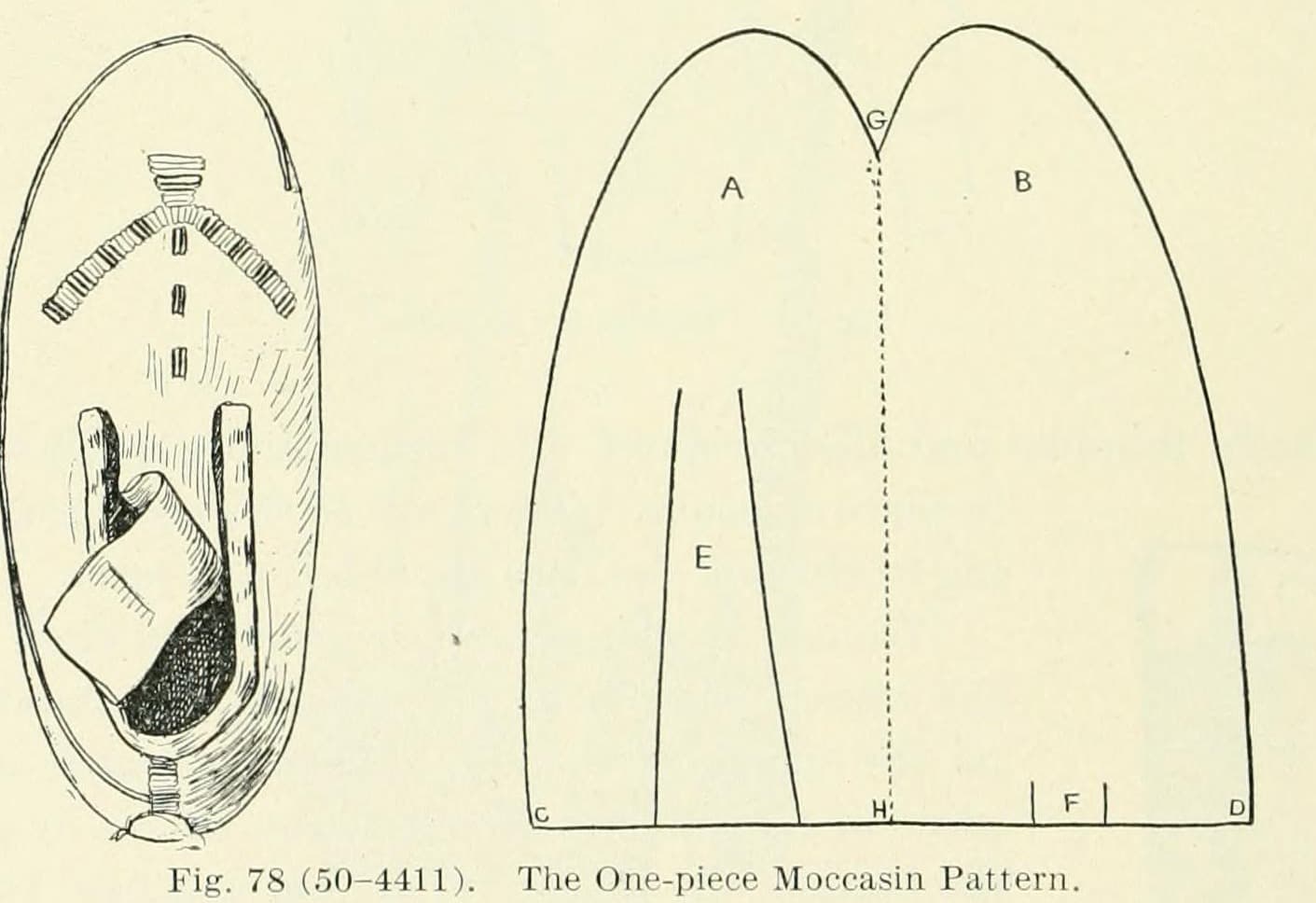
Blackfoot One-Piece Moccasin: One Skin Folded Lengthwise, Seamed Round the Toes, Heel Seam with Trailer, Ankle Flap (Wissler, 1910)
láti ọwọ́ Tex
Aṣọ àti Awọ
9
0
0
0
0
0
CC0 Àgbègbè Gbogbogbò
Blueprint yìí ti jáde lábẹ́ CC0. O lè ṣe àdàkọ, yí padà, pín, àti lò láìsí ìyọ̀ǹda.
Ṣàtìlẹ́yìn Olùṣẹ́dá nípa rírà àwọn ọjà nipasẹ̀ Blueprint wọn Ẹ̀san Olùṣẹ́dá tí àwọn Olùtajà gbé kalẹ̀, tàbí ṣẹ̀dá àtúnṣe tuntun ti Blueprint yìí kí o sì fi sínú Blueprint rẹ gẹ́gẹ́ bí ìsopọ̀ láti pín owó-wíwọlé.