IṢẸ́ ỌNÀ
ẸWÀ ÀTI ÌLERA
IṢẸ́ ỌWỌ́
ÀṢÀ ÀTI ÌTÀN
ÌṢERÉ
ÀYÍKÁ
OÚNJẸ ÀTI OHUN MÍMU
REVERSE ENGINEERING
SÁYẸ́ǸSÌ
ERÉ ÌDÁRAYÁ
ÌMỌ̀-Ẹ̀RỌ
ÀWỌN OHUN WÍWỌ̀
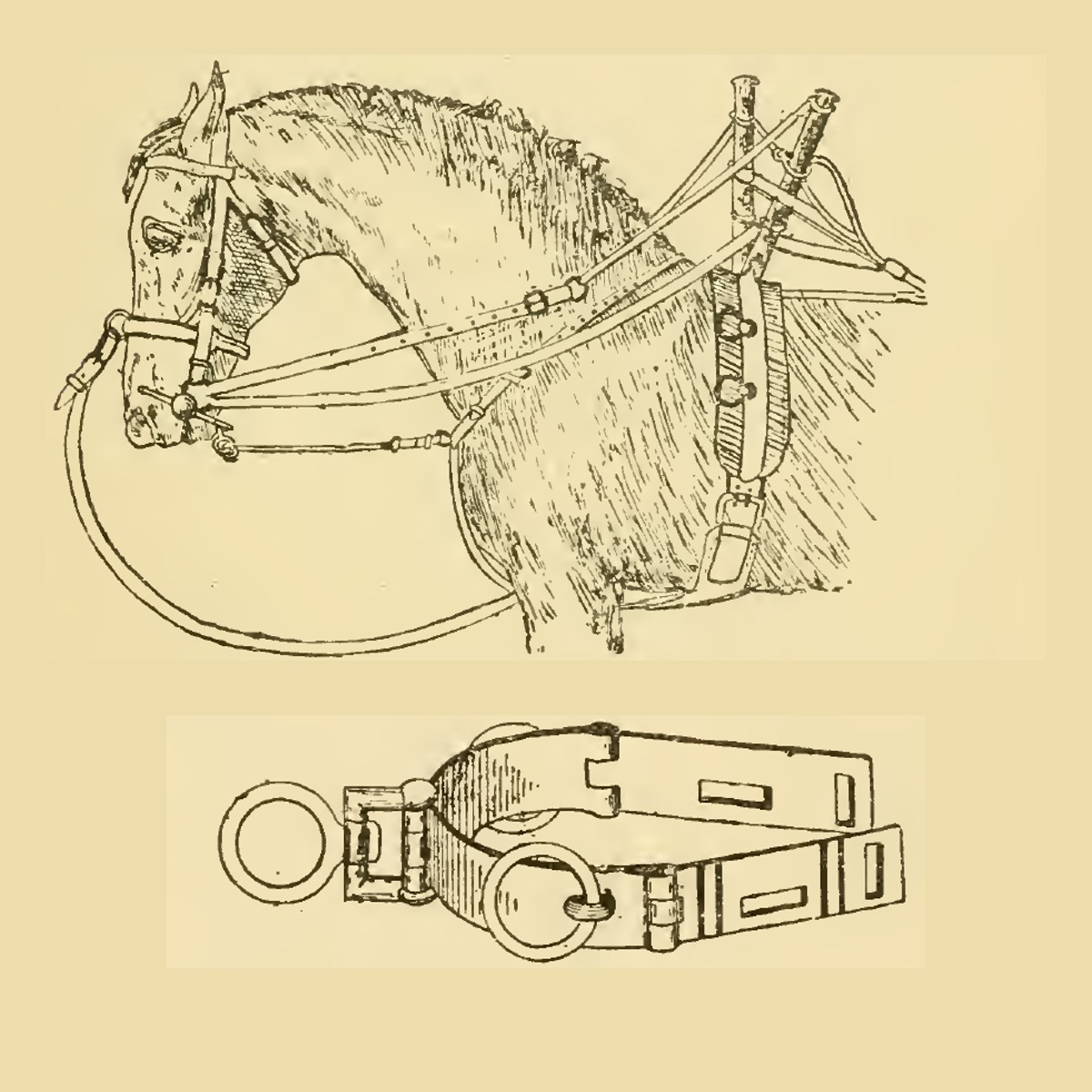


Breaking Cavesson: Leather-Covered Cavesson Iron With Padded Noseband and Double Throat Lash (Hasluck, Saddlery, 1904)
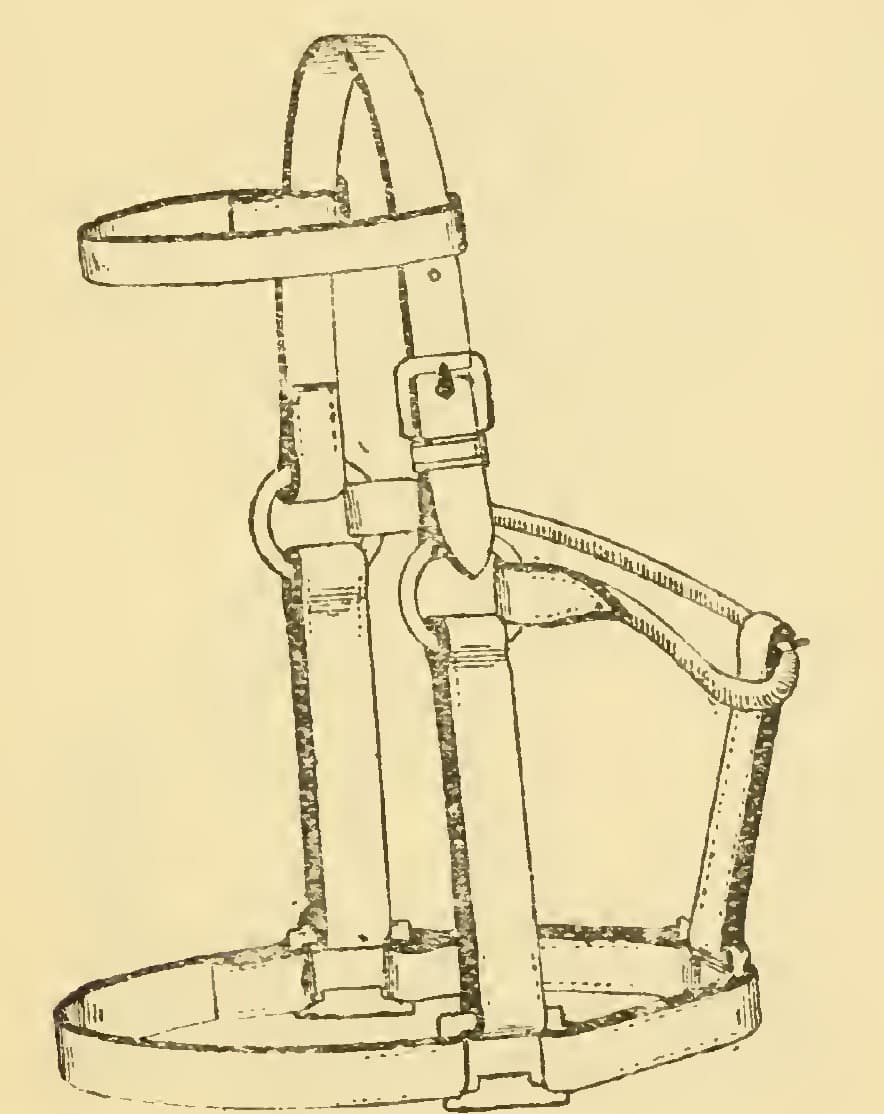
A cavesson holds a young horse's head steady while it is broken in; it is used without a bit, and the leading rein goes on its rings. This is the cavesson from the breaking-down tackle in Paul N. Hasluck's Saddlery (1904): a bought cavesson iron covered in leather and padded inside, a strap up the face, cheeks, jaw straps, a headpiece and one or two throat lashes. Every size is his.
Ilọsíwájú
About 1 day
Ìlànà
1
1
His sizes in centimetres
His sizes in centimetres
Ń ṣí ìwé Jupyter…
2
2
Read Saddlery, ch. VII
Read Saddlery, ch. VII
"The cavison iron (Fig. 22) can be purchased ready-made; it acts as a noseband, being strong to hold the horse's head steady. In the centre is a ring, which turns like a swivel, and another ring is placed on each side." It has openings at the sides for the cheeks and one at each end for the straps below the jaw.
3
3
Cover the iron
Cover the iron
Cover the cavesson iron with thin brown leather and herringbone-stitch it underneath, out of sight. Make holes in the leather opposite the openings in the iron.
Àwọn ohun èlò fún ìgbésẹ̀ yìí:
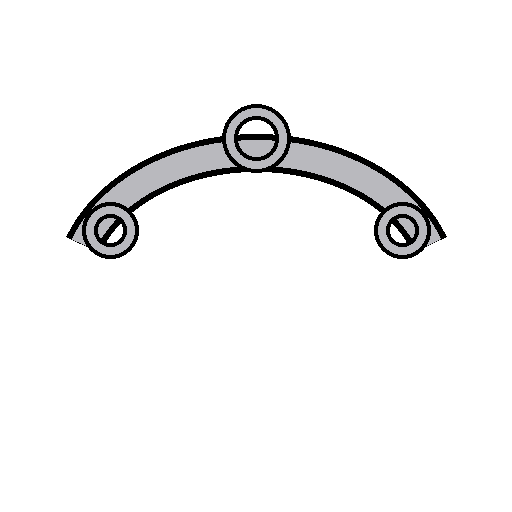 Irin ìjánu orí ìkọ́ni1 ẹyọ
 Awọ àgùntàn (basil)1 ẹyọ
 Òwú ọ̀gbọ̀1 ẹyọ
 Ìdí Oyin1 ẹyọ
Àwọn irinṣẹ́ tí a nílò:
 Ọ̀bẹ awọ
 Ọ̀kọ̀ Ìlùhò
 Abẹ́rẹ́ ìránṣọ awọ méjì
 Ìmú igi fún ríran awọ
4
4
Fit the cheeks
Fit the cheeks
Fit two cheeks 7 in by 1 in in the side openings, each with a runner and buckle and a loop at the top.
Àwọn ohun èlò fún ìgbésẹ̀ yìí:
 Awọ ohun èlò ẹṣin1 ẹyọ
 Bọ́ọ̀kù irin onílahùn2 ẹyọÒwú ọ̀gbọ̀1 ẹyọÌdí Oyin1 ẹyọ
Àwọn irinṣẹ́ tí a nílò:
Ọ̀bẹ awọ Ohun èlò ìbẹ etí
 Ohun ìdán ẹ̀gbẹ́ awọ
 Ohun èlò ìká
 Ọ̀pá Iná Pùróféènì
 Igi ìmọ òrùka awọỌ̀kọ̀ ÌlùhòAbẹ́rẹ́ ìránṣọ awọ méjì
5
5
Fit the face strap
Fit the face strap
Cut a 1 in strap 20 in long to pass round the centre of the iron, go up the face and buckle in the centre of the headpiece. Turn one end in enough to go round the iron and leave enough to stitch it together on the upper side. Slit it in half far enough to go over the centre ring, put it round with half the slit on each side of the ring, and stitch it above the iron, with a hoop under the forehead (his word) for it to pass through.
Àwọn ohun èlò fún ìgbésẹ̀ yìí:
Awọ ohun èlò ẹṣin1 ẹyọÒwú ọ̀gbọ̀1 ẹyọÌdí Oyin1 ẹyọÀwọn irinṣẹ́ tí a nílò:
Ọ̀bẹ awọ Ohun èlò ìlu ihò awọỌ̀kọ̀ ÌlùhòAbẹ́rẹ́ ìránṣọ awọ méjìÌmú igi fún ríran awọ
6
6
Fit the jaw straps
Fit the jaw straps
Put a strap 9 in long in the off-side opening at the end of the iron, and another 5 in long, with a buckle, loop and runner, on the near side.
Àwọn ohun èlò fún ìgbésẹ̀ yìí:
Awọ ohun èlò ẹṣin1 ẹyọBọ́ọ̀kù irin onílahùn1 ẹyọÒwú ọ̀gbọ̀1 ẹyọÌdí Oyin1 ẹyọÀwọn irinṣẹ́ tí a nílò:
Ọ̀bẹ awọIgi ìmọ òrùka awọOhun èlò ìlu ihò awọỌ̀kọ̀ ÌlùhòAbẹ́rẹ́ ìránṣọ awọ méjì7
7
Make and strap on the pad
Make and strap on the pad
Make a stuffed leather pad, as for a cart winker cheek but longer, to run all along the inside of the iron and reach about 1 in beyond it at each end; it is slightly wider when stuffed and flattened. Do not make it clumsy and thick with stuffing. Make four 1/2 in straps long enough to pass round the iron, with a few holes punched in them; stitch one across the pad at each end and one on each side of the central ring, to fasten the pad on.
Àwọn ohun èlò fún ìgbésẹ̀ yìí:
Awọ ohun èlò ẹṣin1 ẹyọ Irun àgùntàn ìkún1 ẹyọÒwú ọ̀gbọ̀1 ẹyọÌdí Oyin1 ẹyọ
Àwọn irinṣẹ́ tí a nílò:
Ọ̀bẹ awọOhun èlò ìlu ihò awọỌ̀kọ̀ ÌlùhòAbẹ́rẹ́ ìránṣọ awọ méjìÌmú igi fún ríran awọ8
8
Make the headpiece and throat lash
Make the headpiece and throat lash
Make the headpiece of good leather 2 ft 4 in long, so that it fits a horse of any size, and slit it 8 in or 9 in at each side so that, when cut, it is 1-3/4 in wide; it can be narrowed in the centre between the slits. Put a chape and buckle in the centre to take the face strap. Make the foreband as for a stallion bridle (the same length as an ordinary bridle front, or a little longer). Make the throat lash 1 ft 8 in long when turned in and 3/4 in wide, with a buckle, a loop and a runner at each end.
Àwọn ohun èlò fún ìgbésẹ̀ yìí:
Awọ ohun èlò ẹṣin1 ẹyọBọ́ọ̀kù irin onílahùn3 ẹyọÒwú ọ̀gbọ̀1 ẹyọÌdí Oyin1 ẹyọÀwọn irinṣẹ́ tí a nílò:
Ọ̀bẹ awọOhun èlò ìbẹ etíOhun ìdán ẹ̀gbẹ́ awọOhun èlò ìkáỌ̀pá Iná PùróféènìIgi ìmọ òrùka awọOhun èlò ìlu ihò awọỌ̀kọ̀ ÌlùhòAbẹ́rẹ́ ìránṣọ awọ méjì9
9
Add a second throat lash for safety
Add a second throat lash for safety
If you want extra safety, put a 5/8 in strap 6 in long on each side of the cheek, stitched in with the chape at the top and slanting slightly downwards, and make an extra throat lash 5/8 in by 1 ft 4 in to buckle to them. "With two throat lashes the bridle will be firm and safe on the horse's head."
Àwọn ohun èlò fún ìgbésẹ̀ yìí:
Awọ ohun èlò ẹṣin1 ẹyọÒwú ọ̀gbọ̀1 ẹyọÌdí Oyin1 ẹyọÀwọn irinṣẹ́ tí a nílò:
Ọ̀bẹ awọOhun èlò ìlu ihò awọỌ̀kọ̀ ÌlùhòAbẹ́rẹ́ ìránṣọ awọ méjì10
10
Troubleshooting
Troubleshooting
Cavesson troubleshooting.
Flow
Loading...
11
11
History and honest limits
History and honest limits
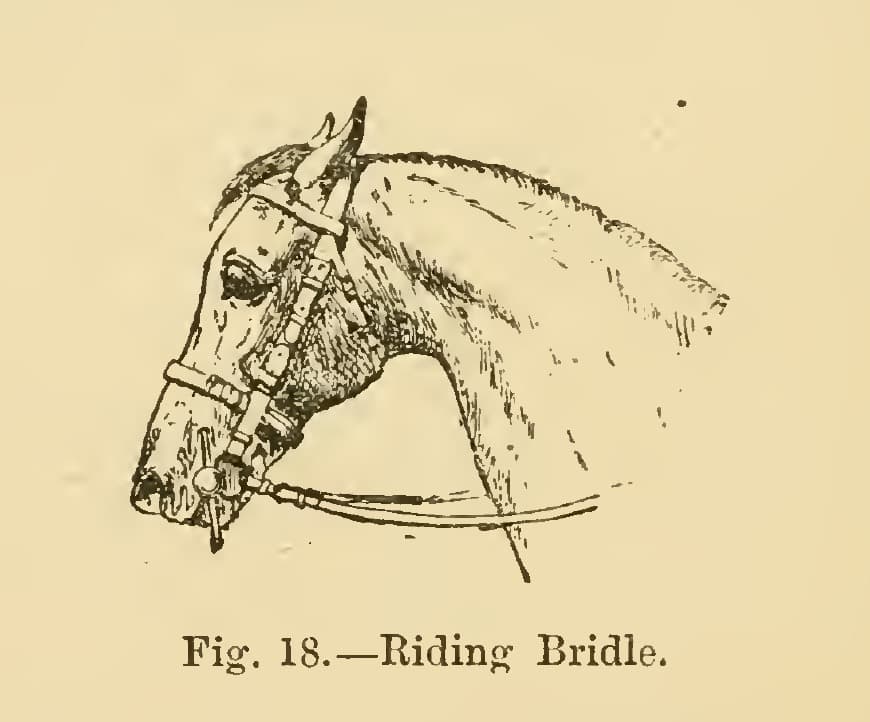
From **Saddlery**, edited by Paul N. Hasluck, David McKay, 1904 (archive.org saddlery00hasl), chapter VII, "Breaking-down Tackle", pp. 59-61, Figs. 21-22; every fraction was read on the scan. He sends the reader to the stallion bridle for the foreband and to a cart winker cheek for the pad, without sizes here. The leading rein (9 ft by 1-1/8 in), side reins, dumb jockey, Corbett martingale, crupper and girth of the full tackle are not made here. Basil for the "thin brown leather", the buckle count in the list, the thread, tools and metric figures are ours.
Àwọn ohun-èlò
7- Àyè
- 1 ẹyọÀyè
- 7 ẹyọÀyè
- 7 ẹyọÀyè
- 6 ẹyọÀyè
- Àyè
- 1 ẹyọÀyè
Ìtọ́nisọ́nà yìí ń ṣe
Blueprint tó jọra
Àwọn blueprint wọ̀nyí pín ìmọ̀ — ọ̀nà, ohun-èlò tàbí ìlànà
CC0 Àgbègbè Gbogbogbò
Blueprint yìí ti jáde lábẹ́ CC0. O lè ṣe àdàkọ, yí padà, pín, àti lò láìsí ìyọ̀ǹda.
Ṣàtìlẹ́yìn Olùṣẹ́dá nípa rírà àwọn ọjà nipasẹ̀ Blueprint wọn Ẹ̀san Olùṣẹ́dá tí àwọn Olùtajà gbé kalẹ̀, tàbí ṣẹ̀dá àtúnṣe tuntun ti Blueprint yìí kí o sì fi sínú Blueprint rẹ gẹ́gẹ́ bí ìsopọ̀ láti pín owó-wíwọlé.