IṢẸ́ ỌNÀ
ẸWÀ ÀTI ÌLERA
IṢẸ́ ỌWỌ́
ÀṢÀ ÀTI ÌTÀN
ÌṢERÉ
ÀYÍKÁ
OÚNJẸ ÀTI OHUN MÍMU
REVERSE ENGINEERING
SÁYẸ́ǸSÌ
ERÉ ÌDÁRAYÁ
ÌMỌ̀-Ẹ̀RỌ
ÀWỌN OHUN WÍWỌ̀
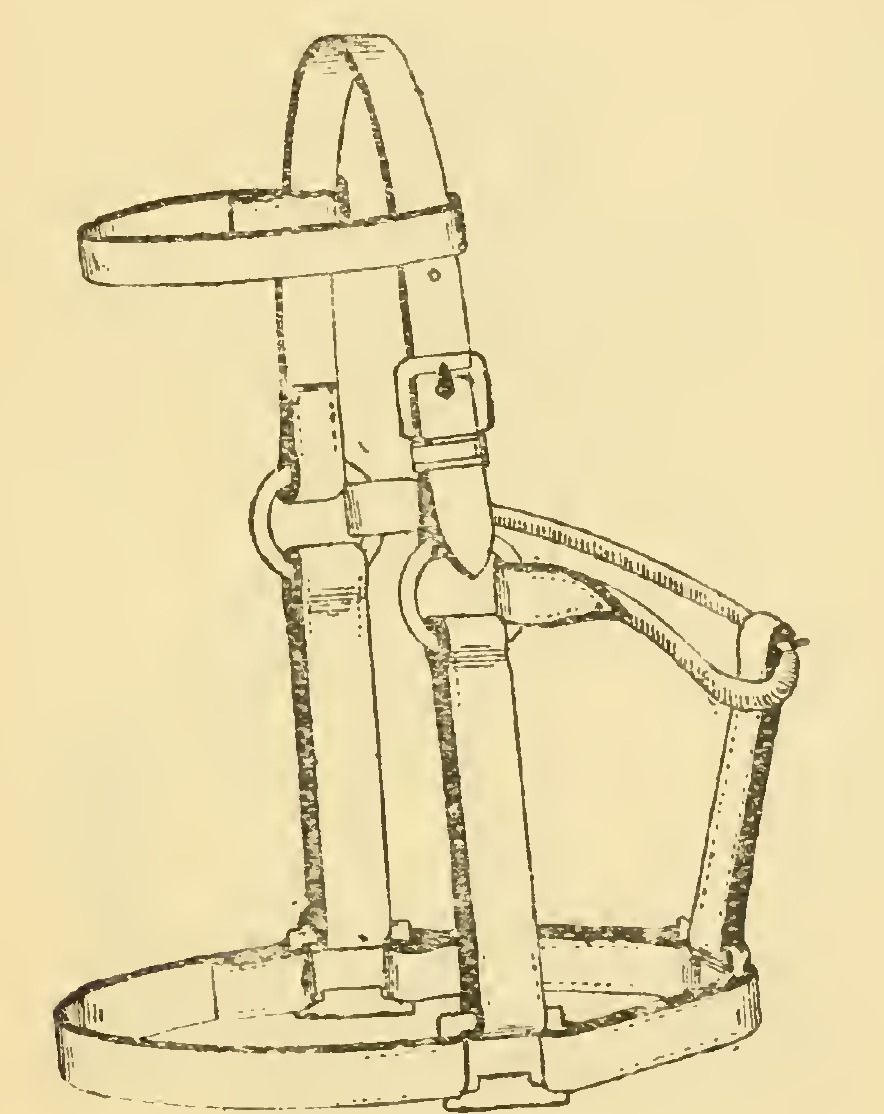


Newmarket Head Collar: Stable Halter With Squared Stays, Noseband, Cheeks and Throat Lash (Hasluck, Saddlery, 1904)
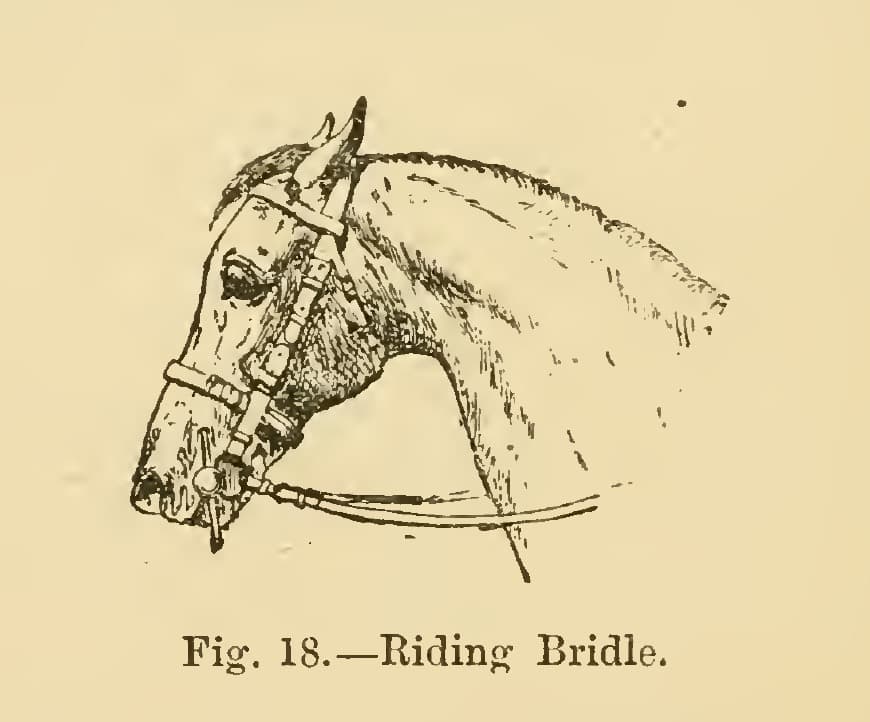
A head collar, also called a headstall or stable collar, ties a horse up in the stable. This is the Newmarket pattern from Paul N. Hasluck's Saddlery (1904): two short stays carrying three stop squares, a noseband, two cheeks, an upward stay, a forehead band, a top strap and a throat lash. Every size is his.
It has no bit; the rein is fastened to the centre square.
Àárín
About 1 day
Ìlànà
1
1
Cutting list
Cutting list
Ń ṣí ìwé Jupyter…
2
2
Read Saddlery, ch. VIII
Read Saddlery, ch. VIII
"Head collars, also called headstalls and stable collars, are made in various ways, and one of the most useful styles will be described in this chapter."
3
3
Make the short stays
Make the short stays
Cut two short straps 1 ft by 1-1/4 in and turn them in to 5 in long, leaving 1 in or a little more for overlap. Shave the ends and prick them eight to the inch. Put one square in the centre between them and one in each end, with the stops on the same side. Lay a strip of leather along the centre of each to raise the stay, then stitch with beeswaxed three-cord hemp thread, with a strong cross-stitch at the end of each line.
Àwọn ohun èlò fún ìgbésẹ̀ yìí:
 Awọ ohun èlò ẹṣin1 ẹyọ
 Òrùka onígun mẹ́rin ìjánu orí3 ẹyọ
 Okùn Hẹ́ǹpù1 ẹyọ
 Ìdí Oyin1 ẹyọ
Àwọn irinṣẹ́ tí a nílò:
 Ọ̀bẹ awọ
 Ìlà ìrán awọ
 Ọ̀kọ̀ Ìlùhò
 Abẹ́rẹ́ ìránṣọ awọ méjì
 Ìmú igi fún ríran awọ
 Okùn Ìdíwọ̀n
4
4
Make the noseband
Make the noseband
Cut the noseband 1 ft 3 in long when turned down. Prepare it and put one end, forming a chape, in each of the end squares of the short stays. Stitch two rows along the edges of the turn-down and trim the ends neatly.
Àwọn ohun èlò fún ìgbésẹ̀ yìí:
Awọ ohun èlò ẹṣin1 ẹyọOkùn Hẹ́ǹpù1 ẹyọÌdí Oyin1 ẹyọÀwọn irinṣẹ́ tí a nílò:
Ọ̀bẹ awọÌlà ìrán awọỌ̀kọ̀ ÌlùhòAbẹ́rẹ́ ìránṣọ awọ méjì5
5
Make the cheeks
Make the cheeks
Cut a pair of cheeks 1-1/4 in by 8 in when bent in both ends. Prepare one end of each for a buckle and shave the points of the other turn-down. Put a runner on each cheek and a loop and the 1-1/4 in roller buckle on one end, then stitch the opposite ends to the two outer squares.
Àwọn ohun èlò fún ìgbésẹ̀ yìí:
Awọ ohun èlò ẹṣin1 ẹyọ Bọ́kùlù onírólà1 ẹyọOkùn Hẹ́ǹpù1 ẹyọÌdí Oyin1 ẹyọ
Àwọn irinṣẹ́ tí a nílò:
Ọ̀bẹ awọỌ̀kọ̀ ÌlùhòAbẹ́rẹ́ ìránṣọ awọ méjì Igi ìmọ òrùka awọ
6
6
Make the upward stay
Make the upward stay
Cut the short upward stay and stitch it behind in the centre square. Its length when doubled is about 4-1/2 in, with an opening left at the top for the throat lash to run through.
Àwọn ohun èlò fún ìgbésẹ̀ yìí:
Awọ ohun èlò ẹṣin1 ẹyọOkùn Hẹ́ǹpù1 ẹyọÌdí Oyin1 ẹyọÀwọn irinṣẹ́ tí a nílò:
Ọ̀bẹ awọỌ̀kọ̀ ÌlùhòAbẹ́rẹ́ ìránṣọ awọ méjì7
7
Make the forehead band, top strap and throat lash
Make the forehead band, top strap and throat lash
Make the forehead band like the snaffle bridle front. Cut the top strap 2 ft by 1-1/4 in and, when finished, punch about four holes on both sides. Make the throat lash 3 ft 6 in by 3/4 in, with the 3/4 in roller buckle, a loop and a runner, and about nine holes.
Àwọn ohun èlò fún ìgbésẹ̀ yìí:
Awọ ohun èlò ẹṣin1 ẹyọBọ́kùlù onírólà1 ẹyọOkùn Hẹ́ǹpù1 ẹyọÌdí Oyin1 ẹyọÀwọn irinṣẹ́ tí a nílò:
Ọ̀bẹ awọ Ohun èlò ìlu ihò awọỌ̀kọ̀ ÌlùhòAbẹ́rẹ́ ìránṣọ awọ méjìIgi ìmọ òrùka awọ
8
8
Put it together
Put it together
Put the forehead band on the head strap and buckle it on both sides in the cheeks. Run the throat lash from the near side through the opening in the upward stay and under the head strap, then through the opening in the forehead band on each side, and bring the point down to the buckle on the near side. If the collar has only one cheek, on the near side, make the strap on the other side 2 ft 9 in long.
9
9
Troubleshooting
Troubleshooting
Head collar troubleshooting.
Flow
Loading...
10
10
History and honest limits
History and honest limits
From **Saddlery**, edited by Paul N. Hasluck, David McKay, 1904 (archive.org saddlery00hasl), chapter VIII, "Head Collars", the Newmarket head collar, Fig. 23; every fraction was read on the scan. His list names one 1-1/4 in roller buckle and one 3/4 in buckle; the throat lash takes a roller buckle of its own width, and fitting the larger one to the cheek is our reading. Not made here: the Albert and Queen's pattern collars and the head collar reins. The metric figures are ours.
Àwọn ohun-èlò
5- 5 ẹyọÀyè
- Àyè
- 5 ẹyọÀyè
- 5 ẹyọÀyè
- 1 ẹyọÀyè
Ìtọ́nisọ́nà yìí ń ṣe
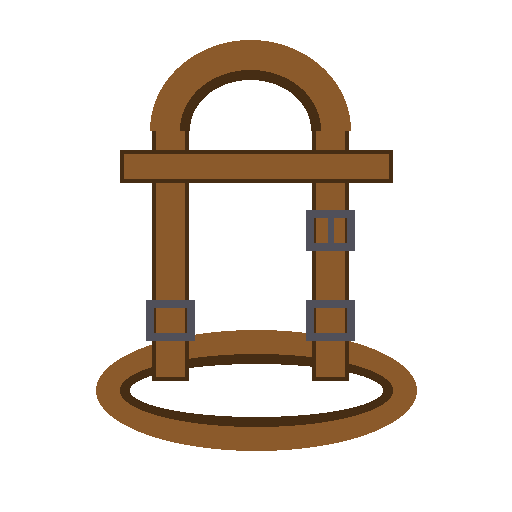
Blueprint tó jọra
Àwọn blueprint wọ̀nyí pín ìmọ̀ — ọ̀nà, ohun-èlò tàbí ìlànà
CC0 Àgbègbè Gbogbogbò
Blueprint yìí ti jáde lábẹ́ CC0. O lè ṣe àdàkọ, yí padà, pín, àti lò láìsí ìyọ̀ǹda.
Ṣàtìlẹ́yìn Olùṣẹ́dá nípa rírà àwọn ọjà nipasẹ̀ Blueprint wọn Ẹ̀san Olùṣẹ́dá tí àwọn Olùtajà gbé kalẹ̀, tàbí ṣẹ̀dá àtúnṣe tuntun ti Blueprint yìí kí o sì fi sínú Blueprint rẹ gẹ́gẹ́ bí ìsopọ̀ láti pín owó-wíwọlé.