IṢẸ́ ỌNÀ
ẸWÀ ÀTI ÌLERA
IṢẸ́ ỌWỌ́
ÀṢÀ ÀTI ÌTÀN
ÌṢERÉ
ÀYÍKÁ
OÚNJẸ ÀTI OHUN MÍMU
REVERSE ENGINEERING
SÁYẸ́ǸSÌ
ERÉ ÌDÁRAYÁ
ÌMỌ̀-Ẹ̀RỌ
ÀWỌN OHUN WÍWỌ̀

Neon: Atmospheric Argon Fractionated in Liquid Air, then Parted from Helium in Liquid Hydrogen (Ramsay and Travers, 1901)
Argon taken from air carries a little neon and helium. Ramsay and Travers liquefied the argon in liquid air and caught the first gas to boil off, which held the light gases. Repeated fractionation, at the end in a bulb cooled by liquid hydrogen, left pure neon.
Result: neon gas, density 10 (oxygen = 16).
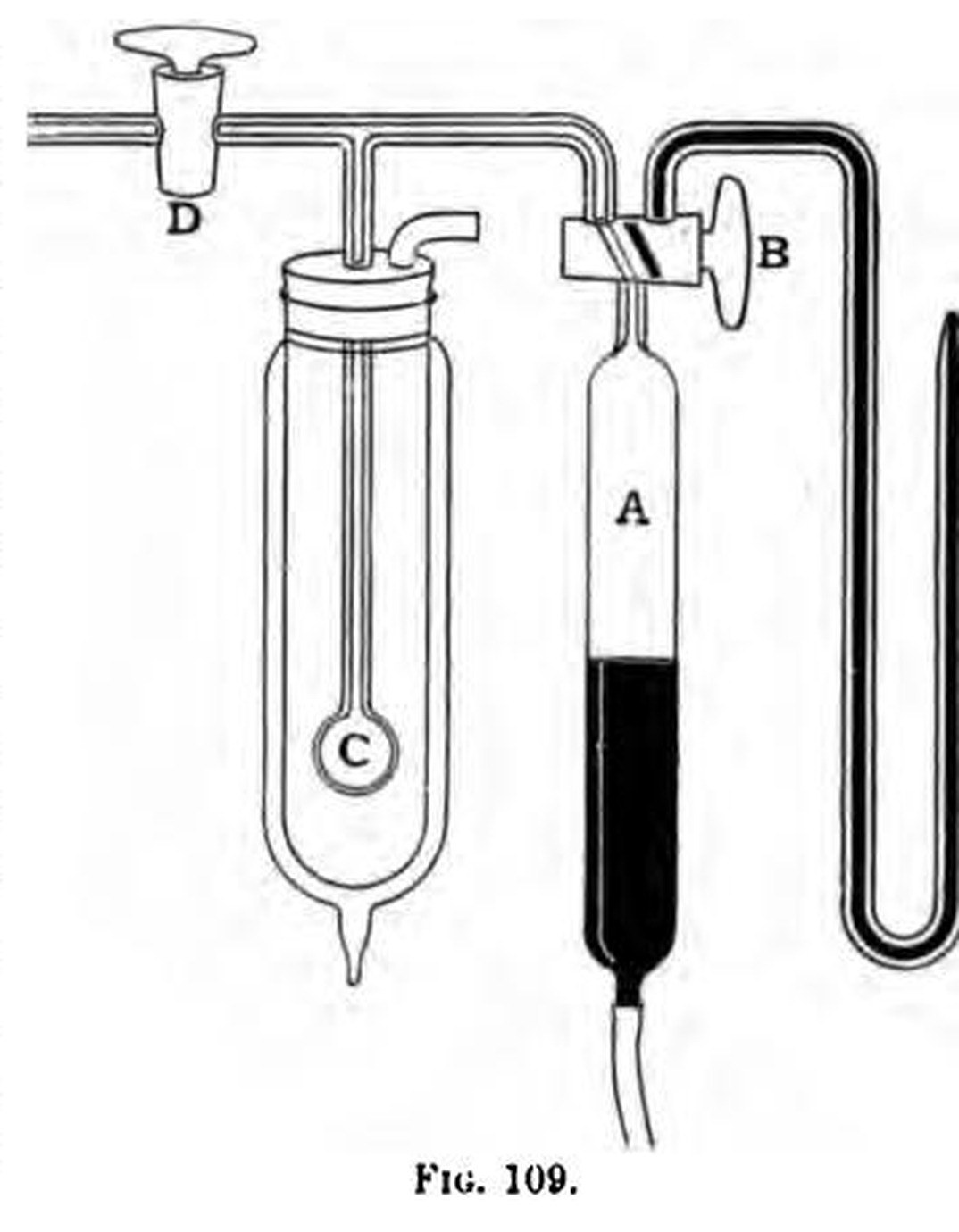
Source: M. W. Travers, The Experimental Study of Gases (1901), pp. 214-218. Liquid air and liquid hydrogen are extremely cold; hydrogen is flammable. Picture: Fig. 109 of the book.
Ilọsíwájú
2 weeks
Ìlànà
1
1
Liquefy the argon and take the light part
Liquefy the argon and take the light part
Liquefy atmospheric argon (Travers used 15 litres) in a bulb of about 25 cc set in liquid air, boiled under a few centimetres of mercury by a pump. Open the tap to the first of a row of mercury gasholders and lower the reservoir to draw off the lowest-boiling part, keeping the pressure on the boiling air as low as possible. This gas is rich in neon and holds helium. Let the rest of the argon boil back into its gasholder. Repeat three times.
Àwọn ohun èlò fún ìgbésẹ̀ yìí:
 Argon1 about 15 litres
Àwọn irinṣẹ́ tí a nílò:
 Ọpọ́n gíláàsì
 Afẹ́fẹ́ olómi
 Ìgò òfo (Dewar)
 Ẹ̀rọ ìfàfẹ́fẹ́jáde
 Ibùdó gáàsì
 Mercury
2
2
Fractionate the light gas
Fractionate the light gas
Use the apparatus of Fig. 109: a mercury gasholder joined through a stopcock to a small bulb, which also opens to a Topler pump. Pump the bulb empty, cool it in liquid air boiled under reduced pressure inside a second vessel of liquid air (-205 °C), and raise the mercury to drive the gas in. Let it boil off in five roughly equal fractions. Liquefy them again one by one, letting the lighter part go and pumping off the denser rest, until the lightest fraction no longer shows argon in the spectroscope.
Àwọn irinṣẹ́ tí a nílò:
Ọpọ́n gíláàsìAfẹ́fẹ́ olómiÌgò òfo (Dewar)Ẹ̀rọ ìfàfẹ́fẹ́jádeIbùdó gáàsìMercury Spectroscope ìdìmú-ọwọ́
3
3
Strip out the last argon with oxygen
Strip out the last argon with oxygen
The lightest gas will not condense in liquid air on its own, even at two atmospheres. Mix it with a good volume of oxygen, liquefy and let it boil off in three fractions; repeat with excess oxygen. Remove the oxygen from each fraction (Travers does not say how here) and check each in the spectroscope. Most of the argon is removed this way, but not the helium.
Àwọn irinṣẹ́ tí a nílò:
 OxygenỌpọ́n gíláàsìAfẹ́fẹ́ olómiÌgò òfo (Dewar)Ẹ̀rọ ìfàfẹ́fẹ́jádeIbùdó gáàsìSpectroscope ìdìmú-ọwọ́
4
4
Part neon from helium in liquid hydrogen
Part neon from helium in liquid hydrogen
Condense the gas in a bulb cooled by liquid hydrogen. Neon condenses (vapour pressure no more than 50 mm), helium stays a gas and argon does not evaporate. Pump off the first fraction (much helium). Collect the second, which evaporates slowly. Take away the liquid hydrogen and collect the third (argon) separately.
Àwọn irinṣẹ́ tí a nílò:
Ọpọ́n gíláàsì Háídírójìn olómiÌgò òfo (Dewar)Ẹ̀rọ ìfàfẹ́fẹ́jádeIbùdó gáàsì
5
5
Recondense and collect pure neon
Recondense and collect pure neon
Condense the second fraction again in liquid hydrogen. Let a little evaporate into the pump and throw it away, collect the main bulk as pure neon, and discard the last traces, which may hold argon. Travers found its density 10 (oxygen = 16).
Àwọn irinṣẹ́ tí a nílò:
Ọpọ́n gíláàsìHáídírójìn olómiÌgò òfo (Dewar)Ẹ̀rọ ìfàfẹ́fẹ́jádeIbùdó gáàsìSpectroscope ìdìmú-ọwọ́Ìtọ́nisọ́nà yìí ń ṣe

Blueprint tó jọra
Àwọn blueprint wọ̀nyí pín ìmọ̀ — ọ̀nà, ohun-èlò tàbí ìlànà

Argon: Air Led over Calcium Carbide and Calcium Chloride at 800 °C (Fischer and Ringe, Thorpe 1912)
láti ọwọ́ Charlie
Inorganic
0
0
0
0
0
0

Liquid Air: Air Compressed to 170 Atmospheres and Expanded through the Hampson Liquefier (Travers 1901)
láti ọwọ́ Charlie
Inorganic
0
0
0
0
0
0

Liquid Hydrogen: Gas at 200 Atmospheres Cooled by Dry Ice and Liquid Air, then Expanded in a Regenerator Coil (Travers, 1901)
láti ọwọ́ Charlie
Inorganic
0
0
0
0
0
0
CC0 Àgbègbè Gbogbogbò
Blueprint yìí ti jáde lábẹ́ CC0. O lè ṣe àdàkọ, yí padà, pín, àti lò láìsí ìyọ̀ǹda.
Ṣàtìlẹ́yìn Olùṣẹ́dá nípa rírà àwọn ọjà nipasẹ̀ Blueprint wọn Ẹ̀san Olùṣẹ́dá tí àwọn Olùtajà gbé kalẹ̀, tàbí ṣẹ̀dá àtúnṣe tuntun ti Blueprint yìí kí o sì fi sínú Blueprint rẹ gẹ́gẹ́ bí ìsopọ̀ láti pín owó-wíwọlé.