IṢẸ́ ỌNÀ
ẸWÀ ÀTI ÌLERA
IṢẸ́ ỌWỌ́
ÀṢÀ ÀTI ÌTÀN
ÌṢERÉ
ÀYÍKÁ
OÚNJẸ ÀTI OHUN MÍMU
REVERSE ENGINEERING
SÁYẸ́ǸSÌ
ERÉ ÌDÁRAYÁ
ÌMỌ̀-Ẹ̀RỌ
ÀWỌN OHUN WÍWỌ̀
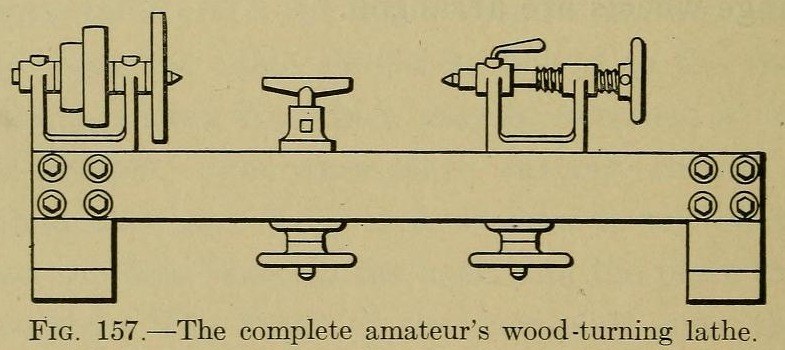

Wood Lathe: Simple Amateur's Lathe with a Maple Bed, 7 in Swing (Lathe Work for Beginners, 1922)
A wood-turning lathe an amateur can build: two strips of hard maple bolted to maple legs make the 3 ft bed, and cast-iron head-stock, tail-stock, hand-rest body, hand wheels and cone pulleys are cast from home-made patterns. Steel spindles turn in the cast-iron bearings, and a cone pulley drives the head-stock from a countershaft.
Result: a wood lathe with a 7 in swing and a 3 ft bed.
Source: R. F. Yates, Lathe Work for Beginners (1922), Chapter XII, pp. 208-216. Unknown: the pattern sizes (on the book's drawings) and the drive. Picture: Fig. 157 of the book.
Ilọsíwájú
Unknown
Ìlànà
1
1
Make the patterns and get castings
Make the patterns and get castings
Make patterns from any handy wood: one for both head-stock and tail-stock, with a web joining the two bearings so the casting does not spring; one for the hand wheels (three castings); one for the washers (two); the cone pulley (two: lathe and countershaft); and the hand-rest body. Give them a slight draw taper. Have them cast in iron at a foundry. Not given: pattern sizes (on the book's drawings).
Àwọn ohun èlò fún ìgbésẹ̀ yìí:
 Àwọn ohun irin dídà1 head-stock, tail-stock, wheels, washers, pulleys, rest body
Àwọn irinṣẹ́ tí a nílò:
 Pátákó igi
 Ìléru cupola
 Ìwọ̀n tí a kò mọ̀
2
2
Build the maple bed
Build the maple bed
Make the bed of two strips of clear hard maple 1 in thick, 4 in wide and about 36 in long (about 1 1/2 in thick for a longer bed), and two maple legs, the part between the ways cut exactly square. Bore a 5/8 in hole through the head-stock leg in line with the head-stock's 1/2 in tapped hole, recessed below for a nut and washers. Bolt bed to legs with eight 3/8 in carriage bolts. Sand it and give it a coat of clear shellac against warping. White oak will do if there is no maple.
Àwọn ohun èlò fún ìgbésẹ̀ yìí:
 Pákó igi líle1 ways and legs
 Bọ́ọ̀tù orí róbótó8 3/8 in carriage bolts
 Sẹ́làkì1 finish
Àwọn irinṣẹ́ tí a nílò:
 Ẹ̀rọ Ìlùkòkò Onídúró
 Bébà Ìfá
3
3
Machine the stocks
Machine the stocks
Face the outside ends of the head-stock and tail-stock bearings on a shaper or milling machine. Drill the bearings between centres in a lathe with a 47/64 in drill, saw off the joining web, face the inner ends and ream to 3/4 in. Line both castings up on a 3/4 in shaft and machine their bottoms. Drill oil holes in the head-stock lugs. Tap the tail-stock front lug 3/16 in for a clamp turned, heated and bent to shape, with soft copper or brass under it; tap the tail-stock rear bearing 7/8 in, 9 threads.
Àwọn ohun èlò fún ìgbésẹ̀ yìí:
 Irin tí a kò mọ̀1 clamp and copper pad
Àwọn irinṣẹ́ tí a nílò:
 Ẹ̀rọ Ìgégé Irin
 Ẹ̀rọ Ìyí Irin
 Ìtò irinṣẹ́ ìgé ihá
 Ilé Iná Alágbẹ̀dẹ
4
4
Turn the spindles and pulley
Turn the spindles and pulley
Turn the head-stock spindle from 1 3/8 in machine steel: 3/4 in diameter, a 7/8 in nose threaded 9 to the inch, a 3/8 in hole right through and a No. 1 Morse taper in the nose. Turn the tail-stock spindle from 7/8 in stock, 3/4 in diameter with a 7/8 in, 9-thread part. Centre each piece, drill halfway from each end with a 3/8 in drill, ream, then finish between centres. Turn the cone pulley with crowned faces, wide enough to run easily between the bearings, and fix it to the spindle with a 3/8 in headless set screw.
Àwọn ohun èlò fún ìgbésẹ̀ yìí:
 Ọ̀pá rírọ irin rírọ̀1 spindlesIrin tí a kò mọ̀1 set screws
Àwọn irinṣẹ́ tí a nílò:
Ẹ̀rọ Ìyí IrinẸ̀rọ Ìlùkòkò Onídúró5
5
Fit the wheels and hand rest, and assemble
Fit the wheels and hand rest, and assemble
Drill hand wheel N 3/4 in for the tail-stock spindle and hold it with a 1/4 in set screw; tap the other two wheels 1/2 in. Drill the washers 9/16 in. Bolt the head-stock down with a stud through the leg, and fit a 1/2 in stud about 7 in long for the tail-stock and a 1/2 in square-headed bolt for the hand-rest body. Plane the hand rest's bottom, drill it 3/4 in, and fit tee-rests of 1/4 x 1 in flat steel welded to 3/4 in shafting, held by a 1/4 in set screw; make several lengths. The cast iron serves as bearing metal, or the bearings can be bushed or babbitted.
Àwọn ohun èlò fún ìgbésẹ̀ yìí:
 Ọ̀pá Pẹrẹsẹ Irin Pẹ́lẹ́1 tee-restsIrin tí a kò mọ̀1 studs, bolts, set screws, shafting
Àwọn irinṣẹ́ tí a nílò:
Ẹ̀rọ Ìlùkòkò OnídúróÌtò irinṣẹ́ ìgé iháIlé Iná Alágbẹ̀dẹÀwọn ohun-èlò
7- 1 head-stock, tail-stock, wheels, washers, pulleys, rest bodyÀyè
- 1 ways and legsÀyè
- 8 3/8 in carriage boltsÀyè
- 1 finishÀyè
- 1 studs, bolts, set screws, shaftingÀyè
- 1 spindlesÀyè
- 1 tee-restsÀyè
Àwọn irinṣẹ́ tó nílò
9- Àyè
- Àyè
- Àyè
Àwọn Ohun Èlò Ìtọ́nisọ́nà Tí A So Pọ̀

10% Ìpín
Casting Iron in a Cupola Furnace — Re-Melting Pig Iron into Finished Castings
láti ọwọ́ Piett
Iṣẹ́ Irin
56
0
0
0
6
0
10% Ìpín
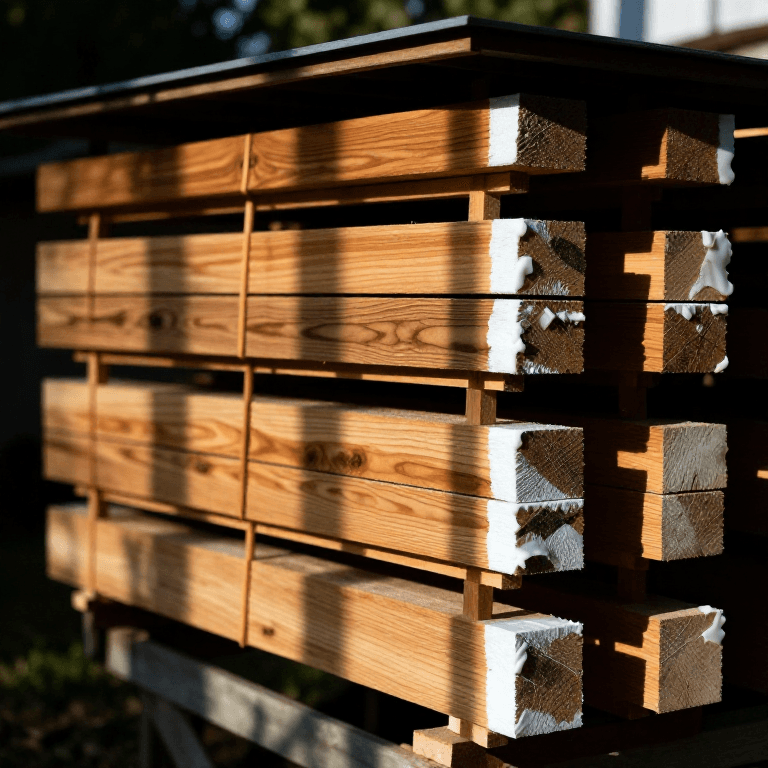
Oak Boards and Blocks, Milled and Air-Dried
láti ọwọ́ Woody
Iṣẹ́ Igi
49
0
0
0
3
0
10% Ìpín
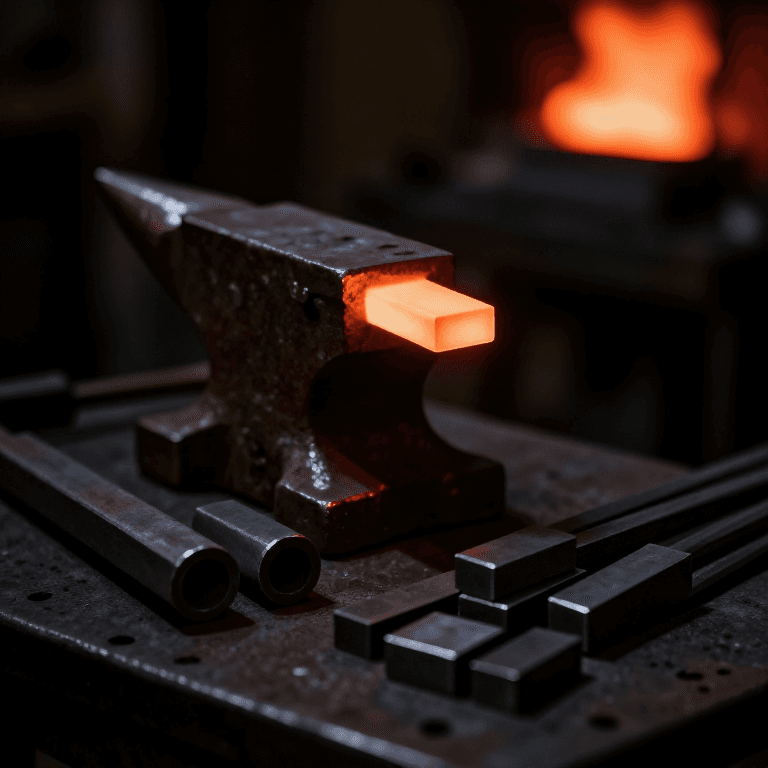
Mild Steel Bar Stock Forged from an Ingot
láti ọwọ́ Forge
Òde Òní
48
0
0
0
5
0

10% Ìpín
Shellac Flakes from Stick Lac
láti ọwọ́ Mary
Iṣẹ́ Igi
38
0
0
0
1
0
10% Ìpín
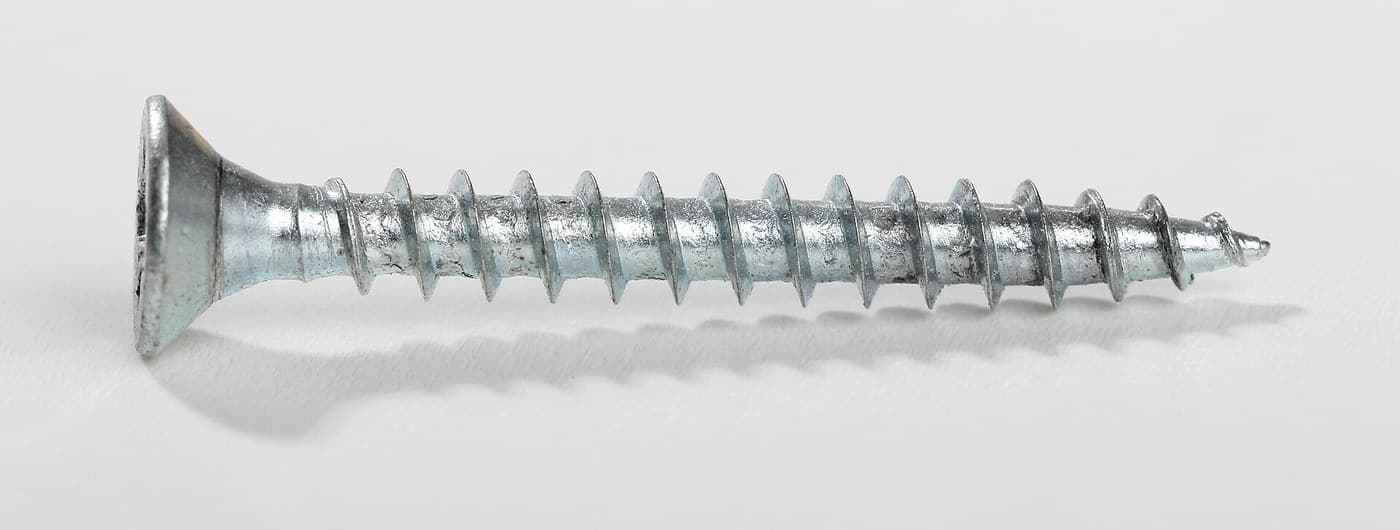
Screws: Cold Headed and Thread Rolled
láti ọwọ́ Emma
Iṣẹ́ Irin
55
0
0
0
1
0
Ìtọ́nisọ́nà yìí ń ṣe

CC0 Àgbègbè Gbogbogbò
Blueprint yìí ti jáde lábẹ́ CC0. O lè ṣe àdàkọ, yí padà, pín, àti lò láìsí ìyọ̀ǹda.
Ṣàtìlẹ́yìn Olùṣẹ́dá nípa rírà àwọn ọjà nipasẹ̀ Blueprint wọn Ẹ̀san Olùṣẹ́dá tí àwọn Olùtajà gbé kalẹ̀, tàbí ṣẹ̀dá àtúnṣe tuntun ti Blueprint yìí kí o sì fi sínú Blueprint rẹ gẹ́gẹ́ bí ìsopọ̀ láti pín owó-wíwọlé.