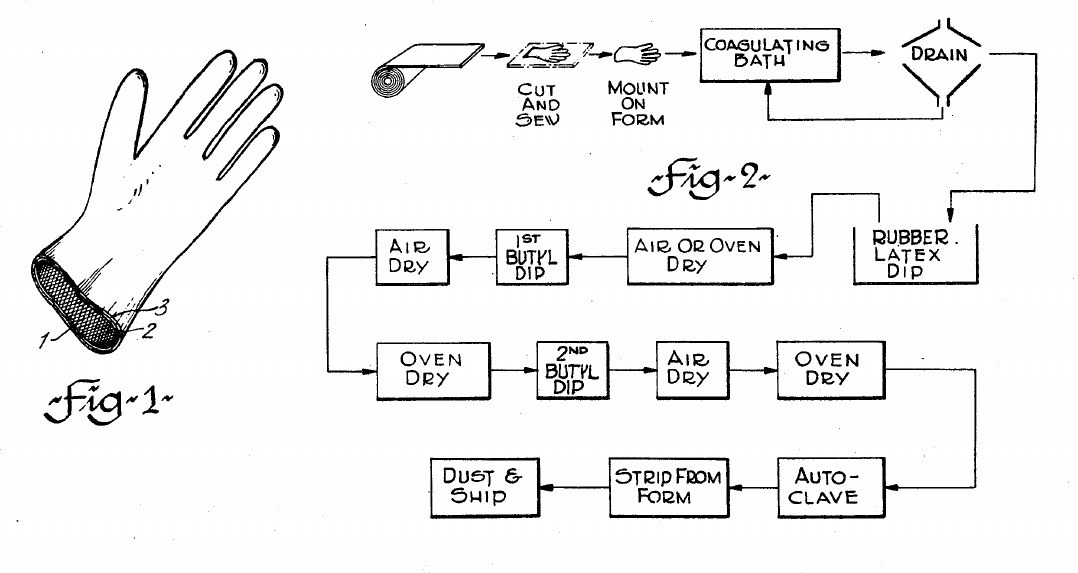


Chemical-Resistant Gloves: Butyl Latex over Natural Rubber on a Cotton Liner (Hart & Collyer, US 4,190,685, 1980)
Instrukcje
Sew the cotton liner
Sew the cotton liner
Materiały do tego kroku:
 Dzianina bawełniana1 liner
Potrzebne narzędzia:
 Nożyczki
 Maszyna do szycia
 Nieznane wymiary
Dip in coagulant
Dip in coagulant
Materiały do tego kroku:
 Kwas octowy (lodowaty)1 10 % in acetone
 Aceton1 solvent
Potrzebne narzędzia:
 Forma do rękawic
 Palnik propanowy
Dip the natural rubber coat
Dip the natural rubber coat
Materiały do tego kroku:
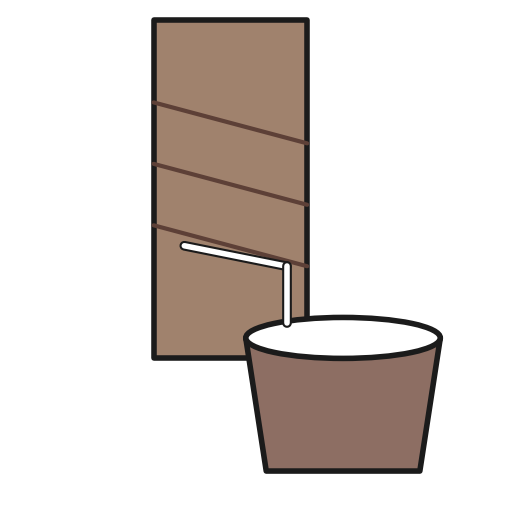 Lateks kauczuku naturalnego1 bath
 Środek ścierny do czyszczenia1 as needed
Potrzebne narzędzia:
Forma do rękawic Szczotka ryżowa
Mix the butyl latex bath
Mix the butyl latex bath
Materiały do tego kroku:
 Lateks kauczuku butylowego100 parts dry
 Siarka3 parts
 Dibutyloditiokarbaminian cynku4 parts
 Proszek tlenku cynku5 parts
 Roztwór formaldehydu (formalina 37 %)0.1 parts formaldehyde
 Ciekły przyspieszacz ditiokarbaminianowy4 parts
 Nieznany materiał6.5 parts pigment
Potrzebne narzędzia:
 Mieszadło
Dip five butyl coats
Dip five butyl coats
Potrzebne narzędzia:
Forma do rękawic Piec do suszenia
Cure and finish
Cure and finish
Materiały do tego kroku:
 Mydło1 as needed
Potrzebne narzędzia:
 Autoklaw stołowyNożyczki
Materiały
13- 1 linerZastępnik
- 1 10 % in acetoneZastępnik
- 1 solventZastępnik
- Zastępnik
- 1 as neededZastępnik
- 100 parts dryZastępnik
- 3 partsZastępnik
- Zastępnik
- 5 partsZastępnik
- 0.1 parts formaldehydeZastępnik
- Zastępnik
- 6.5 parts pigmentZastępnik
- 1 as neededZastępnik
Wymagane narzędzia
9- Zastępnik
- Zastępnik
- Zastępnik
- Zastępnik
- Zastępnik
- Zastępnik
- Zastępnik
- Zastępnik
- Zastępnik
Materiały z połączonych planów

กรีดยางพารา — การเก็บน้ำยางธรรมชาติจากต้นยางพารา
autor: SomchaiSang
Rolnictwo

Glacial Acetic Acid from Wood Vinegar: Acetate of Soda, Oil of Vitriol and Freezing
autor: Charlie
Przemysłowy
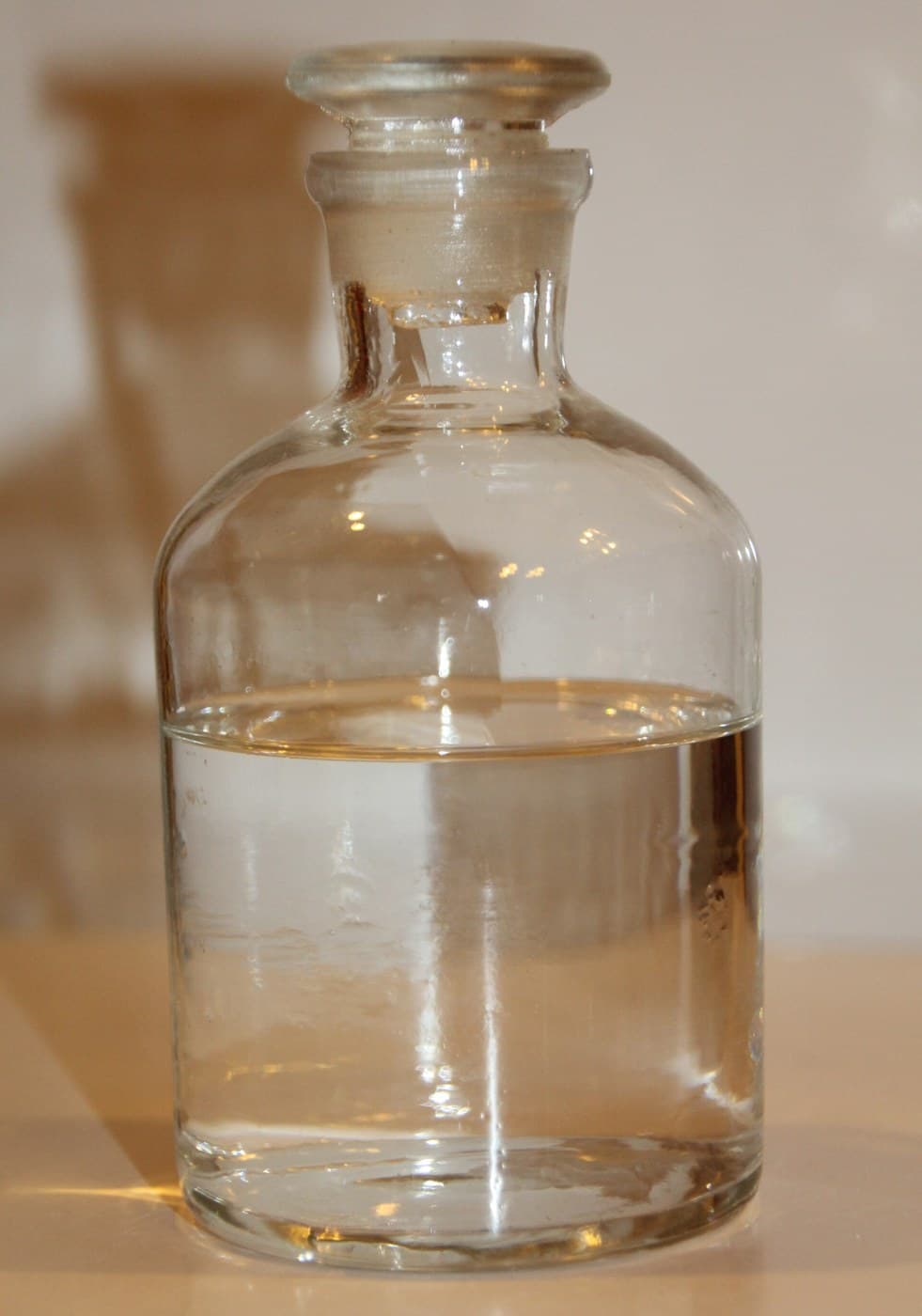
Acetone by Dry Distillation of Acetate of Lime
autor: Charlie
Chemia
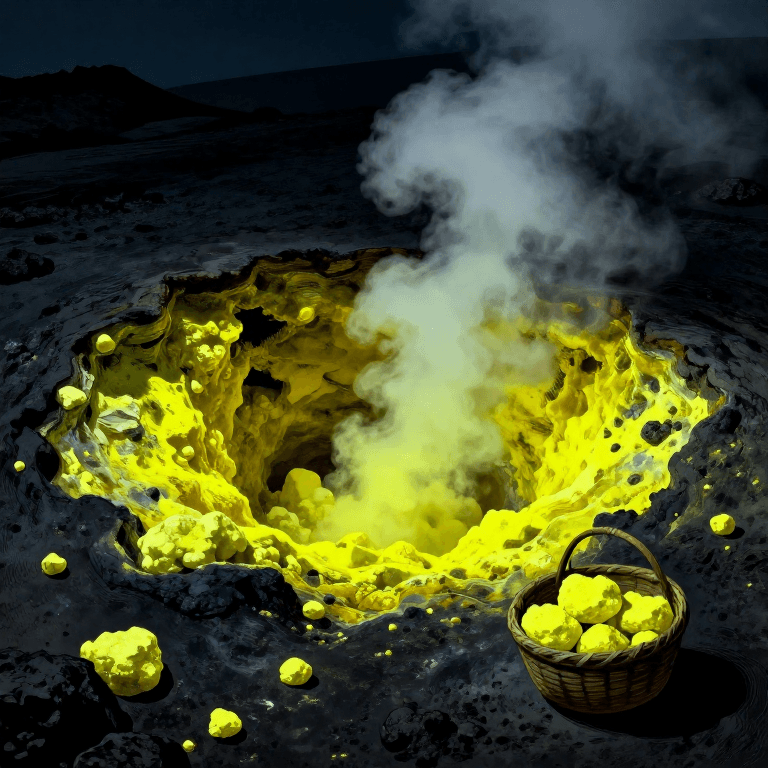
Collecting Native Sulfur from Volcanic Deposits
autor: Peter
Pustynia
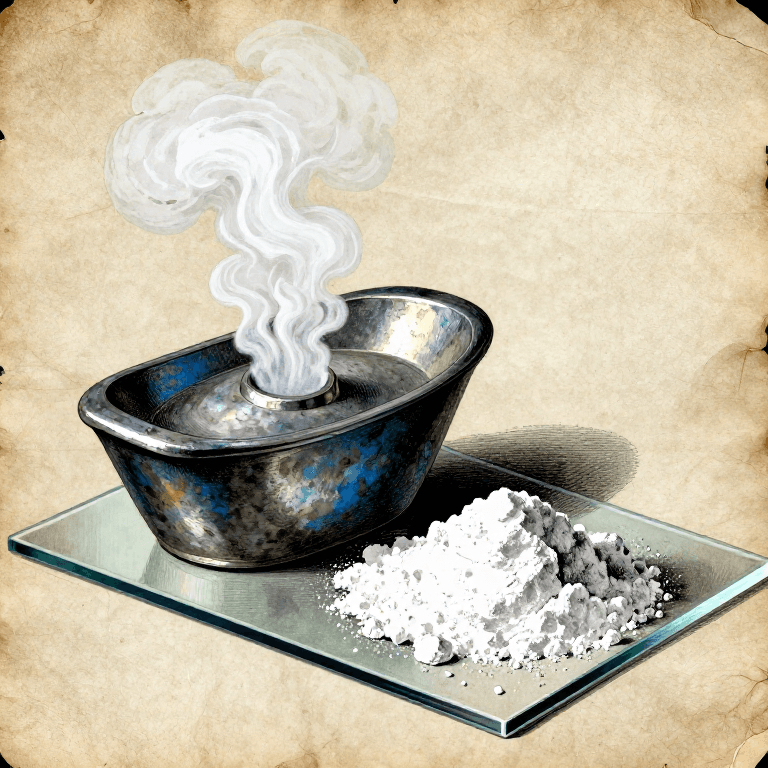
Making Zinc White Pigment — The Non-Toxic Replacement for Lead White
autor: Charlie
SZTUKA
Według tego planu powstaje

CC0 Domena publiczna
Ten plan jest udostępniany na licencji CC0. Możesz go swobodnie kopiować, modyfikować, rozpowszechniać i wykorzystywać do dowolnych celów, bez konieczności uzyskiwania zgody.
Wesprzyj Makera kupując produkty przez jego plan, za co zarabia Prowizja Makera ustalony przez sprzedawców, lub stwórz nową iterację tego planu i dołącz go jako połączenie w swoim własnym planie, aby dzielić się przychodami.